Protest Stickers: Berlin

Paul de Gregorio has worked in fundraising since 1996; he is currently Head of Mobile at Open, a fundraising and communications agency. In his day job he finds ways to inspire the public to take action for some of the charities and not for profit organisations here in the UK and increasingly overseas. He blogs about it here. He’s also a fellow protest sticker-spotter, a habit he indulged on a recent trip to Berlin. In this post, Paul showcases some of the stickers he found, as well as reflecting on a museum exhibition he visited about antisemitic and racist stickers. He’s sometimes posts pictures of the stickers he finds on Instagram.


In my day job I help charities and non-profit organisations generate mass response to their campaigns and appeals.

In my spare time, down time between meetings and when I’m on holiday I spend an extraordinary amount of time taking pictures of political stickers on my mobile. I do it because I want to amplify some of the messages I see, but also because I find their designs a good source of inspiration for my day job.

Berlin is always a good place to find this stuff. On a recent trip I was lucky enough to be in town for the Sticky Messages exhibition at the Deutsches Historisches Museum. The exhibition, to give it its full name, “Sticky Messages. Antisemitic and racist stickers from 1880 to the present”, was a detailed look at the history of the political sticker in Germany over time.

The exhibition itself is great, and whilst at the exhibition I learnt all about Irmela Mensah-Schramm.  She is a 70 year old woman, well known in Germany for her personal commitment to the removal of neo-Nazi messages from public places. For the last 30 years Irmela has been scraping off and spray painting over all the neo-Nazi messages she finds. From time to time this has put her into conflict with local Nazis. But she continues to do it. Having removed over 70,000 stickers since she started, she’s now a hero of mine! You can hear more of her wonderful story in the film below.

You can also read more about her here.

And what follows are a tiny handful of the stickers I found on that trip…
2016-05-07 15.21.06
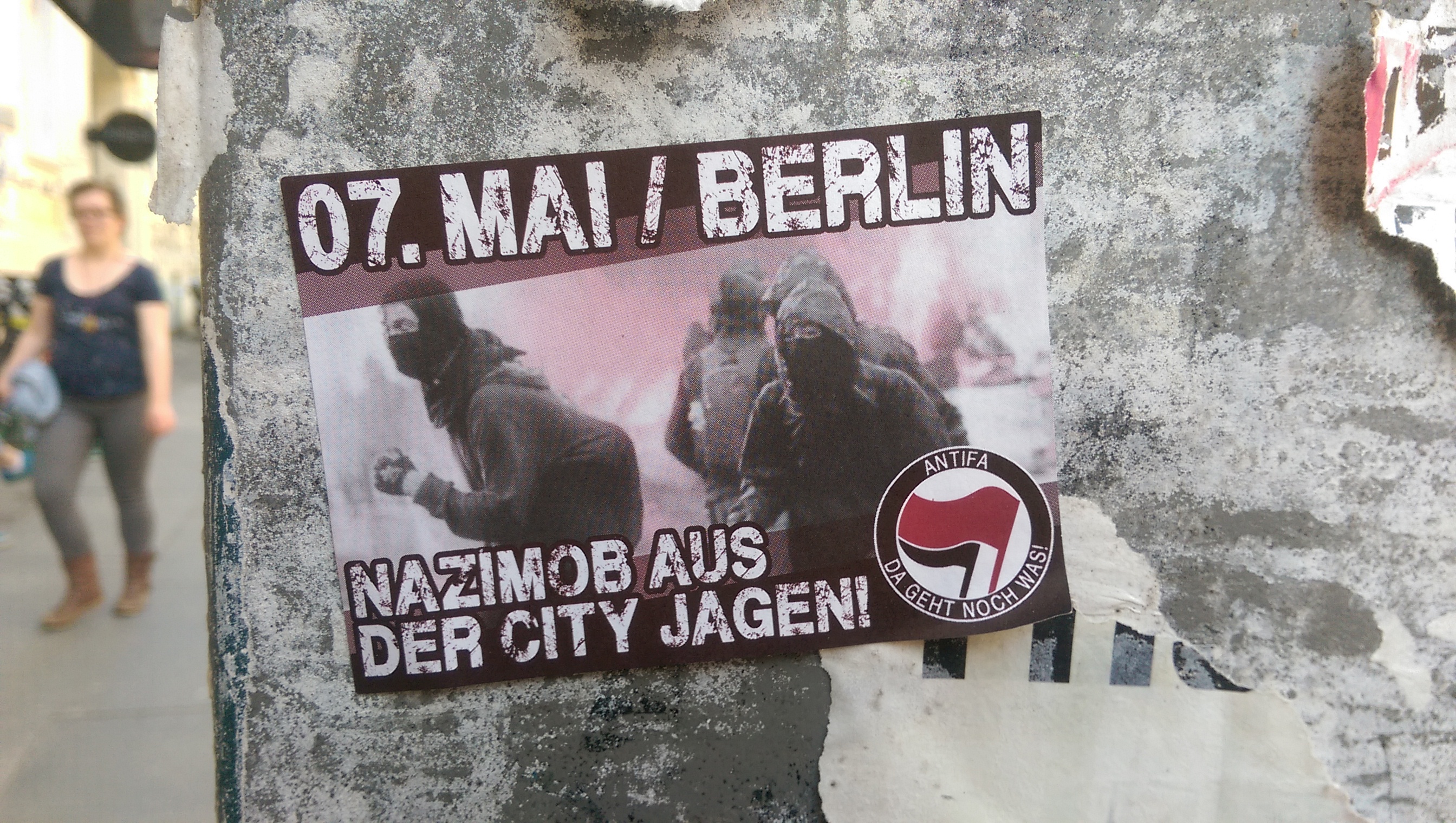
I saw this one on the day we arrived which coincided with a big anti-Nazi protest.
2016-05-07 17.36.29
This one reads “Shut you mouth, Germany!”
2016-05-08 15.21.44
I’ve seen this one all over Europe. And it’s easily found online which makes it so easily to replicate.
2016-05-09 14.13.40
2016-05-09 14.14.04
2016-05-09 14.20.34
The last three I found on Karl Marx Allee, usually a great place to find stickers. I love these three the most because they were plastered all over terrible advertising and I could tell by people watching that they were getting noticed.

Paul de Gregorio

—————————–

All photographs are my copyright. You can use them, I’d just like you to ask and credit me.
You can find me on Twitter, Instagram & Flickr.

Protest Stickers: New York City 2, Part 2

01_09-03-16 (2)
Stickers obscuring a road sign in New York City (Photo: Hannah Awcock).

Street art is everywhere in New York City, and it comes in all shapes and sizes. For those of you that are new to Turbulent London, I am especially interested in stickers, particularly those with political subject matter. So on a recent trip to New York City, I took my camera and my habit of photographing random bits of street furniture to see what protest stickers I could find on the streets of the city that never sleeps. This is the second time I have visited NYC since I started photographing protest stickers, and the first time I struggled to find many. This time however, I found so many stickers that I have decided to do two blog posts, hence the slightly awkward title (the first post, published last week, is here). In the last post, I looked at the different kinds of issues which protest stickers address, the different types of stickers you can find, and some of the most common themes in the stickers I found. This post is far less organised I’m afraid, its just everything else that I wanted to include!

02_11-03-16 (1)
Some American industries. including the building trade, still have very strong unions. Builders in New York tend to plaster their hard hats with stickers, so that they become a walking representation of their unions and the causes that they consider to be important (Photo: Hannah Awcock).
03_10-03-16 (1)
Last week I talked about some of the most common themes that came up in protest stickers, police brutality and the upcoming Presidential election. Animal rights was another common theme; this sticker contains the web addresses of meatvideo.com, which shows abuse at factory farms, and In Defense of Animals, a group which campaigns for animal rights, welfare and habitat (Photo: Hannah Awcock).
04_10-03-16 (11)
This sticker also references meatvideo.com, but it is not quite as well made as the last one. I remember seeing this sticker design when I was here in 2015, so there’s a chance this particular sticker has been there quite a while (Photo: Hannah Awcock).
05_15-03-16 (32)
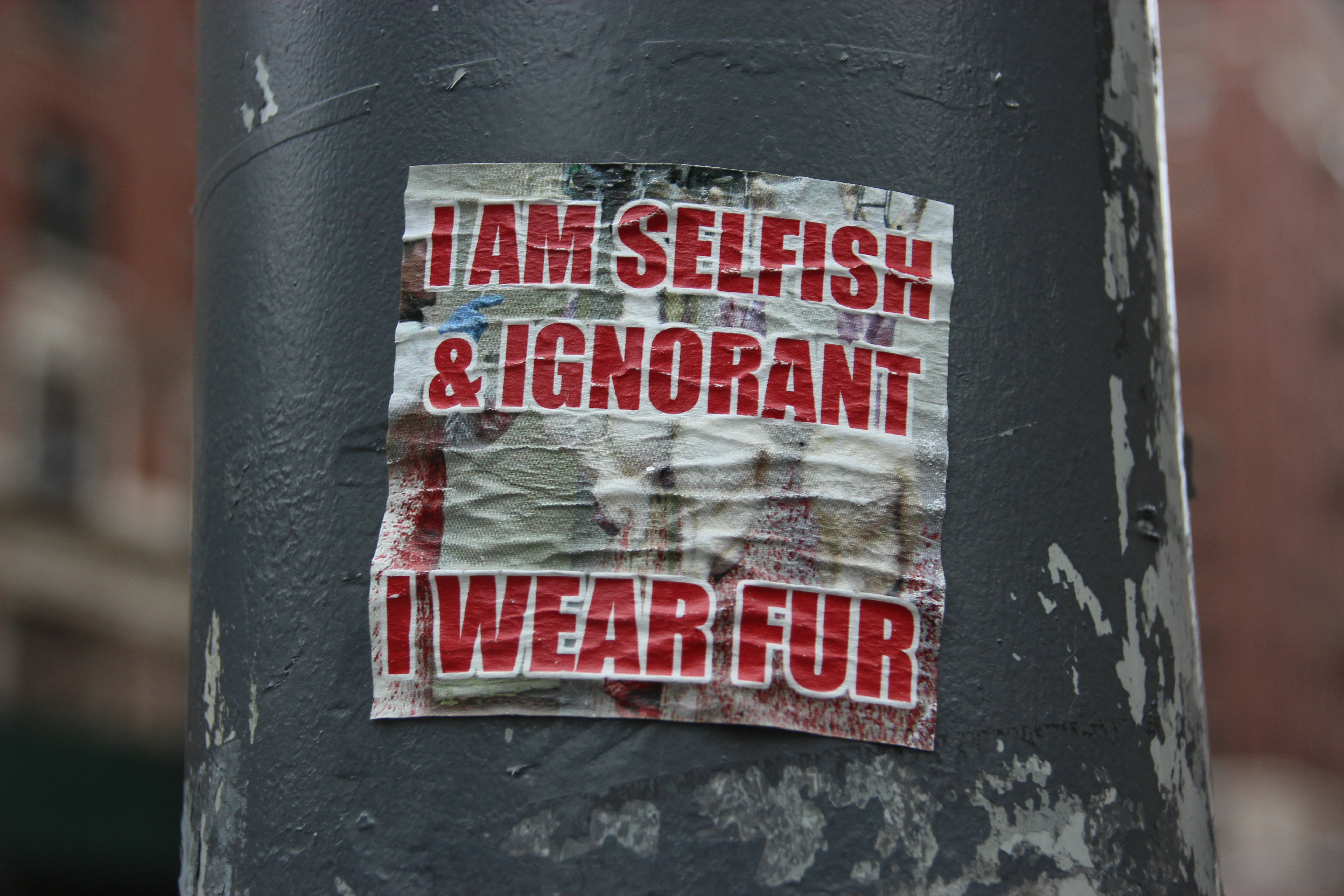
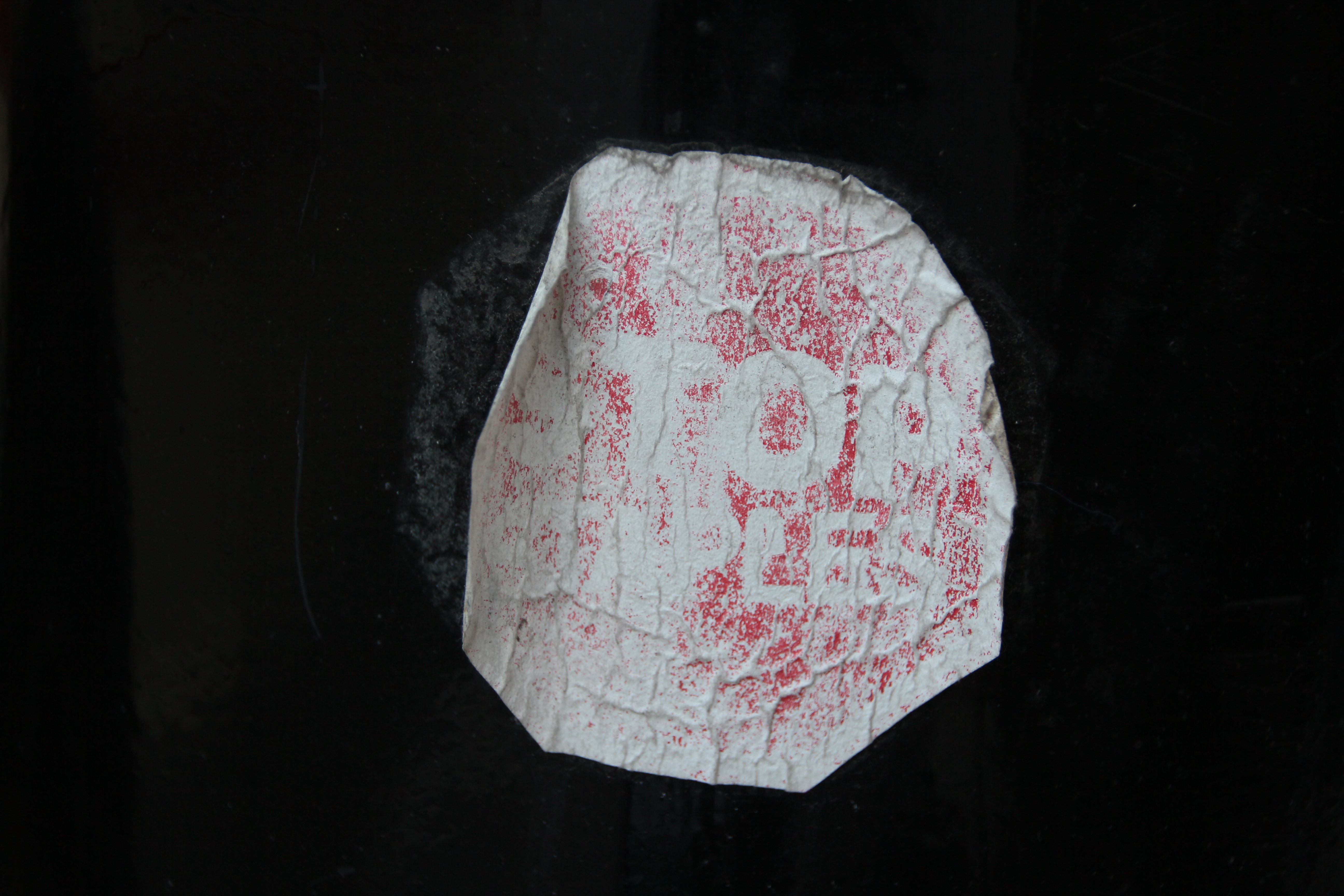
This sticker criticises people who wear fur. The picture is unclear because the sticker has been wrinkled by rain, but the message is still pretty clear thanks to the huge red writing (Photo: Hannah Awcock).
08_12-03-16 (51)
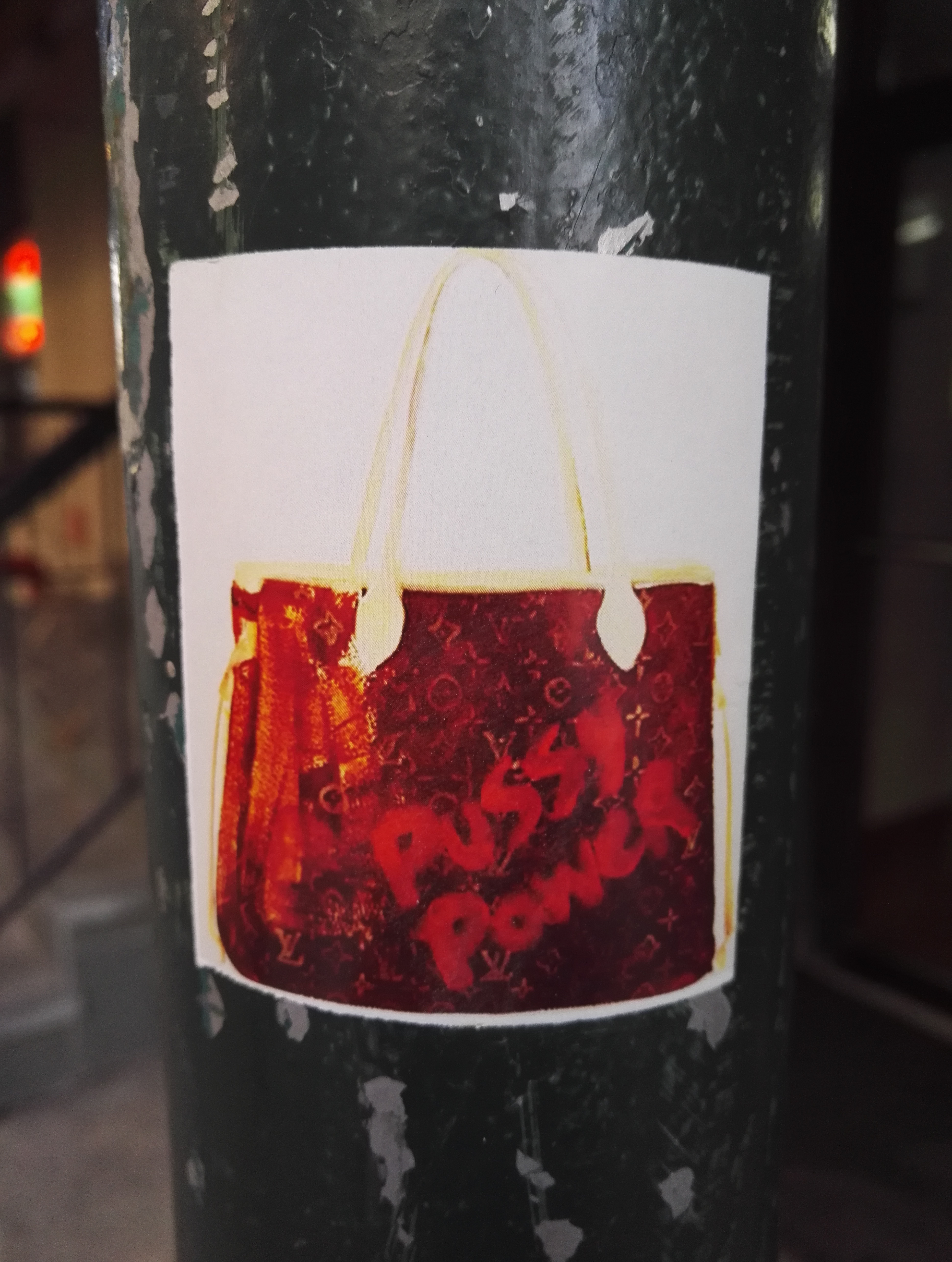
Feminism was a less common theme, but it did crop up now and again (Photo: Hannah Awcock).
dav
I found this sticker on some scaffolding right outside our hotel when we first arrived- I took it as a good omen for the trip! (Photo: Hannah Awcock).
06_12-03-16 (7)
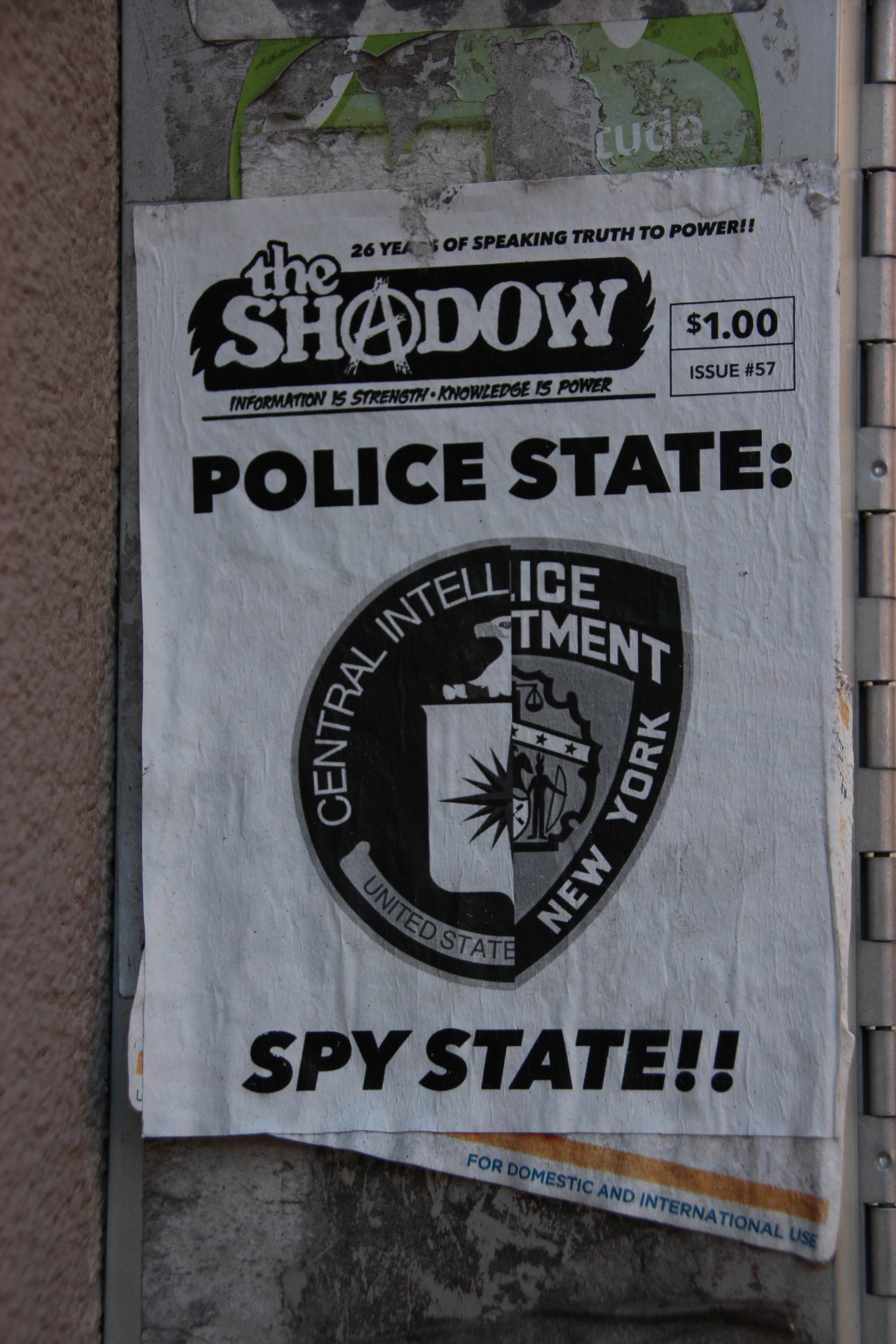
The East Village is one of the ‘coolest’ neighbourhoods on Manhattan, and some stickers are local to this area. The Shadow claims to be New York’s only underground newspaper, and is published from the lower East Side. It was started in 1989, after local people were disillusioned by the mainstream media’s coverage of the Tompkins Square Park riot in 1988. I featured one of The Shadow‘s stickers last time, but didn’t know the story behind it until this trip (Photo: Hannah Awcock).
07_12-03-16 (20)
This sticker was produced by the Museum of Reclaimed Urban Space, which is located in a squat on Avenue C. The Museum is volunteer-run, and focuses on grassroots campaigns to keep communal spaces in the city out of corporate hands (Photo: Hannah Awcock).
09-03-16 (1)
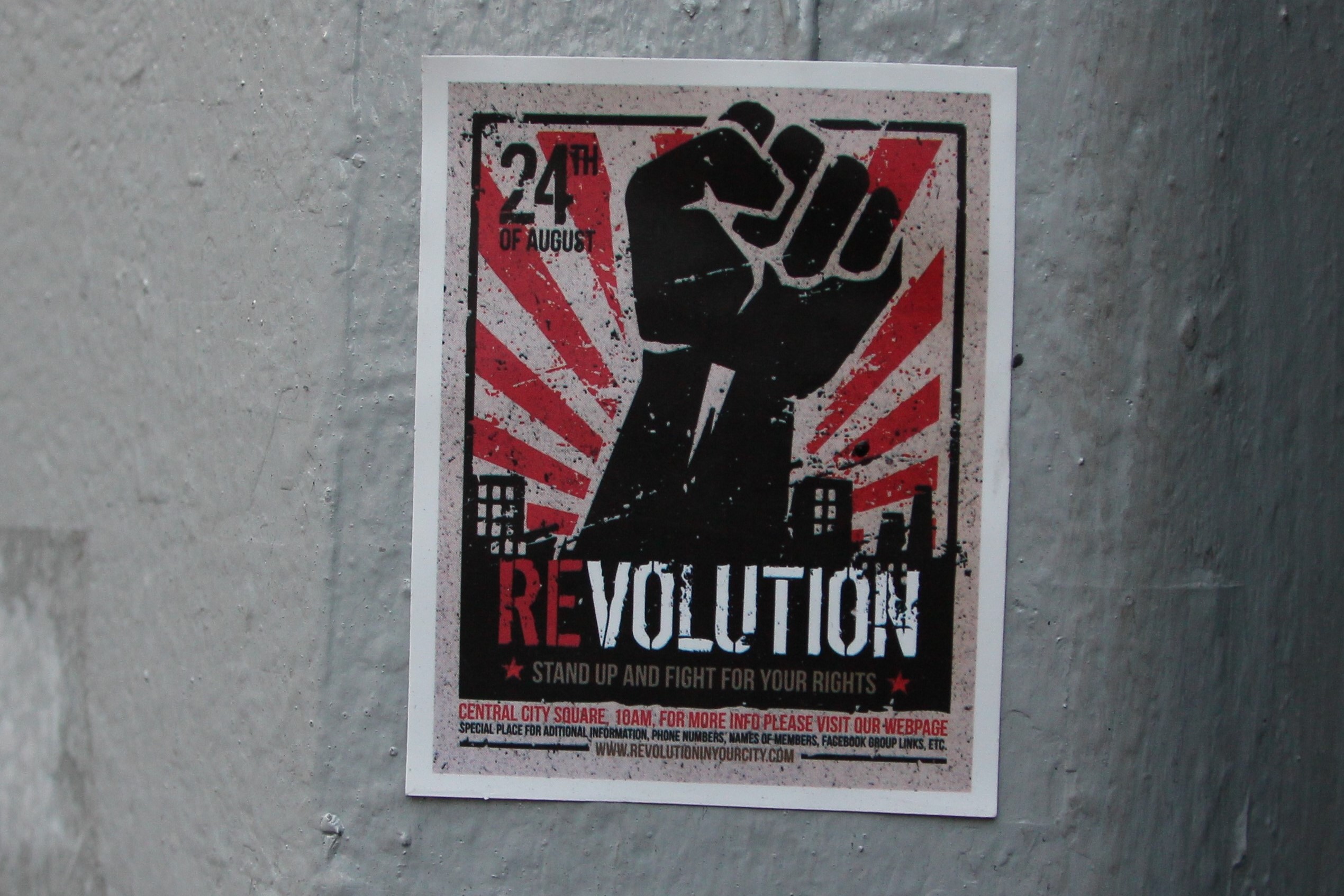
The clenched, raised fist is a common symbol of dissent (Photo: Hannah Awcock).
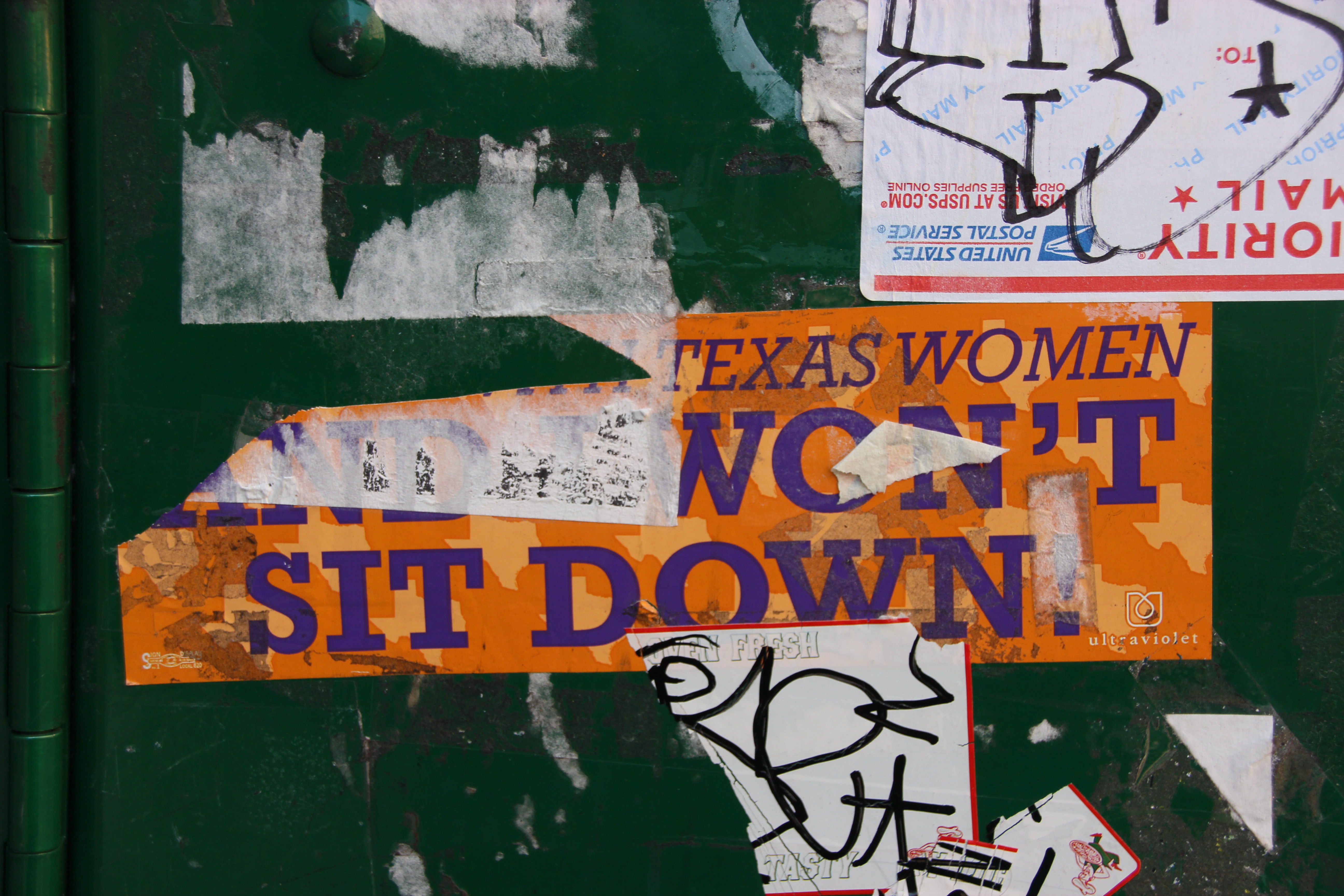
10_12-03-16 (34)
This sticker has been partially obscured, but it reads “We stand with Texas Women, and we won’t sit down!” It was produced by Ultraviolet, a group that campaigns for women’s rights. This particular campaign is about preventing attempts to restrict access to abortions in Texas (Photo: Hannah Awcock).
10-03-16 (7)
Being a millennial myself I find this a little harsh, but everyone is entitled to their opinion I guess! (Photo: Hannah Awcock).
12-03-16 (32)
The SEIU is the Services Employees International Union, and 32BJ is the local New York branch. It represents cleaners, security guards, and others whose work involves the maintenance and servicing of buildings (Photo: Hannah Awcock).
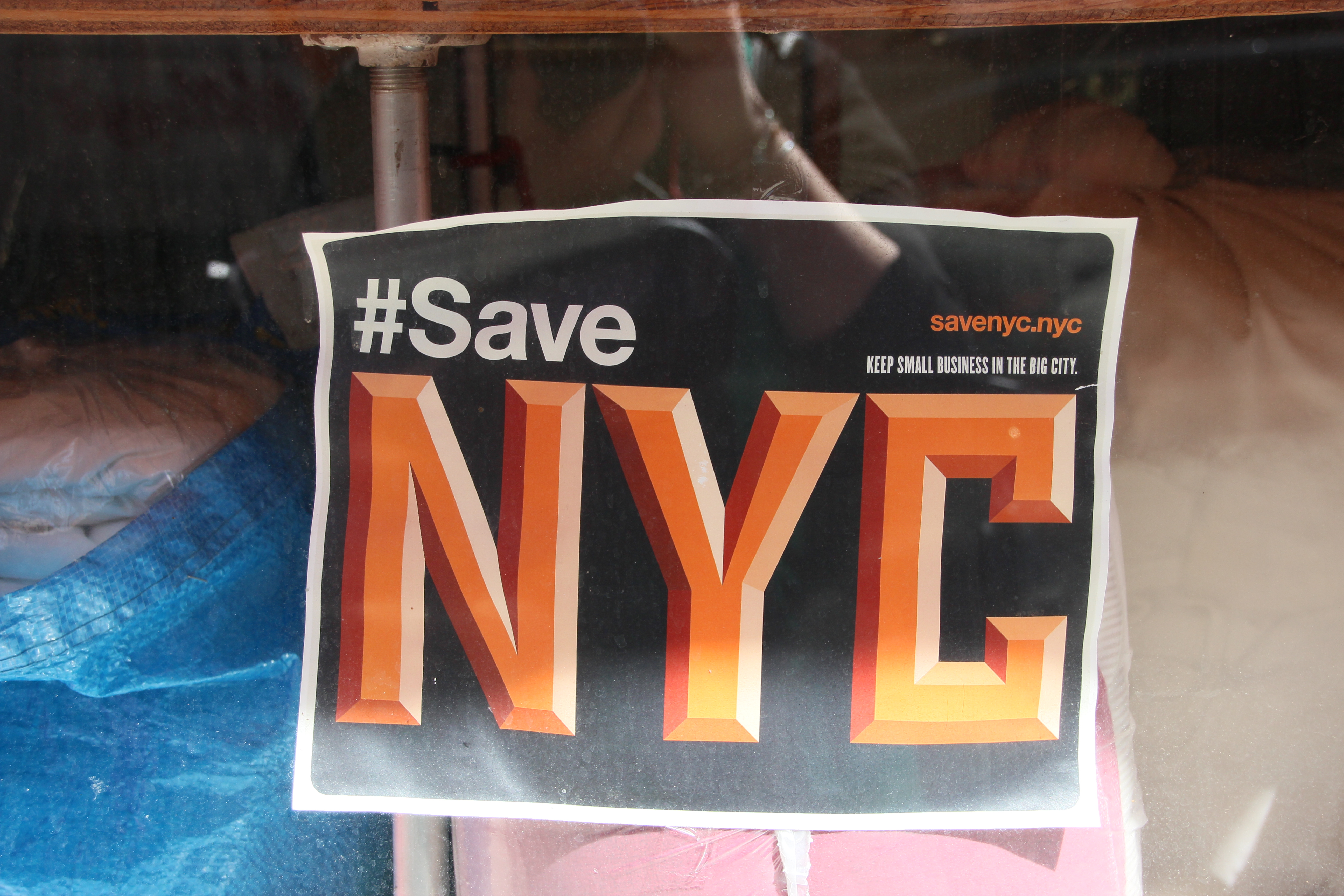
12-03-16 (42)
New York City has rents comparable to London, and it must be difficult for small businesses to survive. Save NYC is a campaign to “preserve the diversity and uniqueness” of New York. This was in the window of a dry cleaners in the East Village (Photo: Hannah Awcock).
15-03-16 (2)
This sticker has adapted the design of the one dollar bill to call for the legalisation of cannabis (Photo: Hannah Awcock).
15-03-16 (5)
This stickers celebrates the actions of Edward Snowden, a whistleblower who leaked information from the National Security Agency in 2013 which sparked intensive debate about the balance of individual privacy and national security. PeaceSupplies.org sells stickers, shirts and patches related to various campaigns (Photo: Hannah Awcock).
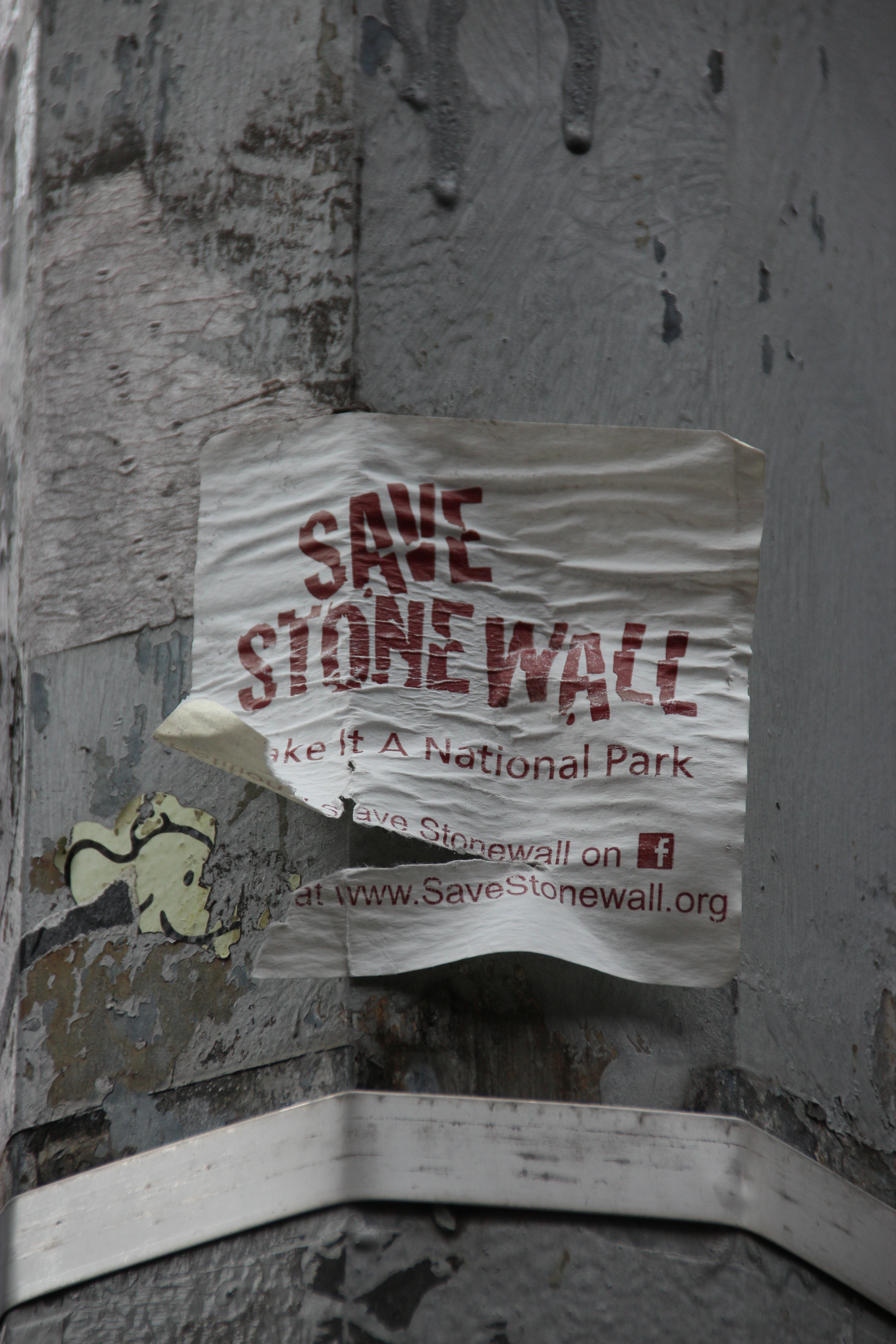
15-03-16 (9)
This sticker promotes Save Stonewall, a campaign to create a national park to commemorate the Stonewall Riots, which took place in Greenwich Village in 1969 (Photo: Hannah Awcock).
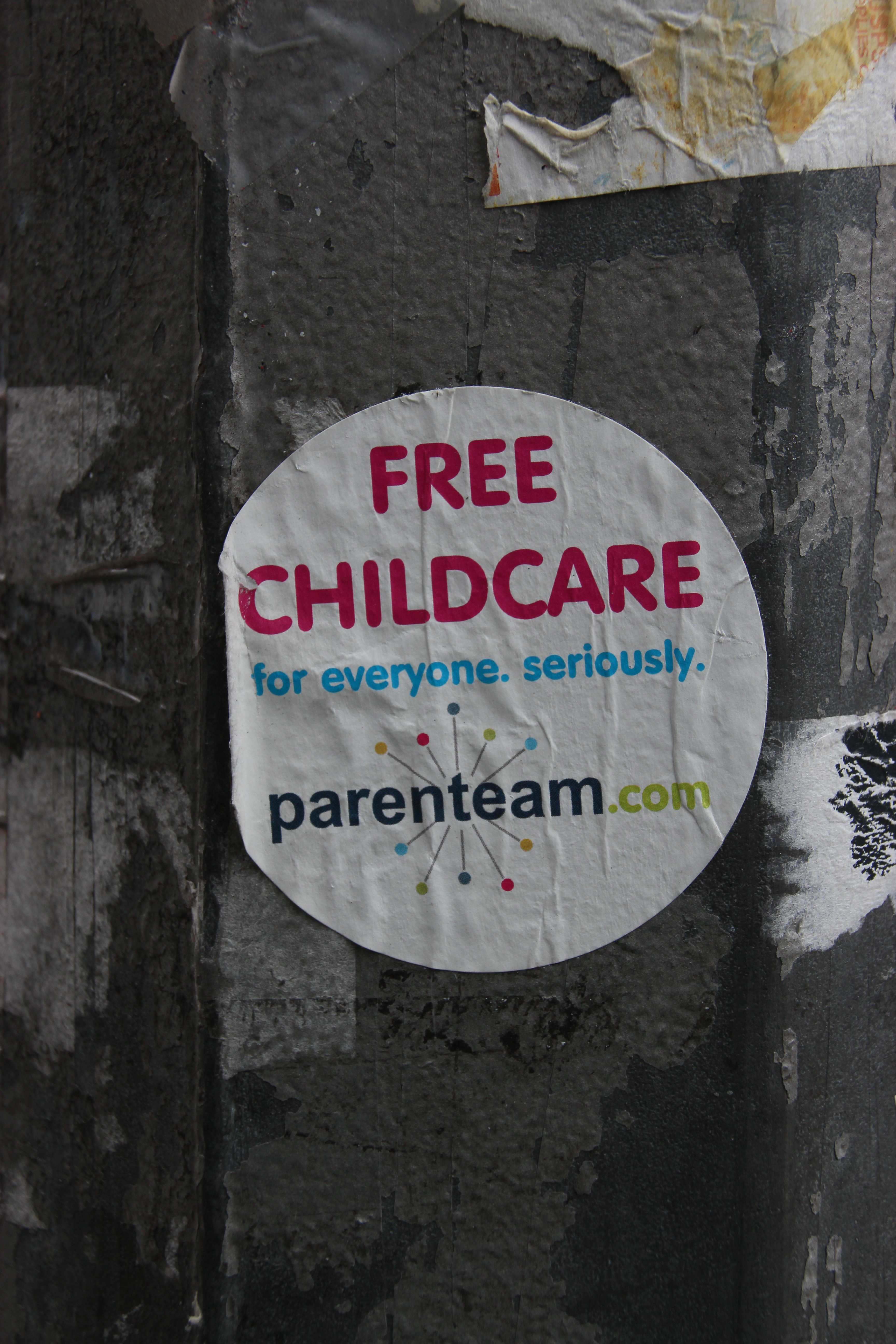
15-03-16 (10)
Parent Team is a group which supports parents of children dealing with drug or alcohol addiction. Here they are calling for free childcare for all, which doesn’t quite match up with their main purpose, but is an admirable goal none the less (Photo: Hannah Awcock).
15-03-16 (14)
This is a sticker produced by the street artist and anti-war activist Jef Campion (a.k.a. Army of One/JC2). He used his art to emphasise the ill effects of war. He passed away in 2014, but his memory lives on in his street art (Photo: Hannah Awcock).
15-03-16 (27)
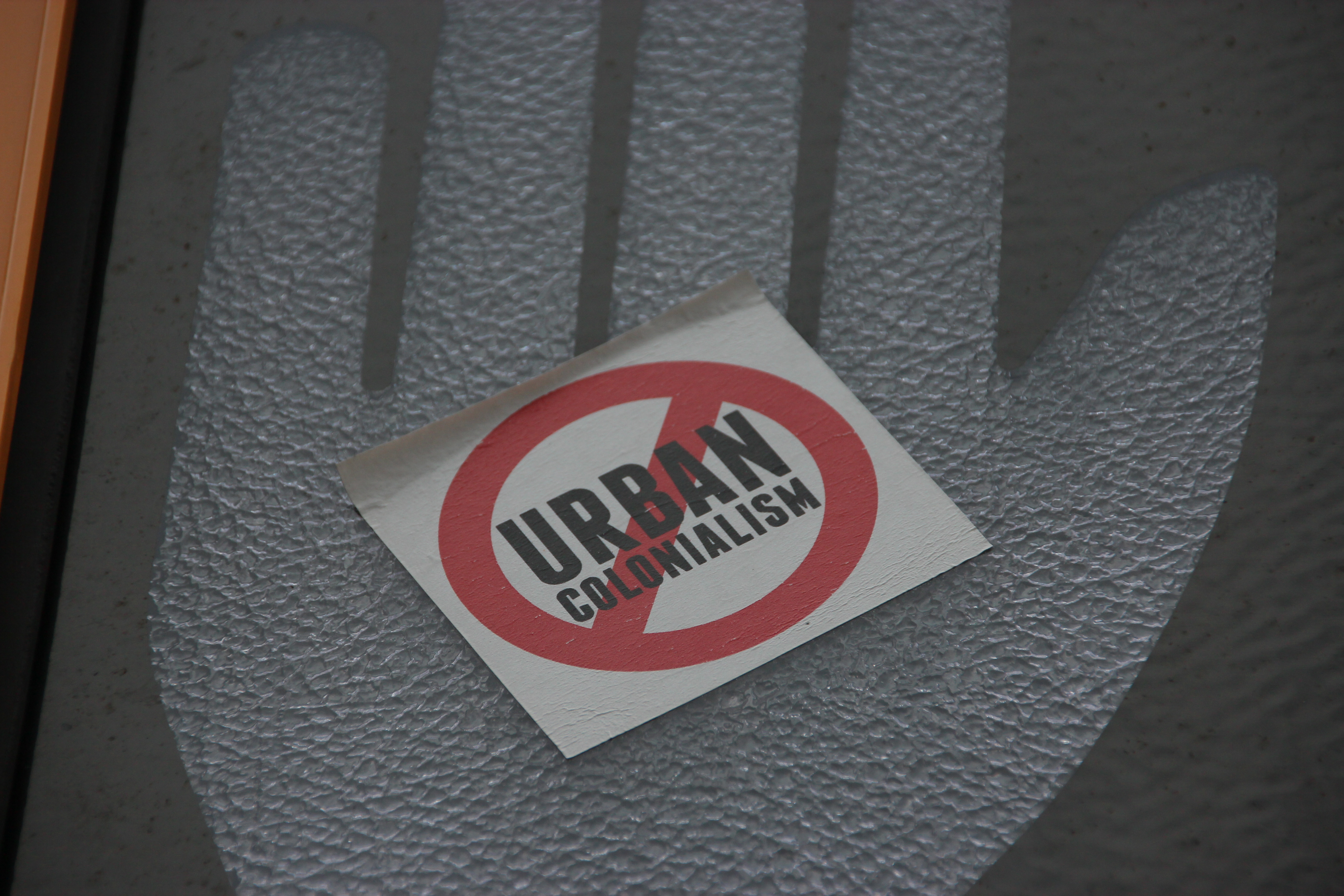
This photo illustrates how the location of a sticker can influence or reinforce its meaning. This sticker was placed on the stop sign at a pedestrian crossing, emphasising its anti-gentrification message (Photo: Hannah Awcock).
15-03-16 (31)
The International Museum for Activist Art is a website which displays art that aims to raise awareness of the issues facing society, and I would definitely recommend having a browse through it (Photo: Hannah Awcock).
15-03-16 (29)
I found this in Washington Square Park on my last day in New York. It uses the story of Goldilocks to call for the preservation of our planet. Earth is ‘just right’ for human habitation, a rare attribute that we shouldn’t take for granted (Photo: Hannah Awcock).

Protest Stickers: New York City 2, Part 1

01_15-03-16 (12)
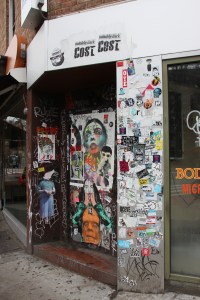
A doorway in Greenwich Village with a high concentration of street art and stickers (Photo: Hannah Awcock).

New York City has a thriving street art culture. Almost every neighbourhood has walls covered in art, both official and unofficial. There are also a lot of stickers, of all kinds- I spotted one sticker advertising a new novel, which is something I haven’t come across in London before. Lots of stickers generally means lots of protest stickers, and during the week that I was there in early March I found loads. I wouldn’t like to say whether the amount of protest stickers is increasing, or I have just got better at spotting them since I visited last time, but it certainly felt like there were a lot. I found so many in fact, that I have decided to split this post into 2 parts, with Part 2 being published this time next week.

Protest stickers are a great way of seeing what kinds of issues are important to the people of a city. Some themes crop up again and again, whilst other topics just appear to be a particular bug bear of one zealous stickerer (I am still looking for a less clumsy way of referring to people who put up stickers!) Stickers are just one of the ways in which protest imprints itself onto the physical fabric of a city, but they can also be one of the most long-lasting, although their transience is one of their defining characteristics.

02_12-03-16 (27)
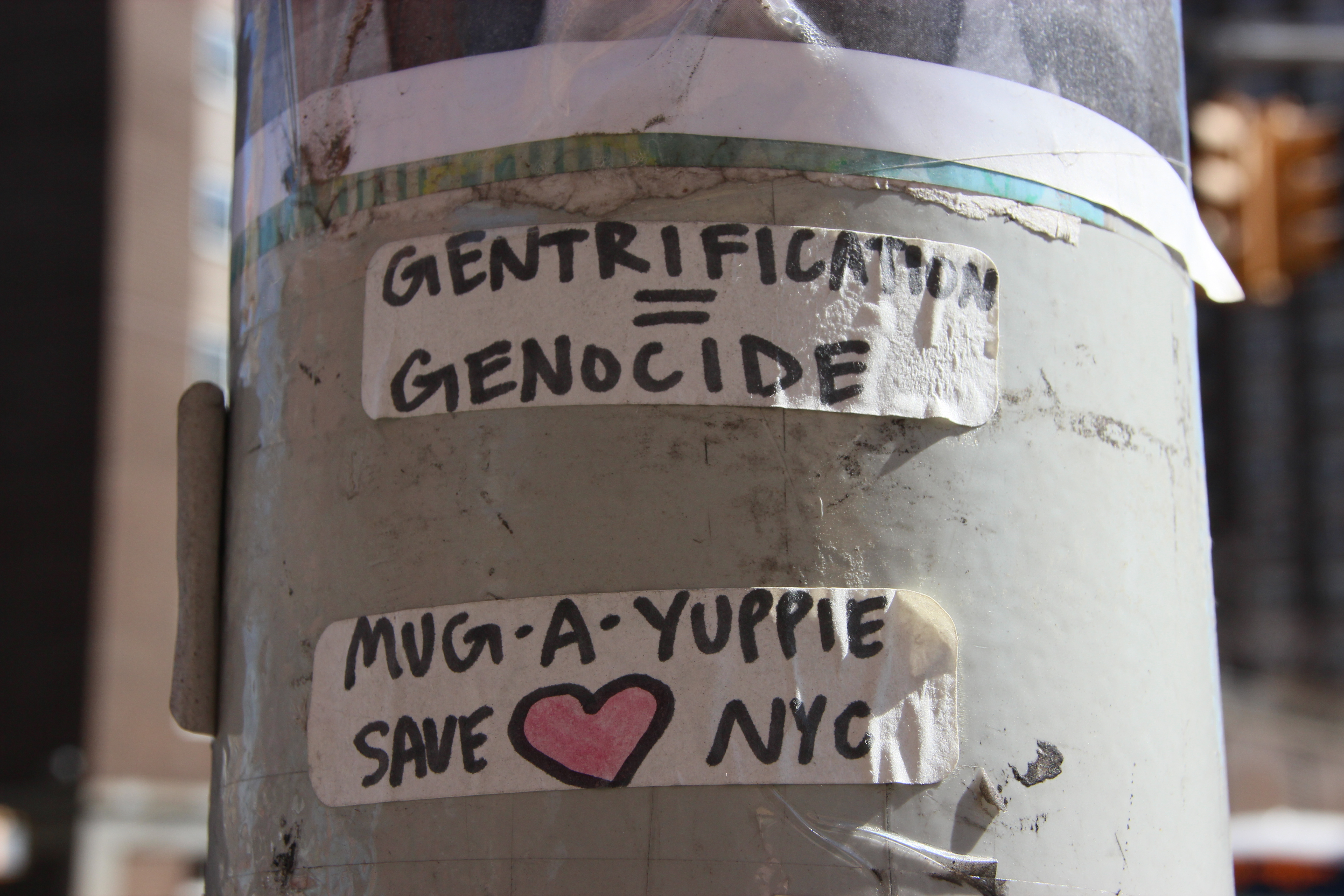
As in London, gentrification is a contentious issue in New York City. These stickers are drawing attention to the issue in a tongue-in-cheek manner (at least I hope it is!) (Photo: Hannah Awcock).
03_10-03-16 (19)
You can find stickers about a whole range of issues, relating to a whole range of scales. The relevance of this sticker is confined to New York City (Photo: Hannah Awcock).
04_10-03-16 (4)
Some stickers refer to national scale issues. The upcoming Presidential election is just about all anyone can talk about in America at the moment, and this obsession is reflected in New York’s protest stickers (Photo: Hannah Awcock).
05_12-03-16 (52)
Some stickers are about international scale issues. In case you can’t read the top line, this sticker says “Stop Iran- We Stand with Israel” (Photo: Hannah Awcock).
dav
There are some stickers that defy scale; this sticker doesn’t refer to any issue in particular, instead advocating a more forgiving attitude that could probably help a lot of contentious situations (Photo: Hannah Awcock).
08_13-03-16 (2)
This sticker also takes an abstract approach. It is by a street artist called @ApillNYC who, despite the @, has very little information about them on the internet (Photo: Hannah Awcock).
06_14-03-16 (2)
Some stickers are not even remotely relevant to New York City. This sticker comes from the Hillsborough Justice Campaign, which seeks justice for the 96 people who died in a crush at Hillsborough Football Stadium in Sheffield in the United Kingdom. I have seen these stickers before in London and I was very excited to find them here, on the viewing platform at the top of the Rockefeller Centre (Photo: Hannah Awcock).
09_10-03-16 (12)
As well as relating to a whole range of scales, protest stickers come in a whole range of forms. This sticker is basic, and was probably quite easy to make (Photo: Hannah Awcock).
10_15-03-16 (15)
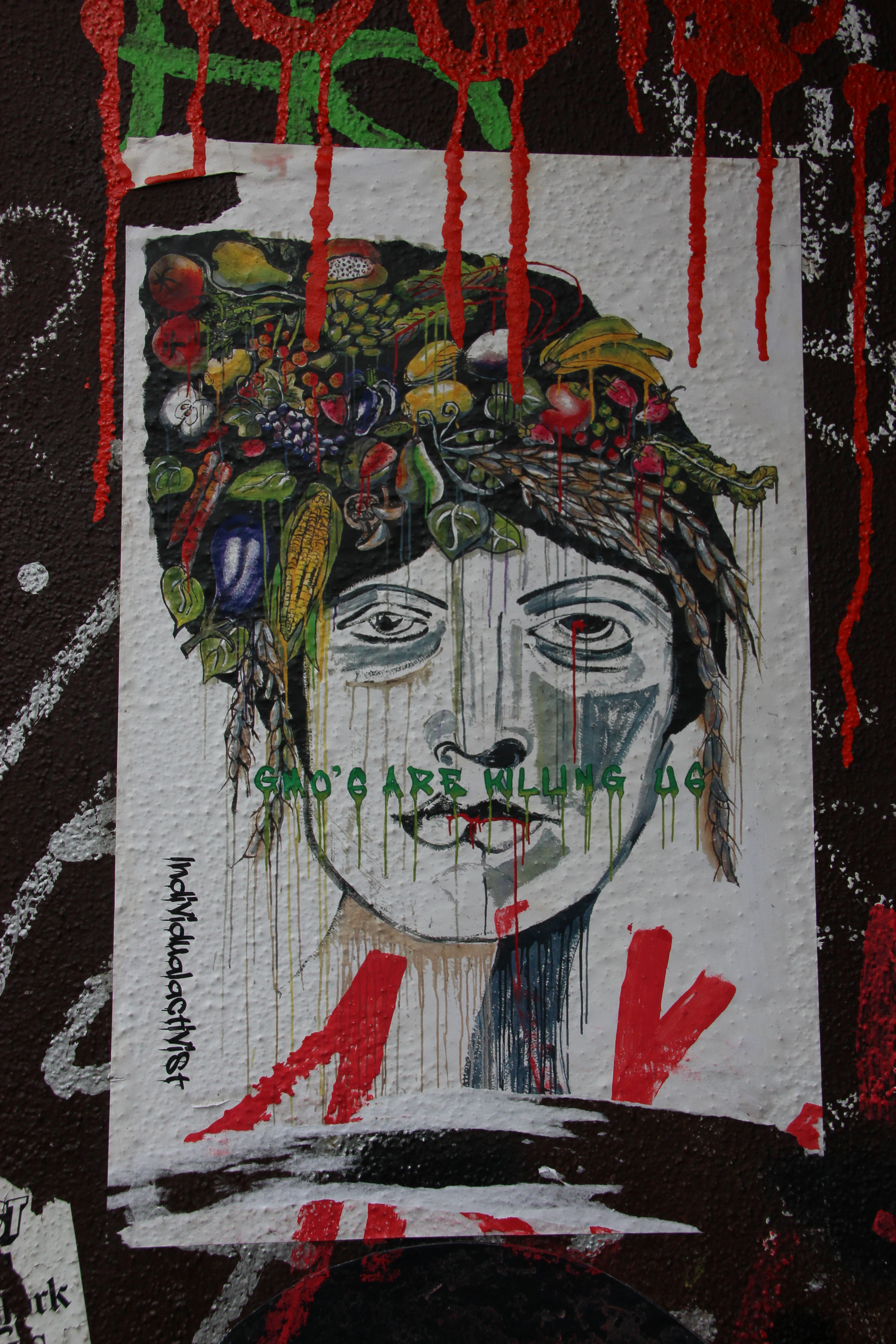
Whereas this sticker blurs the boundary between protest sticker and street art, and likely took a lot longer to produce. This sticker, which I suspect was pasted to the wall rather than being stuck with its own adhesive, is by someone called Individual Activist (Photo: Hannah Awcock).
10-03-16 (15)
One of the most common themes of protest stickers in New York City is policing. There has been widespread controversy in America over the past few years over the treatment of civilians by police officers, particularly when it comes to ethnic minorities. Rise Up October was organised by the Stop Mass Incarceration Network (Photo: Hannah Awcock).
11_09-03-16 (7)
This sticker plays on the idea that the police should protect citizens, rather than pose a threat to them. In reality, the police can pose a threat, particularly to members of ethnic minorities (Photo: Hannah Awcock).
12_12-03-16 (10)
To serve and protect is another phrase commonly associated with the police. This sticker is implying that the police serve and protect property, rather than people (Photo: Hannah Awcock).
13_12-03-16 (37)
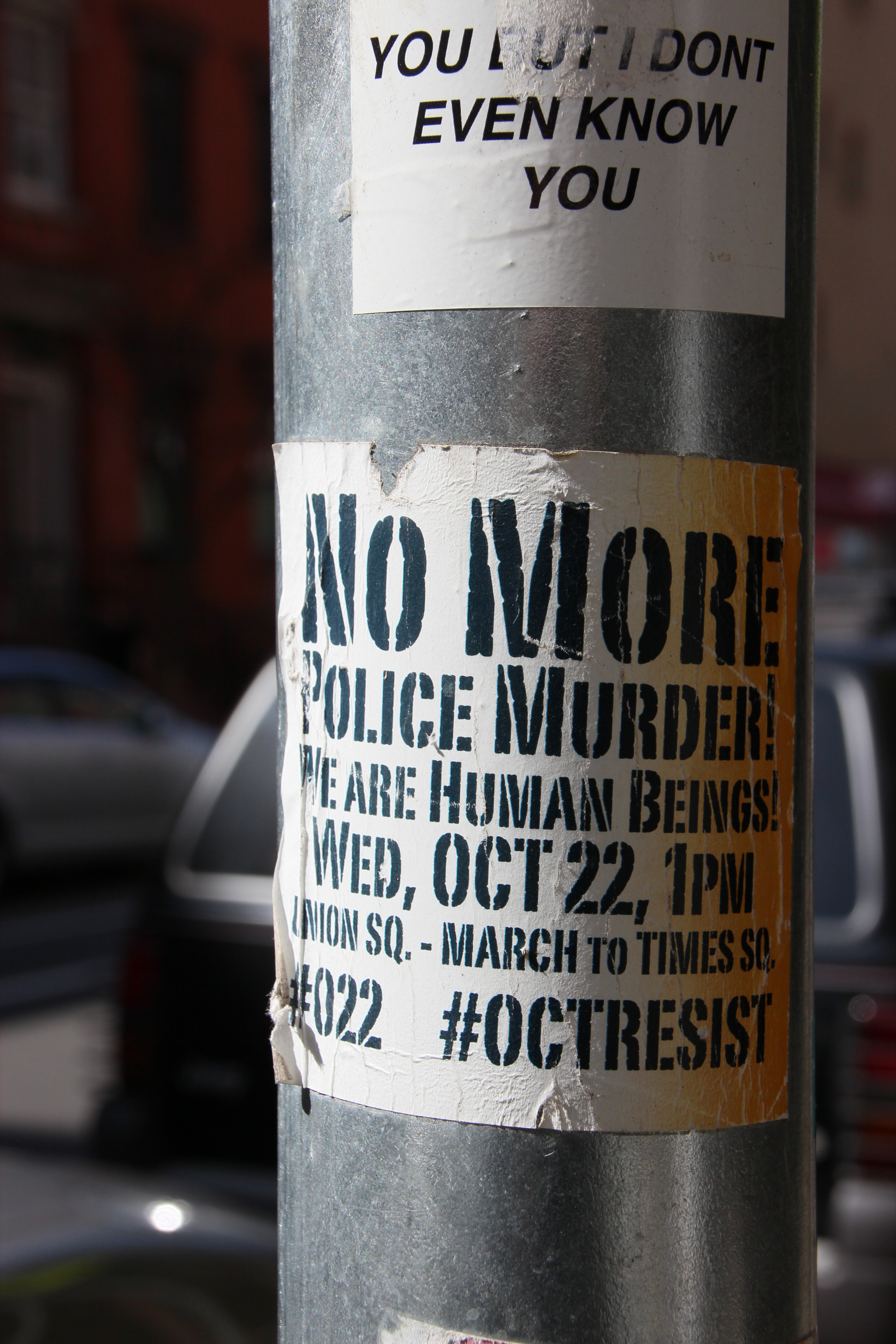
This sticker is advertising a different demonstration against police brutality. I think that #Octresist was also organised by the Stop Mass Incarceration Network, in 2014. If that is the case, then this sticker is getting quite old! (Photo: Hannah Awcock).
dav
Garden State Ultras are a sports fan group with a radical edge. ACAB (All Cops Are Bastards) is part of the international radical language (Photo: Hannah Awcock).
15_15-03-16 (36)
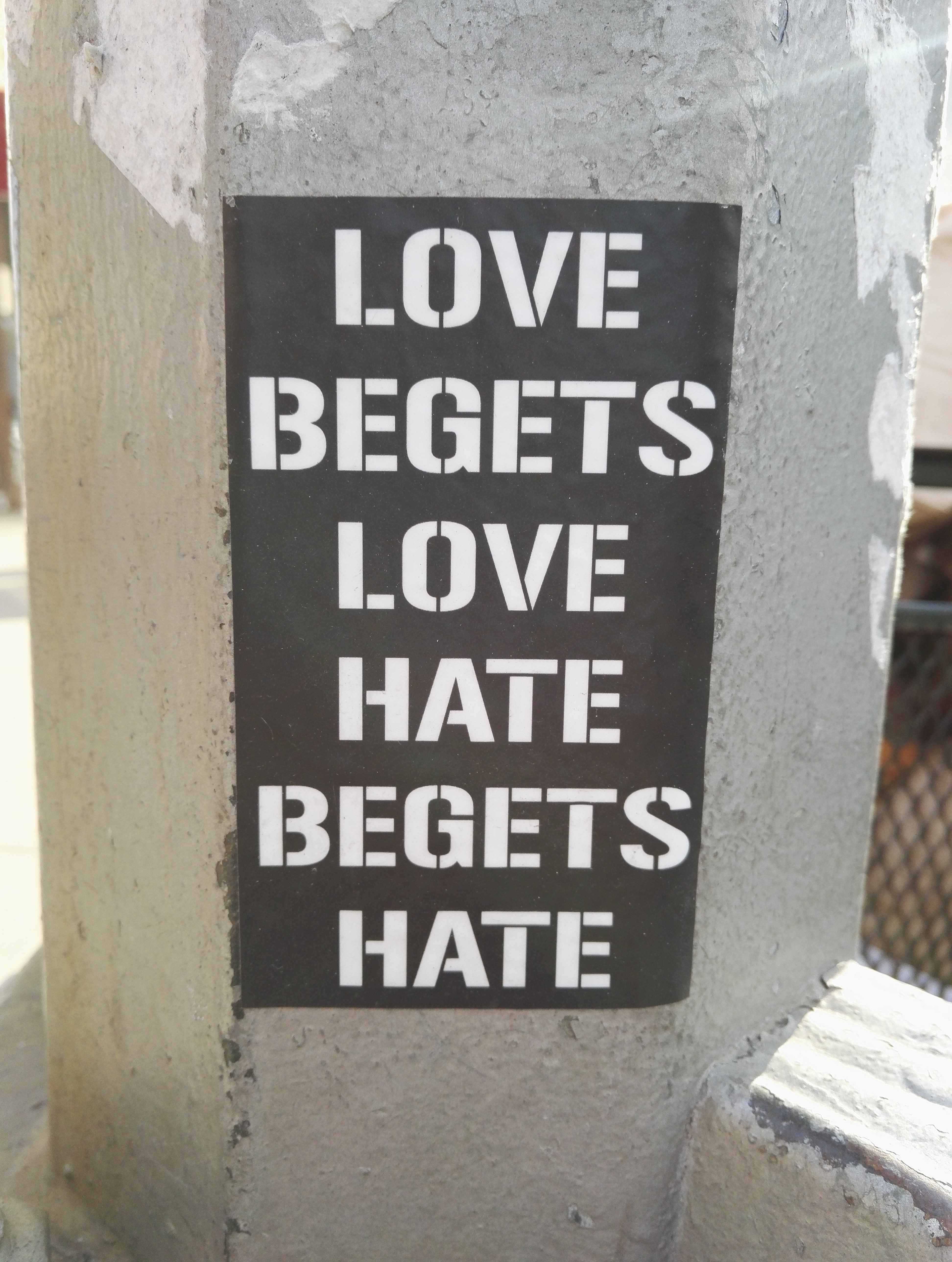
This sticker wouldn’t win any prizes for subtlety, but sometimes that is the best way to get your message across (Photo: Hannah Awcock).
dav
As I mentioned before, the Presidential Election is a hot topic in America. Donald Trump is a controversial figure who nobody seems to like, yet he keeps doing well in the primaries (Photo: Hannah Awcock).
18_12-03-16 (45)
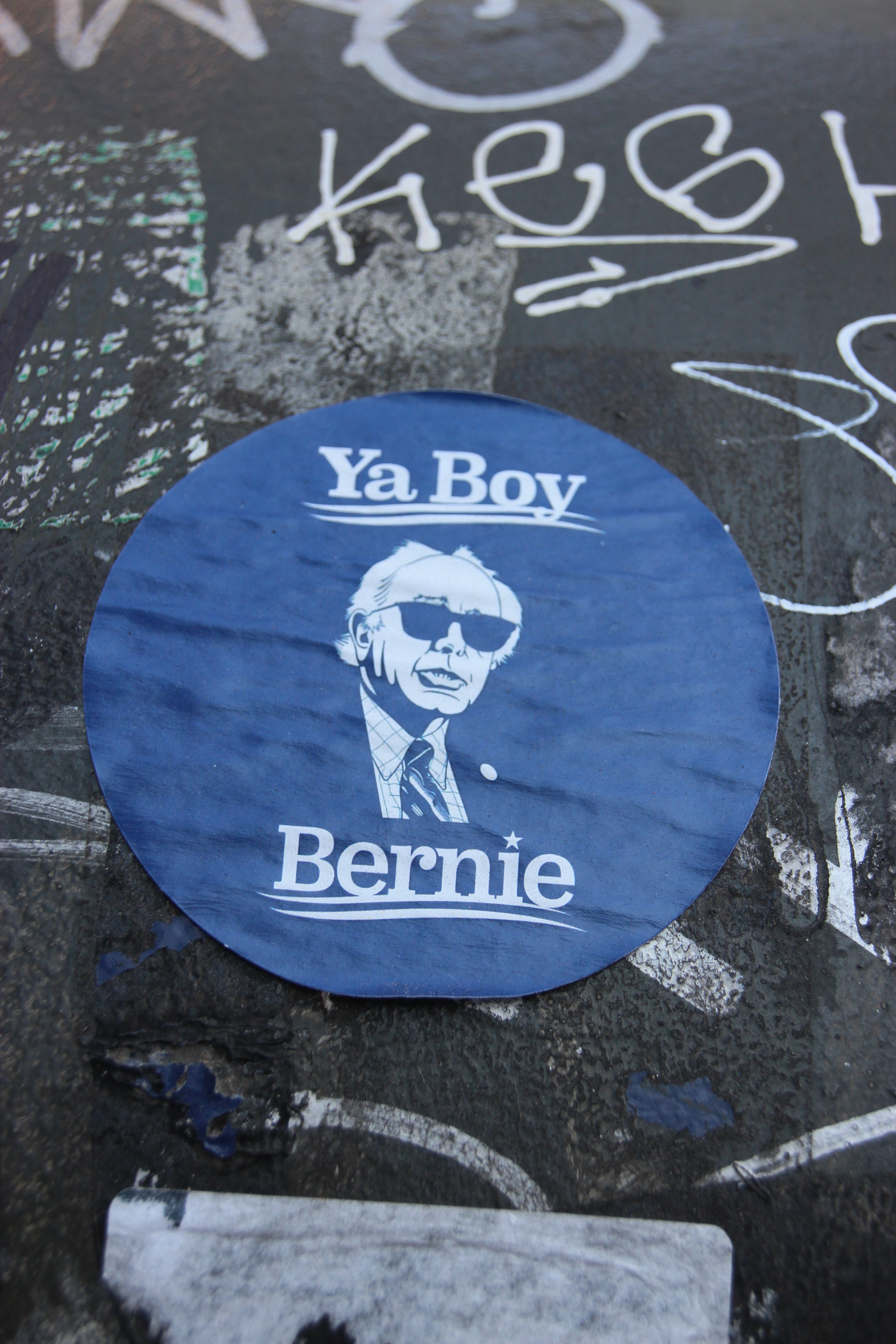
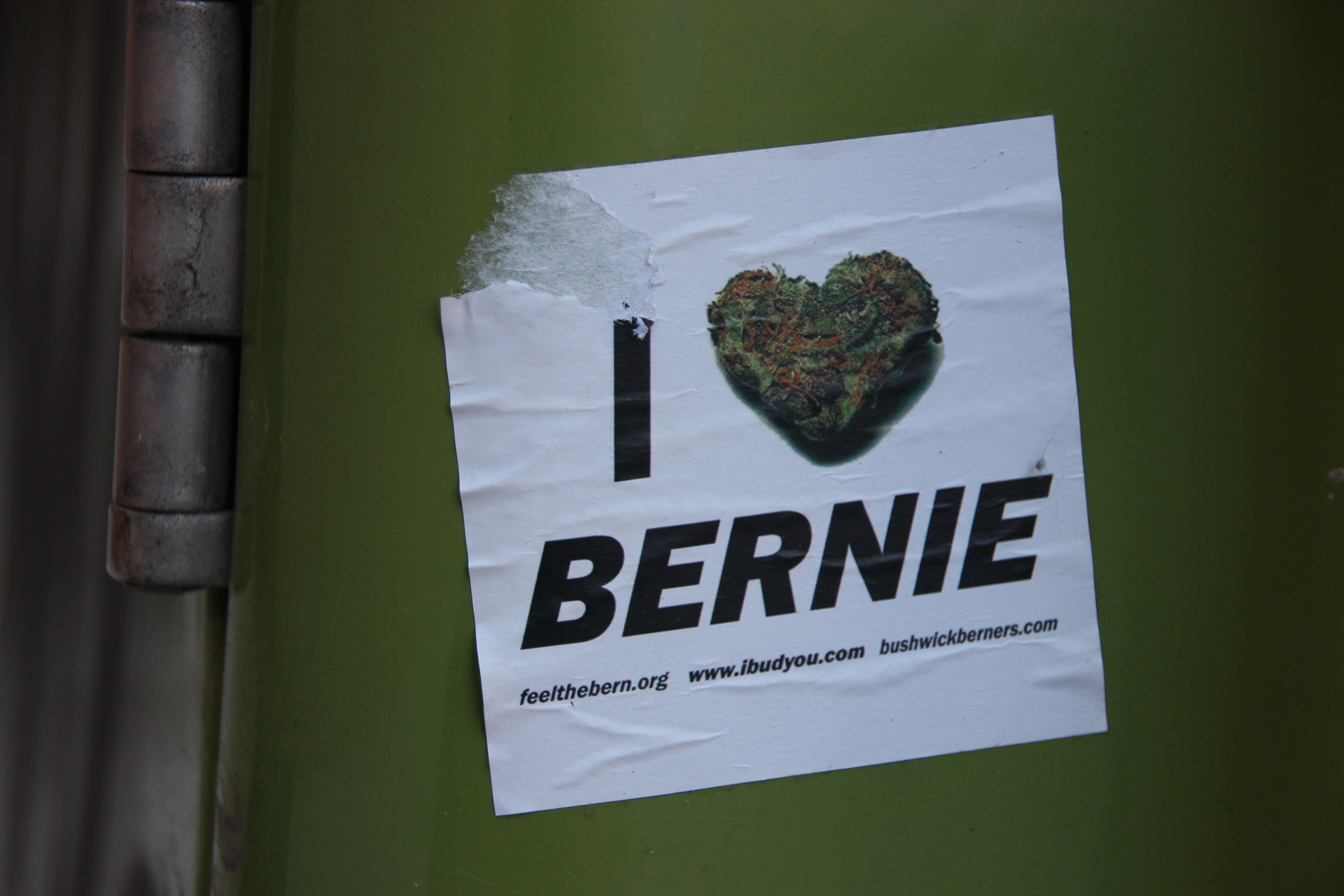
Most New York stickerers seem to be fans of Bernie Sanders. A democrat, he has been called America’s Jeremy Corbyn, he has been giving some people hope that politics can be done differently (Photo: Hannah Awcock).
19_12-03-16 (9)
This sticker was produced by The Personal Stash, which sells marijuana-themed accessories and promotes the reform of laws relating to marijuana (Photo: Hannah Awcock).
20_10-03-16 (17)
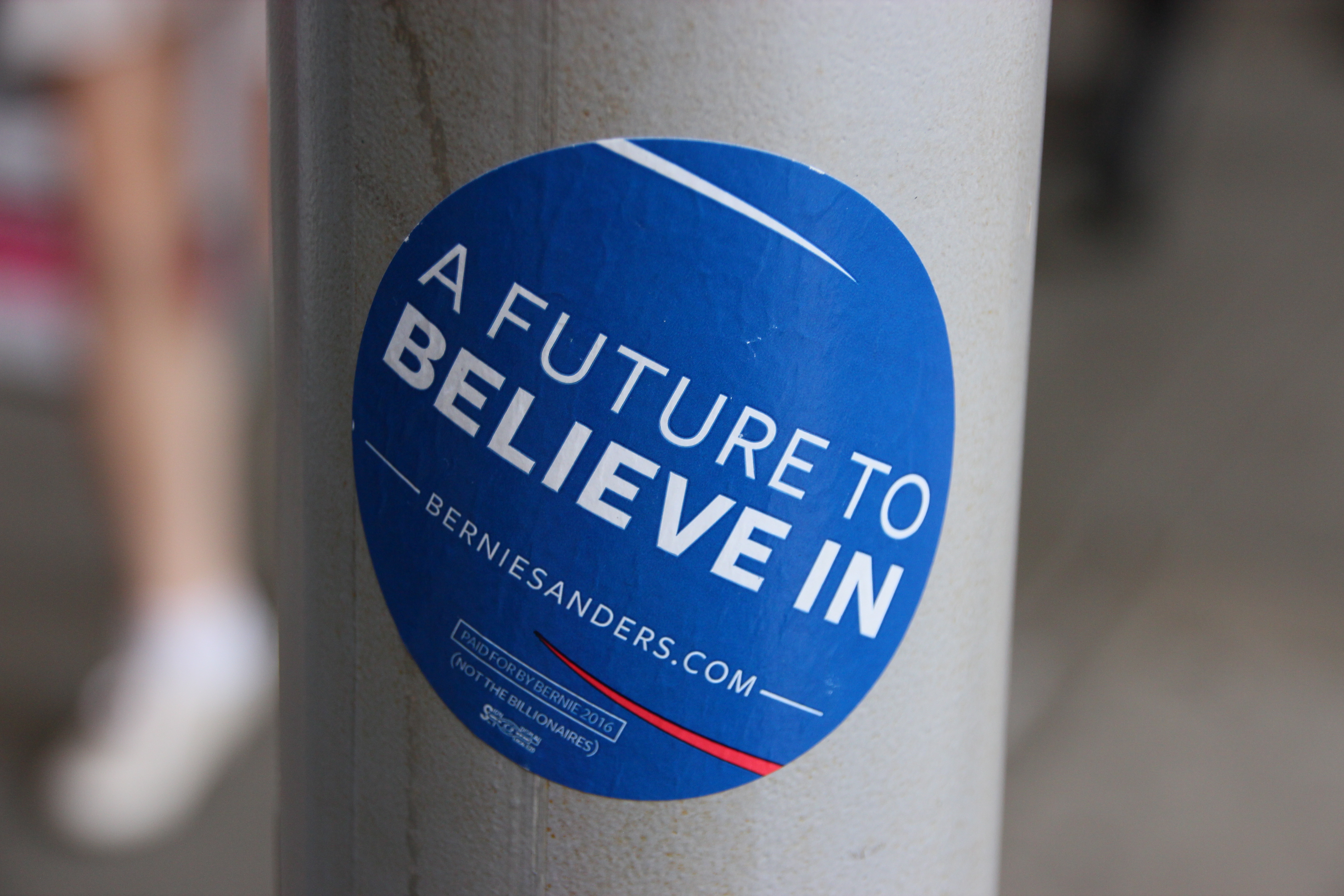
This sticker comes from Bernie Sander’s official campaign. Sometimes, the line between protest and formal politics can become blurred as radicals attempt to reform the system from within (Photo: Hannah Awcock).
21_12-03-16 (2)
And just to end the post on a positive note…(Photo: Hannah Awcock)

Don’t forget to check back next week for Part 2 of Protest Stickers: New York City 2!

London’s Protest Stickers: Anti-Police

The Metropolitan Police are a common sight across London today, but for a long time their survival was far from garunteed.
The Metropolitan Police are a common sight across London today, but for a long time their survival was far from guaranteed (Photo: Hannah Awcock).

London has the distinction of being home to the oldest professional police force in the world. The Metropolitan Police was formed in 1829 in an attempt to impose order on the chaotic and undisciplined city. Their primary purpose was to deter crime, but they became involved in the policing of protest in 1830. Ironically, the first protest in which the police were involved was an anti-police demonstration on the 28th of October 1830. Demonstrators chanting ‘No New Police’ clashed with the boys in blue at Hyde Park Corner. The British people had long been hostile to the idea of a professional police force, so the Metropolitan Police faced an uphill battle convincing Londoners that they were necessary. Ever since then, the Met has had an uneasy relationship with some Londoners. Radicals have always been particularly critical, especially in regard to the policing and control of protest. Disapproval and mistrust of the Metropolitan Police is reflected in London’s protest stickers.

You can see the locations of the stickers on the Turbulent London Map.

One of the most common ways of expressing anti-police sentiment is with the acronym ACAB
One of the most common ways of expressing anti-police sentiment is with the acronym ACAB, which stands for ‘All Cops/Coppers Are Bastards’. In most cases, the acronym’s meaning is not spelled out, but this sticker is particularly obliging, so it seemed like a good place to start the post (Photo: Hannah Awcock, Regent’s Canal Tow Path, 20/05/15).
ACAB crops up frequently, in various fonts and colour schemes. In most circumstances though, you would need to know what the acronym means to understand the sticker's message (King's Cross Station, 27/05/15).
ACAB crops up frequently, in various fonts and colour schemes. In most circumstances though, you would need to know what the acronym means to understand the sticker’s message (Photo: Hannah Awcock, King’s Cross Station, 27/05/15).
The text on this sticker is difficult to make out, but it reads 'Kill the cop inside you... and then the fun begins' (Bloomsbury, 17/03/15).
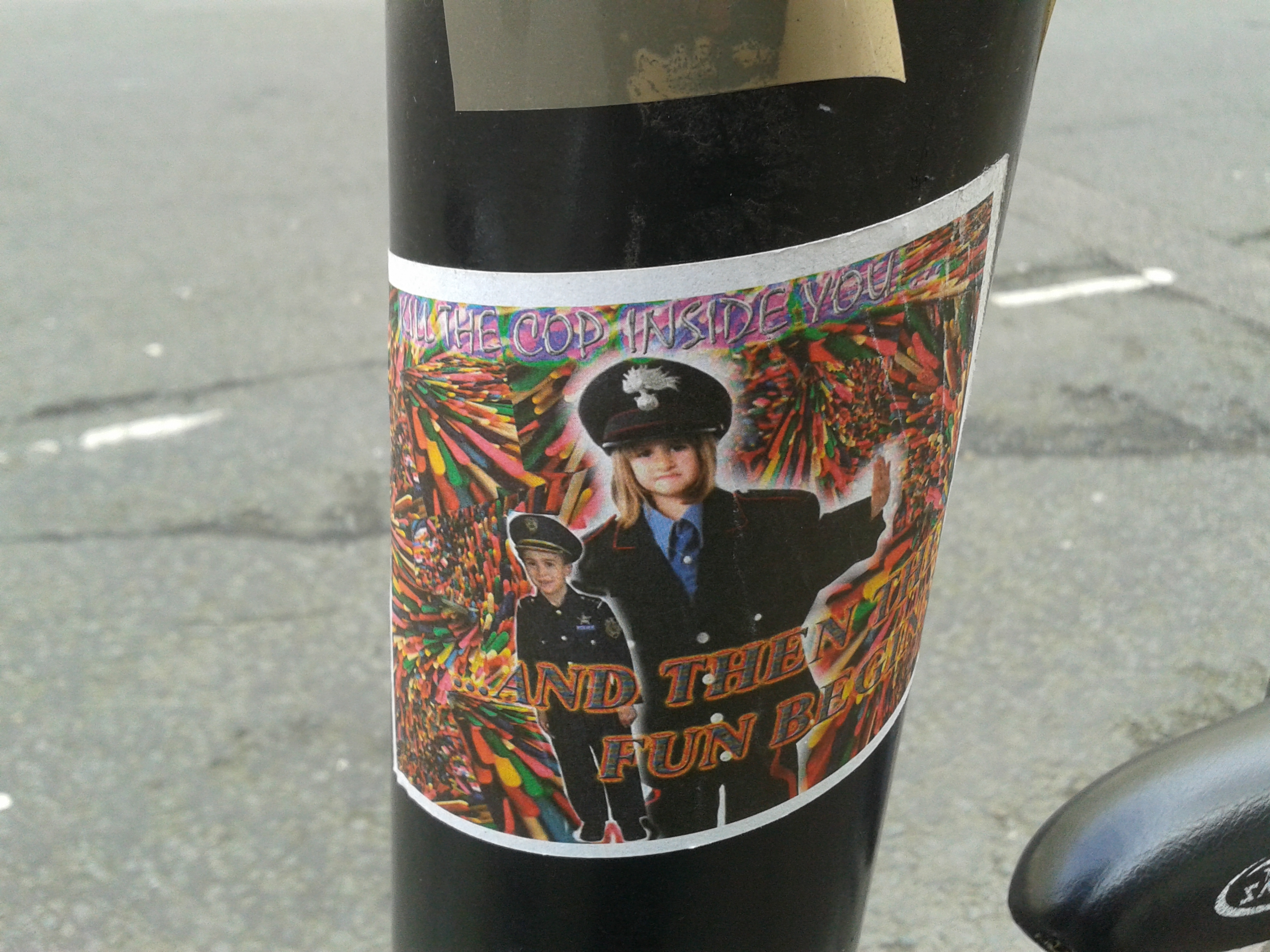
The text on this sticker is difficult to make out, but it reads ‘Kill the cop inside you… and then the fun begins’ (Photo: Hannah Awcock, Bloomsbury, 17/03/15).
The previous two stickers refer to police in general. This sticker refers to the Metropolitan Police specifically, calling it the biggest gang in London (Gordon Street, Bloomsbury, 12/03/15).
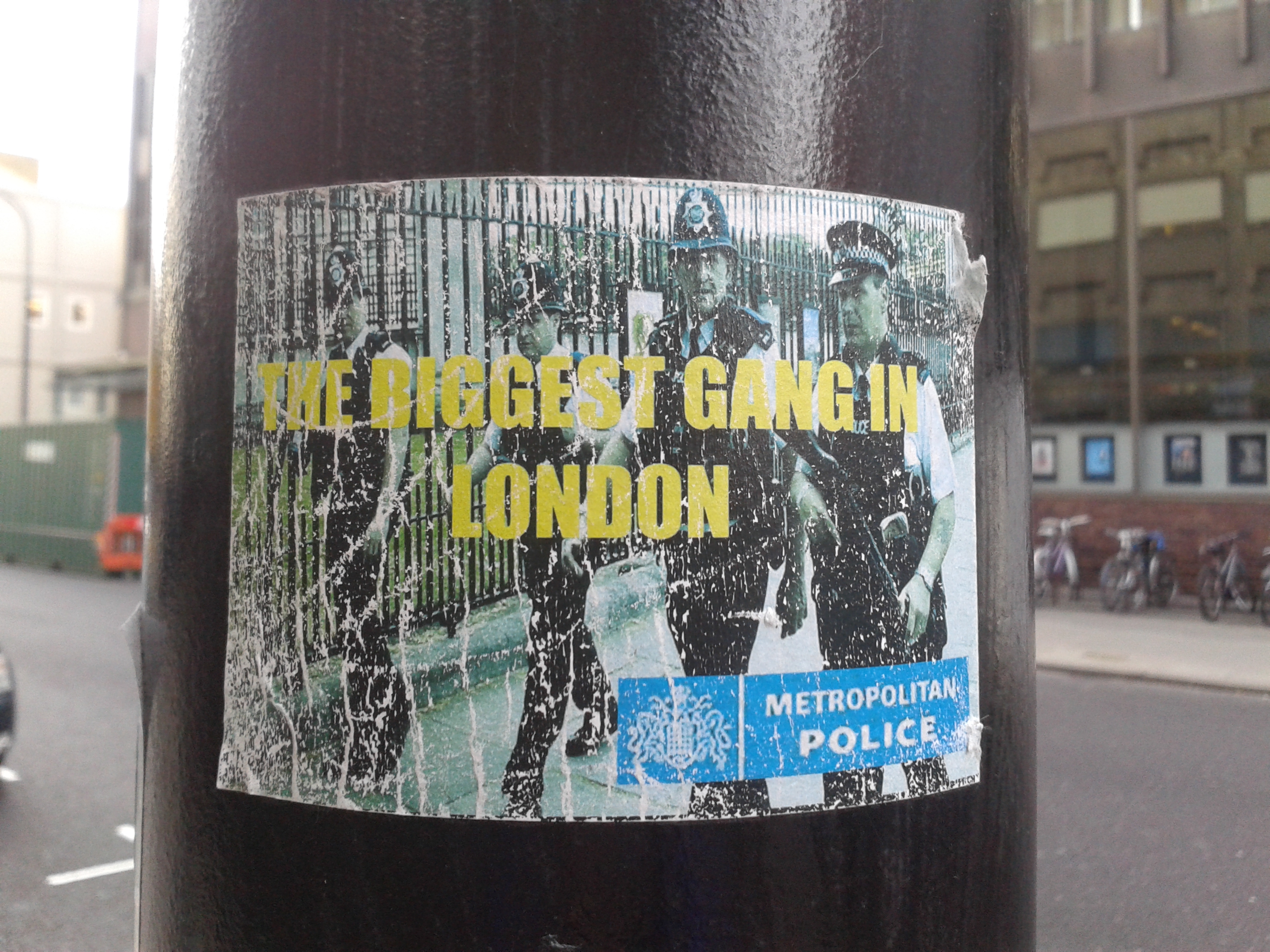
The previous three stickers refer to police in general. This sticker refers to the Metropolitan Police specifically, calling it the biggest gang in London (Photo: Hannah Awcock, Gordon Street, Bloomsbury, 12/03/15).
This sticker is even more specific. (King's Cross, 06/06/15).
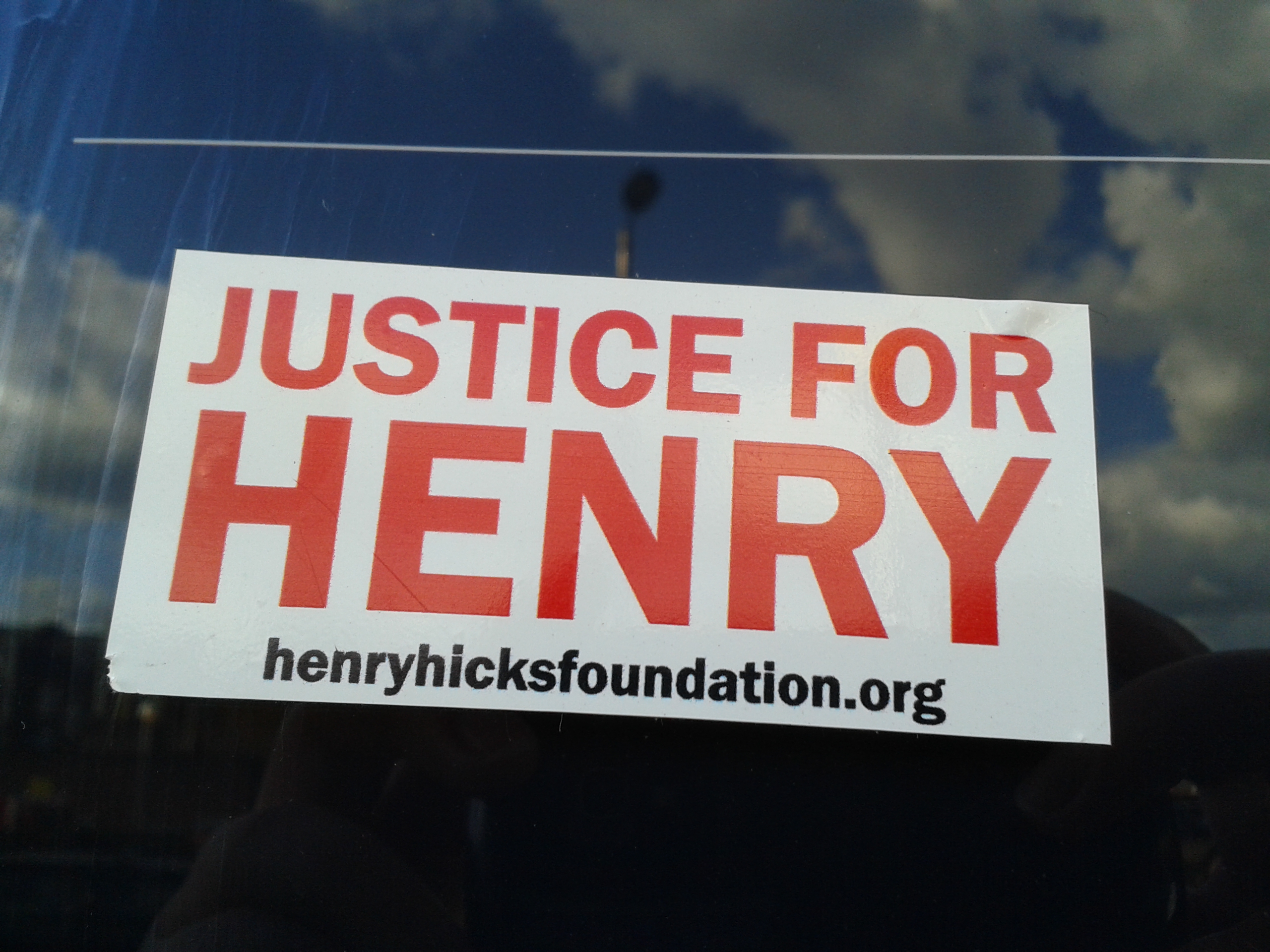
This sticker is even more specific. Henry Hicks died after being chased by two unmarked police cars in December 2014. This sticker is calling for support in the campaign to get justice for Henry (Photo: Hannah Awcock, King’s Cross, 06/06/15).
This sticker also relates to the Henry Hicks campaign, but contains much less information (Tolpuddle Street, Islington, 20/05/15).
This sticker also relates to the Henry Hicks campaign, but contains much less information (Photo: Hannah Awcock, Tolpuddle Street, Islington, 20/05/15).
This sticker also relates to a specific case. Ian Tomlinson famously collapsed and died after being struck by a police officer at the 2009 G-20 protests. AN inquest found that he had been unlawfully killed (Kennington Park Road, 04/06/15).
This sticker also relates to a specific case. Ian Tomlinson famously collapsed and died after being struck by a police officer at the 2009 G-20 protests. An inquest found that he had been unlawfully killed (Photo: Hannah Awcock, Kennington Park Road, 04/06/15).
There has been a lot of controversy over the pat few years over the policing of student protest. This sticker refers to a campaign to ban police from university campuses (Malet Street, Bloomsbury, 17/03/15).
There has been a lot of controversy over the pat few years over the policing of student protest. This sticker refers to a campaign to ban police from university campuses (Photo: Hannah Awcock, Malet Street, Bloomsbury, 17/03/15).
(Senate House, 17/03/15).
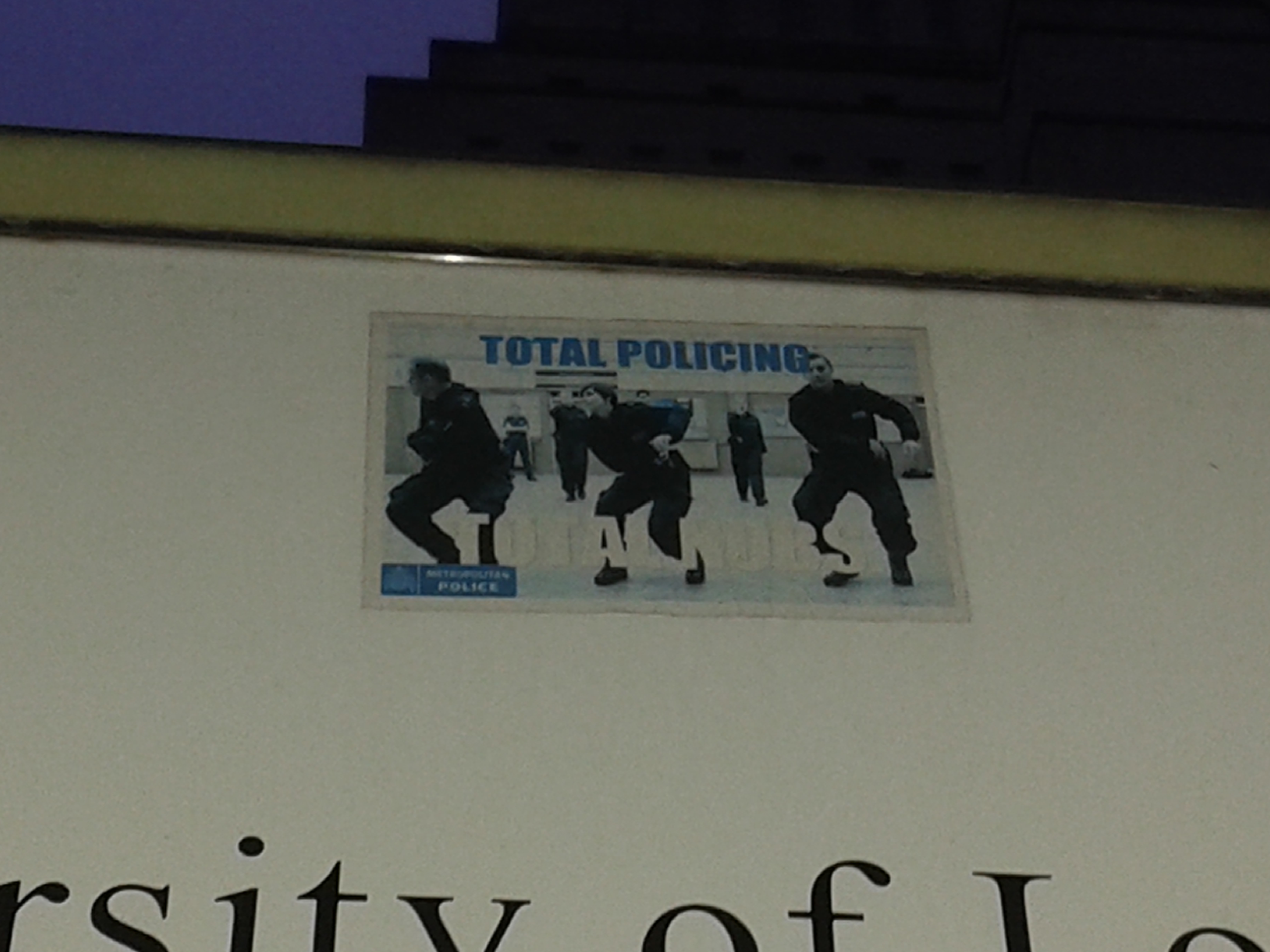
I found this sticker close to Senate House, part of the University of London, which suggests it may also be connected to the controversy over student protest. The writing is not easy to make out; it reads ‘Total Policing- Total Nobs.’ (Photo: Hannah Awcock, Senate House, 17/03/15).
(Malet Street, Bloomsbury, 17/03/15).
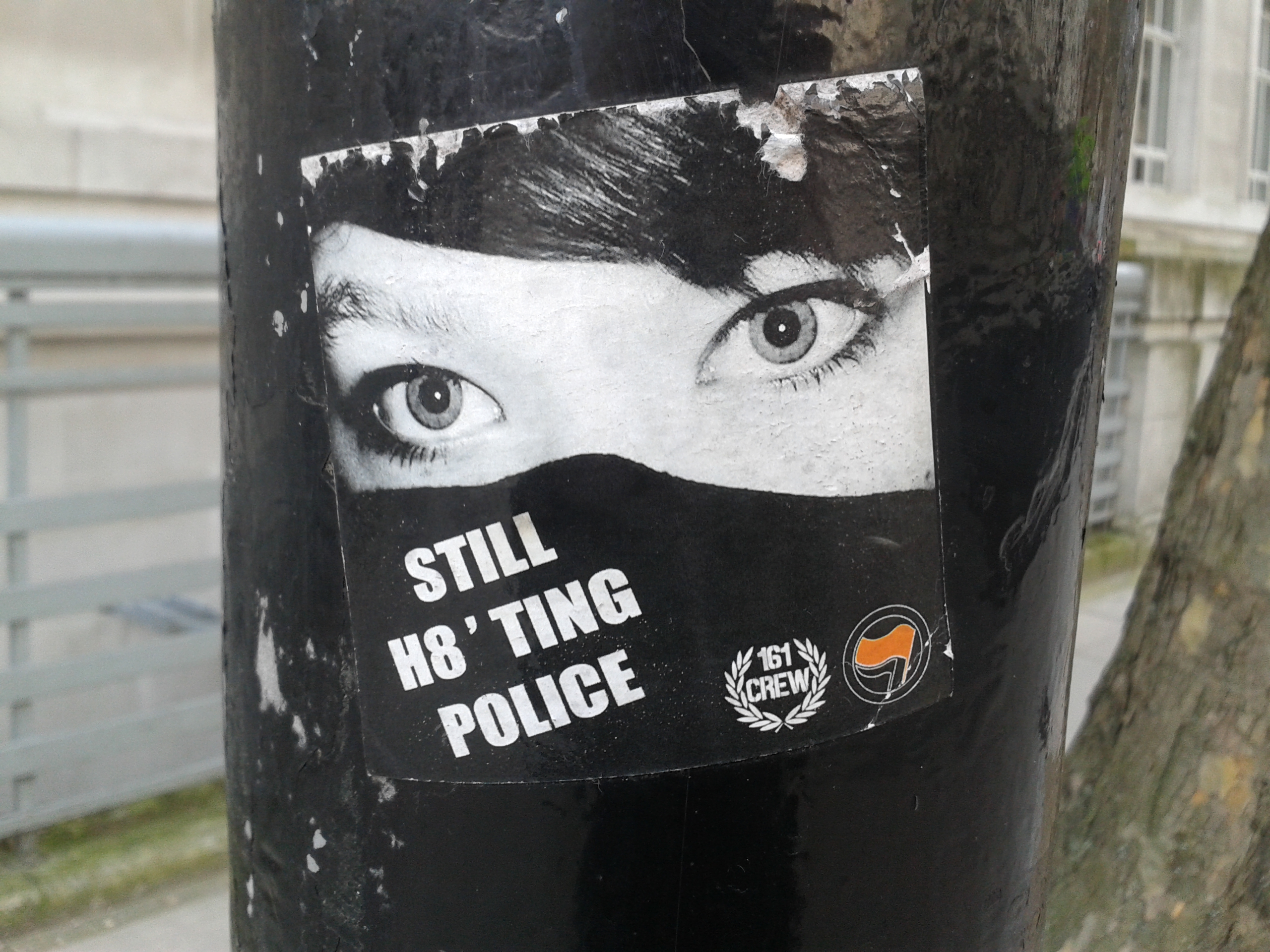
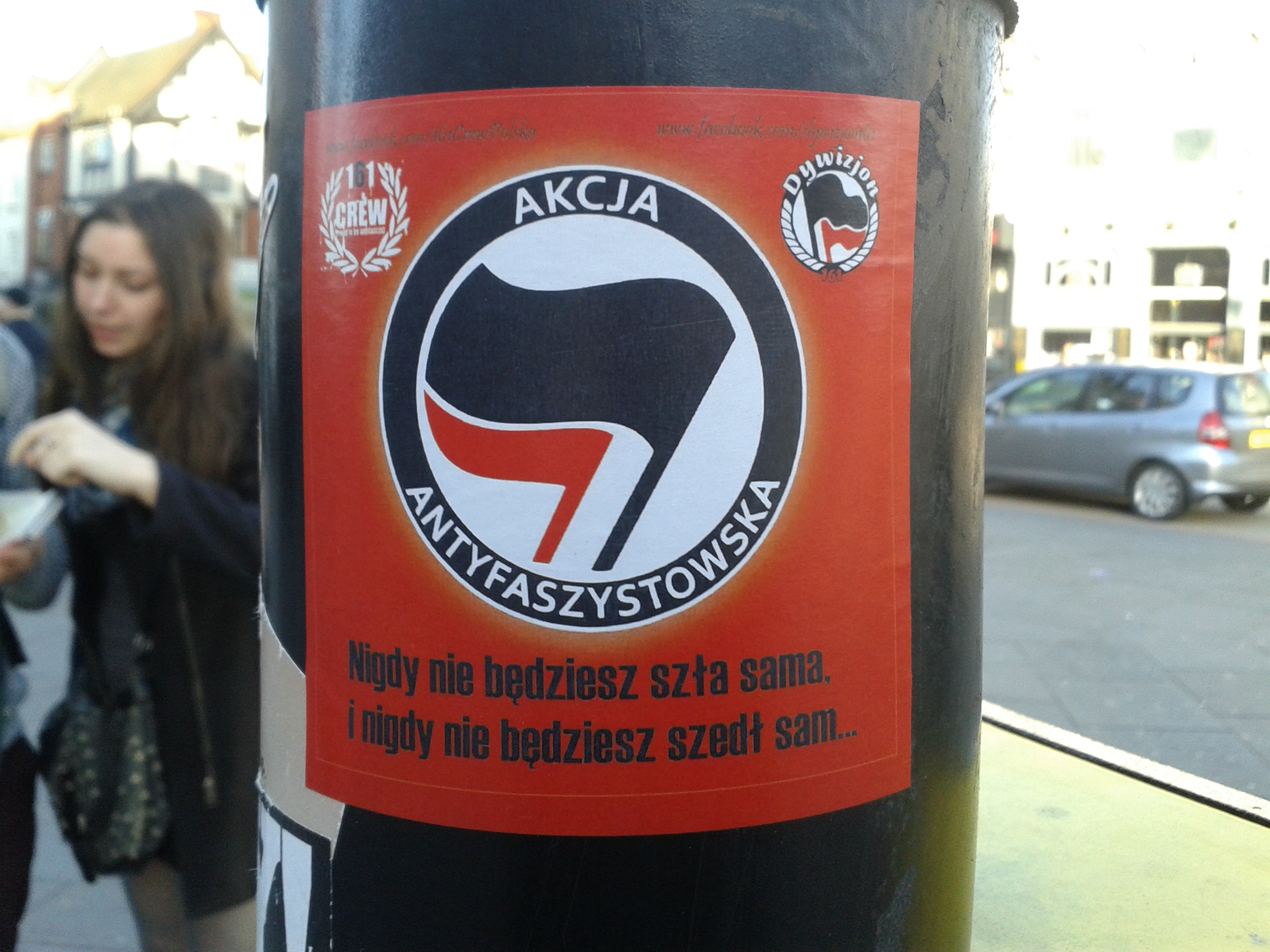
Some stickers feature the logos of the groups who produced them. This sticker was made by the 161 Crew, a Polish anti-fascist group (Photo: Hannah Awcock, Malet Street, Bloomsbury, 17/03/15).
(Westminster Bridge, 20/06/15).
This sticker reworks the logo of the Metropolitan Police, filling it with criticisms of the police force, including terrifying, intimidating, abusive and petty (Photo: Hannah Awcock, Westminster Bridge, 20/06/15).

Sources and Further Reading

Ascoli, David. The Queen’s Peace: The Origins and Development of the Metropolitan Police 1829-1979. London: Hamish Hamilton, 1979.

Protest Stickers: Newcastle Upon Tyne

IMG_9850
Like most cities and large towns, the urban infrastructure of Newcastle is littered with stickers of all kinds (Photo: Hannah Awcock).

Like most major towns and cities, Newcastle upon Tyne in the northeast of England has a healthy tradition of protest. With a population of just under 300,000, it is not one of the largest cities in the UK, but ‘Geordies’ are famous for their good nature and friendliness. As I discovered when I visited in July, this doesn’t mean there isn’t contention and dissent in the city, which is demonstrated by the large number of protest stickers I found.

This was the first protest sticker I found in Newcastle, on Northumberland Street, in the city's main shopping area.
This was the first protest sticker I found in Newcastle, on Northumberland Street, in the city’s main shopping area (Photo: Hannah Awcock).
Animal rights was one of the most common themes of stickers that I found.
Animal rights was one of the most common themes of stickers that I found (Photo: Hannah Awcock).
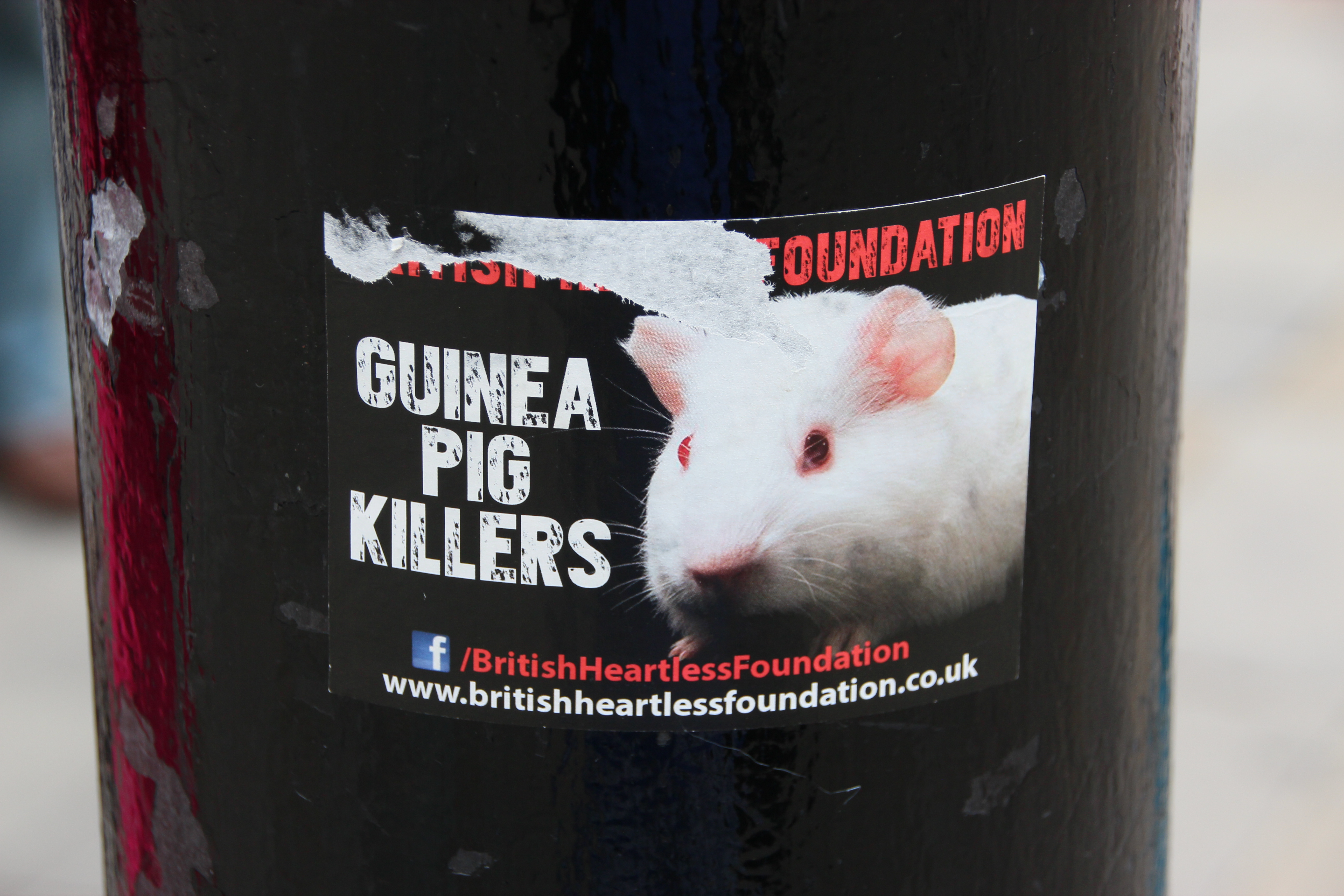
I have seen similar stickers to this one in London. They criticise the British Heart Foundation for using animals in their research.
I have seen similar stickers to this one in London. They criticise the British Heart Foundation for conducting research on animals (Photo: Hannah Awcock).
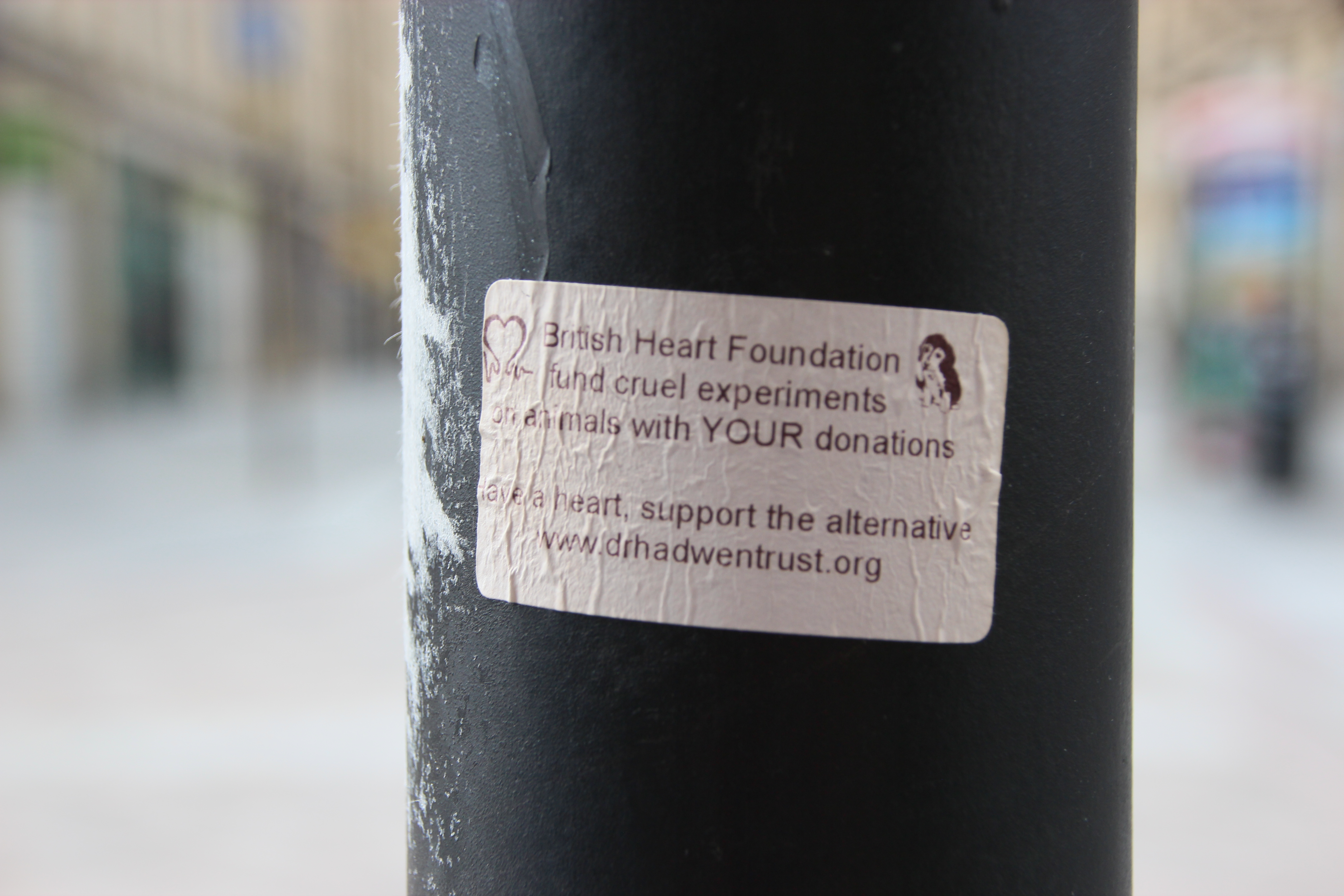
This sticker also criticises the British Heart Foundation, but is less visually striking. Stickers are made using various methods and various levels of skill.
This sticker also criticises the British Heart Foundation, but is less visually striking. It references a different webite, so I imagine it was made by somebody different to the previous one. Stickers are made using various methods and various levels of skill (Photo: Hannah Awcock).
This sticker is also protesting against experimentation on animals, but not specifically in relation to the British Heart Foundation.
This sticker is also protesting against experimentation on animals, but not specifically in relation to the British Heart Foundation (Photo: Hannah Awcock).
This sticker also relates generally to animal rights, but focuses on the culling of badgers. It calls for culls to be sabotaged.
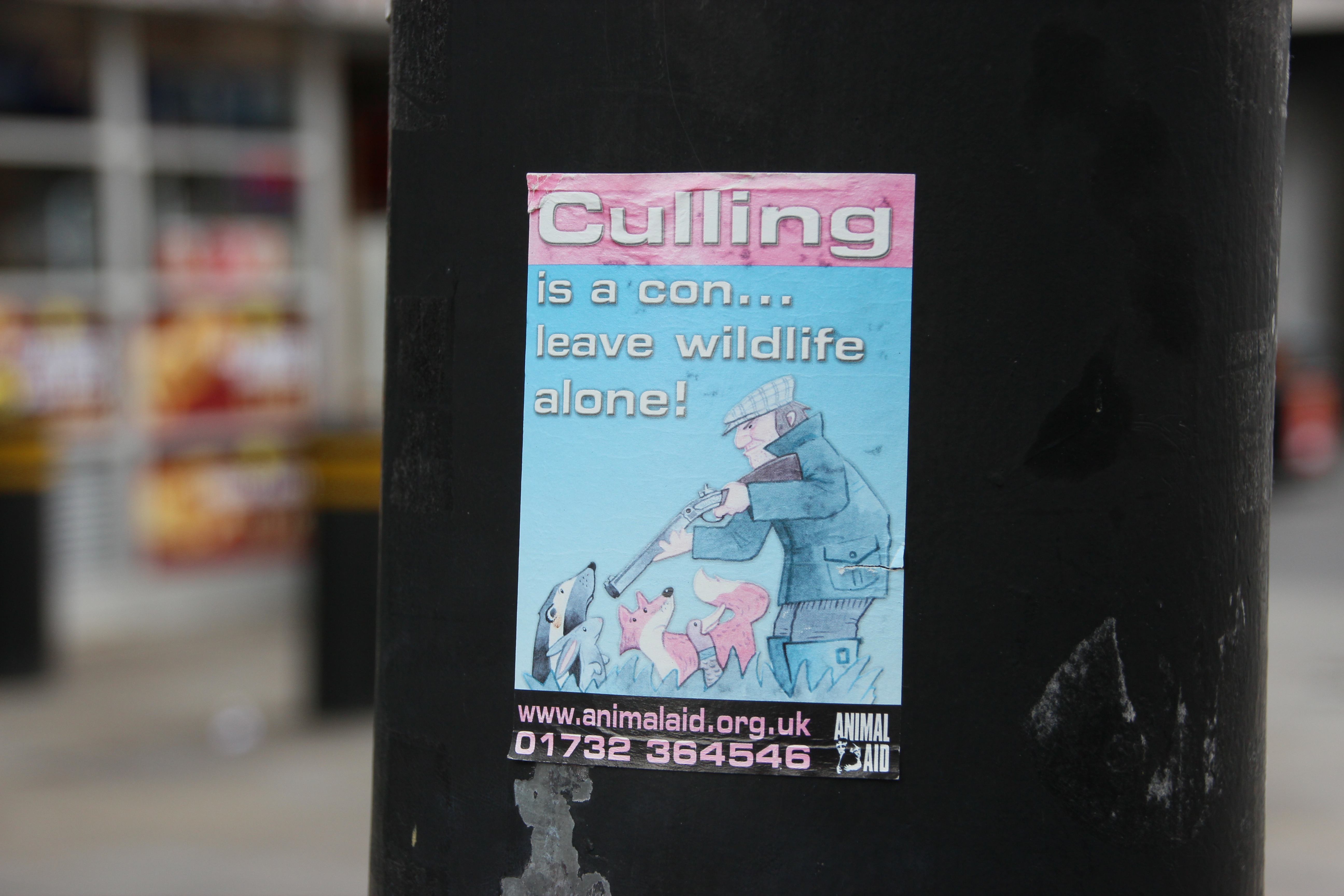
This sticker also relates generally to animal rights, but focuses on the culling of badgers. It calls for culls to be sabotaged (Photo: Hannah Awcock).
This sticker has been partially removed, but I think that the whole text probably read 'Animal Liberation- Human Liberation.' The raised, clenched fist is a fairly common symbol in protest circles. This sticker plays on that symbolism with the addition of a raised paw.
This sticker has been partially removed, but I think that the whole text probably read ‘Animal Liberation- Human Liberation.’ The raised, clenched fist is a fairly common symbol in protest circles. This sticker plays on that symbolism with the addition of a raised paw (Photo: Hannah Awcock).
This sticker has also been partially removed, but two clasped hands can be seen. This is often used as a symbol of solidarity, an important concept in protest movements.
This sticker has also been partially removed, but two clasped hands can be seen. This is often used as a symbol of solidarity, an important concept in protest movements (Photo: Hannah Awcock).
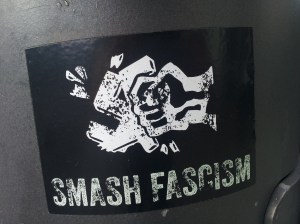
The second common theme in Newcastle protest stickers is anti-fascism. Anti-fascist groups seem to produce a lot of protest stickers, and the North-East anti-fascists are no exception.
The second common theme in Newcastle protest stickers is anti-fascism. Anti-fascist groups seem to produce a lot of protest stickers, and the North-East anti-fascists are no exception (Photo: Hannah Awcock).
Anti-fascists often campaign on specific issues that they consider related to fascism. This sticker is playing on the name of the English Defence League.
Anti-fascists often campaign on specific issues that they consider related to fascism. This sticker is playing on the name of the English Defence League (Photo: Hannah Awcock).
IMG_9806
In this sticker, anti-fascism is connected to class-based activism (Photo: Hannah Awcock).
This sticker focuses on the homophobic element of fascism.
This sticker focuses on the homophobic element of fascism. Around the circular anti-fascist logo is the words antihomophobe action. The words at the bottom of the sticker used to read ‘Eat Shit Nazi Scum.’ They look as if they were deliberately obscured, perhaps by a member of Newcastle’s far-right groups, or maybe just by someone who took exception to the profanity (Photo: Hannah Awcock).
The North-East Anarchists also have a presence in Newcastle's sticker landscape.
The North-East Anarchists also have a presence in Newcastle’s sticker landscape (Photo: Hannah Awcock).
In this sticker, the North-East Anarchists are criticising the banks, although I found this sticker a bit confusing- I had to read it a few times to figure out what it was saying.
In this sticker, the North-East Anarchists are criticising the banks, although I found this sticker a bit confusing- I had to read it a few times to figure out what it was saying (Photo: Hannah Awcock).
Left-wing politics is far from simple. This sticker condemns Bolshevism
Radical politics is far from simple. This sticker is by a group called Anti-Bolshevik Action, which appears to be advocating communism, but not the communism of Stalin, Trotsky and Mao. There are a myriad of complicated divisions between groups with similar beliefs (Photo: Hannah Awcock).
Not every group that puts up stickers in Newcastle is left-wing. This sticker from the North East National Front references Enoch Powell, an anti-immigrant politician to made the famous 'rivers of blood' speech in 1968.
Not every group that puts up stickers in Newcastle is left-wing. This sticker from the North East National Front references Enoch Powell, an anti-immigrant politician to made the famous ‘rivers of blood’ speech in 1968 (Photo: Hannah Awcock).
National Action is a national socialist group that calls itself "Britain's premier Nationalist street movement." THey reject more mainstream nationalist groups like UKIP and have the ultimate aim of a "white Britain."
National Action is a national socialist group that calls itself “Britain’s premier Nationalist street movement.” They reject more mainstream nationalist groups like UKIP and have the ultimate aim of a “white Britain” (Photo: Hannah Awcock).
As is often the case, stickers in Newcastle reflect a combination of local, national, and international issues. The Trade Unions and Socialist Coalition (TUSC) was formed to campaign in the general election in May.
As is often the case, stickers in Newcastle reflect a combination of local, national, and international issues. The Trade Unionist and Socialist Coalition (TUSC) was formed to campaign in the general election in May 2015 (Photo: Hannah Awcock).
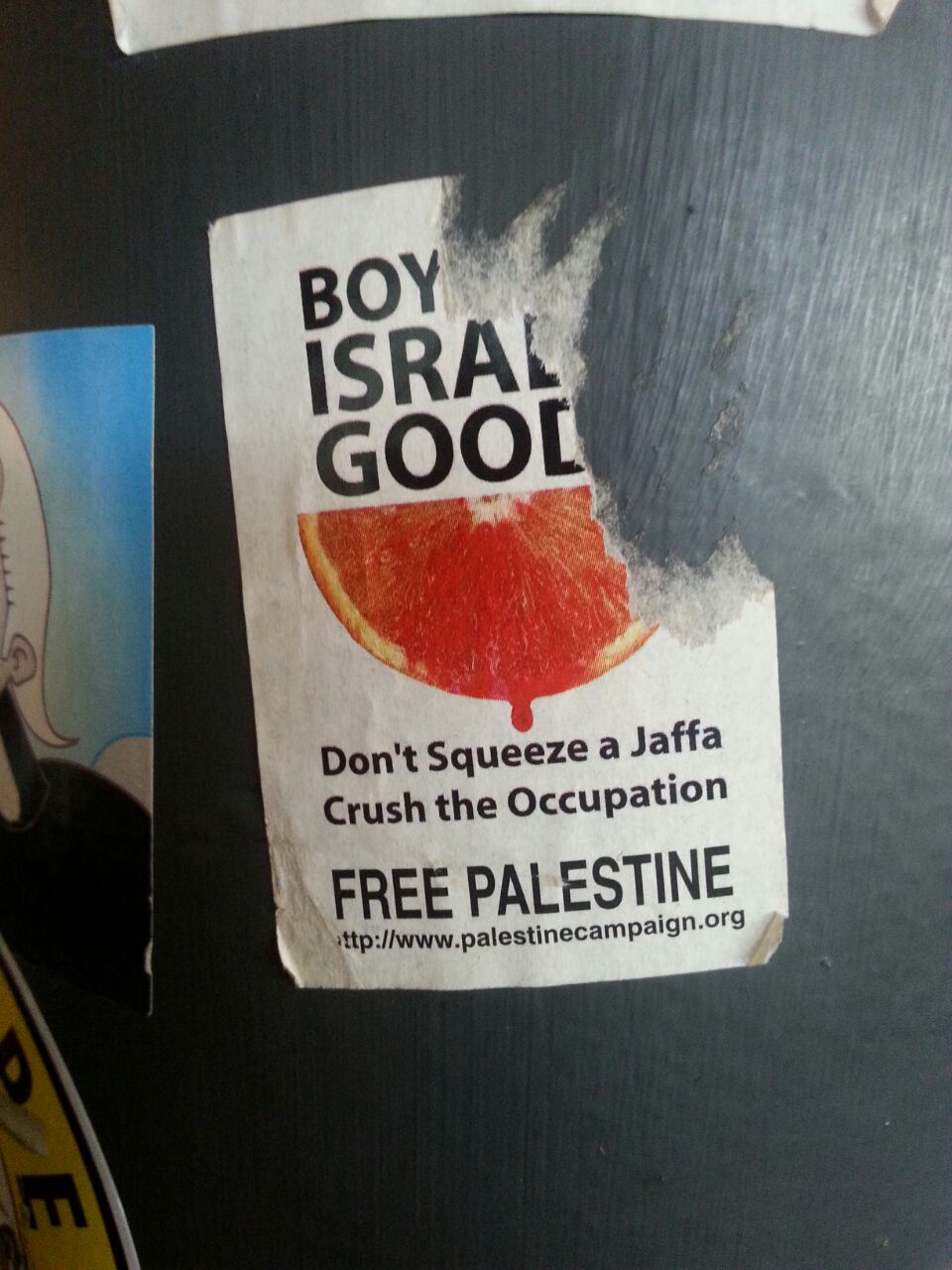
This sticker is calling for a boycott of goods from Israel, specifically oranges. The BDS (Boycott, Divestment, Sanctions) movement aims to resolve the Israel-Palestine issue by exerting economic pressure.
This sticker is calling for a boycott of goods from Israel, specifically oranges. The BDS (Boycott, Divestment, Sanctions) movement aims to resolve the Israel-Palestine issue by exerting economic pressure (Photo: Hannah Awcock).
In contrast to the previous two, this last sticker has a distinctly local flavour. 'Radge' is Geordie slang for rage or anger. It may be a criticism of the armed forces, because of the use of the RAF logo and font.
In contrast to the previous two, this last sticker has a distinctly local flavour. ‘Radge’ is Geordie slang for rage or anger. It may be a criticism of the armed forces, because of the use of the RAF logo and font. It also might not, but I liked it too much to leave out because I wasn’t sure! (Photo: Hannah Awcock)

Sources and Further Reading

Anon. ‘Newcastle upon Tyne.’ Wikipedia. Last modified 17th July 2015, accessed 19th July 2015. https://en.wikipedia.org/wiki/Newcastle_upon_Tyne

London’s Protest Stickers: Anti-Fascism

00_26-9-15 Walworth Road
Anti-fascism is one of the most common topics of protest stickers. This photo was taken on the Walworth Road on 26/09/15 (Photo: Hannah Awcock).

If you start looking out for protest stickers as you move around a British city, you will quickly notice that anti-fascists are particularly prolific sticker-ers. I’m not sure why, but anti-fascism is one of the most frequent themes of protest stickers, aside from anarchism. Most large towns and cities have an anti-fascist group, and as the largest of the lot London is home to several groups, as well as drawing in groups from elsewhere.

01_05-05-15 Aylsebury Estate (10)
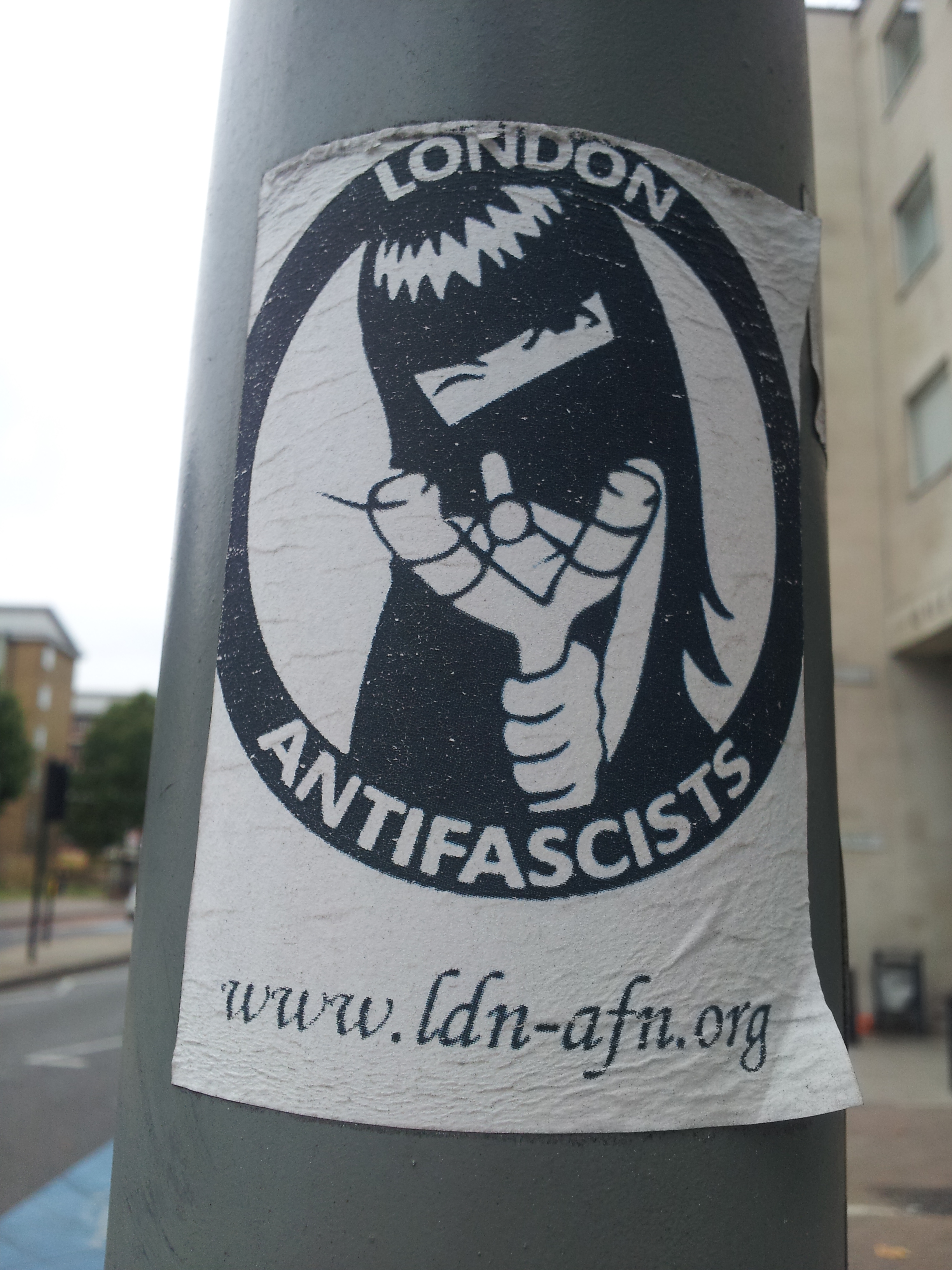
Unsurprisingly, one of the most common groups represented in London anti-fascist protest stickers are London Antifascists. This picture was taken on the Aylesbury Estate on 05/05/15 (Photo: Hannah Awcock).
02_13-08-15 Mile End Road (1)
The logos employed by anti-fascist groups can vary, but an image with a circle is a common feature. This logo features Emily the Strange, a popular gothic character who began life on stickers advertising the clothing line Cosmic Debris. She has since featured on clothing, stationary, and all kinds of objects, but here she comes full circle, appearing on stickers once again. This photo was taken on the Mile End Road on 13/08/15 (Photo: Hannah Awcock).
03_25-02-15 Embankment (1)
Although stickers which just feature a group’s logo and website are common, some are more complicated, like this one photographed on the north bank of the Thames near the City on 25/02/15. This sticker is still quite general in terms of focus however, it doesn’t specify what to fight back against (Photo: Hannah Awcock).
04_28-05-15 Elephant and Castle
Two flags (one red, one back) enclosed in a black circle is the most common and recognisable anti-fascist logo. This sticker points to the complex interconnections between anti-fascism and class politics, suggesting that London Antifascists only care about working-class communities. Or perhaps they are implying that racism and Nazism are only to be found amongst the middle- and upper-classes? This photo was taken at Elephant and Castle on 28/05/15 (Photo: Hannah Awcock).
08_10-03-15 Camden
The double flag logo is so recognisable that I can be quite sure that this sticker is by an anti-fascist group, even though I cannot read the words. This photo was taken near Camden Underground Station on 10/03/15 (Photo: Hannah Awcock).
05_13-04-15 Elephant and Castle
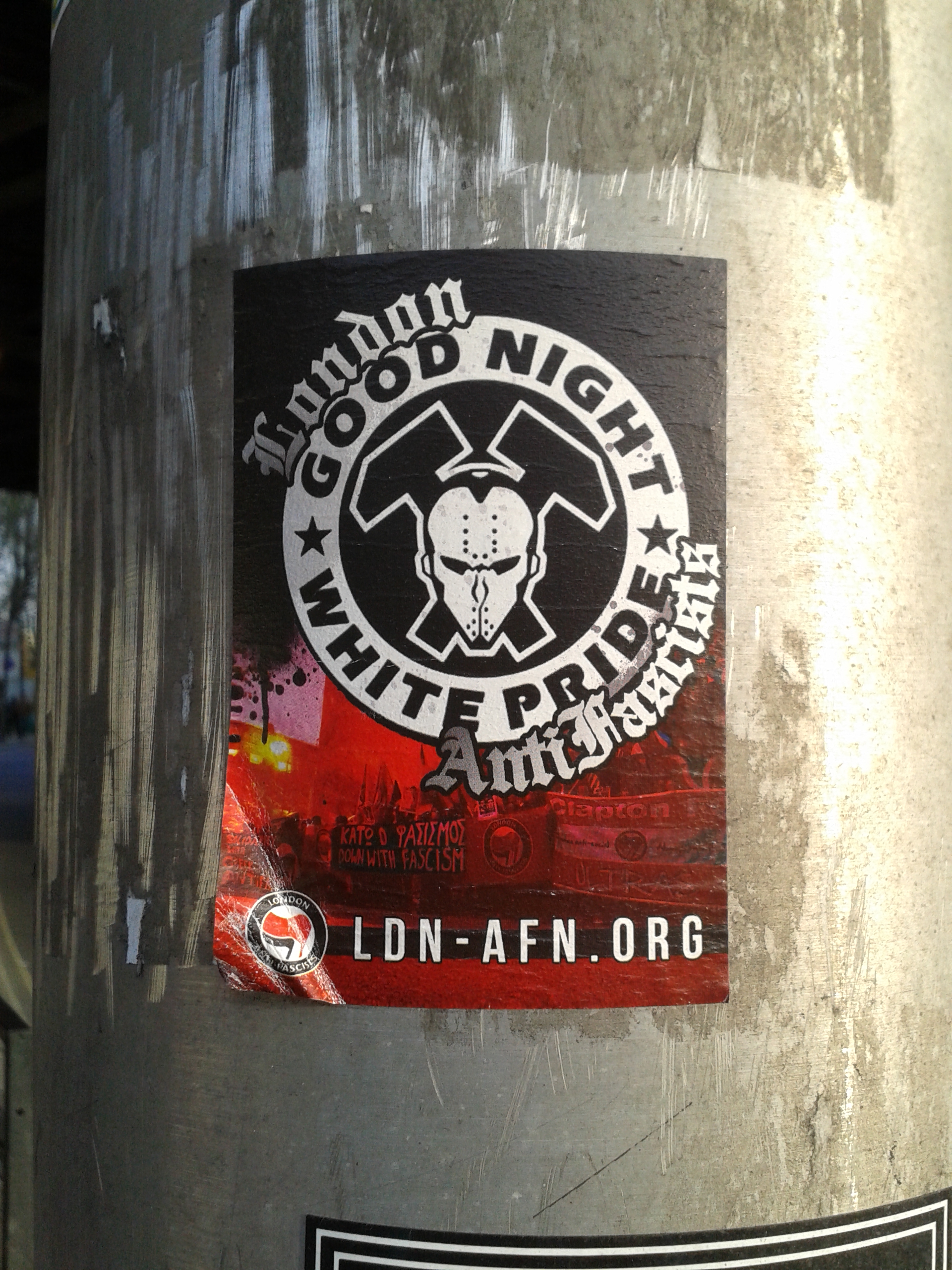
This sticker, photographed at Elephant and Castle on 13/04/15, is also focusing on racism, and has the familiar image surrounded by a circle logo. I must admit that the imagery and font confused me at first, at first glance I thought that this sticker was defending white pride rather than condemning it (Photo: Hannah Awcock).
06_12-03-15 Gordon Street, Bloomsbury (2)
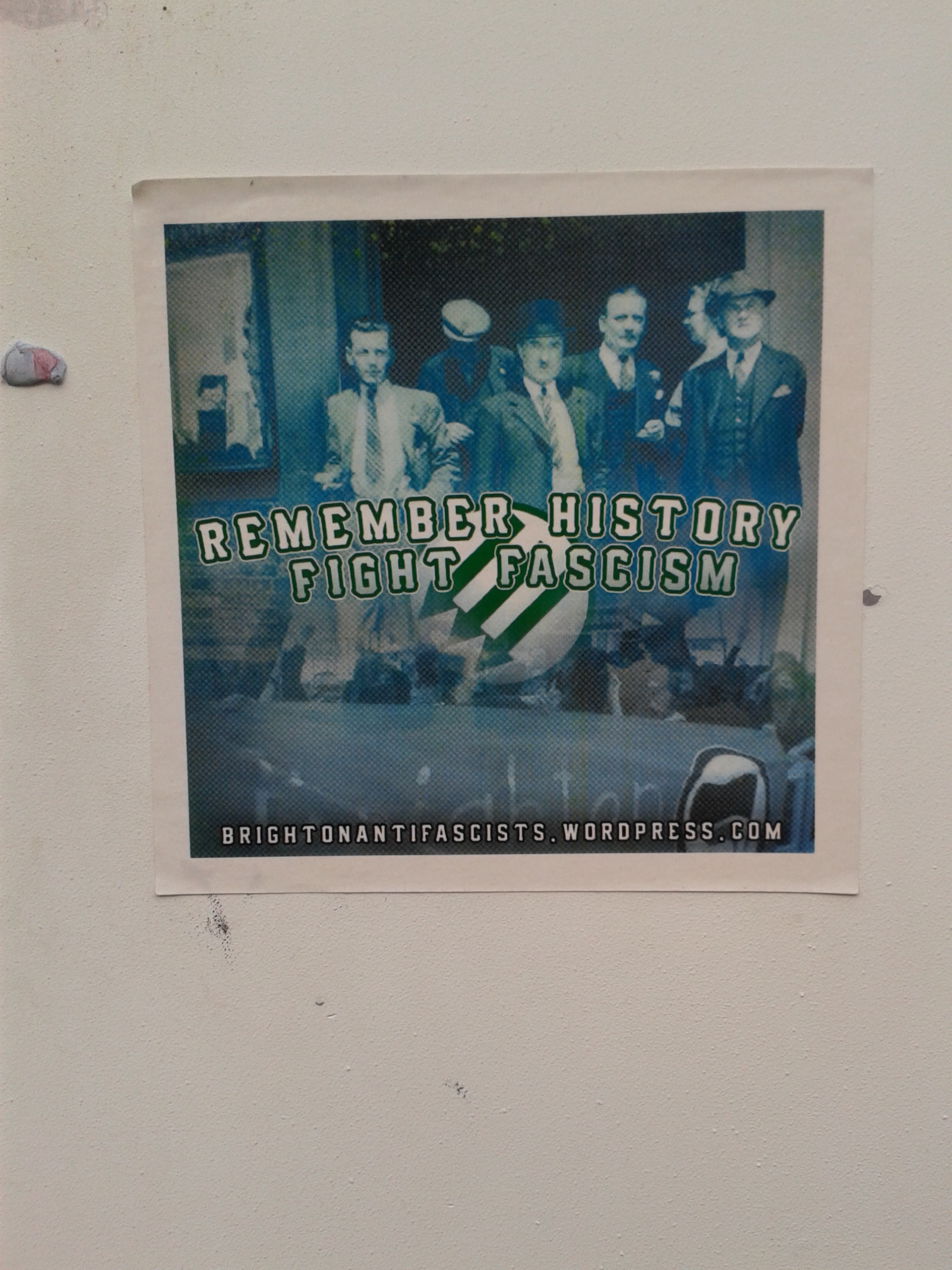
When anti-fascist groups go travelling, they often leave evidence of their presence in the form of protest stickers. This sticker was produced by Brighton Antifascists, although I found it in Gordon Street, Bloomsbury, on 12/03/15 (Photo: Hannah Awcock).
07_14-09-15 Elephant and Castle
The 161 Crew are a Polish antifascist group that has a strong presence in London (the sticker in the previous photo is also one of theirs). This sticker appeared in Elephant and Castle on 14/09/15. I thought it was incredibly brave, as this was during a period of the refugee crisis where the debate around immigration was particularly vicious. Immigrants are supposed to be grateful and loyal to their host country, not encouraging cross-border class-based networks of dissent (Photo: Hannah Awcock).
10_05-05-15 Flint Street SE1 (4)
Unusually, this sticker does not feature an anti-fascist logo, which leads me to suspect it was not made by a specifically anti-fascist group. This photo was taken on Flint Street, near the occupied Aylesbury Estate on 05/05/15 (Photo: Hannah Awcock).
11_25-02-15 Cable Street (5)
Location can be integral to the meaning of protest stickers. I found this sticker in Cable Street, one of the sites of the famous demonstration known as the Battle of Cable Street, which has gone down in anti-fascist collective memory as a rare victory. No Pasaran is Spanish for ‘They Shall Not Pass’, one of the slogans of the Battle which was taken from the Spanish Civil War. The Battle is an important event in British anti-fascist history, a key source of pride and hope (Photo: Hannah Awcock, 25/02/15).
12_25-02-15 Cable Street (9)
This photo was also taken in Cable Street, next to the mural which memorialises the Battle of Cable Street. The double flag logo is present, although within a heart rather than a circle. Not surprisingly, Cable Street has a high concentration of anti-fascist stickers of various types, making it feel almost shrine-like (Photo: Hannah Awcock, 25/02/15).
20_29-05-15 Borough High Street (2)
Not every Londoner is an anti-fascist supporter. The word ‘Antifascists’ and the website has been scratched off this sticker very deliberately. Someone clearly took exception to London Antifascists publicising themselves. This photo was taken on Borough High Street on 29/05/15 (Photo: Hannah Awcock).

Protest Stickers: Chicago

Like most cities around the world, stickers are a common sight in Chicago.
Like most cities around the world, stickers are a common sight in Chicago (Photo: Hannah Awcock).

In April 2015, I went to the annual conference of the American Association of Geographers, which this year was held in Chicago, Illinois. Seeing as I was flying almost 4000 miles, I also took some time to look around the city. There are plenty of protest stickers to be found in Chicago, just like in New York and London. As in other cities, protest stickers in Chicago give us a clue as to what social movements and subversive political campaigns are striking a chord in the city. These movements reflect multiple scales, from the local to the international. Below are some of my favourite pictures from the Windy City.

This was the first sticker I found in Chicago, on my first evening. That was when I knew I was going to like this city!
This was the first sticker I found in Chicago, on my first evening. That was when I knew I was going to like this city! (Photo: Hannah Awcock).
Many of the stickers were about local issues. Such as this sticker promoting mayoral candidate Emanuel Rahm, who I assuming has an Irish background because of the clovers.
Many of the stickers were about local issues, such as this sticker promoting mayoral candidate Emanuel Rahm, who I assume has an Irish background because of the clovers. I don’t know if the ‘Get Real’ sticker below is intentional or just a coincidence, but I like to think it was put there on purpose! (Photo: Hannah Awcock).
Or this one, supporting Rahm's opponent, Jesus 'Chuy' Garcia. It plays on the Chicago flag, which is four stars on a white background between two blue stripes.
This sticker supports Rahm’s opponent, Jesus ‘Chuy’ Garcia. It plays on the Chicago flag, which is four stars on a white background between two blue stripes. The election took place on the 7th of April 2015, so it’s not surprising there was still a lot of evidence of it when I was there in late April (Photo: Hannah Awcock).
Rahm won the election in April, but he is clearly not universally supported. This sticker is a drawing of him.
Rahm won the election in April, but he is clearly not universally supported. This sticker is a drawing of him (Photo: Hannah Awcock).
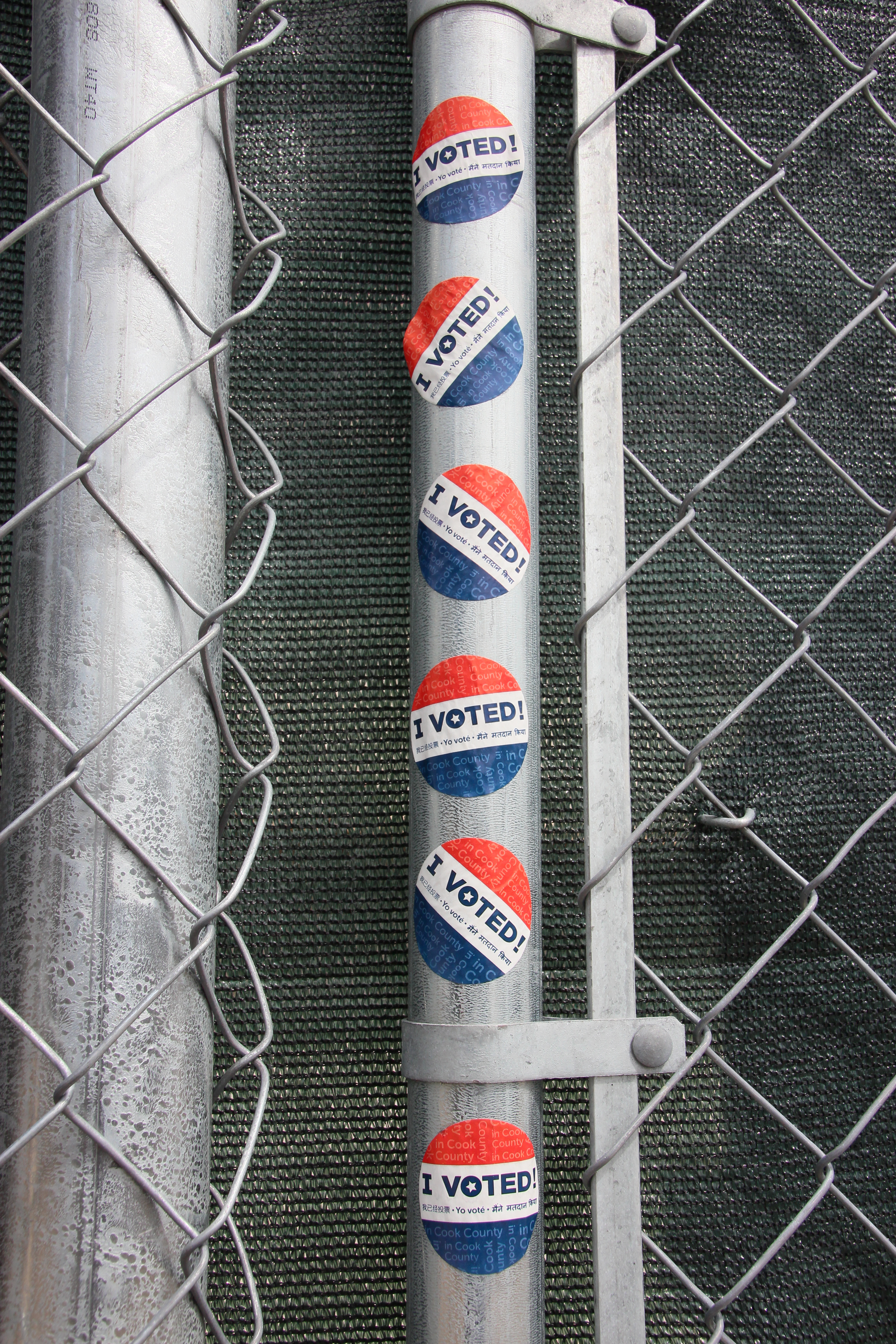
These stickers also relate to electoral politics. I assume they were handed out at a polling station, but I don't know how they ended up on this chain link fence.
These stickers also relate to electoral politics. I assume they were handed out at a polling station, but I don’t know how they ended up on this chain link fence close to Lake Michigan (Photo: Hannah Awcock).
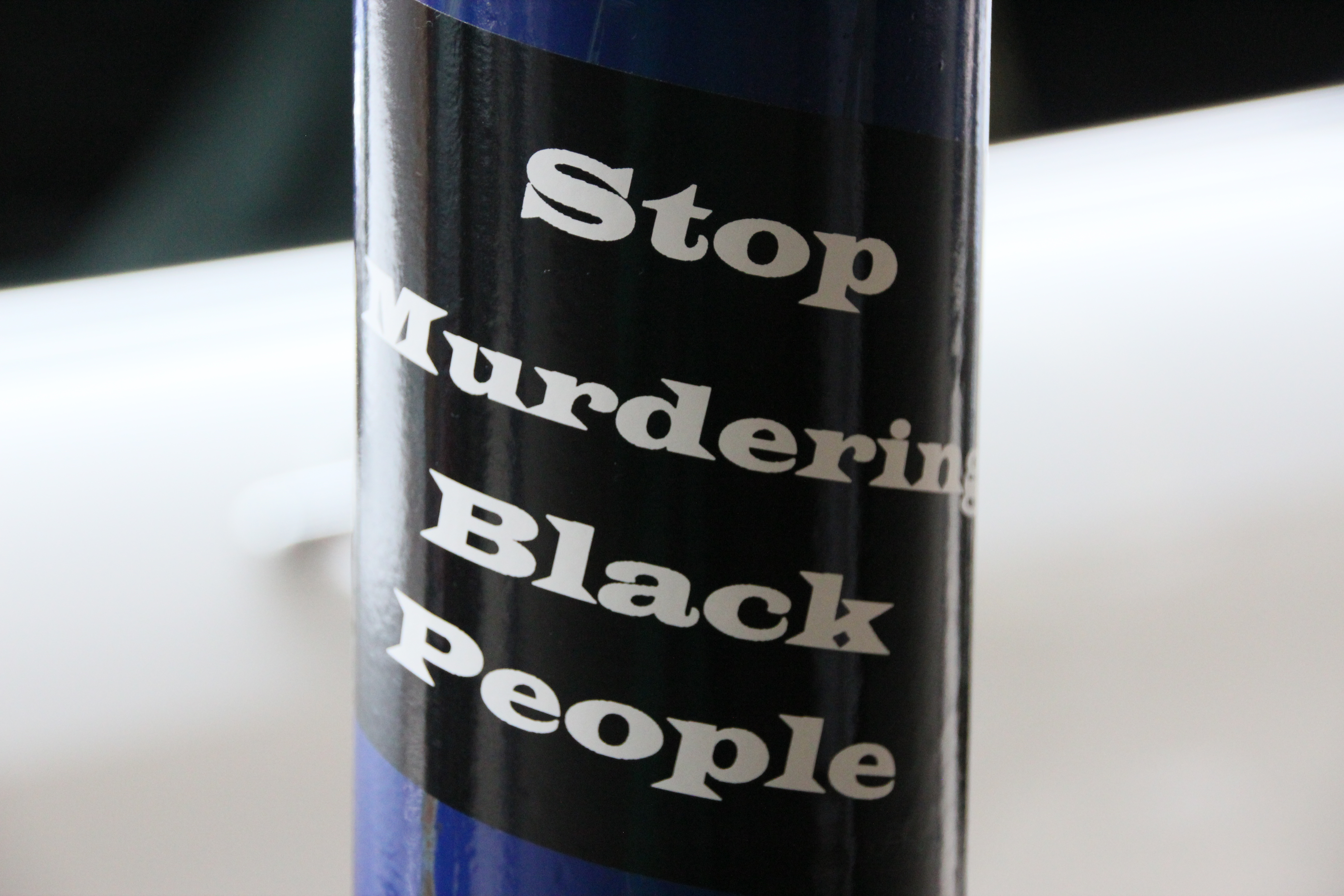
The recent controversy surrounding the relationship between the US police and African Americans was also a common theme. This sticker was advertising a demonstration. Similar stickers were in New York, advertising a protest on the same day.
The recent controversy surrounding the relationship between the US police and African Americans was also a common theme. This sticker was advertising a demonstration. I found similar stickers in New York, advertising a protest on the same day (Photo: Hannah Awcock).
This sticker is decidedly anti-police, playing rather unsubtly on the fact that police are often called 'pigs'.
This sticker is decidedly anti-police, playing rather unsubtly on the fact that police are often called ‘pigs’ (Photo: Hannah Awcock).
Another recurring theme were unions,. This sticker reminds people of the various workers' rights that unions have fought for in the past.
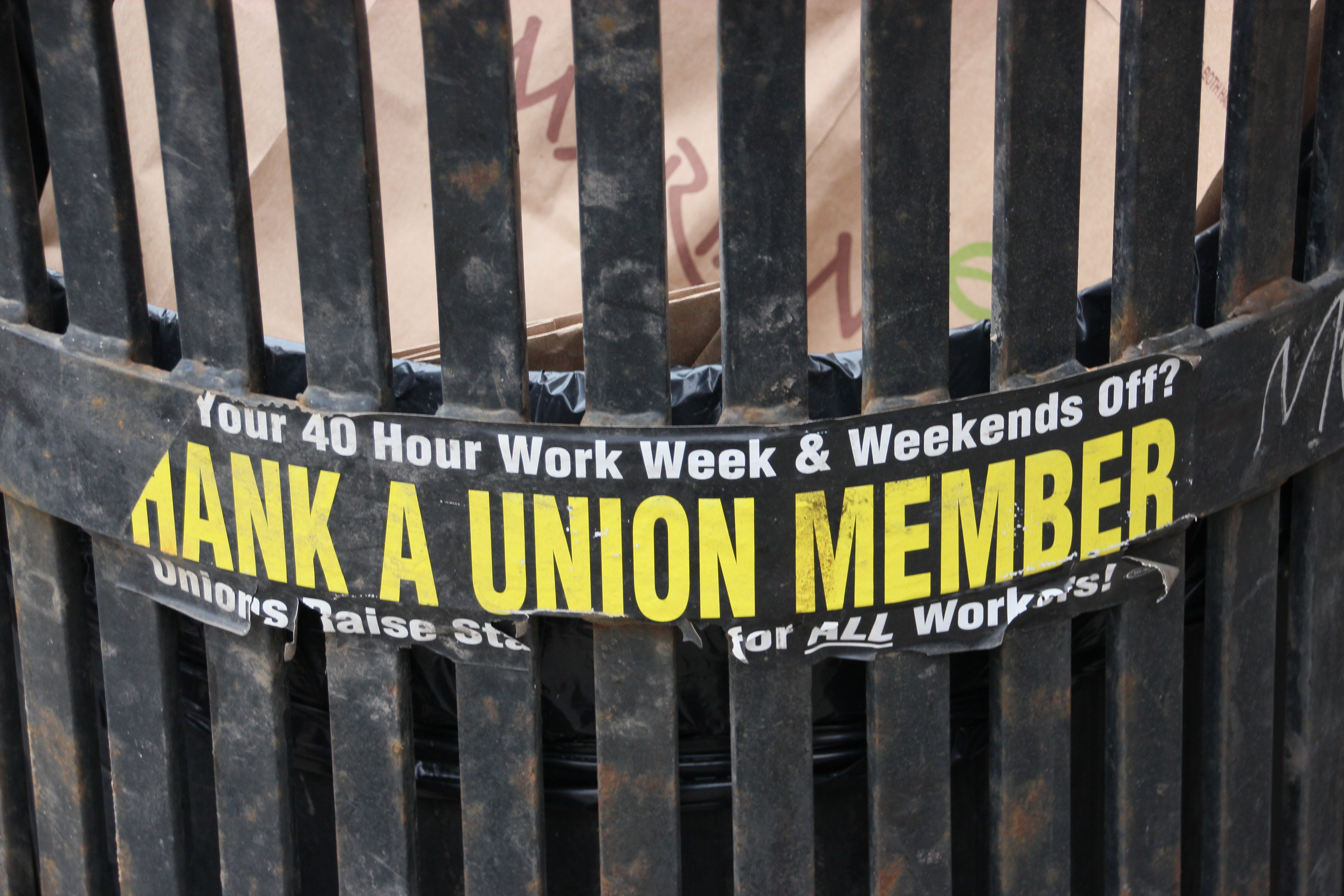
Another recurring theme were unions. This sticker reminds people of the various workers’ rights that unions have fought for in the past. It is also a good example of how the message of stickers can become harder to decipher as they age and deteriorate (Photo: Hannah Awcock).
Some themes were not so familiar however. This sticker is about anti-bullying.
Some themes were not so familiar however. This sticker is about anti-bullying (Photo: Hannah Awcock).
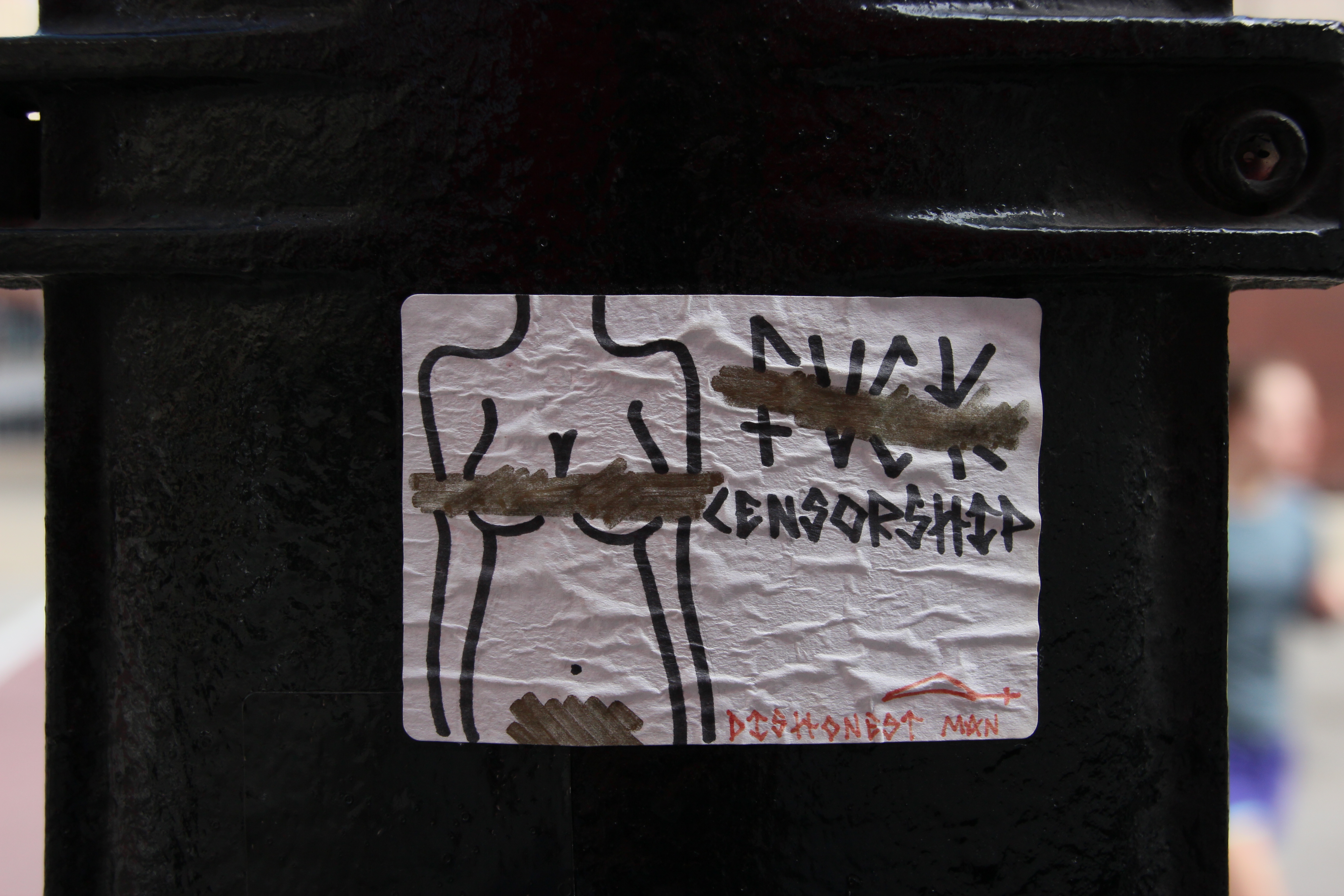
Another uncommon theme was feminism. This sticker criticises censorship of the female body.
Another uncommon theme was feminism. This sticker criticises censorship of the female body…(Photo: Hannah Awcock)
...whilst this handmade sticker encourages women to celebrate their body.
…whilst this handmade sticker encourages women to celebrate their body (Photo: Hannah Awcock).
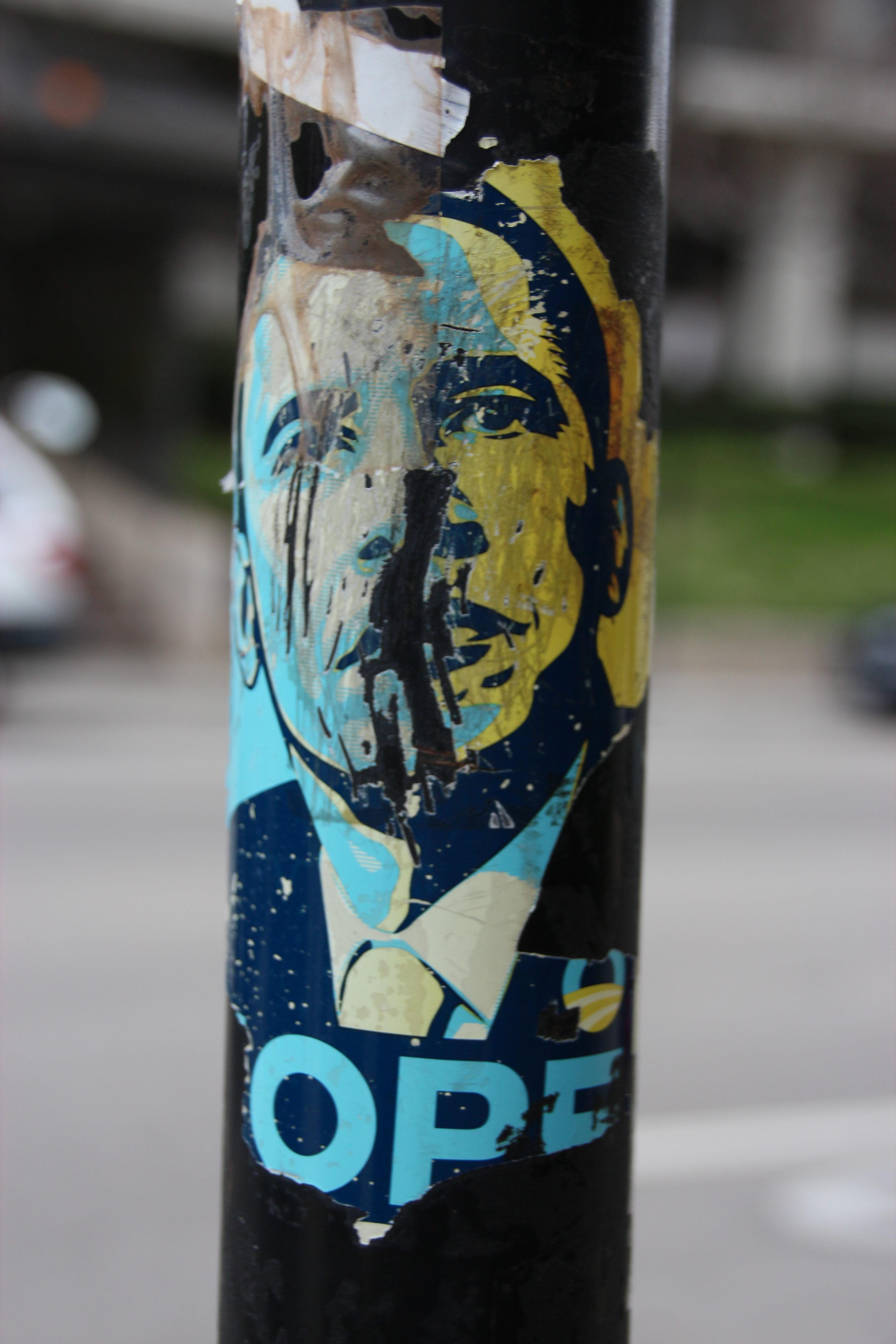
This image of Barack Obama references the Obey theme from the work of street artist Shepard Fairey. It also looks very similar to the iconic poster from Obama's 2008 election campaign, which was also designed by Shepard Fairey.
This sticker is a version of the poster designed for Barack Obama’s 2008 election campaign, which normally has a red and blue colour scheme. It was designed by the street artist Shepard Fairey, who’s Obey street art is world-famous (Photo: Hannah Awcock).
This sticker also references a national campaign. The Fight for 15 is part of the movement demanding a $15/hr minimum wage. Protests took place all over the country on April the 15th, or 4/15 in the American style of dating.
This sticker also references a national campaign. The Fight for 15 is part of the movement demanding a $15/hr minimum wage. Protests took place all over the country on April the 15th, or 4/15 in the American style of dating (Photo: Hannah Awcock).
These stickers are a little more intellectual than usual, and don't exactly make it easy to understand the argument being made.
These stickers are a little more intellectual than usual, and don’t exactly make it easy to understand the argument being made (Photo: Hannah Awcock).
Fascism is a world-wide issue, and so too is the anti-fascism campaign.
Fascism is a world-wide issue, and so too is the anti-fascism campaign. I have seen very similar stickers in London (Photo: Hannah Awcock).
This weathered sticker is for the Stop Staples campaign, which is attempting to prevent Staples from doing a deal with the U.S. Postal Service which would involve setting up postal counters in Staples stores with low-paid, untrained Staples employees.
This weathered sticker is for the Stop Staples campaign, which is attempting to prevent Staples from doing a deal with the U.S. Postal Service which would involve setting up postal counters in Staples stores with low-paid, untrained Staples employees (Photo: Hannah Awcock).
This sticker doesn't appear to be linked to any campaign in particular, and could be referencing any number of issues such as climate change or consumerism.
This sticker doesn’t appear to be linked to any campaign in particular, and could be referencing any number of issues such as climate change or consumerism (Photo: Hannah Awcock).
This is not a protest sticker, but I just liked it so much that I decided to put it in. It's pretty good advice too!
This is not a protest sticker, but I just liked it so much that I decided to put it in. It’s pretty good advice too! (Photo: Hannah Awcock).

Special thanks to Llinos Brown, who put up with my odd habit of taking close-up pictures of random bits of street furniture and also helped me find a few stickers whilst we were in Chicago.

London’s Protest Stickers: Immigration and Race

This design normally reads 'Refugees Welcome.' The bottom section of this poster in Elephant and Castle has been torn off, suggesting someone objected to the original message.
This design normally reads ‘Refugees Welcome.’ The bottom section of this poster in Elephant and Castle has been torn off, suggesting someone objected to the original message (Photo: Hannah Awcock, 13/09/15).

Thanks to recent events, immigration has been a hot topic across the country over the past few months, not just in London. However London has a particularly special relationship with the issues of migration and race. As the historian Roy Porter explains, London is no stranger to migration; “Founded by immigrants, London has had a ceaseless history of immigration.” For most of the city’s history, the death rate has been higher than the birth rate, so London wouldn’t be here today without millions of migrants from across the UK and the rest of the world. Unfortunately, memory can be selective, and many argue against welcoming more migrants and refugees into the UK.

Sadly, London is also no stranger to racism. From the murder of prominent Jews at the coronation of Richard the Lionheart in September 1189, through to the Battle of Cable Street and the fight against fascism in the East End in the 1930s and 40s, anti-Semitism has been a persistent problem for London and Londoners. More recently, immigration from former British colonies starting in the 1950s has led to tension and discrimination against Asian and Black Londoners. In the worst cases this has resulting in racially-motivated murder, such as those of Altab Ali in 1978 and Stephen Lawrence in 1993.

The stickers below all relate to migration, or the interconnected issue of racism.

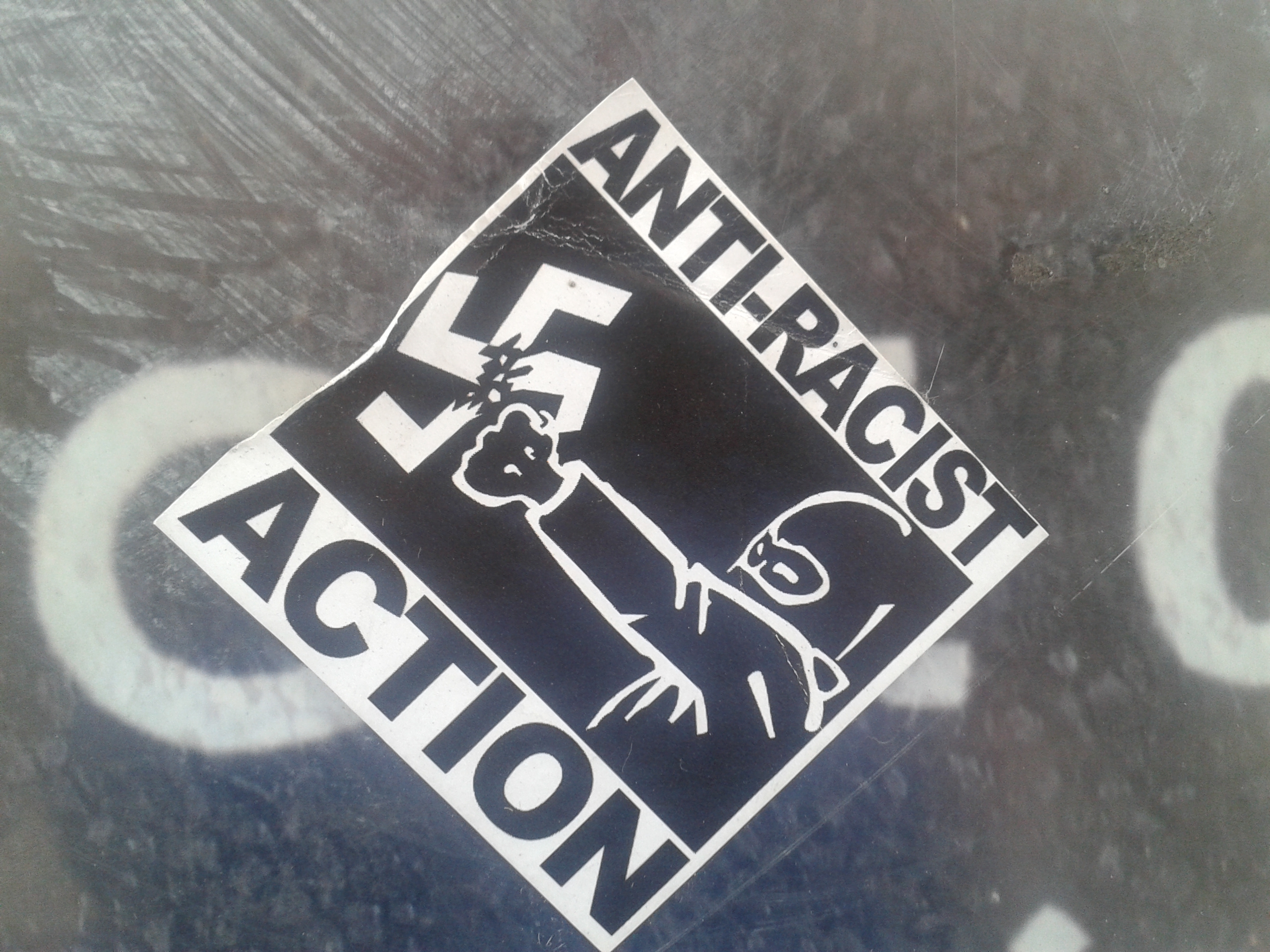
Anti-racist stickers have been a relatively common sight in London since at least before I started looking for them (Elephant and Castle, 25/06/15).
Anti-racist stickers have been a relatively common sight in London since at least before I started looking for them (Photo: Hannah Awcock, Elephant and Castle, 25/06/15).
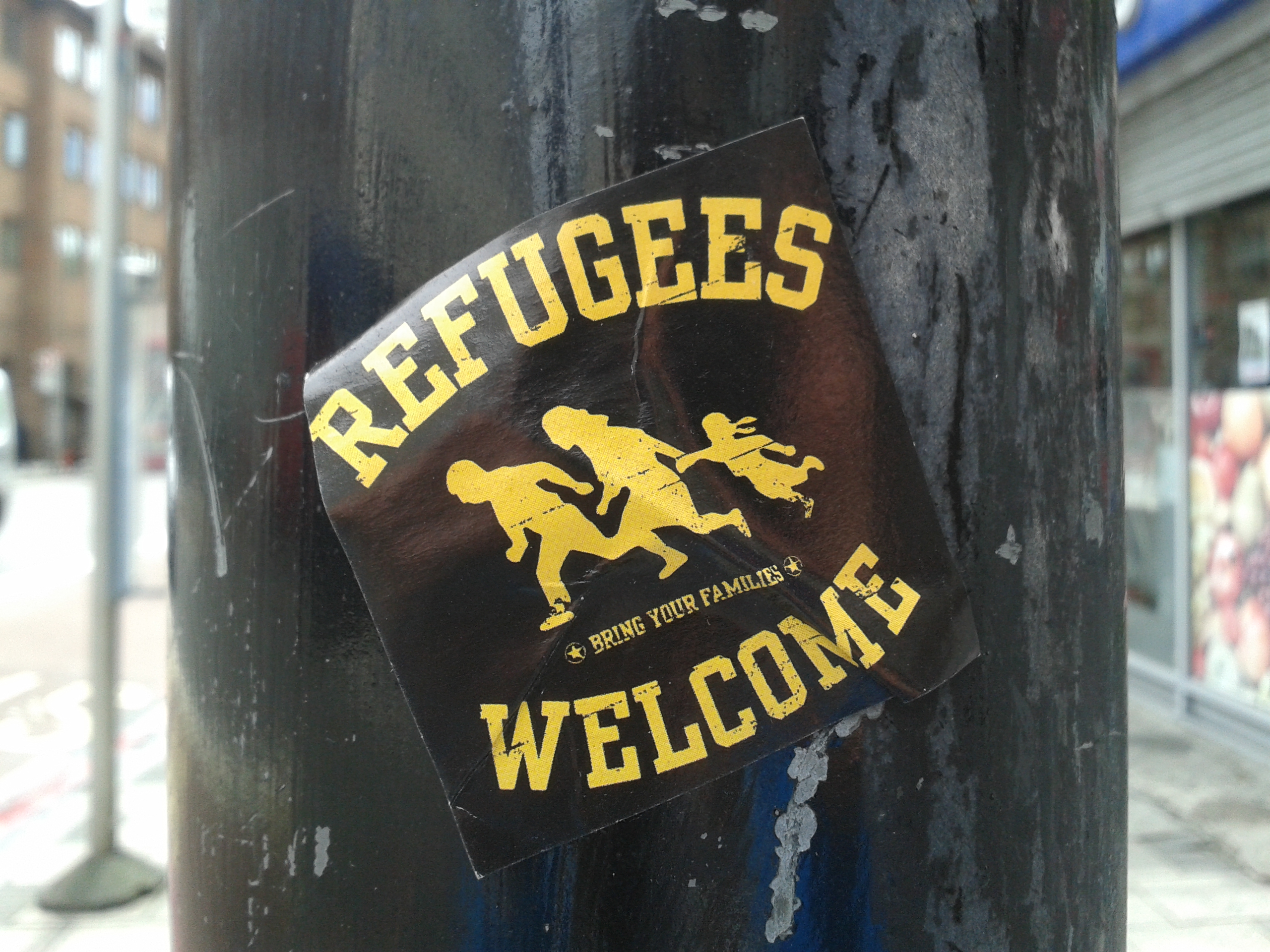
Specifically pro-immigration stickers are a more recent occurrence, they began appearing around the same time that the refugee 'crisis' began (Waterloo Bridge, 17/06/15).
Specifically pro-immigration stickers are a more recent occurrence, they began appearing around the same time that the refugee ‘crisis’ began (Photo: Hannah Awcock, Waterloo Bridge, 17/06/15).
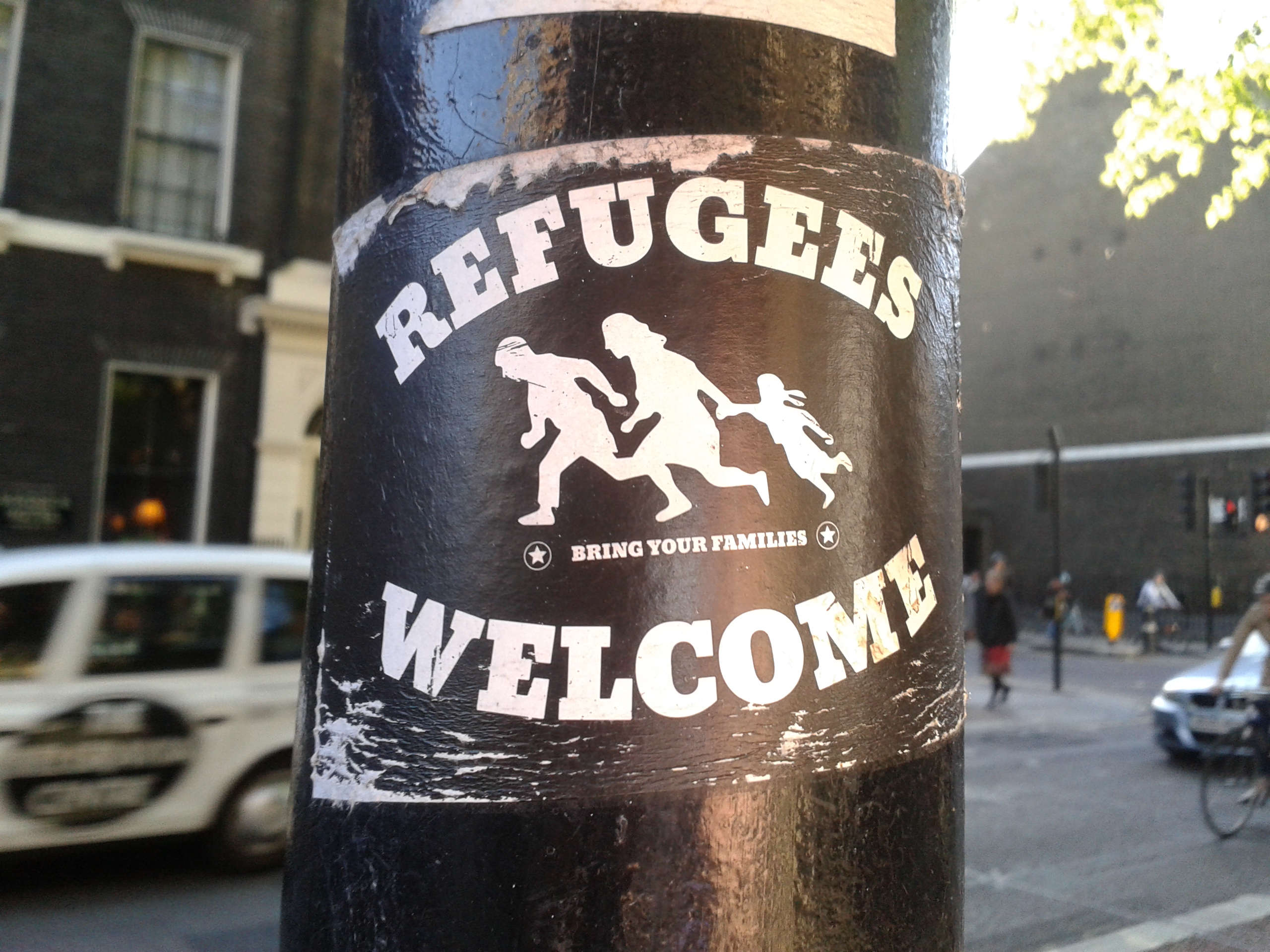
The design from the poster above has become a common sight on stickers, posters and banners. This picture was taken in Borough High Street on 29/05/15.
The design from the poster above has become a common sight on stickers, posters and banners. This picture was taken in Borough High Street on 29/05/15 (Photo: Hannah Awcock).
This version of the sticker was photographed in Gower Street, Bloomsbury on 12//05/15. The same or similar stickers can often been seen in various locations around London.
This version of the sticker was photographed in Gower Street, Bloomsbury on 12//05/15. The same or similar stickers can often been seen in various locations around London (Photo: Hannah Awcock).
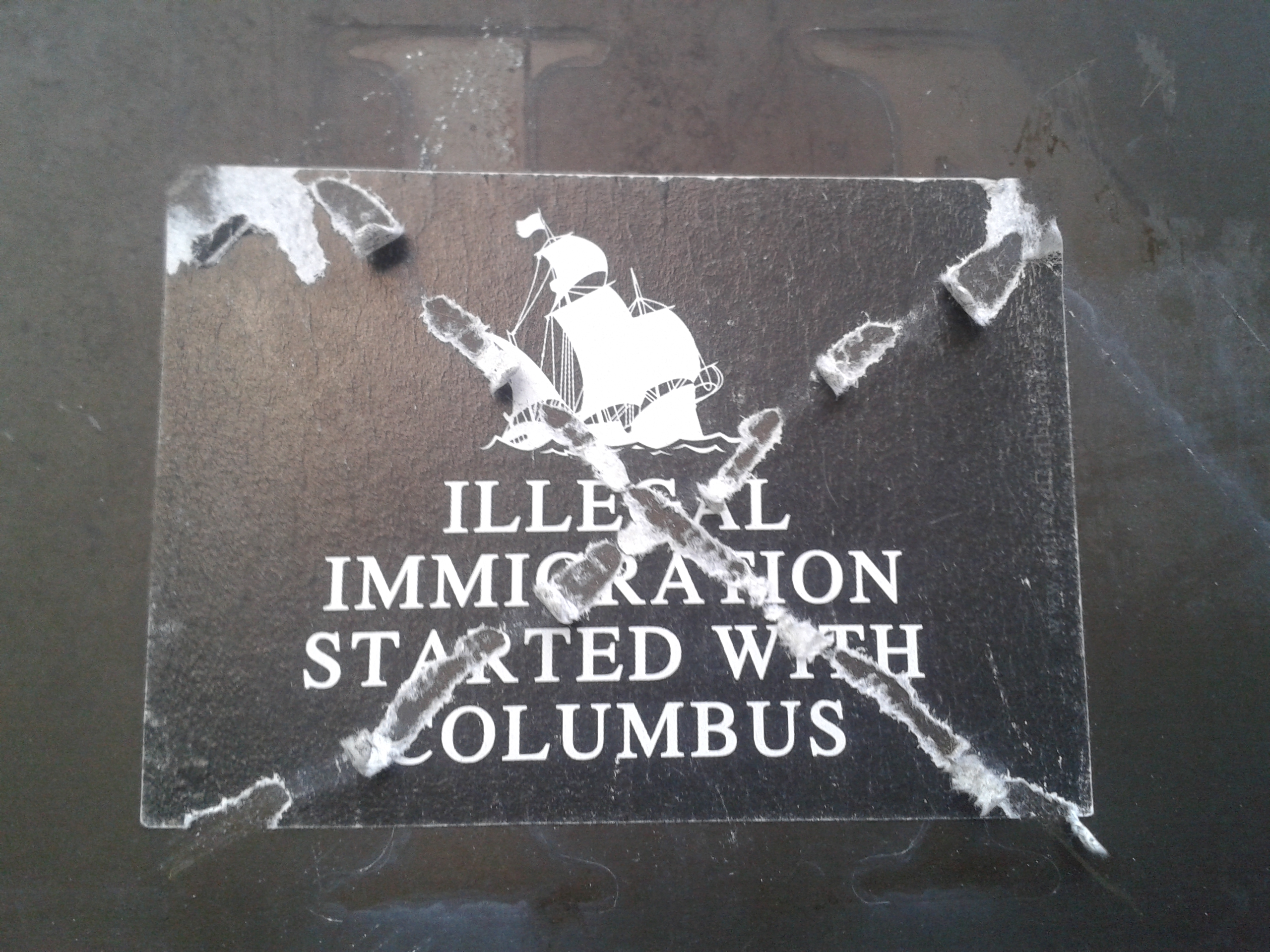
This sticker, which attempts to complicate the definition of illegal immigration, is another sticker which I have seen all over the city. This particular example, outside the Inner London Crown Court in Southwark, has had a cross scratched through it, perhaps because someone disagreed with the message (18/06/15).
This sticker, which attempts to complicate the definition of illegal immigration, is another sticker which I have seen all over the city. This particular example, outside the Inner London Crown Court in Southwark, has had a cross scratched through it, perhaps because someone disagreed with the message (Photo: Hannah Awcock, 18/06/15).
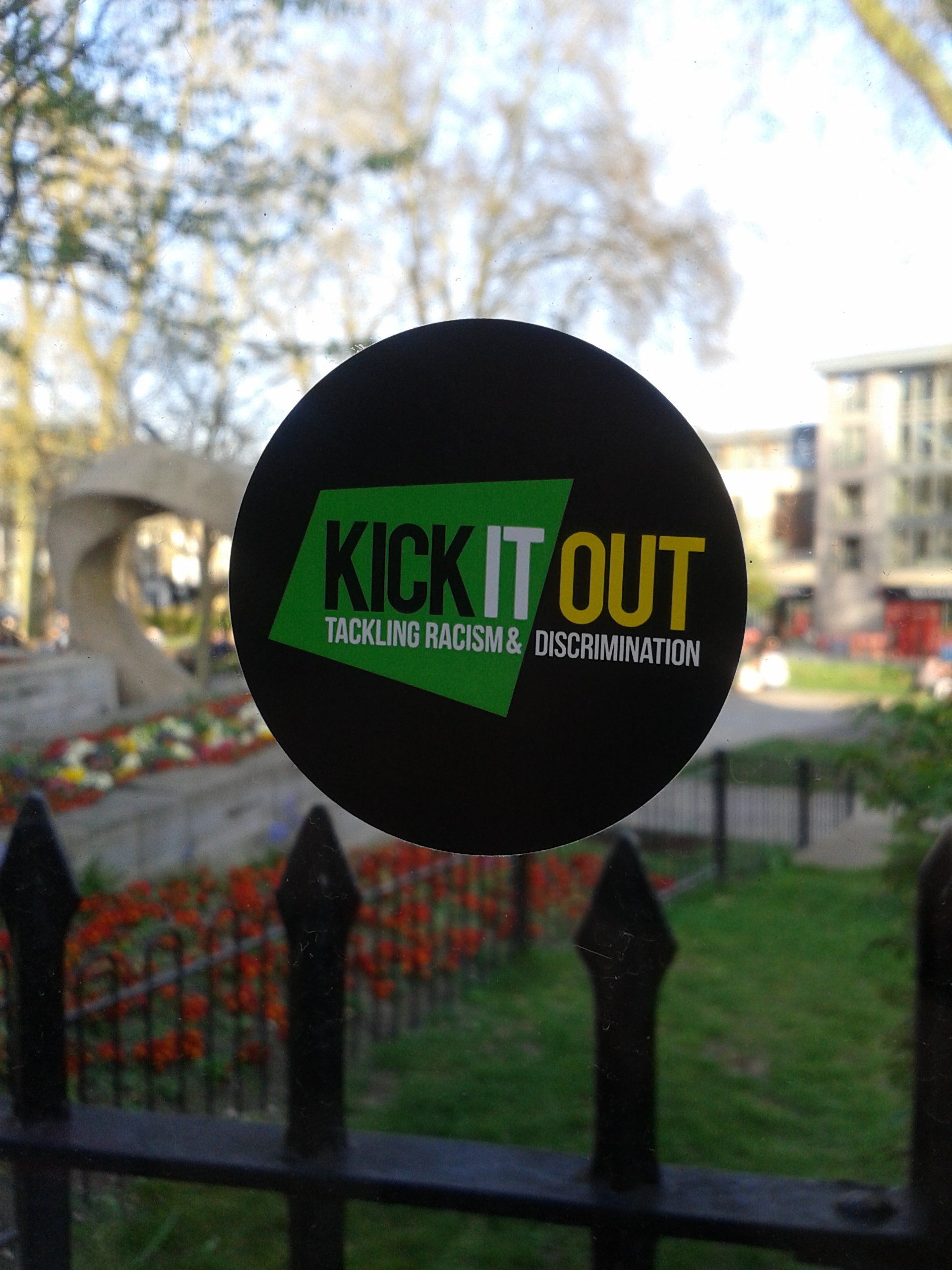
This sticker, photographed on a bus stop in Upper Street in Islington refers to racism in sport. Kick It Out works to promote equality and inclusion in football (14/04/15).
This sticker, photographed on a bus stop in Upper Street in Islington refers to racism in sport. Kick It Out works to promote equality and inclusion in football (Photo: Hannah Awcock, 14/04/15).
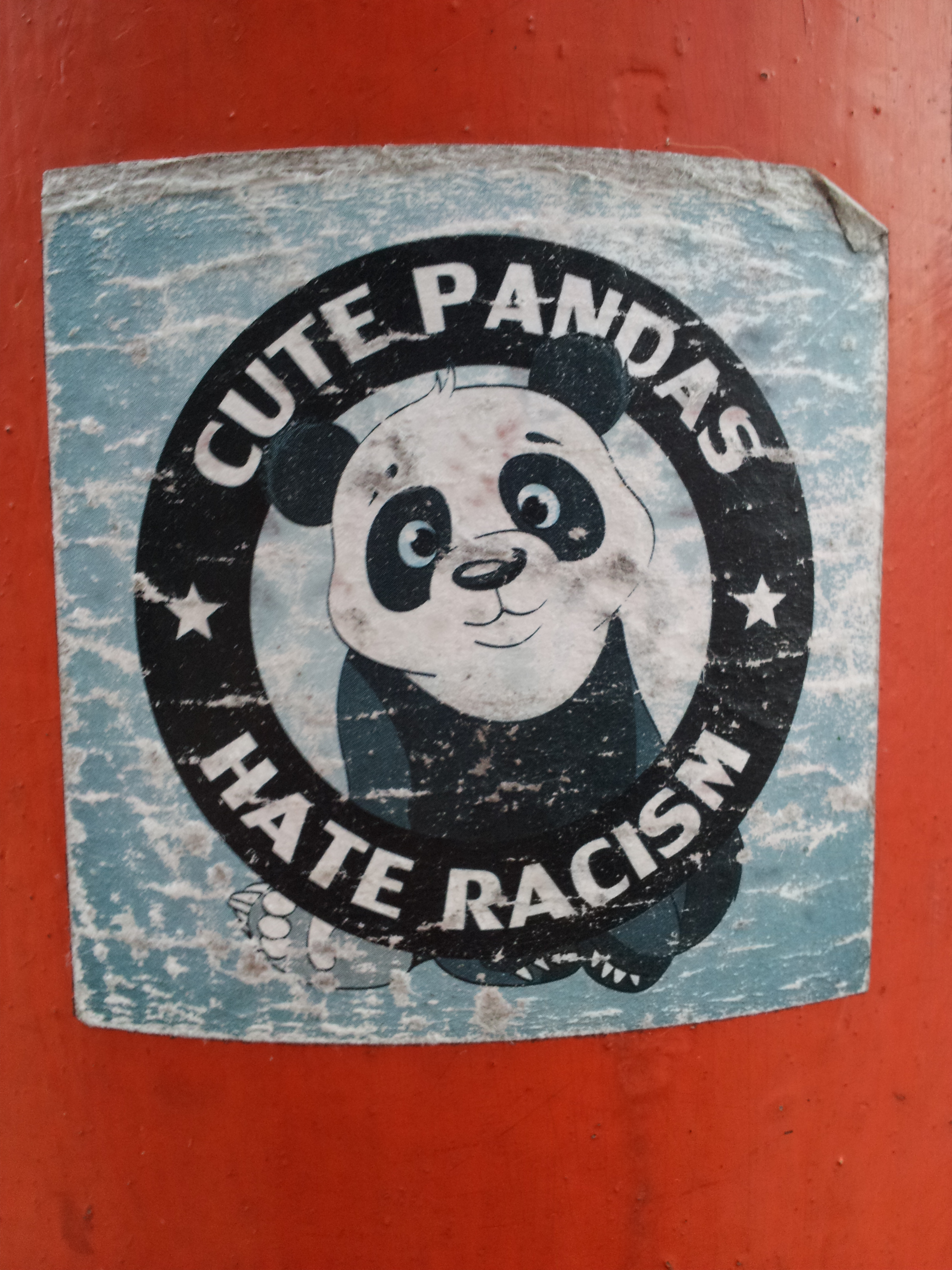
I'm sure that cute pandas actually have no opinion on racism, but I like this sticker none the less! (Union Street, Southwark, 08/09/15).
I’m sure that cute pandas actually have no opinion on racism, but I like this sticker anyway! (Photo: Hannah Awcock, Union Street, Southwark, 08/09/15).
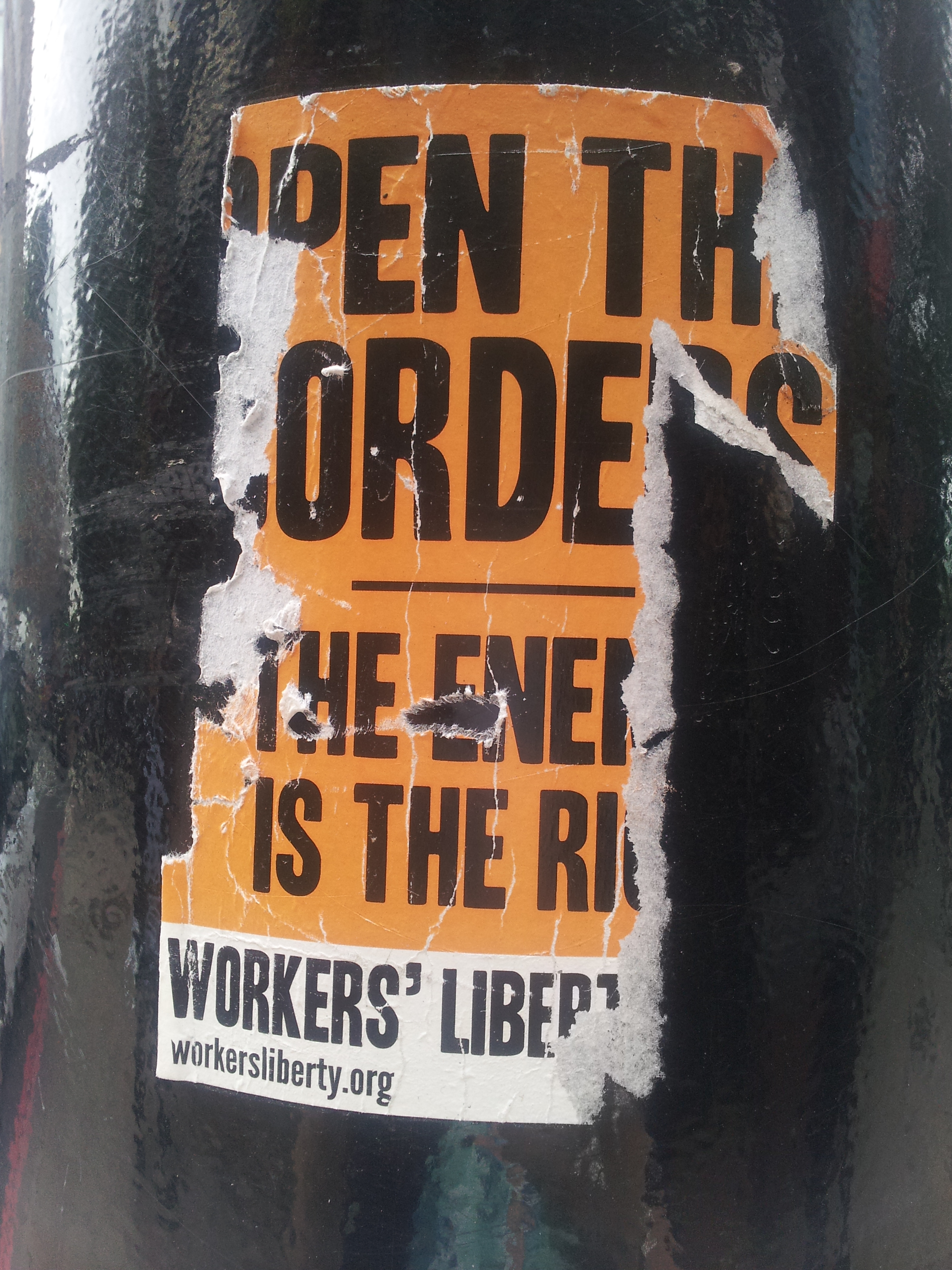
Some stickers get weathered or torn, so that their message is obscured. This sticker, made by Worker's Liberty says
Some stickers get weathered or torn, so that their message is obscured. This sticker, made by Worker’s Liberty says “Open the Borders: The Enemy is the…” I can’t make out who the enemy is, perhaps the ‘Right’? (Photo: Hannah Awcock, 03/09/15 Euston Road).
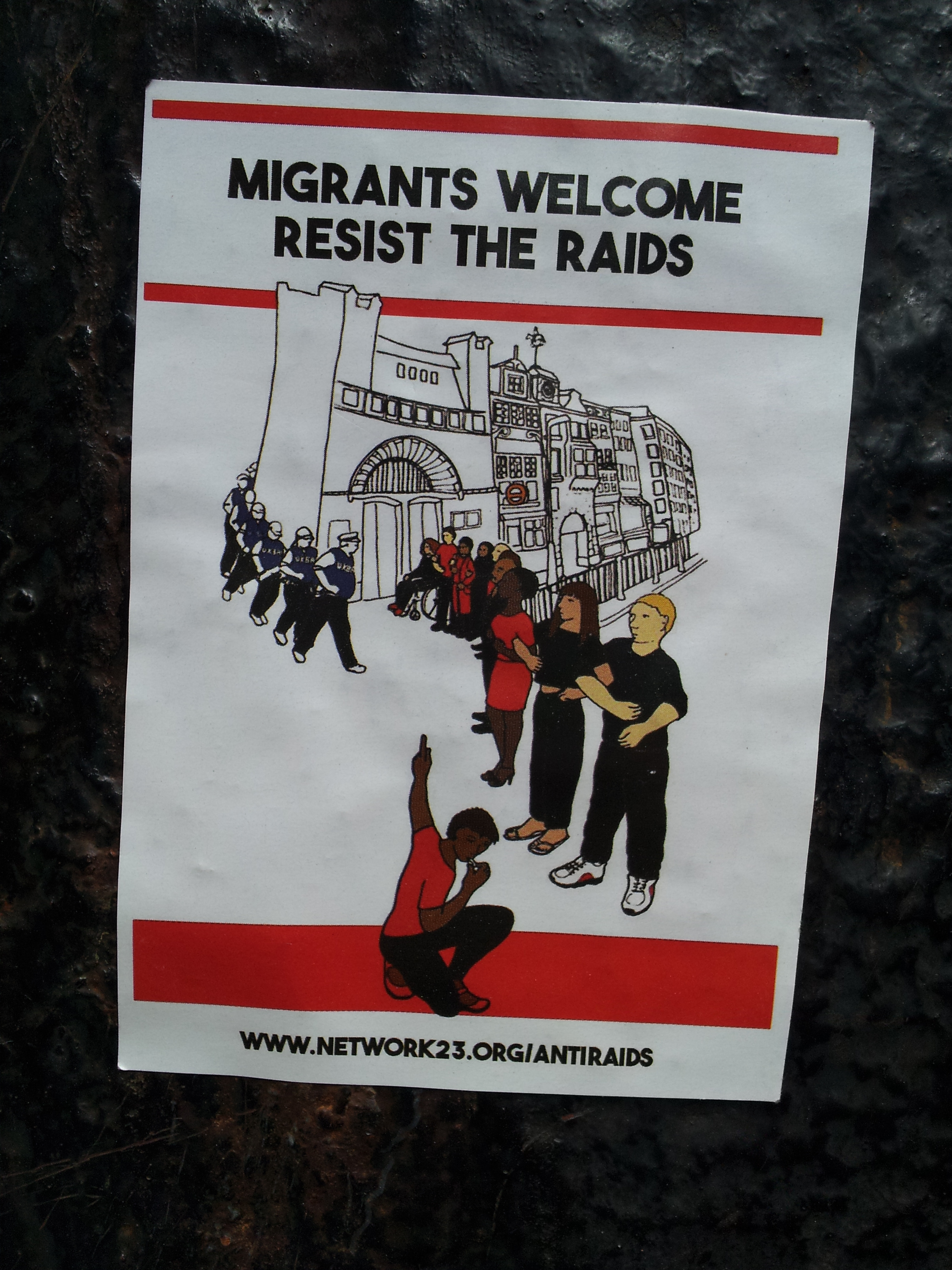
This sticker refers to raids carried out by the Metropolitan Police trying to catch illegal immigrants (Elephant and Castle, 05/08/15).
This sticker refers to raids carried out by the UK Border Agency trying to catch illegal immigrants. It was produced by the Anti-Raids Network, a loose network of organisations and individuals trying to combat raids (Photo: Hannah Awcock, Elephant and Castle, 05/08/15).
Unfortunately, not all stickers are anti-racism or pro-immigration/ The Creativity Alliance are white supremacists who believe in race as a religion (Euston Road, 10/08/15).
Unfortunately, not all stickers are anti-racism or pro-immigration. The Creativity Alliance are white supremacists who believe in race as a religion (Photo: Hannah Awcock, Euston Road, 10/08/15).
This sticker in Brick Lane questions who only white nations (allegedly) have to live up to standards of diversity. Someone else has used a marker pen to make their opinion on that perspective very clear (17/04/15).
This sticker in Brick Lane questions who only white nations (allegedly) have to live up to standards of diversity. Someone else has used a marker pen to make their opinion on that perspective very clear (Photo: Hannah Awcock, 17/04/15).

Sources and Further Reading

Beckman, Morris. The 43 Group. London: Centerprise (1993[1992]).

Hindley, Geoffrey. Magna Carta: The Origins of Liberty, from Runnymede to Washington. London: Robinson (2015 [2008]).

Porter, Ray. London- A Social History. London: Penguin (2000 [1994]).

Protest Stickers: New York City

Like in London, stickers of various kinds are ubiquitous in New York.
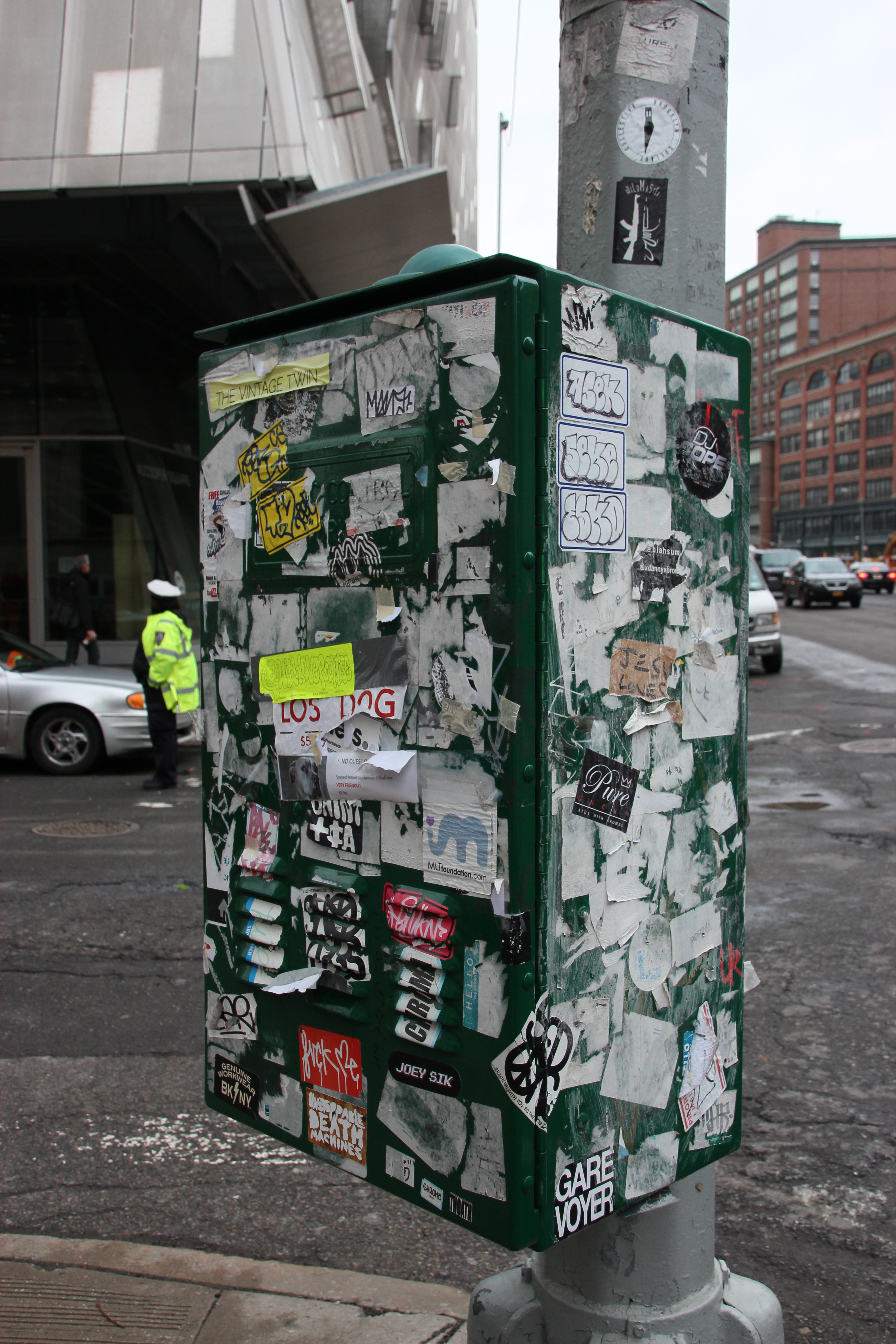
Like in London, stickers of various kinds are ubiquitous in New York (Photo: Hannah Awcock).

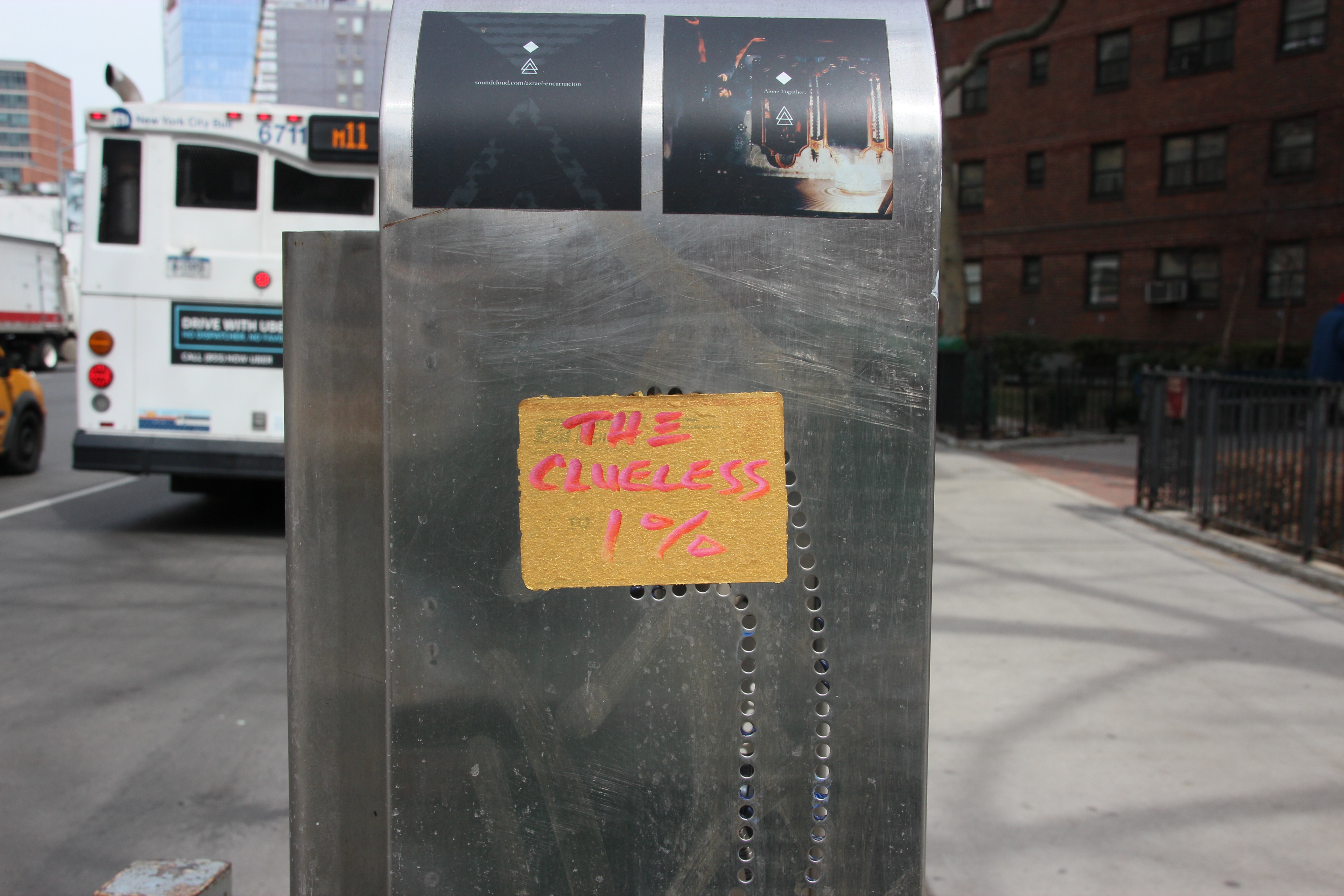
A few months ago, I visited New York on an undergraduate field trip. As I explored the city, I took pictures of protest stickers as I do in London. This post is about some of the stickers that I saw. At first I thought that explicitly political stickers were less common in New York than London, as it took me quite a while to find any. However I discovered that in some areas, such as the East Village in Manhattan, protest stickers are just as common as in London.

I spotted this sticker in several locations around the city. It is advertising a demonstration that was due to take place several weeks after I was in New York. The treatment of the city's citizens, especially black citizens, by police has resurfaced as a contentious issue in recent months.
I spotted this sticker in several locations around the city. It is advertising a demonstration that was due to take place several weeks after I was in New York. The treatment of the city’s citizens, especially black citizens, by police has resurfaced as a contentious issue in recent months (Photo: Hannah Awcock).
Some issues that are common subjects of protest stickers in London also occur in New York, like this one advocating a boycott of Israel.
Some issues that are common subjects of protest stickers in London also occur in New York, like this one advocating a boycott of Israeli produced goods (Photo: Hannah Awcock).
Other issues are unique to the US, such as this sticker declaring that 9/11 was the result of a conspiracy. It looks as if it has been scratched with a key or something similar in an attempt to obscure the image, suggesting the controversy of this kind of opinion.
Other issues are unique to the US, such as this sticker declaring that 9/11 was the result of a conspiracy. It looks as if it has been scratched with a key or something similar in an attempt to obscure the image, suggesting the controversy of this kind of opinion (Photo: Hannah Awcock).
This sticker plays on the iconic posters from Obama's campaign during the last election, but replaces the image of Obama with that of a protester in a V for Vendetta mask.
This Occupy sticker plays on the iconic posters from Obama’s campaign during the last election, but replaces the image of Obama with that of a protester in a V for Vendetta mask (Photo: Hannah Awcock).
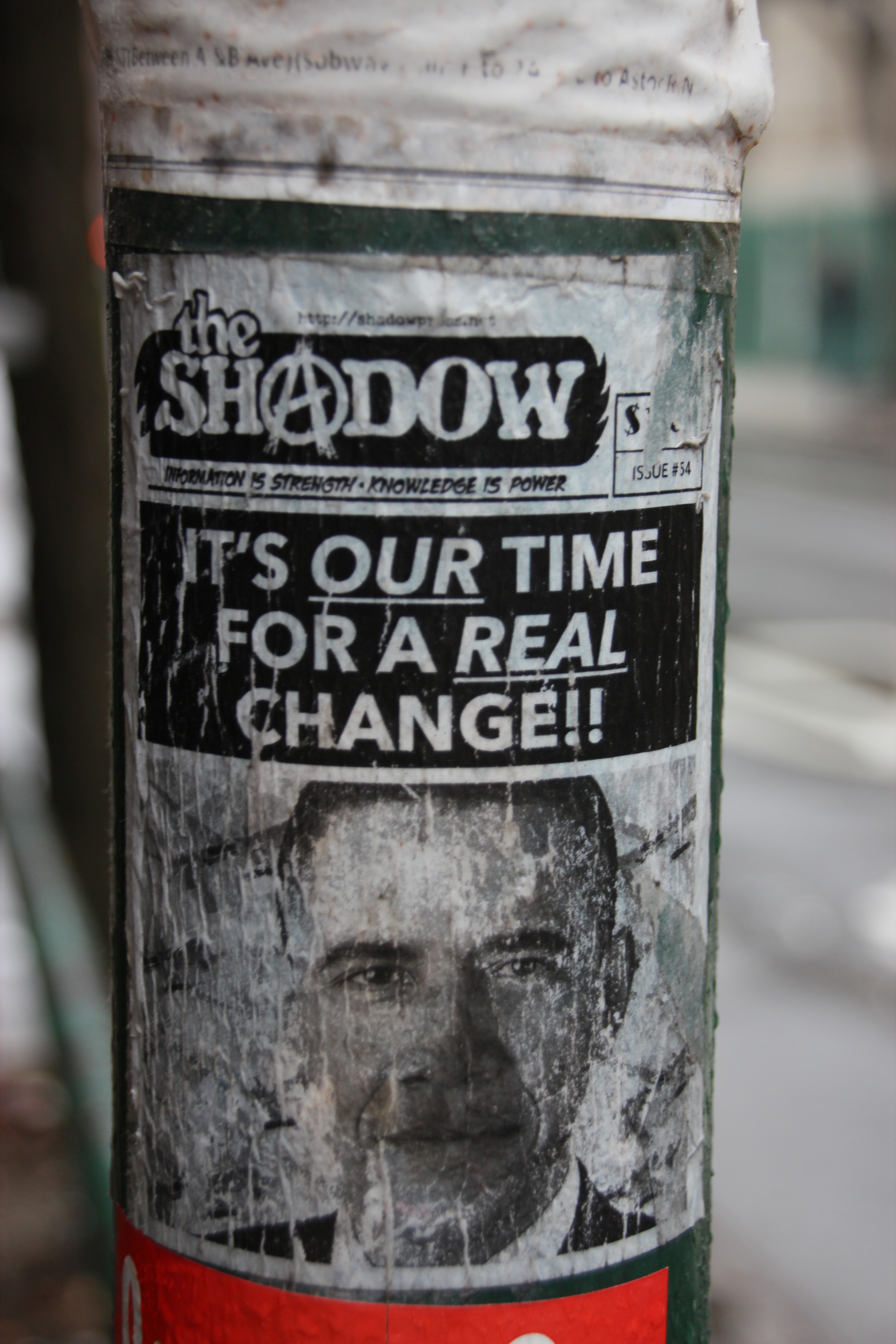
This sticker also refers to Obama. I saw sever different issues of 'The Shadow' whilst in New York.
This sticker also refers to Obama. I saw sever different issues of ‘The Shadow’ whilst in New York (Photo: Hannah Awcock).
Anti-fascism was not such a common topic of protest stickers in New York as London.
Anti-fascism was not such a common topic of protest stickers in New York as London, but it is there (Photo: Hannah Awcock).
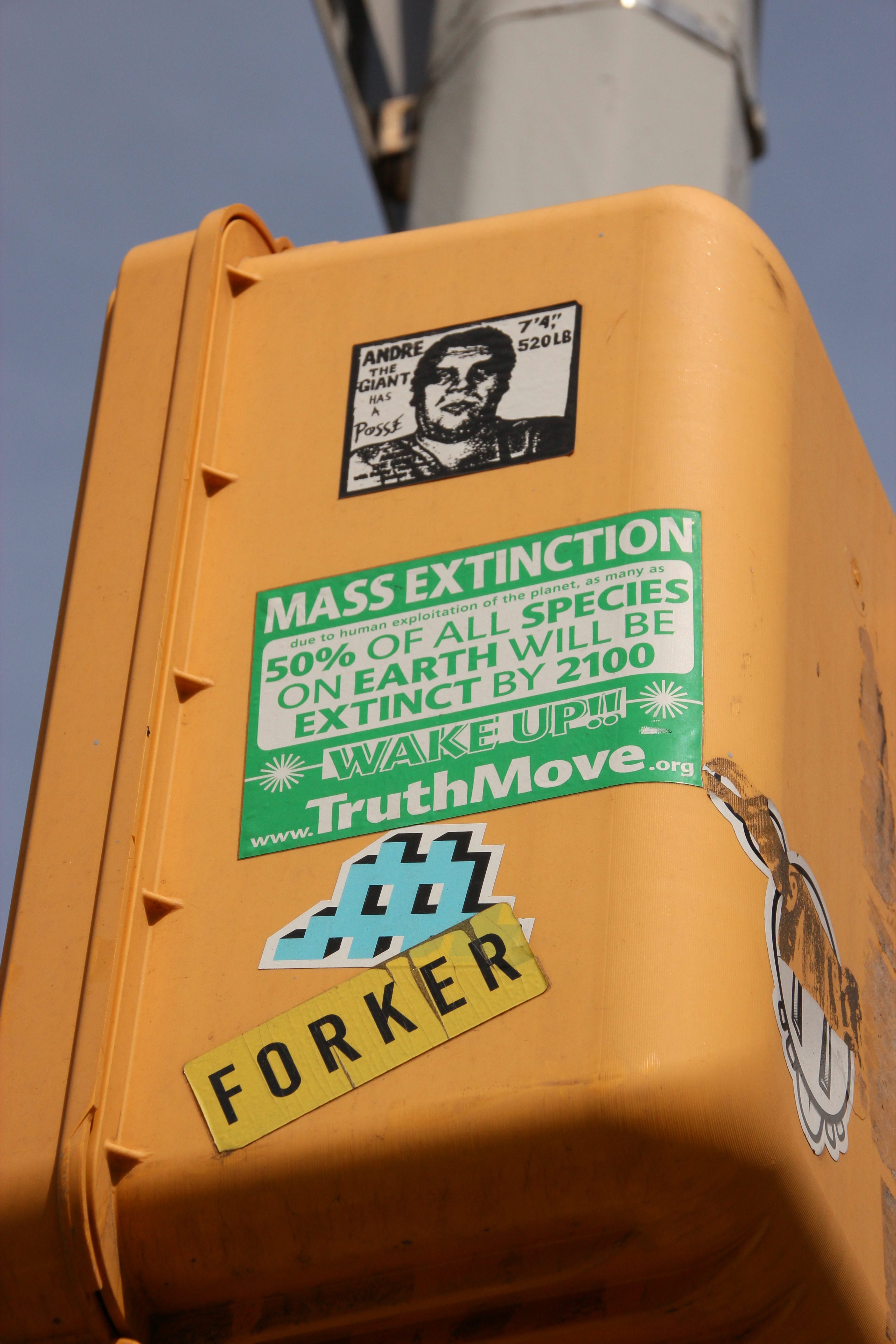
IMG_7465
This sticker was produced by an organisation called Truth Move, which also produced the anti-fascist sticker above. Anti-fascism and environmental issues are not usually tackled by the same social movement groups; Truth Move is an organisation that argues that equality and democracy come from equal access to knowledge and facts (Photo: Hannah Awcock).
IMG_7470
This sticker is handmade, it looks as if a postage label has been painted over (Photo: Hannah Awcock).
I know I am cheating a little bit with this one, it is in the collection in the Interference Archive. But I liked it too much to leave out!
I know I am cheating a little bit with this one, it is in the collection in the Interference Archive rather than on the streets. But I liked it too much to leave out! (Photo: Hannah Awcock)
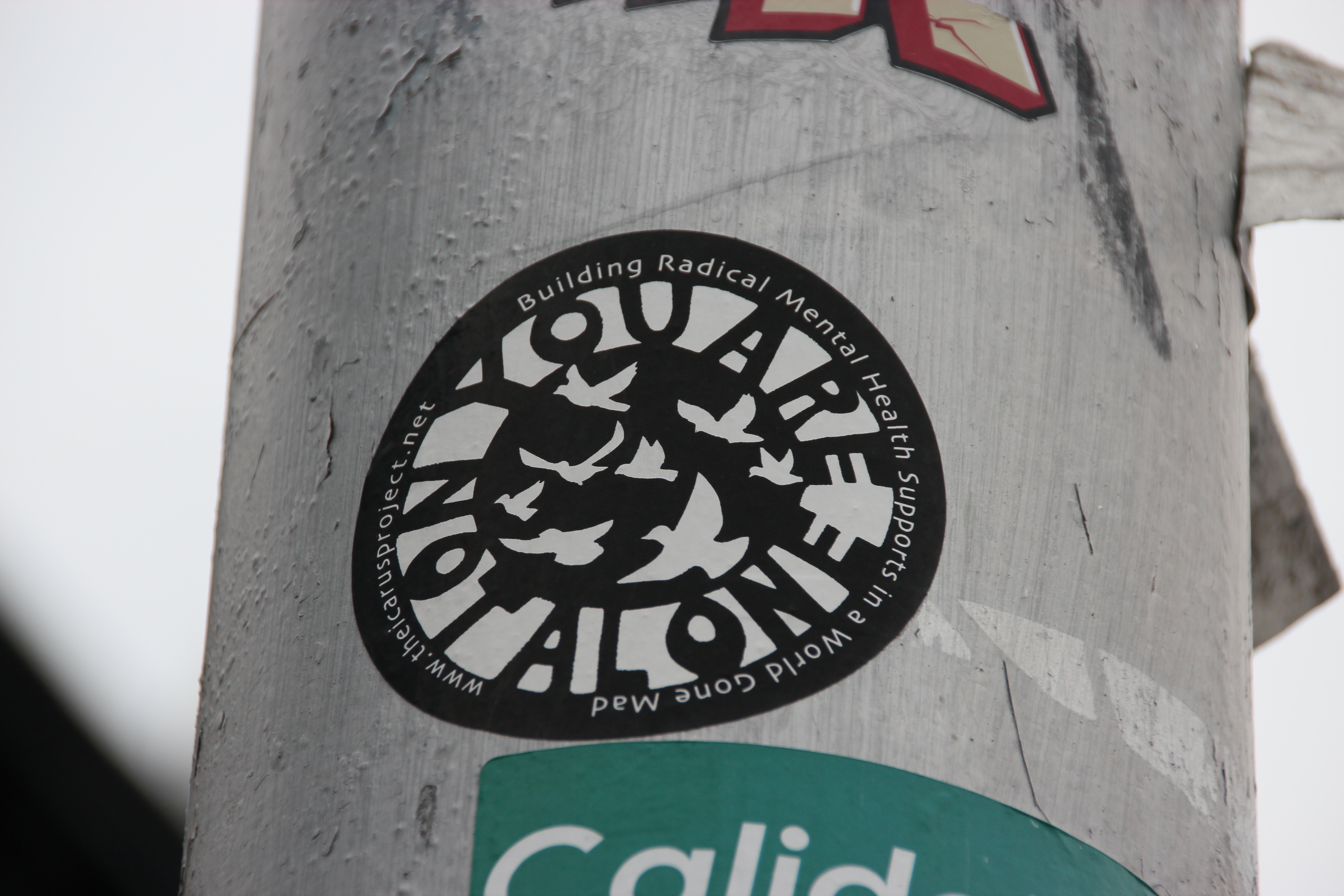
I like the design of this sticker, and it's topic, mental health is also unusual.
I like the design of this sticker, and it’s topic, mental health, is also unusual (Photo: Hannah Awcock).
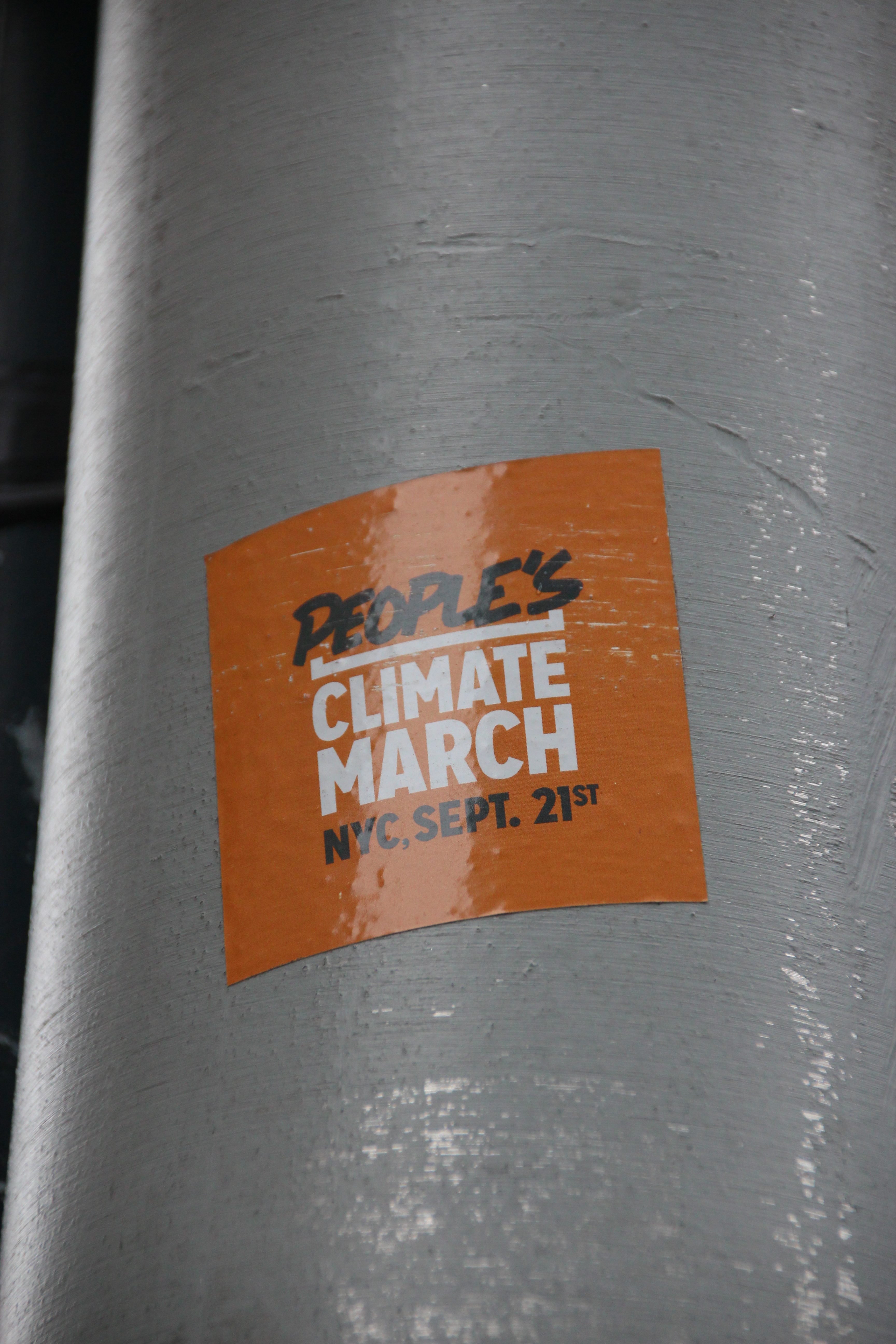
This sticker, advertising a climate march, could also be found in Spanish, a language with is widely spoken in America and New York.
This sticker, advertising a climate march, could also be found in Spanish, a language with is widely spoken in America and New York (Photo: Hannah Awcock).
I love the politeness of this anti-racist sticker in the East Village.
I love the politeness of this anti-racist sticker in the East Village (Photo: Hannah Awcock).
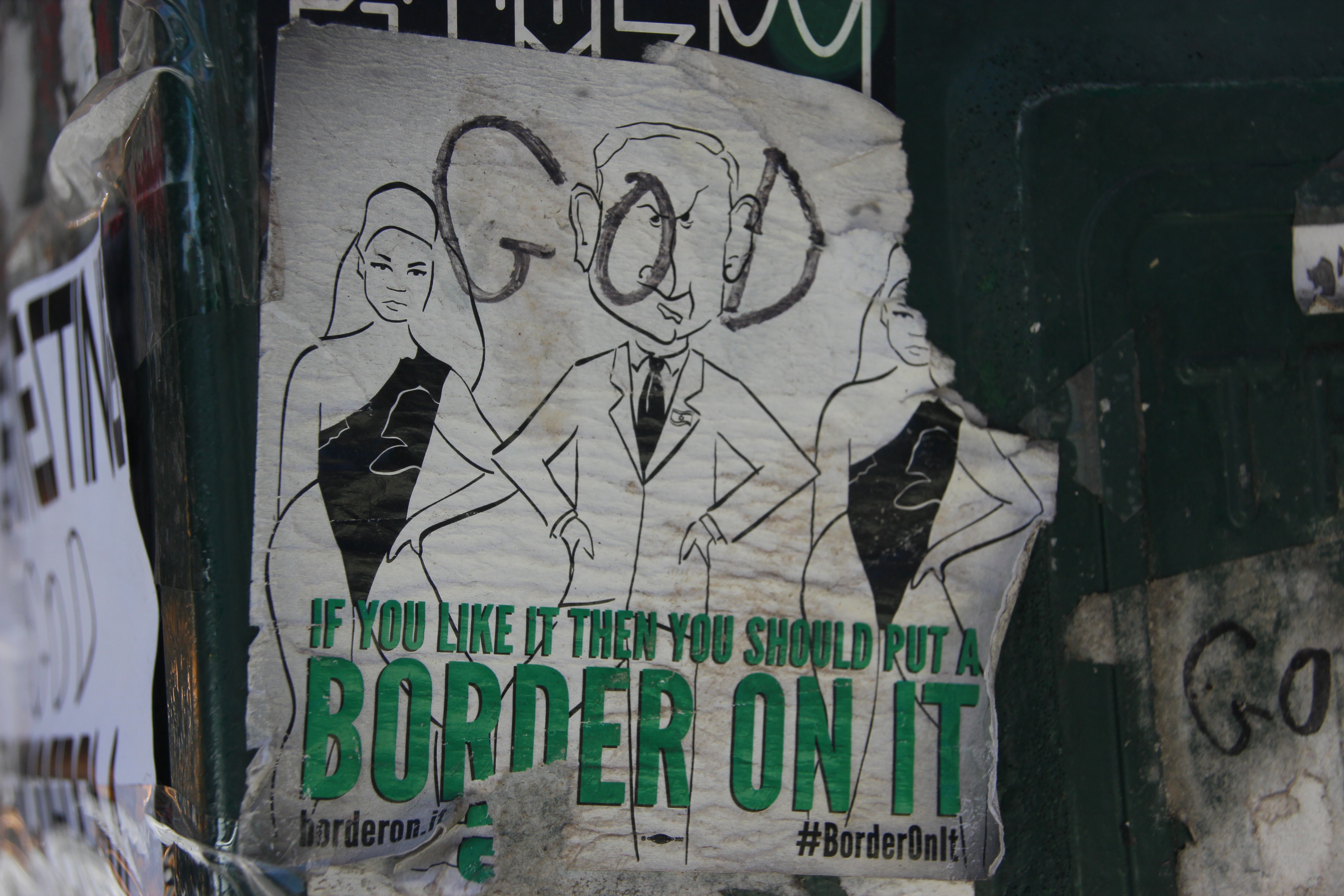
Although I do not agree with the sentiment of this sticker, I can't help but admire it's wit.
Although I do not agree with the sentiment of this sticker, I can’t help but admire it’s wit (Photo: Hannah Awcock).

London’s Protest Stickers: Housing

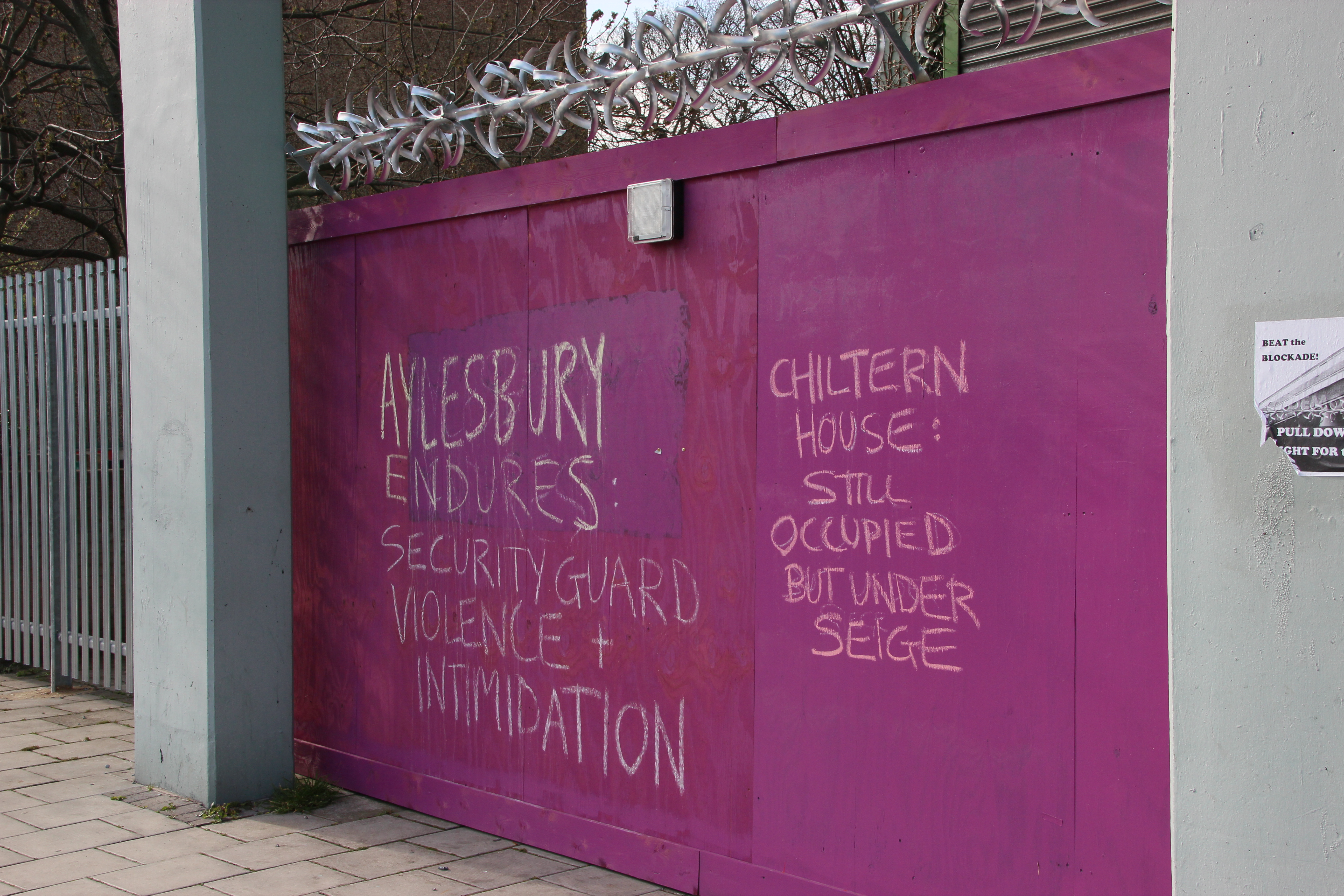
The fencing around Chiltern House on the Aylesbury Estate, which was occupied after the March for Homes on 31/01/15.
The fencing around Chiltern House on the Aylesbury Estate, which was occupied after the March for Homes on 31/01/15 (Photo: Hannah Awcock).

Recently, housing has become one of the most contentious issues in London. The city is growing faster than its housing stock, which is putting real pressure on Londoners. Many, particularly those with low incomes, are struggling with high prices, soaring rents and a chronic shortage of council housing. A numbers of campaign groups, such as FocusE15 and Housing Action Southwark and Lambeth, have started to combat the problem by raising awareness, protesting and intervening in evictions.The recent March for Homes is just one of the examples of the actions taking place. This focus is reflected in London’s protest stickers, and housing is one of the most common specific issues that stickers refer to. Most of the following pictures come from the area around the Aylesbury estate, an section of which was occupied after the March for Homes in protest of the estate gradually being sold off by Southwark Council for private redevelopment.

This sticker refers directly to the occupation at Aylesbury, and was photographed on 13/04/15 at Elephant and Castle.
This sticker refers directly to the occupation at Aylesbury, and was photographed on 13/04/15 at Elephant and Castle (Photo: Hannah Awcock).
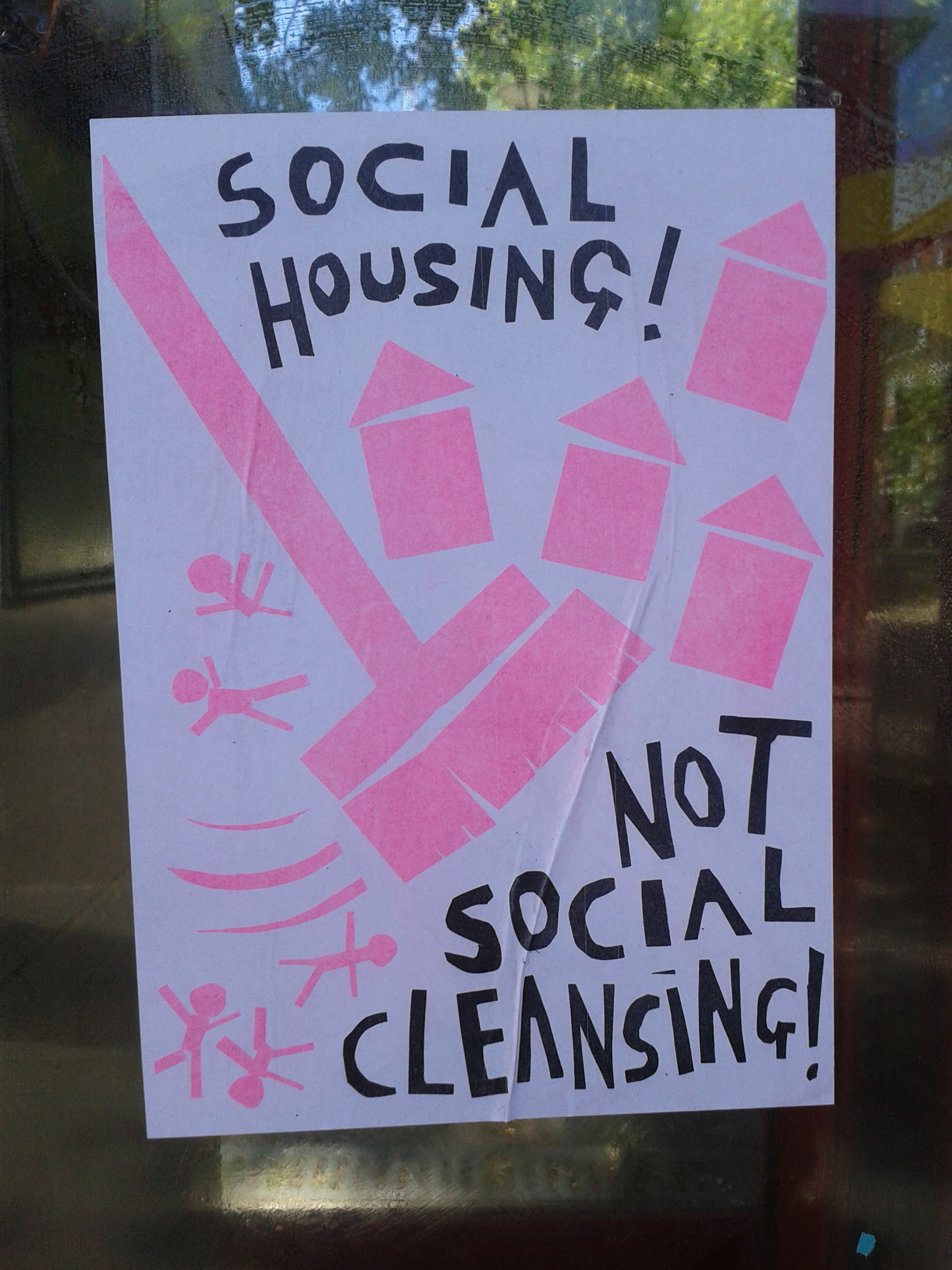
Many of London's poorest inhabitants are being pushed out by rising prices and redevelopments, leading to accusations of social cleansing (Aylesbury Estate, 02/04/15).
Many of London’s poorest inhabitants are being pushed out by rising prices and redevelopments, leading to accusations of social cleansing (Photo: Hannah Awcock, Aylesbury Estate, 02/04/15).
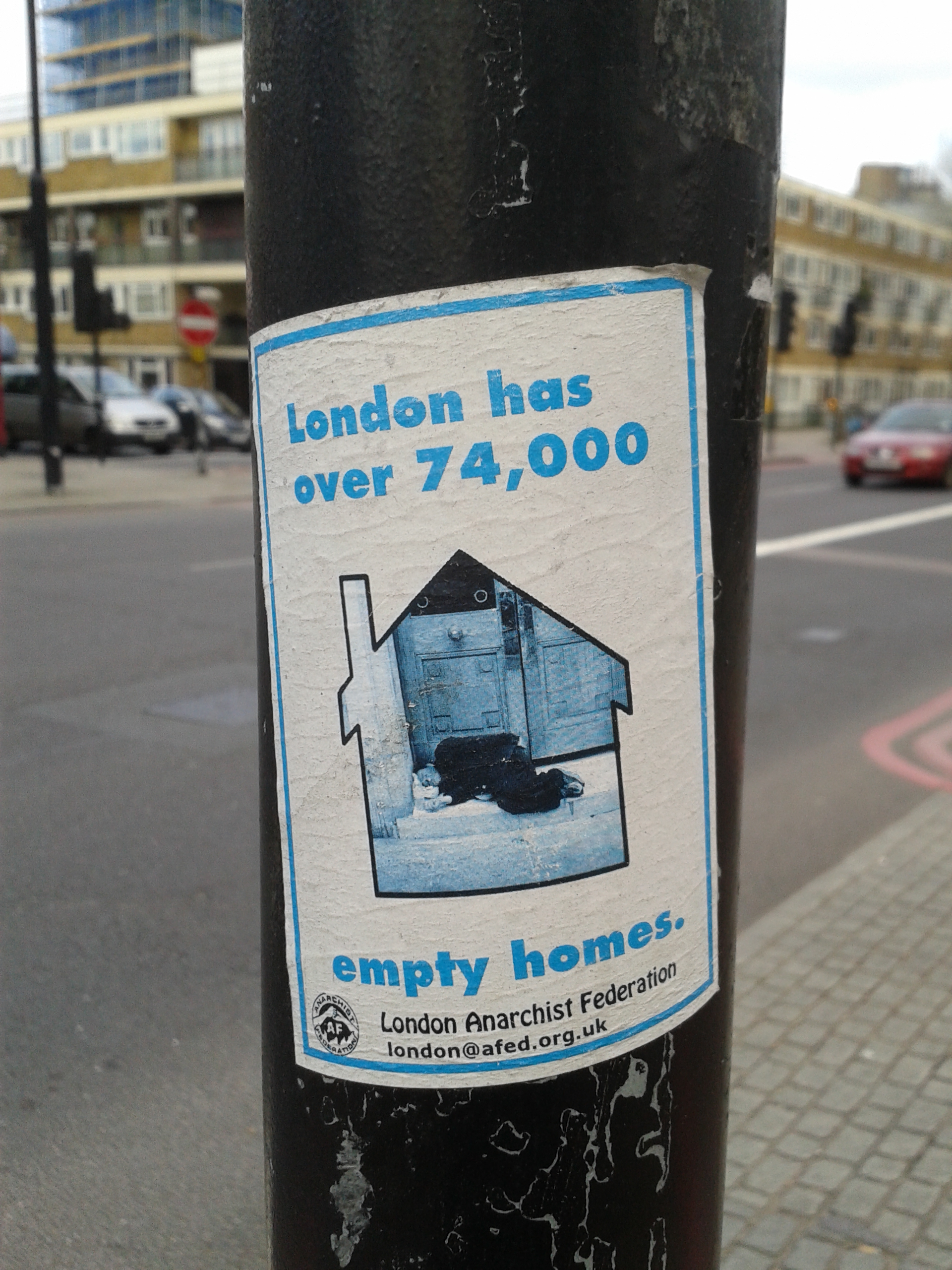
Many homes are bought by investors, kept empty and then sold off for profit a year or two later once the price has risen (08/03/15, Elephant and Castle).
Many homes are bought by investors, kept empty and then sold off for profit a year or two later once the price has risen (Photo: Hannah Awcock, Elephant and Castle, 08/03/15).
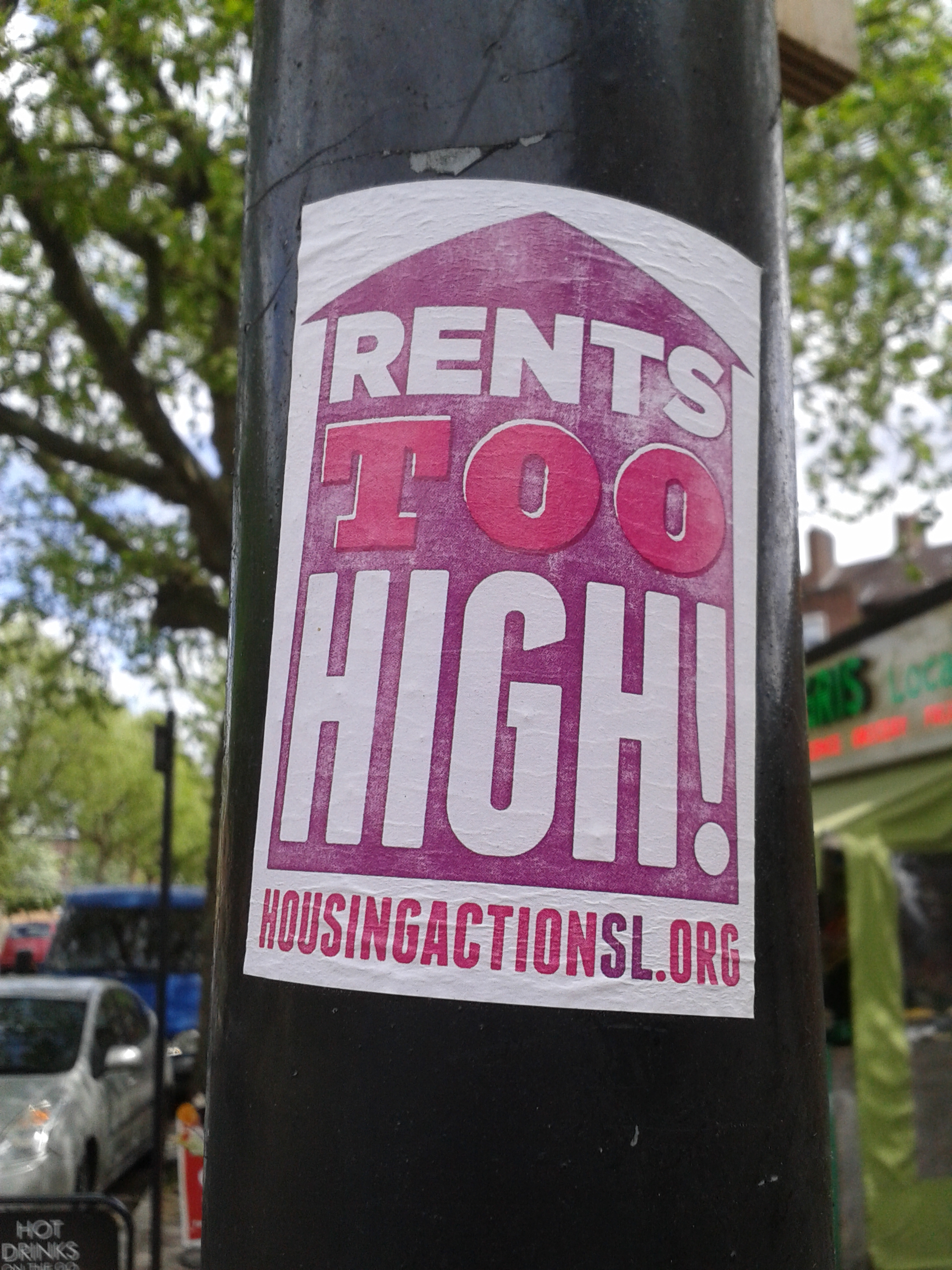
This sticker was produced by Housing Action Southwark and Lambeth, along with several others featured in this post (Flint Street, SE1, 05/05/15).
This sticker was produced by Housing Action Southwark and Lambeth, along with several others featured in this post (Photo: Hannah Awcock, Flint Street, SE1, 05/05/15).
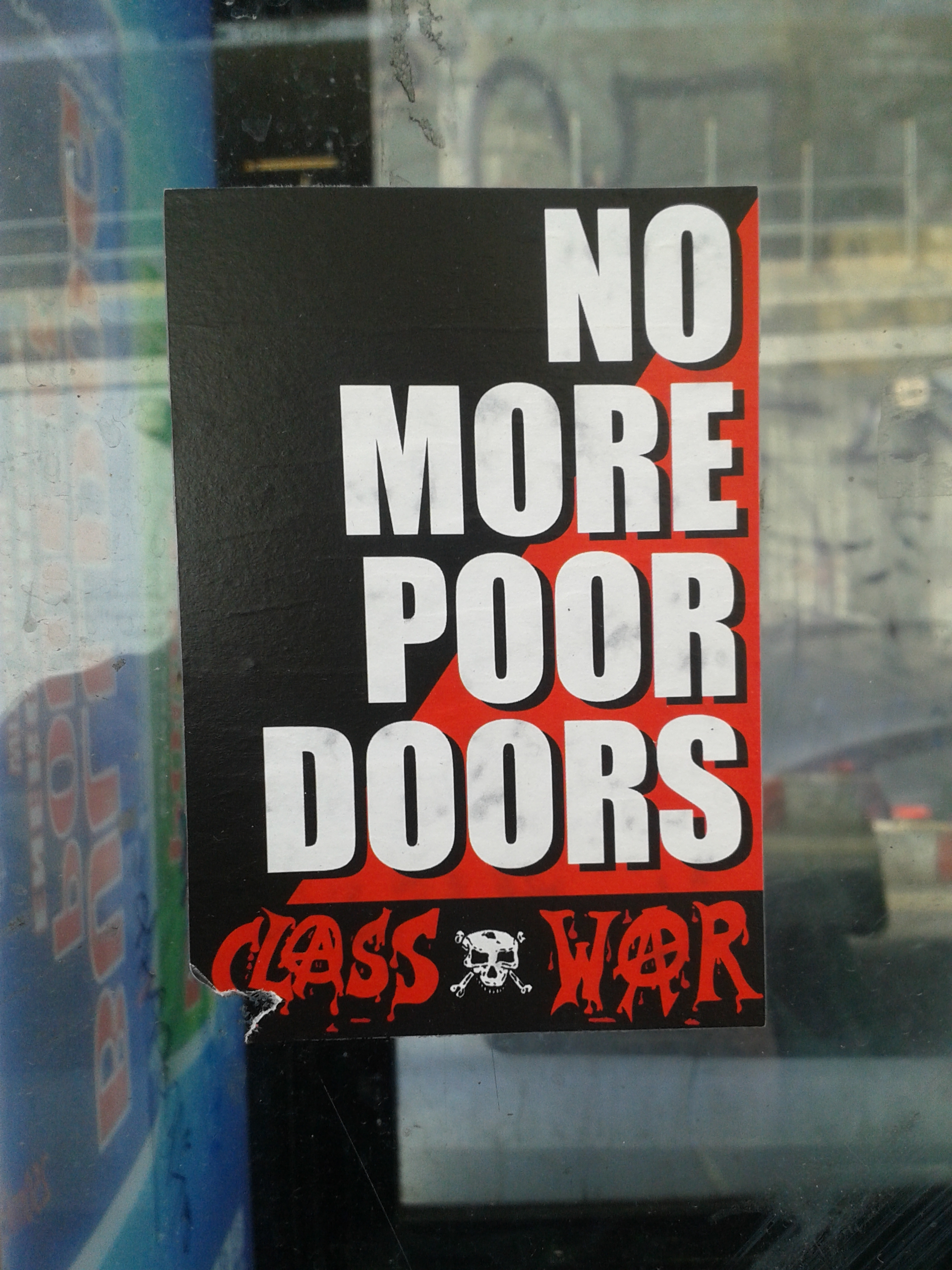
Over the past few months, it has come to light that some property developers build separate entrances for the social housing in their developments.  This sticker is calling for an end to these 'poor doors'.
Over the past few months, it has come to light that some property developers build separate entrances for the social housing in their developments. This sticker is calling for an end to these ‘poor doors’ (Photo: Hannah Awcock, Elephant and Castle, 03/03/15).
Some of the detail on this sticker is hard to make out because of the weathering, but I think it is calling for the Bedroom Tax to be replaced with a 50% Mansion Tax (Cable Street, 25/02/15).
Some of the detail on this sticker is hard to make out because of the weathering, but I think it is calling for the Bedroom Tax to be replaced with a 50% Mansion Tax (Photo: Hannah Awcock, Cable Street, 25/02/15).
This sticker was obviously made by the same people as the previous one,  but it is slightly different. Also, 'Vote for Class War' has been changed to 'Fight for Class War' (Borough High Street, 18/02/15).
This sticker was obviously made by the same people as the previous one, but it is slightly different. Also, ‘Vote for Class War’ has been changed to ‘Fight for Class War’ (Photo: Hannah Awcock, Borough High Street, 18/02/15).
This design was produced by Housing Action Southwark and Lambeth. The picture was taken in East Street, which has recently got attention because of resistance to raids by the UK Border Agency (East Street, Southwark, 04/06/15).
This design was produced by Housing Action Southwark and Lambeth. The picture was taken in East Street, which has recently got attention because of resistance to raids by the UK Border Agency (Photo: Hannah Awcock, East Street, Southwark, 04/06/15).
This design was also produced by HASL, and also refers to social cleansing (East Street, 04/06/15).
This design was also produced by HASL, and also refers to social cleansing (Photo: Hannah Awcock, East Street, 04/06/15).