Cantankerous Campania

Whenever I travel I keep an eye out for evidence or histories of contention, protest and dissent, and I frequently come across interesting stories.  I  recently got back from a family holiday in Sorrento, a mid-sized city in the Italian province of Campania. As well as the city of Naples, Campania is home to some of Italy’s most popular tourist attractions, including Vesuvius, Pompei and the Amalfi Coast. During my holiday, I came across several examples of protest and contentious politics, both historic and contemporary.
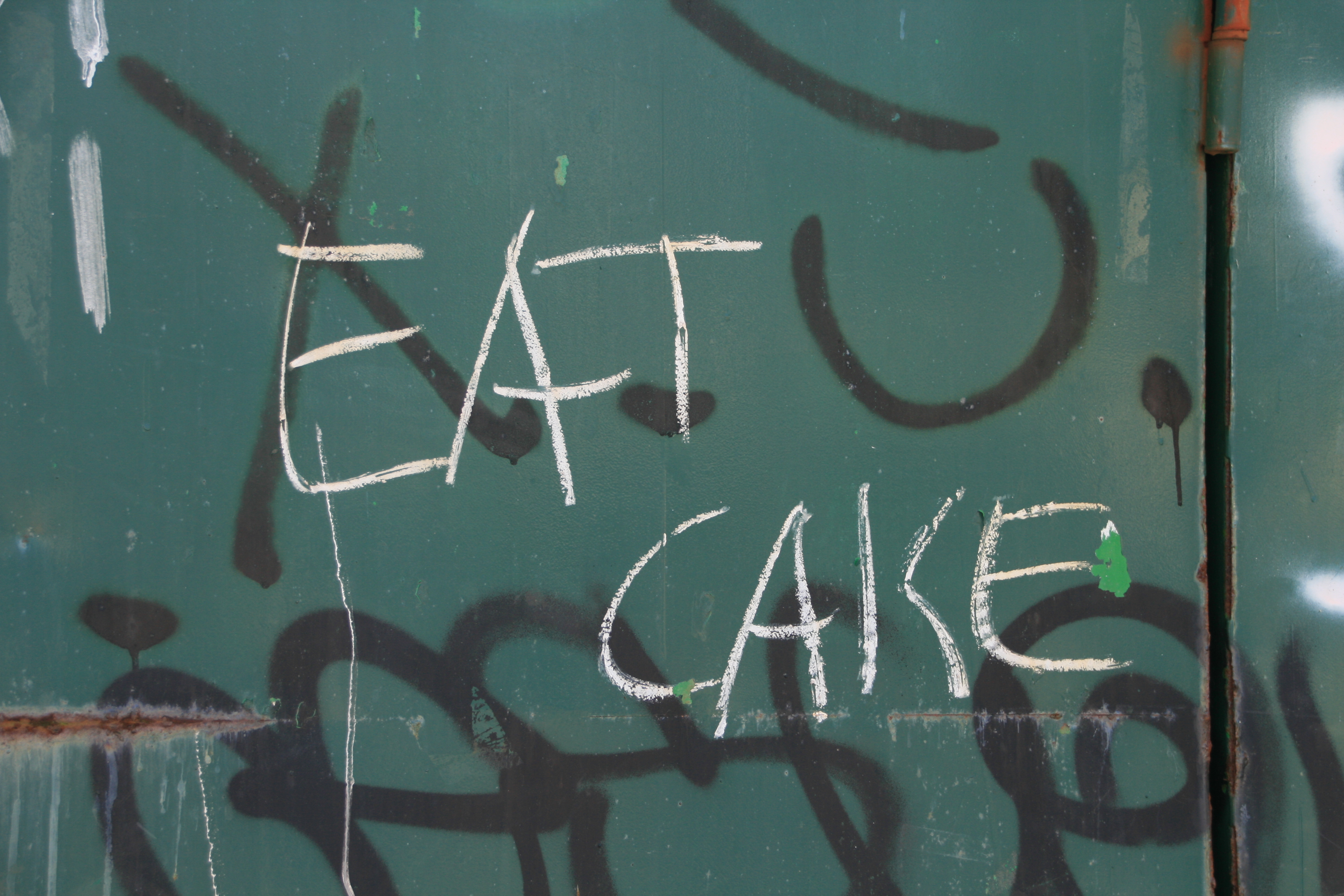
Some Light-hearted Graffiti in Sorrento.
Some Light-hearted Graffiti in Sorrento (Photo: Hannah Awcock).

Pompei is perhaps the most famous tourist attraction in Campania, a Roman city buried during an eruption of Vesuvius in 79 AD, and remarkably well preserved as a result. The city has 2 amphitheatres that are open to the public, one of which was the site of a riot in 59AD, between the local Pompeians and the residents of a nearby town called Nuceria. What started as an exchange of taunts and insults at a gladiatorial competition escalated to the throwing of stones, and finally the drawing of weapons. Casualties were suffered on both sides, although the Nucerians apparently came off decidedly worse. It seems likely that the riot was the culmination of long-term resentments between the citizens of the two towns. As punishment, the Pompeians were banned from holding events in the amphitheatre for 10 years. This story helped me to repopulate the ghostly archeological site, and imagine what Pompei was like before its tragic and sudden destruction.

The Amphitheatre in Pompei that Played Host to a Bloody Riot in AD 59.
The Amphitheatre in Pompei that Played Host to a Bloody Riot in AD 59 (Photo: Hannah Awcock).

Of course Campania is not just a tourist destination, it is also a region where millions of people live, and express dissent. Although I don’t pretend to be familiar with Italian politics, or the Italian language, there were quite obvious signs of contemporary contention as we travelled around. I found several stickers for a Naples anti-fascist group (see image below). The first one I noticed was on a train station platform. The local train network seemed to be a focus point of graffiti and stickers, so the anti-facism sticker did not seem out of place. The second time I spotted the sticker was in a much more incongruous location. At the top of Vesuvius there is scientific equipment to monitor the volcano, and provide advance warning for any future eruptions. One such monitoring station was covered in stickers, including the same Naples anti-fascism one I had seen at the station.

A Sticker of a Naples Anti-Fascism Group on a Train Station Platform.
A Sticker of a Naples Anti-Fascism Group on a Train Station Platform (Photo: Hannah Awcock).
The Measuring Equipment Covered in Stickers at the Top of Vesuvius.
The Measuring Equipment Covered in Stickers at the Top of Vesuvius (Photo: Hannah Awcock).

The other example of contemporary contention I noticed was the acronym A.C.A.B. Standing for All Cops Are Bastards, it is something I have become quite familiar with in England in recent years. I was surprised to find it in Italy though, as I assumed that the phrase would be different in Italian. I noticed it several times however, graffitied on a wall near my hotel, and written in black marker on a train window. I was intrigued by the international quality of this radical sentiment.
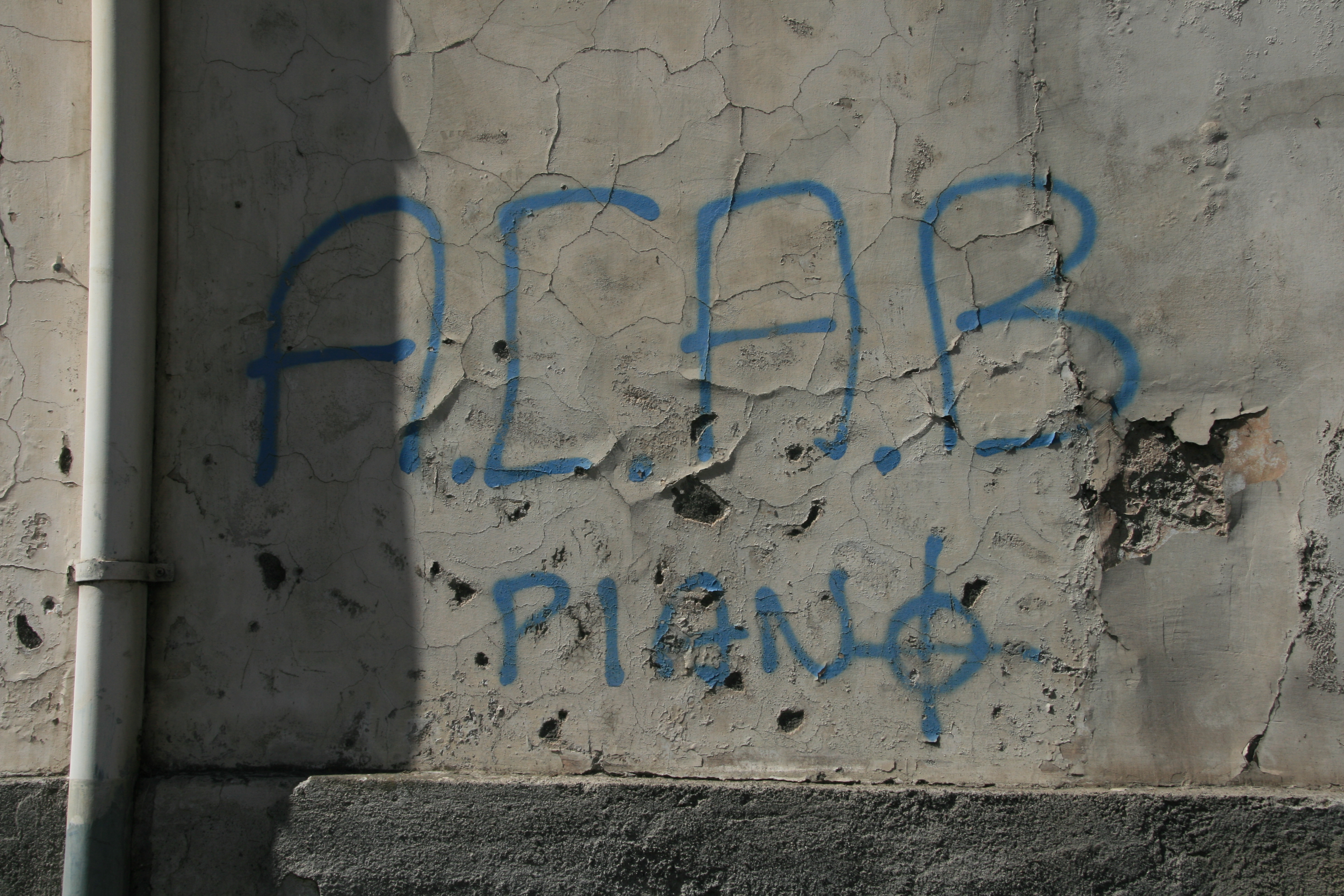
Some Graffiti in Sorrento Expressing Anti-Police Sentiment.
Some Graffiti in Sorrento Expressing Anti-Police Sentiment (Photo: Hannah Awcock).

The history of protest in London, let alone the rest of the world, is vast, and I will never be able to learn about all of it. However trying to find out the contentious histories of new place that I visit helps me feel like I am getting to know that place slightly better, as well as providing some interesting anecdotes when for when I get home!

Protest Songs at the Cambridge Folk Festival

IMG_0324.JPG
The Cambridge Folk Festival 2014 (Photo: Hannah Awcock).

This weekend, I went to the Cambridge Folk Festival for the first time. I had a thoroughly enjoyable weekend, but it also got me thinking. Due to my chronic inability to stop relating absolutely everything I do and see to the topic of my PhD, I started thinking about the role of music in protest and contentious politics. Obviously folk music has a long history, and is a time-honoured way of expressing  the whole range of human emotion, including anger, resentment and discontent.

Modern folk musicians play a key role in preserving traditional folk songs. Many bands and artists at the festival performed songs that have been around for a long time, and commemorated some of the more contentious periods in history. For example the Welsh band Calan performed a song about a fierce battle between the red dragon of Wales and the white dragon of England. The white dragon was soundly beaten, the song being a remnant of times when the relationship between the two countries was not quite as cordial.

Performers also used music to commemorate important figures in the history of protest. Ladysmith Black Mambazo, a South African choir, sung a song about the achievements of Nelson Mandela.  Music and song has been used for centuries to memorialise great people, acts, and events, and the tradition continues to this day.

img_0226.jpg
Pokey LaFarge at the Cambridge Folk Festival 2014 (Photo: Hannah Awcock).

However the festival was not entirely focused on the past. Musicians used original songs to voice critique about the current state of society. For example Pokey LaFarge, an American singer, performed a song decrying the state of the American healthcare system. Before performing the song, he said that it was important to him that his opinions on the issue were ‘on record’, and perhaps in several hundred years the song will still be remembered and performed by other musicians like him. This also brings to mind more popular artists like Bruce Springsteen and Morrissey, whose politics permeate their music.

The aural is a factor which is frequently overlooked in human geography, although there are some who are trying to address that imbalance (see for example the work of Anja Kanngieser (http://anjakanngieser.com/). I think the archives are particularly vulnerable to a silent perspective on life, as our ability to capture sound is a relatively recent phenomenon. In the hushed atmosphere of the archive, it is easy to forget the sounds and noises that would have accompanied the events you are reading about. It is important to bear in mind that protest, and life in general, does not take place in silence, far from it in fact. Music and sound play a key role in protest, be it in the form of chants, political song lyrics, or simply just loud, upbeat music to lift spirits and get a protest noticed. The Cambridge Folk Festival reminded me that life is loud and music is powerful, and that is a lesson I will try to hang on to.