Reading the Riot Act 2: Luddites and Micks

Last year, I wrote a post about the protest-related origins of the phrase ‘reading the riot act,’ amongst others, and since then I have been on the lookout for other phrases which also have their origins in periods of strife. What I’ve found are two terms to describe people. If you have ever called someone, or been called by someone, a ‘Luddite’ or a ‘Mick’ (to describe an Irish person, not someone who’s name is Michael), then you have been referring to Britain’s long history of dissent.

A Luddite is someone who dislikes technology (Source: Poughkeepsie Day School).

A Luddite is a term frequently used to refer to someone who disapproves of new technologies. For most people, it is an insult, but others embrace the name with pride. If the origins of the term were more widely known, perhaps more people would be proud of the name. The Luddites was the collective name given to English textile workers who protested against the mechanization of their trade between 1811 and 1816. The new technologies of the Industrial Revolution meant that textiles could be mass-produced by unskilled, low-wage workers, forcing skilled artisans out of work.

The (probably) fictional leader of this movement was called General, or King, Ludd, and reportedly lived in Sherwood Forest, the home of another mythical champion of the people, Robin Hood. The name may come from Ned Ludd, who allegedly smashed two stocking frames in 1779.  The Luddite protests began in Nottinghamshire and quickly spread through the midlands and North of England. The demonstrators sent threatening letters to employers and broke into factories to destroy new machines. In 1812, machine breaking became punishable by death, and 17 men were executed the following year. Obviously the Luddites were unsuccessful at halting the march of the Industrial Revolution, but they made such an impression that their name is still used, 200 years later.

‘Mick’ is a derogatory word to describe an Irish person. There are several explanations for the origin of the term, but my favourite comes from London’s contentious past. Michael Barrett has the dubious honour of being the last person to be publicly hanged in England. In May 1868 he was executed for his role in the Clerkenwell Outrage on the 13th of December 1867. 12 people were killed in a bombing outside the Middlesex House of Detention in Clerkenwell, shocking Londoners and turning them against the cause of Irish nationalism. Michael Barrett’s name became synonymous with all Irish people.

The bomb was a failed jailbreak that went disastrously wrong. Prominent Fenians Richard O’Sullivan Burke and Joseph Casey were being held in the Clerkenwell prison. A barrel of gunpowder was placed against the wall of the prison’s exercise yard and set off with a firework, with the aim of blowing a hole in the wall so Burke and Casey could escape. Far too much gunpowder was used and the blast damaged a row of tenement houses on the other side of the road. 12 people were killed and up to 120 were injured. The prison authorities knew something was being planned, so the prisoners were locked in their cells instead of exercising at the time of the bombing, and Burke and Casey failed to escape. Although Michael Barrett was charged along with several others, he was the only one who was actually convicted of the bombing.

The English language has many phrases which, when you actually stop to think about them, appear to be absolute nonsense. But when you start to trace it back, you often find a great story that explains it, and offers a tiny window onto Britain’s chequered past.

Sources and Further Reading

Anon. “Luddite.” Wikipedia. Last modified 7th June 2015, accessed 12th June 2015. https://en.wikipedia.org/wiki/Luddite

Anon. “Michael Barrett (Fenian).” Wikipedia. Last modified 17th December 2014, accessed 23rd June 2015. https://en.wikipedia.org/wiki/Michael_Barrett_(Fenian)

Anon. “Mick.” No date, accessed 12th June 2015. http://www.urbandictionary.com/define.php?term=Mick

Webb, Simon. Dynamite, Treason and Plot: Terrorism in Victorian and Edwardian London. Stroud: The History Press, 2012.

Turbulent Londoners: Bernie Grant, 1944-2000

Turbulent Londoners is a series of posts about radical individuals in London’s history who contributed to the city’s contentious past. My definition of ‘Londoner’ is quite loose, anyone who has played a role in protest in the city can be included. Any suggestions for future Turbulent Londoners posts are very welcome. The next Turbulent Londoner is Bernie Grant, who devoted his life to campaigning for equality across various forums.


A plaque commemorating the work of Bernie Grant can be found on Tottenham Town Hall in London (Source: jelm6).

Bernard Alexander Montgomery Grant, known to most as Bernie Grant, was an influential campaigner for civil rights in Britain and around the world. In a political career that spanned four decades, he fought to promote equality of all kinds as a trade union leader, a member of local government, and a Member of Parliament. Although he spent the majority of his career in mainstream politics, he still deserves the status of a Turbulent Londoner as he continued to fight for what he believed in once he was elected, and acted as “a red rag to the bulls of rightwing politics” (Phillips, 2000).

Born in Georgetown, Guyana on the 17th February 1944, Bernie Grant moved to London with his parents when he was 19. He studied at Heriot-Watt University in Edinburgh, but left in 1969 in protest against discrimination against black students. He started working as a telephonist for the Post Office at the International Telephone Exchange in King’s Cross, and became involved in trade union politics during the Post Office strike in 1970. In 1978 Bernie became an Area Officer for the National Union of Public Employees, a full-time job.

Also in 1978, Bernie became a Labour Councillor in the north London borough of Haringey. He founded the Black Trades Unionists Solidarity Movement, and worked there full time between 1981 and 1984. In 1985, he earned the nickname ‘Barmy Bernie’ from the tabloid press because of his leadership of the opposition against the Conservative government’s rate-capping, which meant that central government could restrict the spending of local councils. He is in good company; the name ‘Suffragettes’ was coined by a reporter at the Daily Mail.

Haringey Council emerged from the dispute with central government with Bernie Grant as leader. He was the first black man to hold such a position in Europe. Bernie practiced what he preached, and Haringey was one of the few local councils to develop policies that tackled discrimination on the basis of disability, gender, race, or sexual orientation. After the controversial Broadwater Farm riots on the 6th of October 1985 Bernie stood up for the local youth, despite widespread and frequently vicious criticism.

The Broadwater Farm controversy didn’t damage Bernie’s reputation enough to prevent him being elected the Member of Parliament for Tottenham in 1987. He caused a stir by attending his first state opening of parliament in African dress, another of his ‘red rag’ moments. Once in Parliament, Bernie continued to fight for what he believed in. He founded the Parliamentary Black Caucus, and campaigned to end racism in the UK and abroad, against racist policing methods, deaths in police custody, and institutionalised racism in education, housing, and health. He also fought for the rights of refugees, greater resources for inner city areas, the elimination of overseas debt for poor nations, and the recognition of past colonialism and enslavement. He worked hard for his constituency, campaigning for a major cultural and arts facility, now called the Bernie Grant Arts Centre in his name.

Bernie Grant remained the MP for Tottenham until his death on the 8th of April 2000, aged 56. He was a man who never shied away from what he thought was right, even in the face of party politics and widespread criticism. He proved that it is possible to make positive changes from within the official system of government, a lesson which is worth hanging onto in the face of modern mainstream politics.

Sources and Further Reading

Anon. “Bernie Grant.” Wikipedia. Last modified 4th May 2015, accessed 18th June 2015. https://en.wikipedia.org/wiki/Bernie_Grant

Phillips, Mike. “Bernie Grant.” The Guardian. Last modified 10th April 2000, accessed 18th June 2015. http://www.theguardian.com/news/2000/apr/10/guardianobituaries.obituaries

The Bernie Grant Archive. No date, accessed 18th June 2015. http://berniegrantarchive.org.uk/

Protest Stickers: Chicago

Like most cities around the world, stickers are a common sight in Chicago.
Like most cities around the world, stickers are a common sight in Chicago (Photo: Hannah Awcock).

In April 2015, I went to the annual conference of the American Association of Geographers, which this year was held in Chicago, Illinois. Seeing as I was flying almost 4000 miles, I also took some time to look around the city. There are plenty of protest stickers to be found in Chicago, just like in New York and London. As in other cities, protest stickers in Chicago give us a clue as to what social movements and subversive political campaigns are striking a chord in the city. These movements reflect multiple scales, from the local to the international. Below are some of my favourite pictures from the Windy City.

This was the first sticker I found in Chicago, on my first evening. That was when I knew I was going to like this city!
This was the first sticker I found in Chicago, on my first evening. That was when I knew I was going to like this city! (Photo: Hannah Awcock).
Many of the stickers were about local issues. Such as this sticker promoting mayoral candidate Emanuel Rahm, who I assuming has an Irish background because of the clovers.
Many of the stickers were about local issues, such as this sticker promoting mayoral candidate Emanuel Rahm, who I assume has an Irish background because of the clovers. I don’t know if the ‘Get Real’ sticker below is intentional or just a coincidence, but I like to think it was put there on purpose! (Photo: Hannah Awcock).
Or this one, supporting Rahm's opponent, Jesus 'Chuy' Garcia. It plays on the Chicago flag, which is four stars on a white background between two blue stripes.
This sticker supports Rahm’s opponent, Jesus ‘Chuy’ Garcia. It plays on the Chicago flag, which is four stars on a white background between two blue stripes. The election took place on the 7th of April 2015, so it’s not surprising there was still a lot of evidence of it when I was there in late April (Photo: Hannah Awcock).
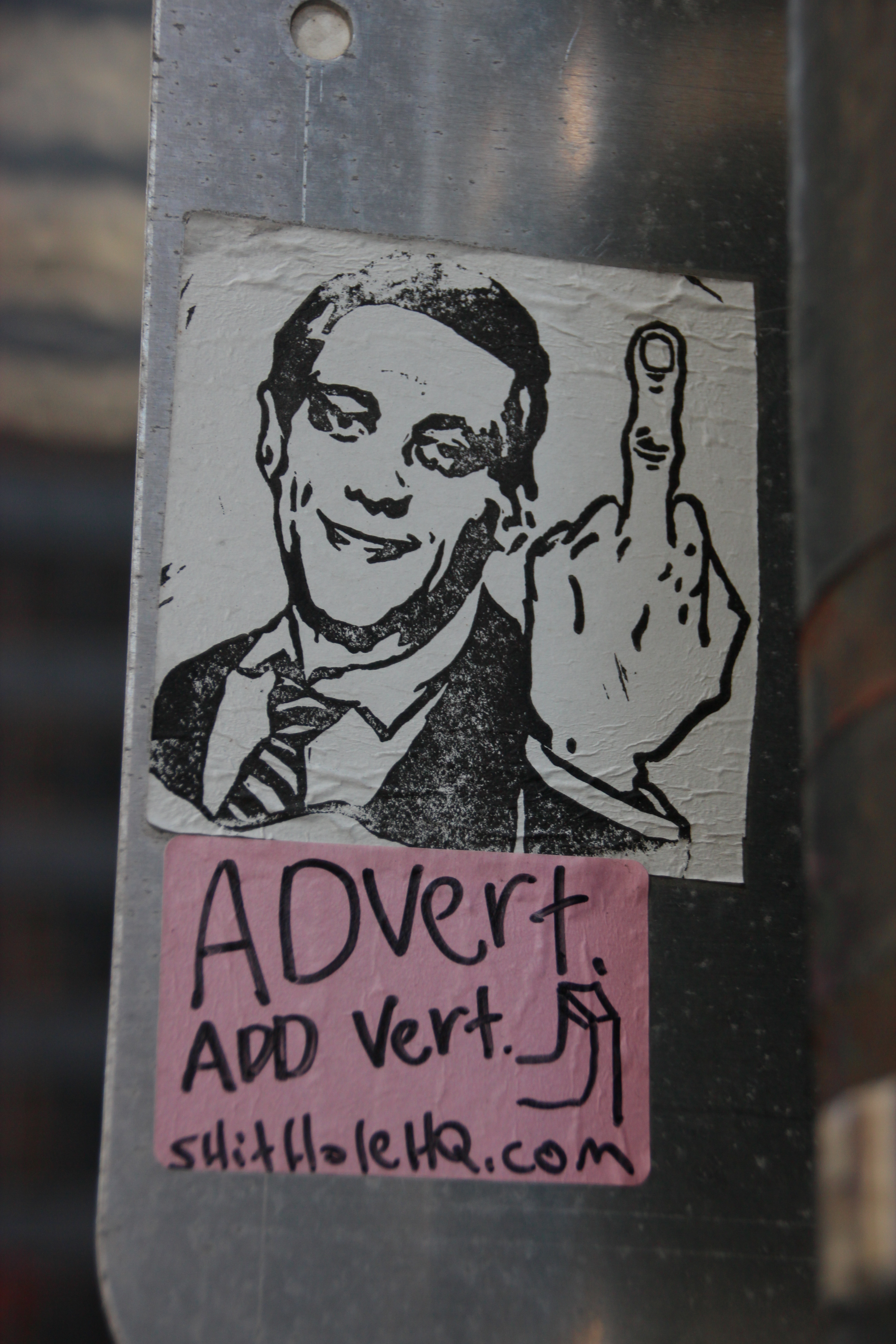
Rahm won the election in April, but he is clearly not universally supported. This sticker is a drawing of him.
Rahm won the election in April, but he is clearly not universally supported. This sticker is a drawing of him (Photo: Hannah Awcock).
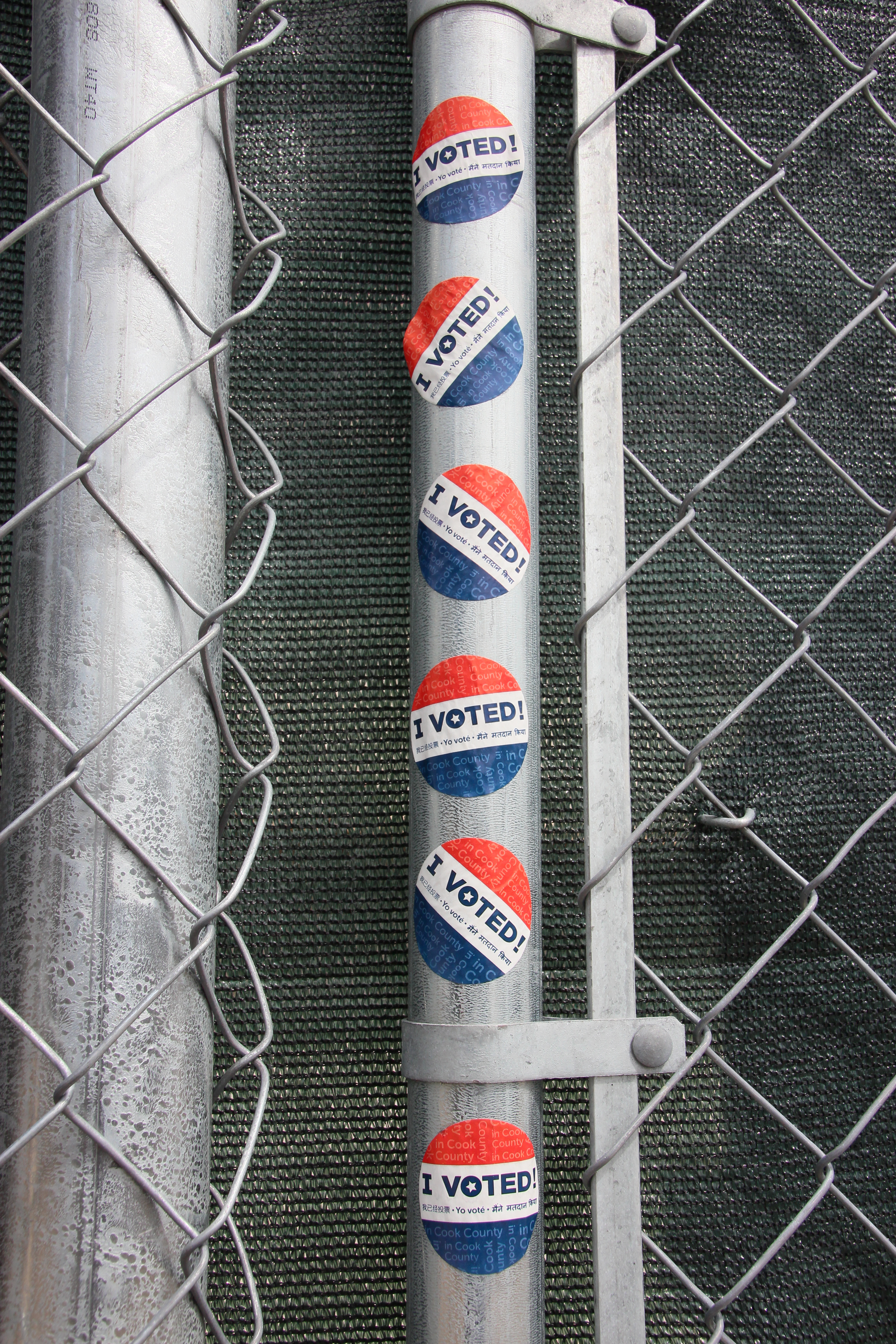
These stickers also relate to electoral politics. I assume they were handed out at a polling station, but I don't know how they ended up on this chain link fence.
These stickers also relate to electoral politics. I assume they were handed out at a polling station, but I don’t know how they ended up on this chain link fence close to Lake Michigan (Photo: Hannah Awcock).
The recent controversy surrounding the relationship between the US police and African Americans was also a common theme. This sticker was advertising a demonstration. Similar stickers were in New York, advertising a protest on the same day.
The recent controversy surrounding the relationship between the US police and African Americans was also a common theme. This sticker was advertising a demonstration. I found similar stickers in New York, advertising a protest on the same day (Photo: Hannah Awcock).
This sticker is decidedly anti-police, playing rather unsubtly on the fact that police are often called 'pigs'.
This sticker is decidedly anti-police, playing rather unsubtly on the fact that police are often called ‘pigs’ (Photo: Hannah Awcock).
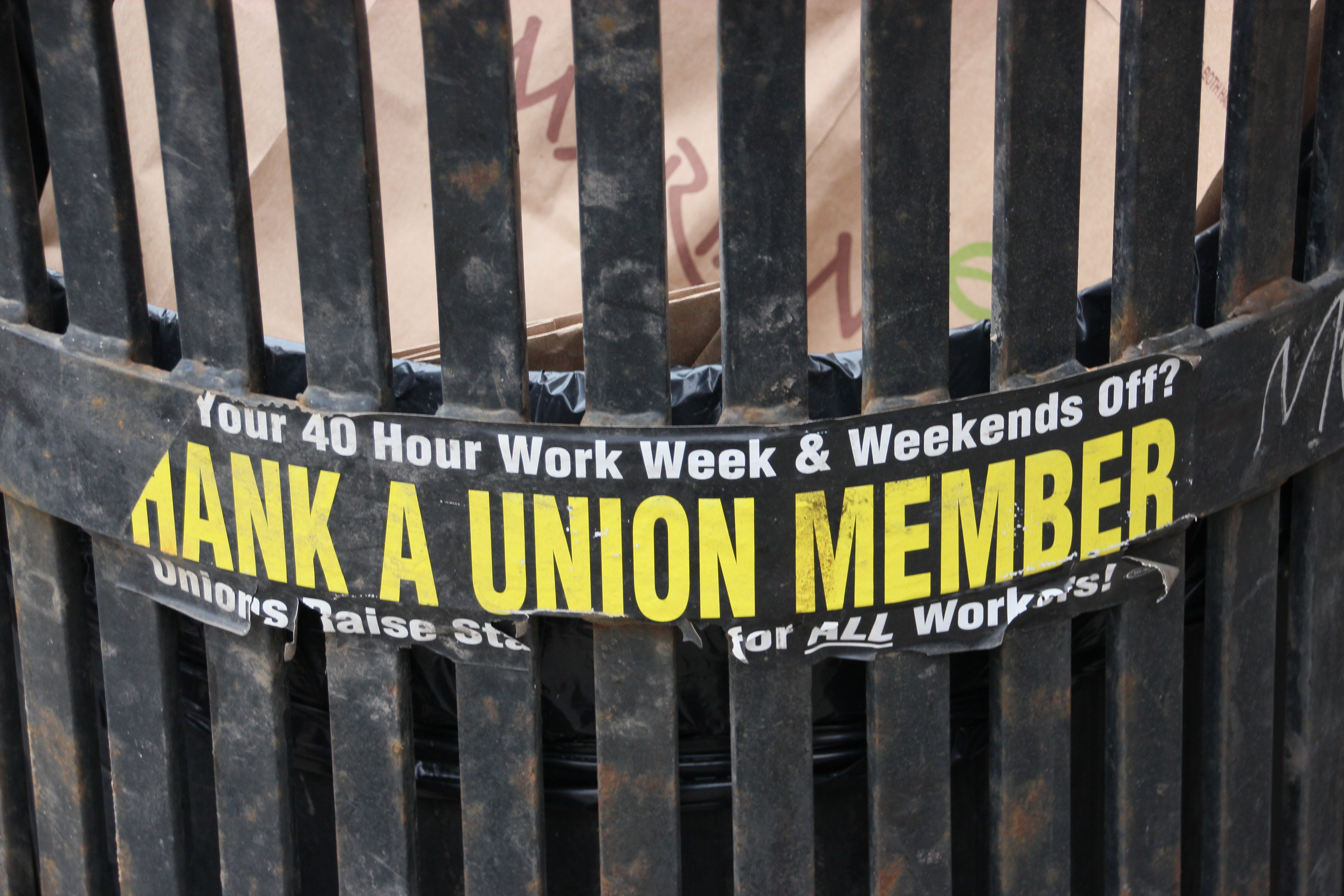
Another recurring theme were unions,. This sticker reminds people of the various workers' rights that unions have fought for in the past.
Another recurring theme were unions. This sticker reminds people of the various workers’ rights that unions have fought for in the past. It is also a good example of how the message of stickers can become harder to decipher as they age and deteriorate (Photo: Hannah Awcock).
Some themes were not so familiar however. This sticker is about anti-bullying.
Some themes were not so familiar however. This sticker is about anti-bullying (Photo: Hannah Awcock).
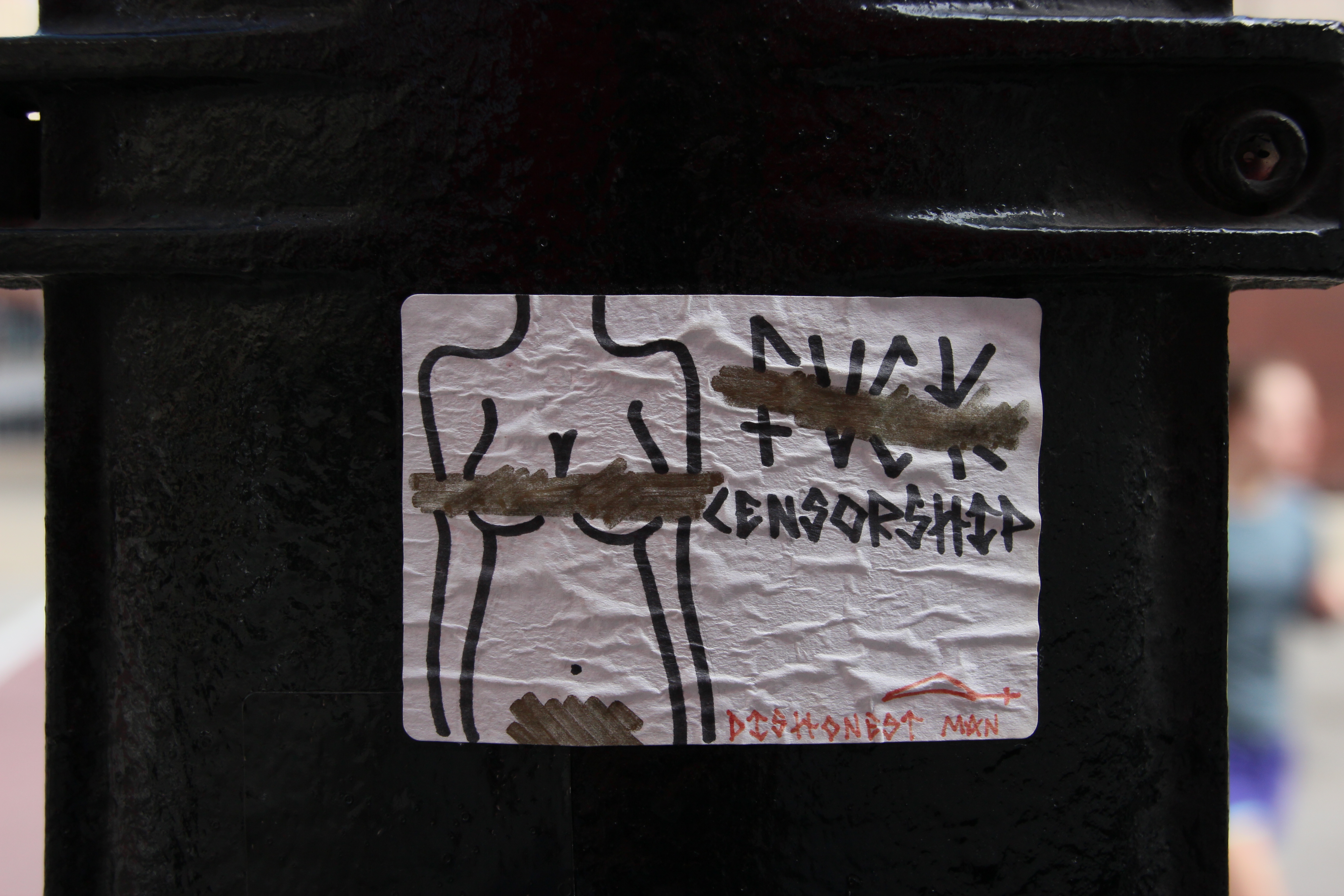
Another uncommon theme was feminism. This sticker criticises censorship of the female body.
Another uncommon theme was feminism. This sticker criticises censorship of the female body…(Photo: Hannah Awcock)
...whilst this handmade sticker encourages women to celebrate their body.
…whilst this handmade sticker encourages women to celebrate their body (Photo: Hannah Awcock).
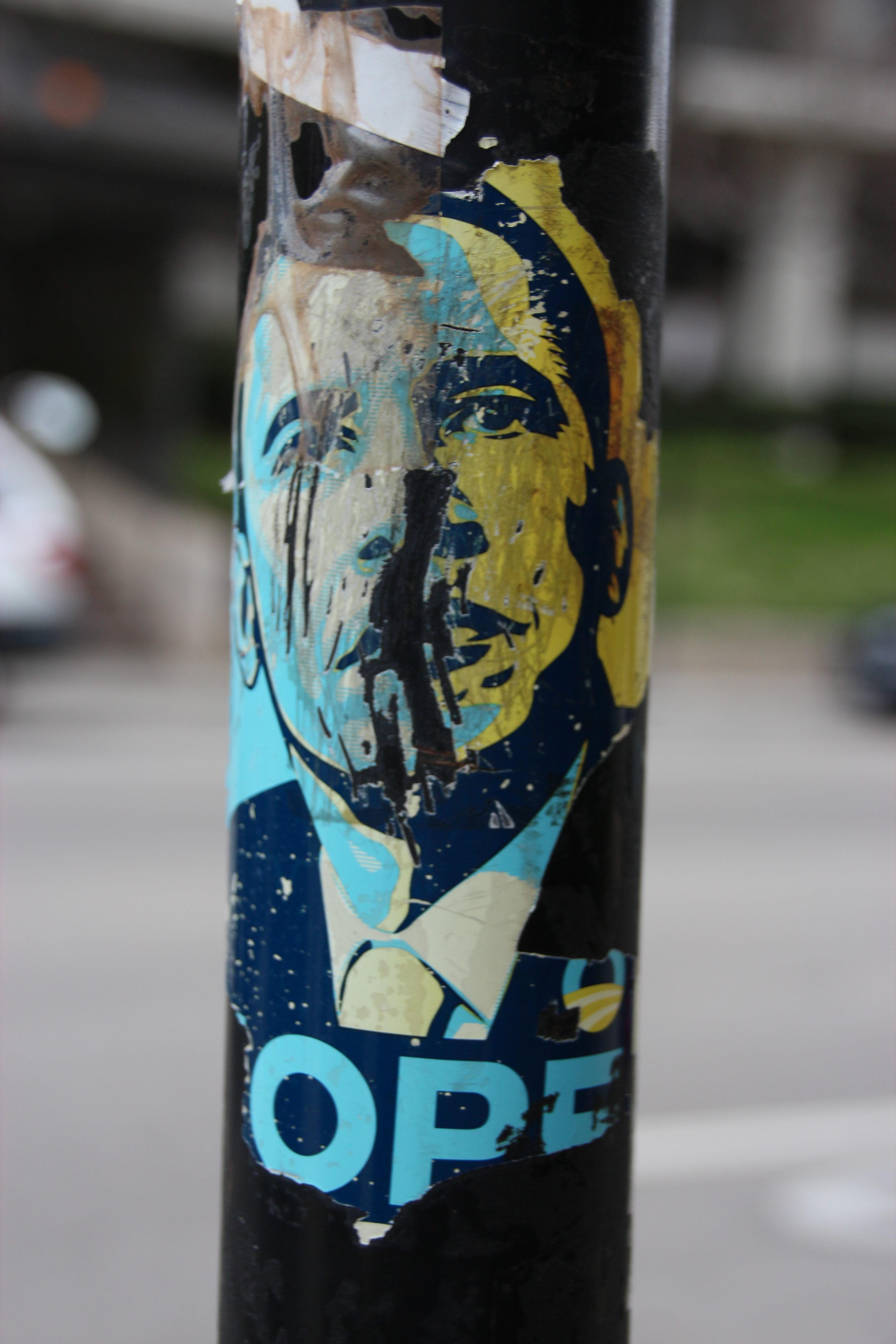
This image of Barack Obama references the Obey theme from the work of street artist Shepard Fairey. It also looks very similar to the iconic poster from Obama's 2008 election campaign, which was also designed by Shepard Fairey.
This sticker is a version of the poster designed for Barack Obama’s 2008 election campaign, which normally has a red and blue colour scheme. It was designed by the street artist Shepard Fairey, who’s Obey street art is world-famous (Photo: Hannah Awcock).
This sticker also references a national campaign. The Fight for 15 is part of the movement demanding a $15/hr minimum wage. Protests took place all over the country on April the 15th, or 4/15 in the American style of dating.
This sticker also references a national campaign. The Fight for 15 is part of the movement demanding a $15/hr minimum wage. Protests took place all over the country on April the 15th, or 4/15 in the American style of dating (Photo: Hannah Awcock).
These stickers are a little more intellectual than usual, and don't exactly make it easy to understand the argument being made.
These stickers are a little more intellectual than usual, and don’t exactly make it easy to understand the argument being made (Photo: Hannah Awcock).
Fascism is a world-wide issue, and so too is the anti-fascism campaign.
Fascism is a world-wide issue, and so too is the anti-fascism campaign. I have seen very similar stickers in London (Photo: Hannah Awcock).
This weathered sticker is for the Stop Staples campaign, which is attempting to prevent Staples from doing a deal with the U.S. Postal Service which would involve setting up postal counters in Staples stores with low-paid, untrained Staples employees.
This weathered sticker is for the Stop Staples campaign, which is attempting to prevent Staples from doing a deal with the U.S. Postal Service which would involve setting up postal counters in Staples stores with low-paid, untrained Staples employees (Photo: Hannah Awcock).
This sticker doesn't appear to be linked to any campaign in particular, and could be referencing any number of issues such as climate change or consumerism.
This sticker doesn’t appear to be linked to any campaign in particular, and could be referencing any number of issues such as climate change or consumerism (Photo: Hannah Awcock).
This is not a protest sticker, but I just liked it so much that I decided to put it in. It's pretty good advice too!
This is not a protest sticker, but I just liked it so much that I decided to put it in. It’s pretty good advice too! (Photo: Hannah Awcock).

Special thanks to Llinos Brown, who put up with my odd habit of taking close-up pictures of random bits of street furniture and also helped me find a few stickers whilst we were in Chicago.

Book Review: Dynamite, Treason and Plot- Terrorism in Victorian and Edwardian London

'Dynamite, Treason and Plot' by Simon Webb.
‘Dynamite, Treason and Plot’ by Simon Webb.

Webb, Simon. Dynamite, Treason and Plot: Terrorism in Victorian and Edwardian London. Stroud: The History Press, 2012.

There is a tendency today to see terrorism as some modern aberration, something that has arisen in recent years and might with luck fade away in time. This is unlikely. Terrorism of different sorts has been a constant backdrop in British history for centuries; it is likely to remain so for centuries to come. The notion that increased vigilance on the part of the public, combined with wise and good laws passed by Parliament, might one day defeat terrorism and usher in a peaceful era, where nobody needs to worry about bombs and assassinations, is a chimera.

Webb, p.151

As far as most people are concerned, Guy Fawke’s plot, the IRA bombings of the 1970s and 7/7 are probably the only examples of terrorism in London. In Dynamite, Treason and Plot: Terrorism in Victorian and Edwardian London, Simon Webb sets out to correct that misconception. From the Clerkenwell Outrage, where 12 people were killed in a Fenian prison break gone wrong; to the Tottenham Outrage (not every event is known as an Outrage, I promise!), a chase that lasted several hours and involved the hijacking of a tram and a milk cart, the stories Webb tells range from the horrific to the downright farcical.

Arguably the biggest strength of Dynamite, Treason and Plot is the emphasis on continuity. Humans have a tendency to believe that everything that happens is new, that the problems faced by modern society are unique to our time. Webb proves the inaccuracy of this belief, demonstrating that not only terrorism, but also immigration and xenophobia, are issues that the people of London have been grappling with for centuries. Irish, Jewish, and more recently Muslim; many minorities have been the subject of fear and discrimination in the city, and terrorism has frequently exacerbated the tensions.

Another of the strengths of Dynamite, Treason and Plot is Webb’s approach to terrorism itself. Webb doesn’t condemn the terrorists he describes outright, but neither does he glorify them. The first chapter of the book is devoted to discussion of the theories and motivations behind terrorism. It is not necessarily the mindless, monstrous violence which it is often portrayed as-there are particular reasons why people choose to resort to terrorism-and Webb takes them into account. Terrorism is an emotive subject, difficult to deal with in a sensitive and balanced way, but I think Webb does a good job of this.

Webb’s writing style can be repetitive; he frequently makes the same point twice in quick succession, and he often says how it was “nothing short of a miracle” that more people weren’t killed or injured in the events he recounts. He makes assertions, making a point without providing any supporting evidence, and often overlooks some of the historical controversies and debates. For example, in the chapter about the Suffragettes, Webb mentions the alleged plot to assassinate David Lloyd George by the Wheeldon family. In Dynamite, Treason and Plot it appears there is no doubt that that is what actually happened, but in To End all Wars by Adam Hochschild the event appears much more complicated. Hochschild suggests that the whole thing may have been a set-up, the plot concocted by the government to harm the opposition to the First World War, of which the Wheeldon family was a part. Whatever the truth, Webb completely ignores the debate, and as such misses out on some of the nuances of the story.

Despite the shortfalls I think Dynamite, Treason and Plot is well worth a read. It is an engaging read that deals with some of London’s darker, overlooked history. Webb puts terrorist into political and social context, rather than treating it as an isolated and inexplicable phenomenon to be instantly condemned.

On This Day: The Clerkenwell Outrage, 13th December, 1867

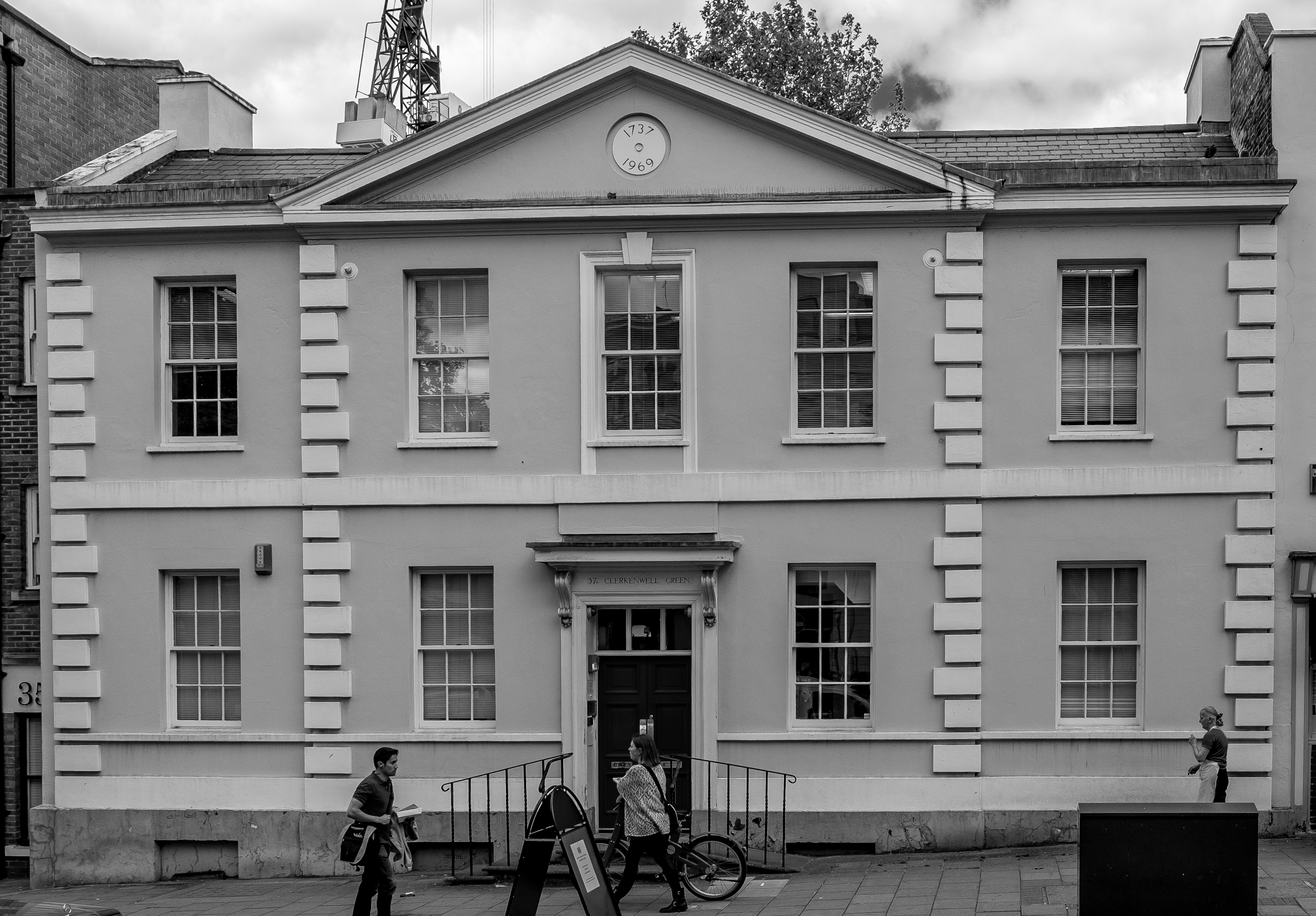
Clerkenwell has been the focus of a large amount of turbulence over its history, even for an area of London. During the Peasant’s Revolt in 1381 the priory of St. John was burnt down because of its wealth and connections with Sir Robert Hales, a hated tax collector. Lenin moved into 37a Clerkenwell Green in 1902, and published 16 issues of Iskra, a pre-Bolskevik newspaper from there. The house is now the Marx Memorial Library. The area has also harboured religious nonconformists, such as the Lollards and early Methodists. Clerkenwell Green, historically an open, grassy area, has played host to many political meetings and demonstrations, some more peaceful than others. But on the 13th December 1867, Clerkenwell was rocked by an explosion that shocked even this contentious neighbourhood.

Lenin used to live in the building that is now the Marx Memorial Library in Clerkenwell (Source: Steven Collins).

The story begins in America in 1858. A group of Irish expatriates founded a secret society called the Irish Republican Brotherhood, known to most as the Fenians. Their aim was to free Ireland from British rule by any means necessary, including attacks on the British establishment in Ireland, other colonies, and even the mainland itself. By the middle of the 1860s, there were Fenian groups in Soho and Finsbury. By 1867, they were proving quite troublesome to the authorities. After a failed attempt to steal over 10,000 rifles from Chester Castle in February to arm an Irish uprising and the breakout of two prominent Fenians from a prison van in Manchester that resulted in the death of a Police Sergeant in September, tensions were running high.

Richard O’Sullivan-Burke was largely thought to be the man who led the Manchester prison van breakout. He was arrested in London in November along with another man called Joseph Casey. To avoid a repeat of Manchester the men were quickly transferred to the Clerkenwell House of Detention, just to the North of Clerkenwell Road. The prison was formidable, surrounded by a wall 25ft high and over 2ft thick. The men obviously had friends in London—every day cooked food was brought to them by a woman named Anne Justice, and rumours of an escape attempt soon reached the authorities.

Extra guards and uniformed police were posted in and around the prison in response to the warning. Despite this, an attempt was made to break out O’Sullivan-Burke and Casey on the 12th of December. A man wheeled a large barrel up the prison wall by the exercise yard, and attempted to light a fuse on the barrel twice before he gave up, and wheeled the barrow off. A policeman watched the entire thing, but did not think it suspicious. The next day, another, similar attempt was made. This time, a firework was used as a fuse, and it turned out to be much more reliable. The resulting explosion was heard all over London. It levelled 60ft of the prison wall, and the front of a row of houses across the street in Corporation Row. 12 people were killed, and 120 others were injured.

“Britain’s first terrorist bombing” (Webb, 2012; p53) was an unmitigated disaster. Because of the failed attempt the day before the prisoners were not even in the exercise yard at the time of the explosion. Which was lucky in a way, as the Fenians had used far too much gunpowder (548lbs of it to be exact), and the explosion would have killed anyone in the yard. It sparked hysteria across the capital; it was said that twenty babies were killed in the womb by the blast, and that the explosion was a signal to begin a whole wave of terrorist attacks across the city. There were calls for new laws and emergency powers which would not be unfamiliar to us today. Any sympathy that there had been for the Irish cause amongst Londoners evaporated, and the government set up the first Secret Service Department, with the goal of gathering intelligence and anticipating future Fenian attacks. It was the forerunner of today’s Special branch and MI5. 5 people were charged with murder, including Anne Justice, but a man named Michael Barrett was the only one convicted. He has the dubious distinction of being the last person to ever be publicly executed in Britain.

Sadly, London is no stranger to terrorism. The Clerkenwell Outrage may have been Britain’s first terrorist bombing, but it was not the first terrorist plot, with conspiracies going back as far as the 1605 Gunpowder Plot and beyond.  In light of everything that has been going on recently, it can be helpful to remember that this is not the first time London has faced vague and shadowy threats; the city has always continued to survive and thrive.

Sources and Further Reading

German, Lindsey and John Rees. A People’s History of London. London: Verso (2012).

Hunt, Nick. “History and Politics.” Plunging into History. No date, accessed 21st November 2015. Available at http://www.plungingintohistory.com/ir-area-historyandpolitics

Merat, Aaron. “Clerkenwell’s Hidden Communist History.” Islington Now. Last modified 11th March 2010, accessed 21st November 2015. Available at   http://islingtonnow.co.uk/2010/03/11/clerkenwells-hidden-communist-history/

Webb, Simon. Dynamite, Treason and Plot: Terrorism in Victorian and Edwardian London. Stroud: The History Press (2012).

White, Jerry. London in the 19th Century: A Human Awful Wonder of God. London: Vintage (2007).

Turbulent Londoners: Muriel Lester, 1883-1968

Turbulent Londoners is a series of posts about radical individuals in London’s history who contributed to the city’s contentious past. My definition of ‘Londoner’ is quite loose, anyone who has played a role in protest in the city can be included. Any suggestions for future Turbulent Londoners posts are very welcome. Next up is Muriel Lester, a social reformer and pacifist.


Muriel Lester in 1938 (Source: Wikimedia Commons).

Muriel Lester was a social reformer, pacifist, feminist and non-conformist. Like Charlotte Despard, she turned away from her privileged life, dedicating herself to helping the poor and advocating peace. Born in Leytonstone on the 8th of February 1883 to a wealthy Baptist family, by the time of her death aged 83 she had travelled the world, founded a social centre that still exists today, and been nominated for the Nobel Peace Prize. Twice.

Muriel moved to Bow in East London with her sister Doris in 1908. At the start of the twentieth century the East End was crowded and very poor. Many middle- and upper-class humanitarians were embarking on charitable projects in the area around this time, such as the lesser-known Pankhurst daughter Sylvia. In 1915, with money from their father, the Lester sisters bought a disused chapel and opened it as a ‘teetotal pub’, so that local people could have a place to meet in the evenings. They named it Kingsley Hall, after their brother who had died the previous year.

Between 1922 and 1926 Muriel was an Alderman on the radical Poplar Borough Council, and she chaired the Maternal and Child Welfare Committee. In 1928 a new purpose-built Kingsley Hall was designed as a community centre and place of worship. Muriel herself took on the role of vicar. Her spirituality was an important part of her campaigning throughout her life. In 1929 Muriel and Doris set up a second Kingsley Hall in Dagenham, where many Bow residents had been relocated after huge slum clearance programmes in the East End. Both Halls are still going strong today.

Modern-day Kingsley Hall in Bow (Source: Peter Thwaite).

But community work in the East End was not the only way in which Muriel tried to make the world a better place. She was also a dedicated pacifist, and in 1914 was a founding member of the Fellowship of Reconciliation (FoR), a Christian Pacifist organisation which is also still active today. In 1926 she travelled to India and met Gandhi, with whom she developed a strong friendship. When he travelled to London for a conference in 1931, he stayed at the Kingsley Hall in Bow.

In 1934, Muriel began working as a secretary for the International FoR. She travelled the world spreading the message of non-violence. During a trip to Japan she was dubbed the ‘Mother of World Peace’, and she was detained in Trinidad in 1941 because of the success of her pacifist speeches in the US.

Muriel Lester was a woman who never stopped trying to help people. This mission continued even in death, as her body was donated to science. She used her privilege to benefit others, and demonstrated incredible bravery by taking the unpopular and frequently dangerous position of pacifist during two world wars. I make a point of featuring admirable women in the Turbulent Londoners series, and Muriel Lester would certainly make a good role model for any young woman.

Sources and Further Reading
Anon. “Lester, Muriel.” Bishopsgate Institute. No date, accessed 13th June 2015. http://www.bishopsgate.org.uk/Library/Library-and-Archive-Collections/Protest-and-Campaigning/Lester-Muriel
Anon. “Muriel Lester.” Wikipedia. Last modified 15th May 2015, accessed 13th June 2015. https://en.wikipedia.org/wiki/Muriel_Lester
Anon. “The East End’s Global Peace Messenger.” BBC. Last modified 10th October 2008, accessed 13th June 2015. http://www.bbc.co.uk/london/content/articles/2008/10/08/muriel_lester_feature.shtml

Breaking the Peace: A Century of London Protest on Film

This Monday, I went to a talk at the Birkbeck Cinema called Breaking the Peace: A Century of London Protest on Film given by  Professor Ian Christie, part of a series of events exploring London on film in association with the Raphael Samuel History Centre. Over the course of an hour and a half, Professor Christie showed us footage of the Suffragettes (1910-13), the 1926 General Strike, a 1932 Hunger March, the Battle of Cable Street (1936), Anti-Vietnam War protests (1968), the disruption of the 1970 Miss World competition at the Royal Albert Hall, the 2003 Anti-Iraq War demonstration, and Occupy London (2011). I had a great afternoon watching the footage, looking out for all the things that have (and haven’t) changed about protest in London over the last one hundred years.

Occupy London Still
A still from a film made by Occupy London about the protests outside St. Paul’s Cathedral in 2011 (Source: Conscious Collective).

Apart from fashion, one of the biggest changes that stood out was the development, and democratisation, of film technology. The afternoon began with grainy, silent, black-and-white newsreel footage,  and finished with colour and sound, probably filmed by amateurs with handheld cameras. As film technology has developed, it has also got cheaper, allowing wider excess. In the 1960s the new TV production company Granada started making World in Action,  a hard-hitting news programme that presented London protesters in a more balanced light than older, more established sources of news. By the 2010s, the Occupy movement were making and editing their own films, presenting themselves exactly the way they wanted. Organisers of protests want their message to reach further than the people who witnessed the protest directly, and the more control they have over the communication media that spreads that message,  the more successful they are likely to be in getting that message out.

One thing which has not changed much is the language used by outsiders to describe protest. In almost every example there was the perception that a largely peaceful protest had been subverted by a small minority of ‘criminals’, ‘anarchists’, or ‘hawks’ (I particularly liked the Cold War terminology creeping in here). Protesters were also frequently described as ‘converging on London’, giving the impression of disgruntled Britons descending on the capital from all corners of the country. London is the political and economic centre of the country,  it is no surprise that it is chosen as the site of many national demonstrations.

The tactics of the demonstrators themselves has also remained largely the same. The content and methods of production may have changed, but banners and placards are still an integral part of protest marches, as is costume. The protest march itself has also changed little since the women of the suffrage movement proved it could be done with dignity and respectability. Scholars sometimes talk about ‘repertoires of resistance’- the specific set of tactics available to demonstrators to make their point. These repertoires are often shared between and within communities, including on a national scale. This means that many protests utilise similar strategies. There is also a tendency to take inspiration from what came before; the anti-Vietnam demonstrators may have mimicked the successful strategies of the Suffragettes, for example.

Another constant throughout the films was London itself. Both Hyde Park and Trafalgar Square are described in the newsreels as ‘the home of free speech’, and landmarks such as Nelson’s Column act as a familiar backdrop to events. London is no stranger to protest. Due to its role as the political and economic centre of Britain, the city is full of buildings which can act as symbolic stand-ins for intangible power structures (the Houses of Parliament, the Bank of England, and foreign embassies are some examples). The fact that places like Hyde Park have become known as the home of free speech also attracts more protest groups, reinforcing the city’s reputation for protest.

The purpose of this series of events organised by the Raphael Samuel History Centre and Professor Ian Christie was to think about how film can be used for research. There is a vast amount of film of London protest available, much of it more accessible than ever thanks to resources such as YouTube. Whilst it is important to be wary of possible biases (the early newsreels are almost entirely concerned with the preservation of law and order), film is a perfectly viable source to use for investigating historical research. It’s just a shame half of my case studies occurred before the invention of film!

Protest: What’s the Point?

When I posted a link to Reddit about the End Austerity Now demonstration in June I said it was a ‘big success’. Several comments reacted to this rather sarcastically with one asking if austerity is now over. Whilst I didn’t appreciate the tone of the comments, I realised that ‘what makes a successful protest?’ is a perfectly valid question. It is true that protests rarely bring about large scale change, but they serve other purposes too, such as raising awareness, recruitment, demonstrating solidarity and boosting morale.

Some of the comments I received when I said on the website Reddit that the End Austerity Now demonstration in June 2015 was a 'big success'.
Some of the comments I received when I said on the website Reddit that the End Austerity Now demonstration in June 2015 was a ‘big success’.

It can be difficult to find examples where protest has directly led to wide-scale change, although the 1990 Poll Tax Riots is one case where protest significantly contributed to change. It is much easier to find examples of protests that have led directly to small-scale, local change. For example, housing protest groups like FocusE15 and Housing Action Southwark and Lambeth (HASL) have managed to prevent an increasing number of evictions and long-distance relocations by London councils over the past few years. Looking further back, the female workers at the Bryant and May match factory in Bow, East London won themselves better working conditions and helped to kick start New Unionism when they went on strike back in 1888. These examples demonstrate that protest is not always as ‘unsuccessful’ as it is perceived to be.

Even protests that do not lead to direct change can be ‘successful’. For example, a protest can raise awareness of an issue amongst those who witness it and the wider public via media coverage. Fathers4Justice are a group that know how to garner publicity, as their tactic of scaling landmarks dressed as various superheroes demonstrates. As well as dramatic or comic stunts, violence can also increase press coverage, as happened in the student tuition fee demonstrations in London in late 2010. It’s a risk though, as violence can often alienate would-be supporters. On the 13th December 1867 the Irish Republican Brotherhood attempted a prison breakout in Clerkenwell by blowing up the prison wall. They used too much gunpowder however, and the explosion killed 12 people. The event became known as the Clerkenwell Outrage, and support for the Fenians in London, which had been quite strong up to this point, evaporated. Nevertheless, regardless of exactly how you go about it, protest can be an effective way of raising the profile of an issue you care about.

Linked to raising awareness, protests can also help with recruitment. Put simply, you can’t attract new recruits if nobody knows who you are. Protests get people talking, and provide the opportunity to win people over. After the publicity resulting from the fourth anniversary demonstration of the British Union of Fascists (BUF) in 1936, which has since become know as the Battle of Cable Street, BUF membership spiked. Membership in London almost doubled, jumping from under 3000 to around 5000 (Tilles, 2011). Whilst this is not a positive example, it does show just how effective protest can be at attracting new activists to a cause.

Solidarity is a crucial concept amongst protest groups and social movements. Holding a protest, or attending someone else’s, is a good way of providing both practical and emotional support. The work of Lesbians and Gay Support the Miners (LGSM) during the 1984-5 miner’s strike, popularised by the 2014 film Pride, is a good example of this. The actions of LGSM not only raised money for the miners, but let them know that they were not alone. In return a delegation of miners led the 1985 London Pride parade, and voted for gay rights motions at Labour and TUC conferences (Kelliher, 2015). Protest can help build and maintain ties between diverse groups.

Miner Dai Donovan (played by Paddy Considine) explains his definition of solidarity to Mark Ashton (Ben Schnetzer), founder of LGSM, in the film Pride (Source: Pride, 2014).
Miner Dai Donovan (played by Paddy Considine) explains solidarity to Mark Ashton (Ben Schnetzer), founder of LGSM, in the film Pride (Source: Pride, 2014).

The final purpose that protest serves isn’t easy to pin down, but I think is best described as morale boosting. Being active in a social movement can be difficult and draining. It often feels as though you are putting in a lot of time and effort for very little return. Protests can provide a sense of accomplishment, of getting something done. They can also be fun; protests often have a carnivalesque atmosphere which provides the chance to relax and let go. Chanting a slogan at the top of your voice surrounded by tens, hundreds, or thousands of others who share your frustration and anger can be a wonderful feeling. It can be hugely helpful to be reminded that you are not the only one who feels the way you do, and this is rarely more obvious than at a protest.

There are several ways in which protest can be successful. It may well be that protests frequently fail to cause change, but this does not mean that they fail as a tactic for dissent. Protests also serve to raise awareness, recruit new activists, show solidarity and boost morale, and at these tasks they are very successful. Austerity may still be in place after the End Austerity Now demo, but I stand by my statement that it was a big success.

Sources and Further Reading

Kellier, Diarmaid. ‘The 1984-5 Miners’ Strike and the Spirit of Solidarity.’ Soundings 60 (2015): 118-129.

Tilles, Daniel. “The Myth of Cable Street.” History Today 61, no. 10 (2001): 41-47.

London’s Protest Stickers: Immigration and Race

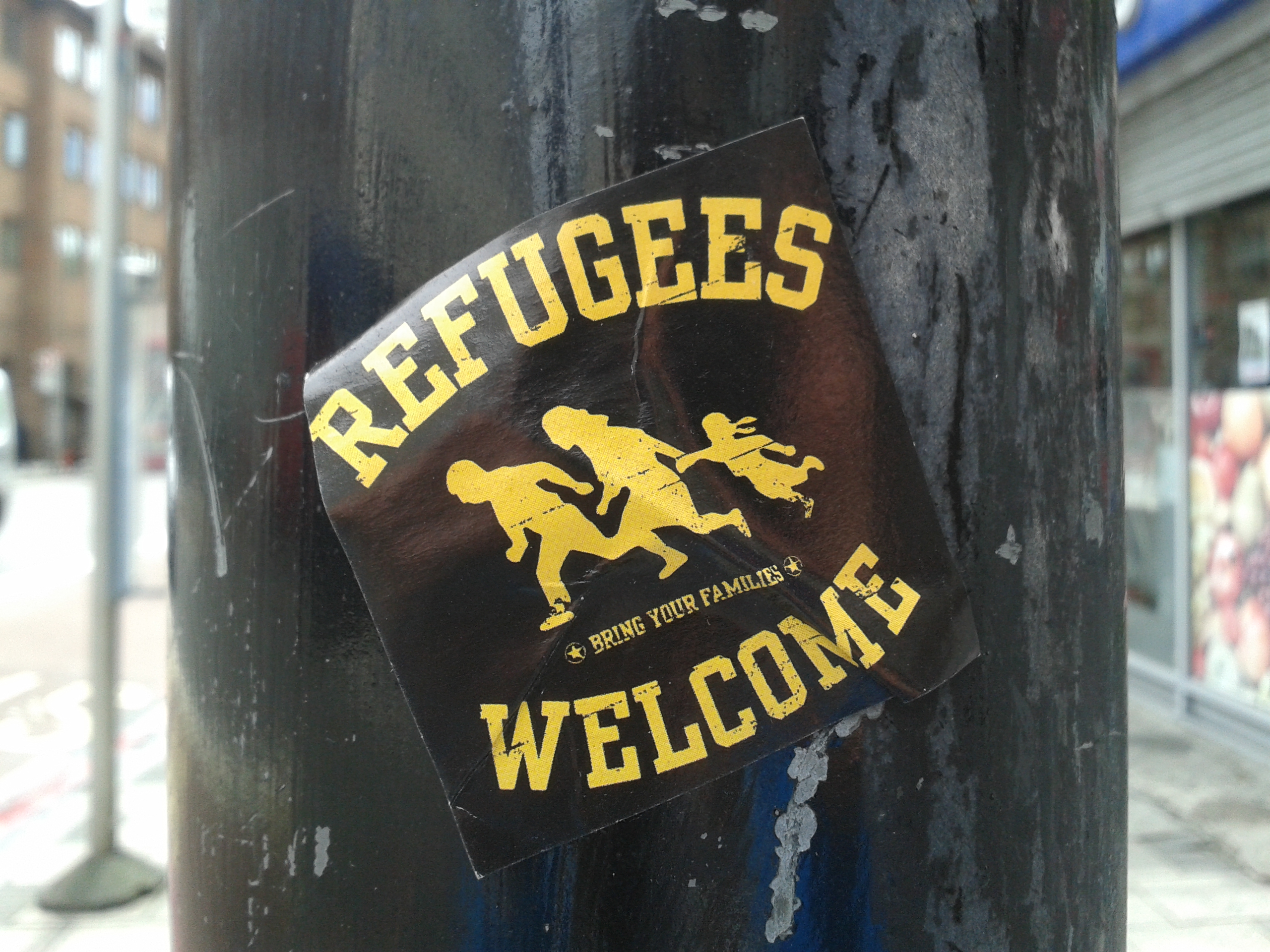
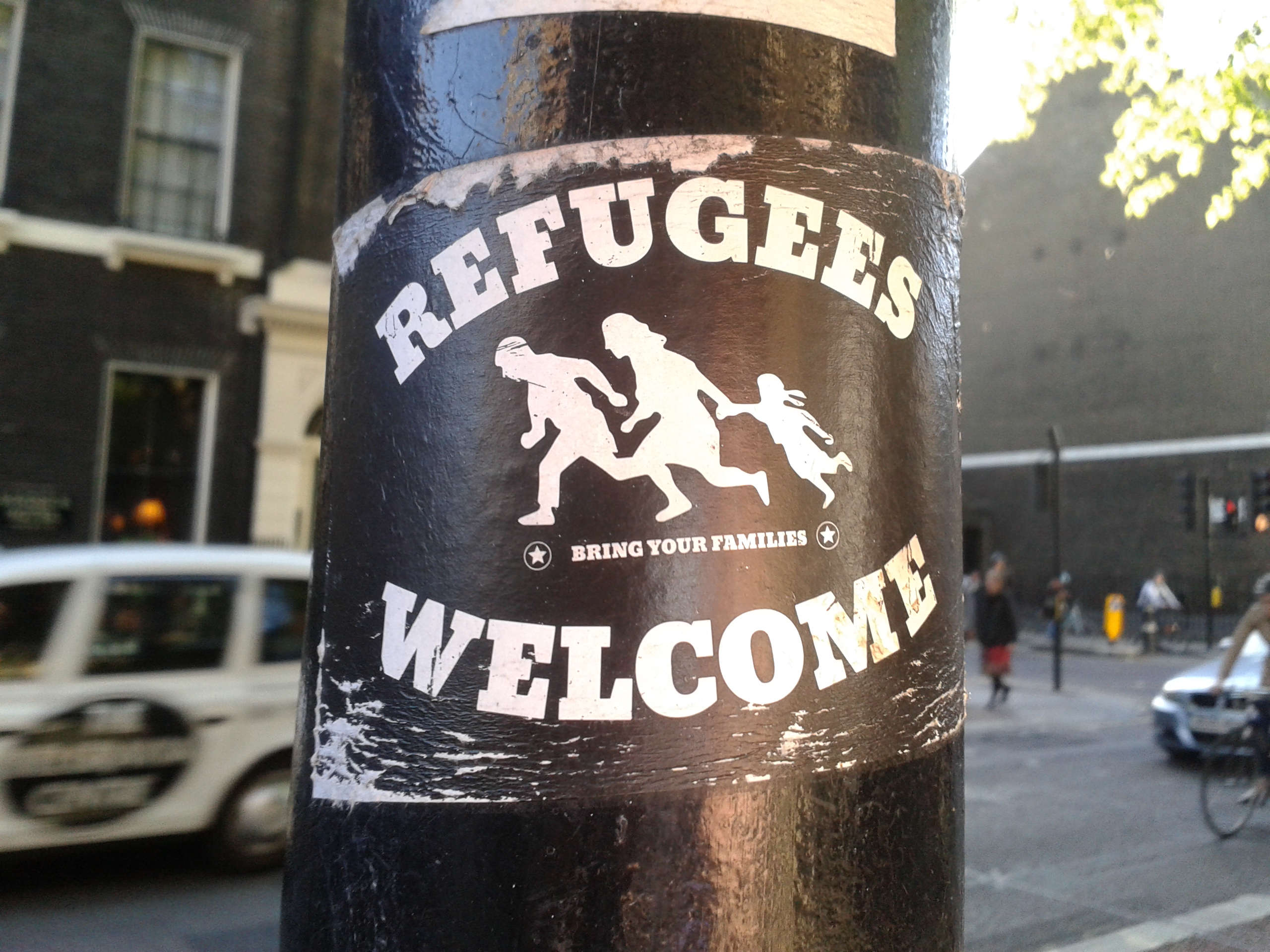
This design normally reads 'Refugees Welcome.' The bottom section of this poster in Elephant and Castle has been torn off, suggesting someone objected to the original message.
This design normally reads ‘Refugees Welcome.’ The bottom section of this poster in Elephant and Castle has been torn off, suggesting someone objected to the original message (Photo: Hannah Awcock, 13/09/15).

Thanks to recent events, immigration has been a hot topic across the country over the past few months, not just in London. However London has a particularly special relationship with the issues of migration and race. As the historian Roy Porter explains, London is no stranger to migration; “Founded by immigrants, London has had a ceaseless history of immigration.” For most of the city’s history, the death rate has been higher than the birth rate, so London wouldn’t be here today without millions of migrants from across the UK and the rest of the world. Unfortunately, memory can be selective, and many argue against welcoming more migrants and refugees into the UK.

Sadly, London is also no stranger to racism. From the murder of prominent Jews at the coronation of Richard the Lionheart in September 1189, through to the Battle of Cable Street and the fight against fascism in the East End in the 1930s and 40s, anti-Semitism has been a persistent problem for London and Londoners. More recently, immigration from former British colonies starting in the 1950s has led to tension and discrimination against Asian and Black Londoners. In the worst cases this has resulting in racially-motivated murder, such as those of Altab Ali in 1978 and Stephen Lawrence in 1993.

The stickers below all relate to migration, or the interconnected issue of racism.

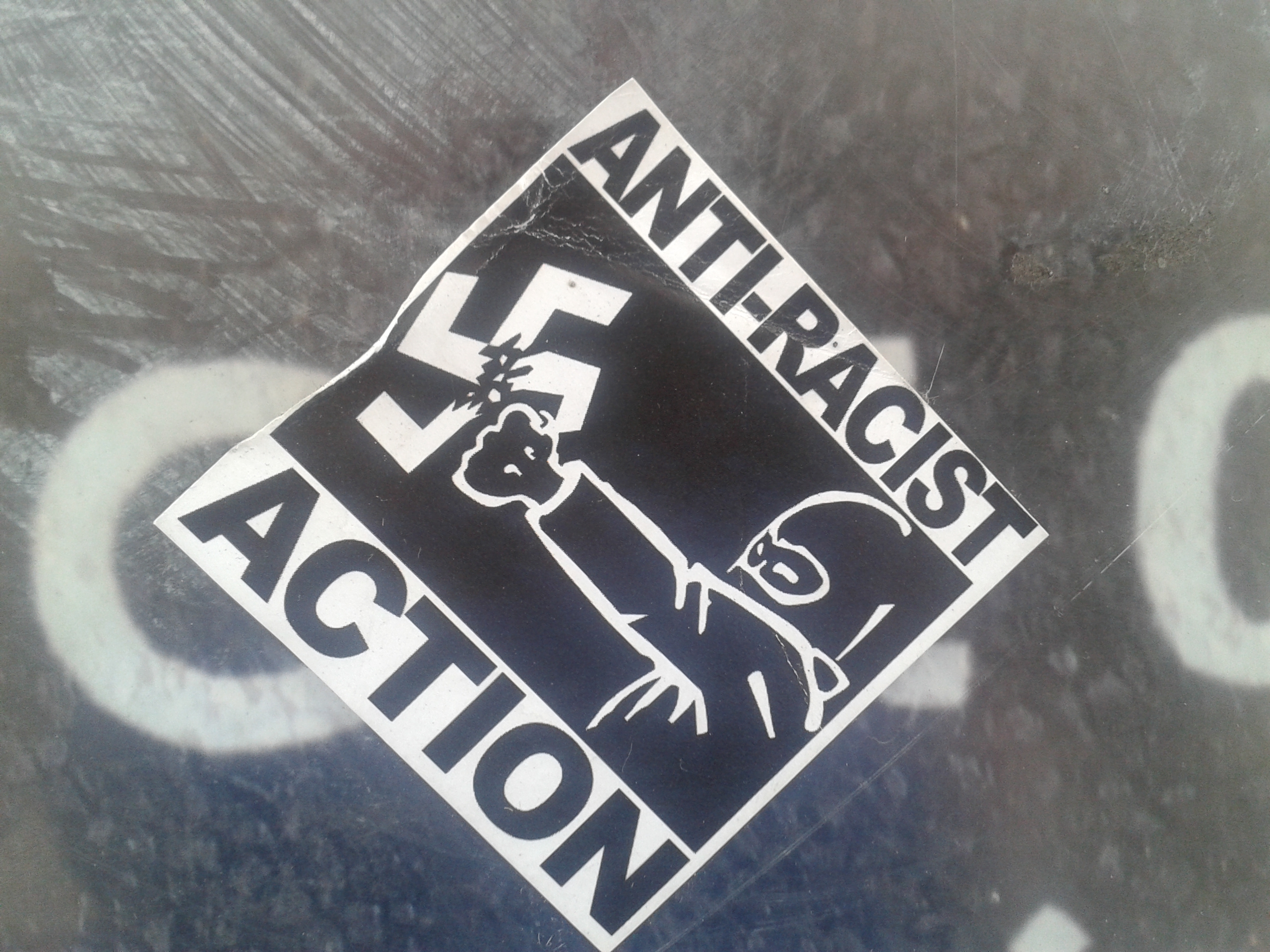
Anti-racist stickers have been a relatively common sight in London since at least before I started looking for them (Elephant and Castle, 25/06/15).
Anti-racist stickers have been a relatively common sight in London since at least before I started looking for them (Photo: Hannah Awcock, Elephant and Castle, 25/06/15).
Specifically pro-immigration stickers are a more recent occurrence, they began appearing around the same time that the refugee 'crisis' began (Waterloo Bridge, 17/06/15).
Specifically pro-immigration stickers are a more recent occurrence, they began appearing around the same time that the refugee ‘crisis’ began (Photo: Hannah Awcock, Waterloo Bridge, 17/06/15).
The design from the poster above has become a common sight on stickers, posters and banners. This picture was taken in Borough High Street on 29/05/15.
The design from the poster above has become a common sight on stickers, posters and banners. This picture was taken in Borough High Street on 29/05/15 (Photo: Hannah Awcock).
This version of the sticker was photographed in Gower Street, Bloomsbury on 12//05/15. The same or similar stickers can often been seen in various locations around London.
This version of the sticker was photographed in Gower Street, Bloomsbury on 12//05/15. The same or similar stickers can often been seen in various locations around London (Photo: Hannah Awcock).
This sticker, which attempts to complicate the definition of illegal immigration, is another sticker which I have seen all over the city. This particular example, outside the Inner London Crown Court in Southwark, has had a cross scratched through it, perhaps because someone disagreed with the message (18/06/15).
This sticker, which attempts to complicate the definition of illegal immigration, is another sticker which I have seen all over the city. This particular example, outside the Inner London Crown Court in Southwark, has had a cross scratched through it, perhaps because someone disagreed with the message (Photo: Hannah Awcock, 18/06/15).
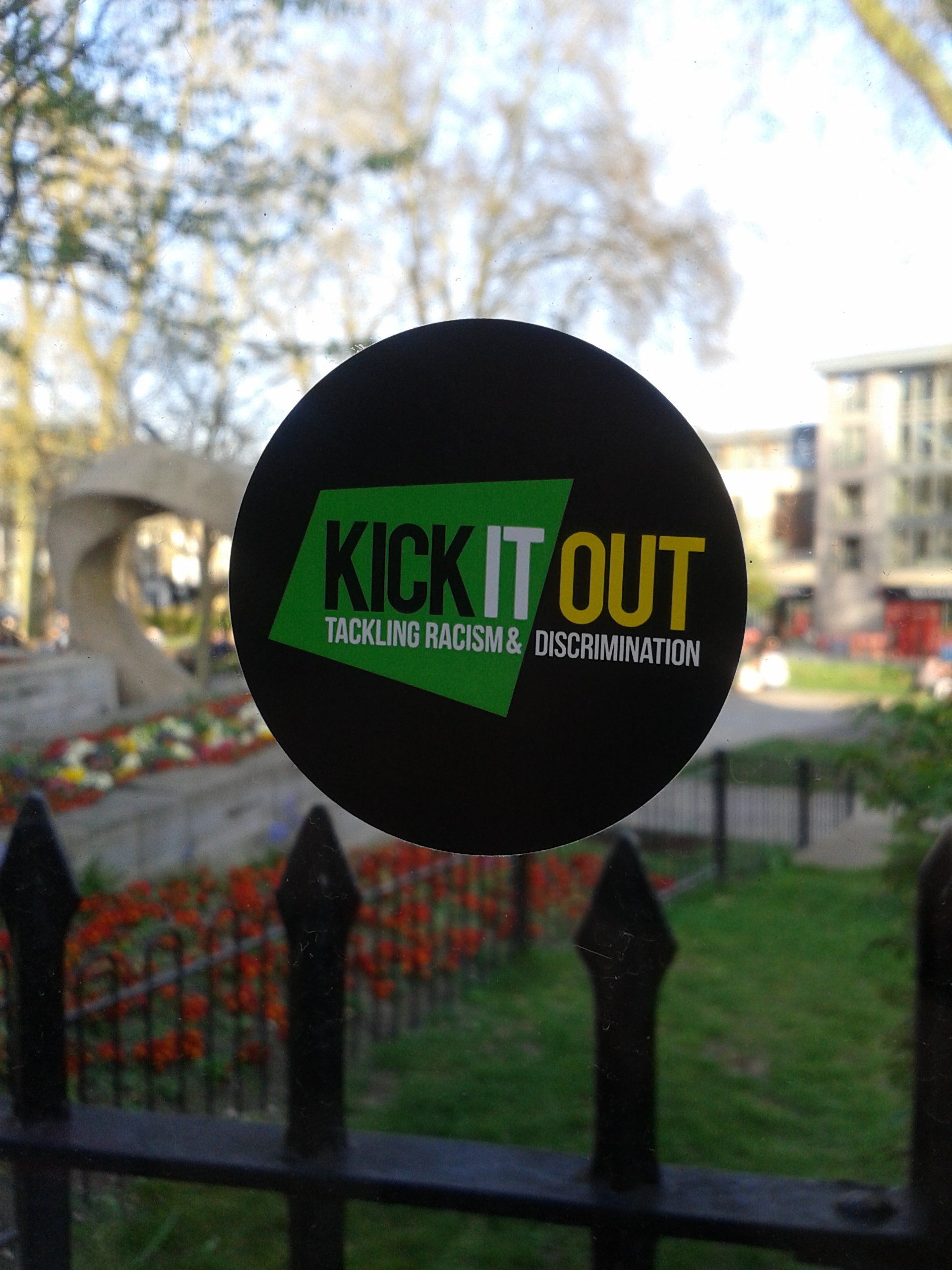
This sticker, photographed on a bus stop in Upper Street in Islington refers to racism in sport. Kick It Out works to promote equality and inclusion in football (14/04/15).
This sticker, photographed on a bus stop in Upper Street in Islington refers to racism in sport. Kick It Out works to promote equality and inclusion in football (Photo: Hannah Awcock, 14/04/15).
I'm sure that cute pandas actually have no opinion on racism, but I like this sticker none the less! (Union Street, Southwark, 08/09/15).
I’m sure that cute pandas actually have no opinion on racism, but I like this sticker anyway! (Photo: Hannah Awcock, Union Street, Southwark, 08/09/15).
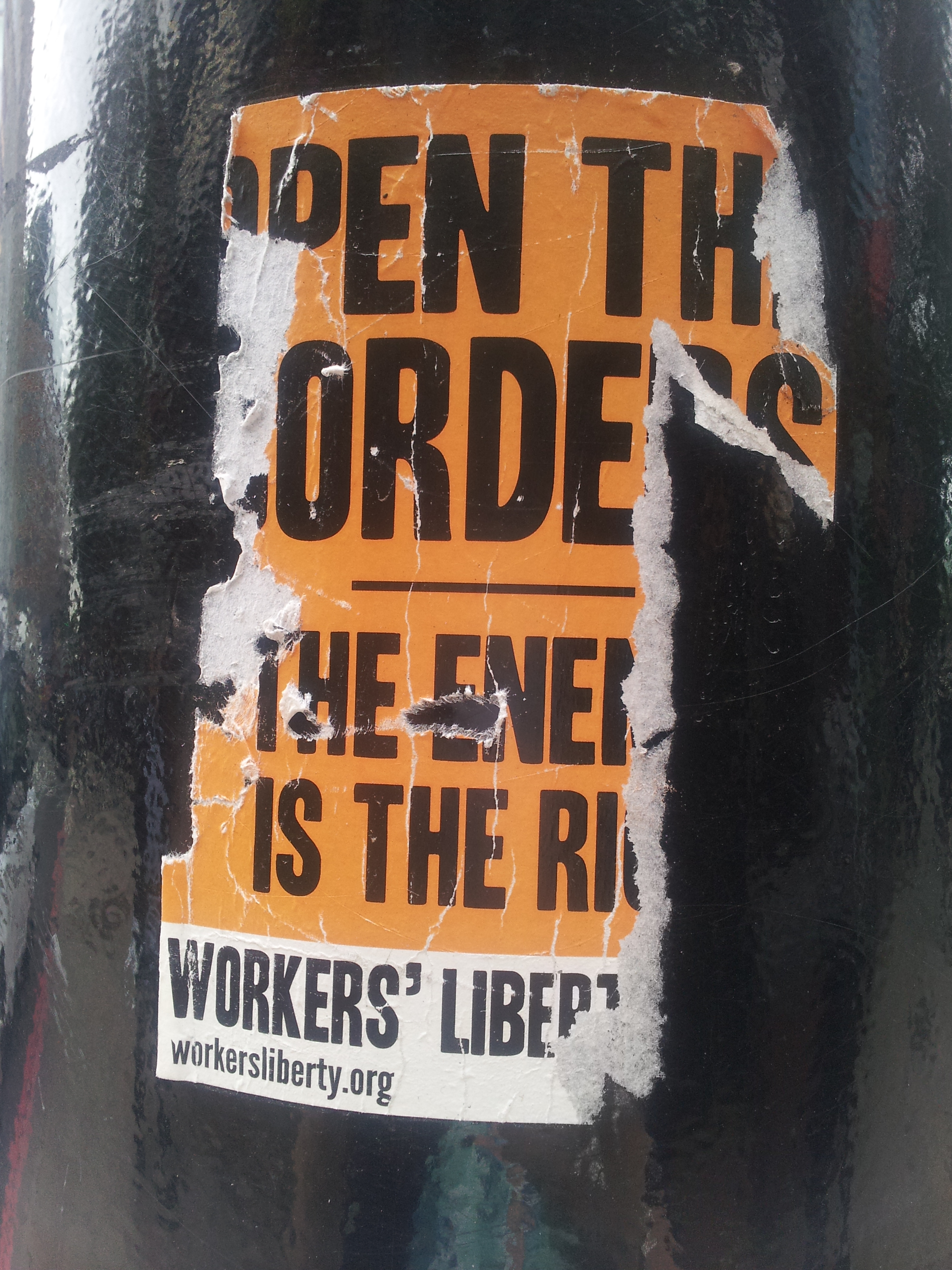
Some stickers get weathered or torn, so that their message is obscured. This sticker, made by Worker's Liberty says
Some stickers get weathered or torn, so that their message is obscured. This sticker, made by Worker’s Liberty says “Open the Borders: The Enemy is the…” I can’t make out who the enemy is, perhaps the ‘Right’? (Photo: Hannah Awcock, 03/09/15 Euston Road).
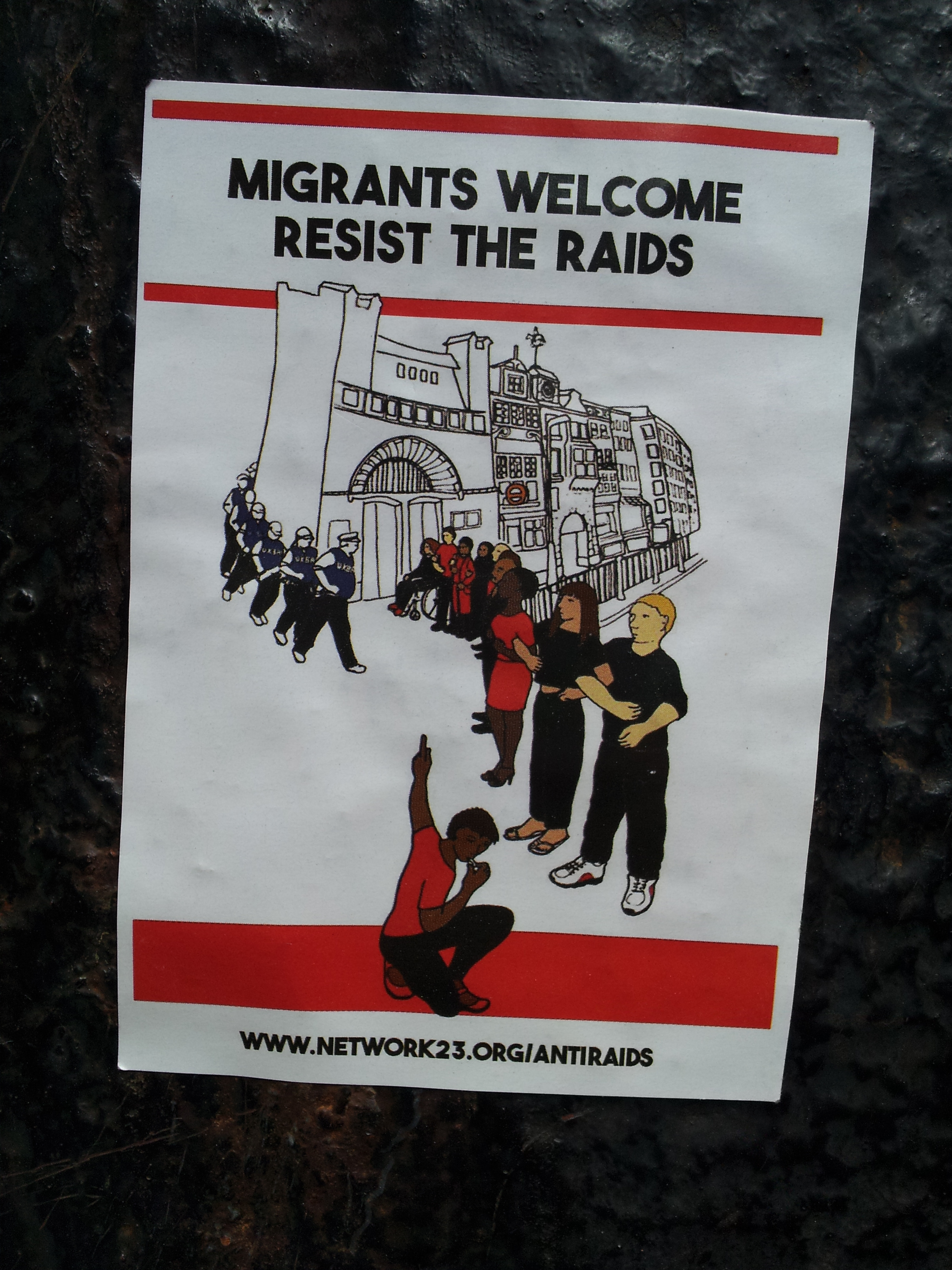
This sticker refers to raids carried out by the Metropolitan Police trying to catch illegal immigrants (Elephant and Castle, 05/08/15).
This sticker refers to raids carried out by the UK Border Agency trying to catch illegal immigrants. It was produced by the Anti-Raids Network, a loose network of organisations and individuals trying to combat raids (Photo: Hannah Awcock, Elephant and Castle, 05/08/15).
Unfortunately, not all stickers are anti-racism or pro-immigration/ The Creativity Alliance are white supremacists who believe in race as a religion (Euston Road, 10/08/15).
Unfortunately, not all stickers are anti-racism or pro-immigration. The Creativity Alliance are white supremacists who believe in race as a religion (Photo: Hannah Awcock, Euston Road, 10/08/15).
This sticker in Brick Lane questions who only white nations (allegedly) have to live up to standards of diversity. Someone else has used a marker pen to make their opinion on that perspective very clear (17/04/15).
This sticker in Brick Lane questions who only white nations (allegedly) have to live up to standards of diversity. Someone else has used a marker pen to make their opinion on that perspective very clear (Photo: Hannah Awcock, 17/04/15).

Sources and Further Reading

Beckman, Morris. The 43 Group. London: Centerprise (1993[1992]).

Hindley, Geoffrey. Magna Carta: The Origins of Liberty, from Runnymede to Washington. London: Robinson (2015 [2008]).

Porter, Ray. London- A Social History. London: Penguin (2000 [1994]).

Practising Historical Geography

Last Wednesday (the 28th of October), the 21st Practising Historical Geography conference took place at the University of Sussex in Brighton. The conference is organised by the Historical Geography Research Group of the Royal Geographical Society with the Institute of British Geographers (or HGRH and RGS-IBG for short!), and is aimed at undergraduates and postgraduates. This was my forth year attending the conference (previously held at the University of Bristol (2014), University of Central Lancashire in Preston (2013) and the University of Hull (2012). I first attended as a Masters student (all those studying the MA Cultural Geography at Royal Holloway are encouraged to attend), and even now, in the third year of my PhD, I still found it to be a beneficial and enjoyable experience.

The Royal Holloway contingent at the 21st Practising Historical Geography conference at the University of Sussex (Photo: Innes Keighren).

The conference combines keynote speakers, workshops, and chances to network. The first keynote was given by Dr. Simon Rycroft (University of Sussex) and was entitled ‘Mid-century Representation: John Latham’s Cosmos.’ Using the work of artist John Latham, Dr. Rycroft argued that it is important to be alert to the changing practices of representation. Representations reflect the ways we think about materials, which changes over time. Academics need to take such things into account when analysing representations.

Dr. Simon Rycroft talking about the work of artist John Latham (Photo: Hannah Awcock).

After the first keynote is a section called Postgraduate Voices, where someone who has recently completed their PhD gives advice based on their experiences. This year, Dr. Jake Hodder talked about the 3 major crises he faced during his PhD, which roughly align with the 3(ish) years that a PhD takes:

  1. Imposter syndrome:  The fear that someone will realise you are not good enough to be here, and tell you to go home, in a very public and humiliating way.
  2. Project isn’t coming together: At some points it can feel like you will never be able to make a coherent whole out of all the work you have done.
  3. Uncertainty: Particularly in the third and fourth years, financial insecurity and a sense of ‘what the hell am I going to do next?!’ can take its toll.

I found myself agreeing with everything Jake said. It is always reassuring to know that others are facing the same difficulties as you, and knowing that Jake overcame them to become Dr. Hodder is a welcome confidence boost!

Every year, the Historical Geography Research Group runs a competition for undergraduate dissertations in the field of historical geography. This year, the prize was won by Victoria Bellamy (University of Cambridge), who told us about her research on Victoria Park in East London in the second half of the nineteenth century. Parks are ideologically contested spaces; there is constant debate about their purpose and how they can be used. Victoria’s research explores how some of these debates played out in Victoria Park, surrounded by some of the most deprived areas of Victorian London. She did a fantastic job of presenting her work.

2015-10-28 11.20.29
Victoria Bellamy summarised her prize-winning undergraduate dissertation in just 10 minutes (Photo: Hannah Awcock).

The middle section of the day is taken up by 2 workshops, which focus on what it’s like to actually do historical research. Previous workshops have involved all kinds of things, from taxidermy to the Preston bus station, but this year they focused on extreme weather events in Britain (run by Dr. Lucy Veale, University of Nottingham) and the spatial politics of British households in the nineteenth-century, particularly the relationships between domestic servants and employers (run by  Dr. Fae Dussart, University of Sussex). Chances to discuss the practice of researching the past with other researchers are rare, so I always look forward to this part of the day. It is an opportunity to talk about the difficulties of historical research, as well as explore some methodologies that may be unfamiliar.

Lucy Veale running a workshop about researching extreme weather events in the archive (Photo: Hannah Awcock).

The day was rounded off by the second keynote speaker, Dr. James Kneale (University College London), who spoke on the subject of ‘Looking for Drink in the Archive.’ Dr. Kneale has been researching alternative approaches to Victorian understandings of alcohol. There is plenty of evidence of the moral debates surrounding alcohol in the archives, but the Victorians didn’t just talk about alcohol, they experienced it in a whole range of other ways. Dr. Kneale has been using the archive to investigate practice, which is no simple task.

2015-10-28 15.46.58
James Kneale discussing looking for evidence of alcohol in the archives (Photo: Hannah Awcock).

If all goes according to plan, I will probably be too busy putting the finishing touches to my thesis to attend the 22nd Practising Historical Geography conference next year. This is a shame, as it is a great event. I would thoroughly recommend it for any Masters or PhD students whose work even remotely relates to historical geography, especially if you are relatively new to academia. The atmosphere is friendly and welcoming, and it would be an ideal first conference. I have learnt a lot over the past four years, and met people who have become both colleagues and friends. Thank you to the Historical Geography Research Group (particularly Lucy Veale, who has organised the last 3 conferences) for putting on such wonderful events.

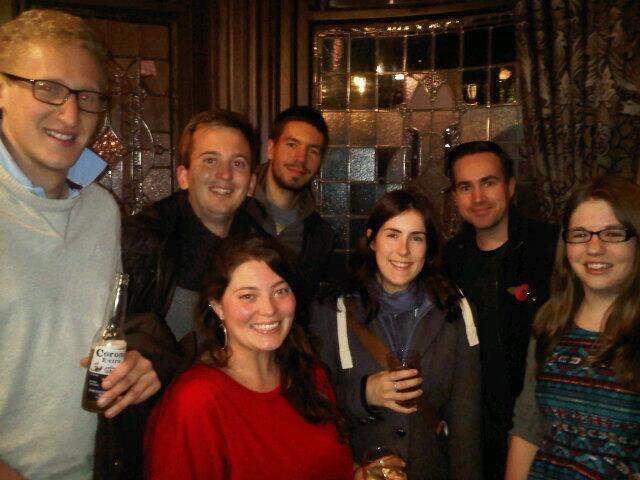
The 2012-3 MA Cultural Geography cohort in a pub in Hull the night before the 18th Practising Historical Geography conference (Photo: Innes Keighren).
The Royal Holloway contingent in a pub in Preston the night before the 19th Practising Historical Geography conference in 2013 (Photo: Innes Keighren).
The Royal Holloway contingent at the 20th Practising Historical Geography conference in Bristol- we don't spend all our time in pubs! (Photo: Innes Keighren).
The Royal Holloway contingent at the 20th Practising Historical Geography conference in Bristol- we don’t spend all our time in pubs! (Photo: Innes Keighren).