Book Review: Attack on London- Disaster, Rebellion, Riot, Terror and War

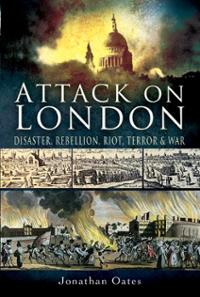
attack-on-london-disaster-riot-war-jonathan-oates-hardcover-cover-art
Attack on London by Jonathan Oates

Jonathan Oates. Attack on London: Disaster, Rebellion, Riot, Terror and War. Barnsley: Wharncliffe Local History, 2009. RRP £19.99.

Out of all the high street chains of bookstores, I have a particular fondness for The Works. If you’ve never come across one before, it’s a sort of outlet store for books and stationary, and I can rarely resist having a browse when I walk past one. I have found numerous bargains in there over the years, including Attack on London by Jonathan Oates.

Dr. Jonathan Oates is the Ealing Borough Archivist and Local History Librarian, but he has also published numerous books on London’s history, particularly its more criminal elements. In Attack on London Oates, inspired by the 7/7 bombings, traces how Londoners have reacted to tragedy, shock, and trauma. Starting with the Peasant’s Revolt in 1381, Oates documents some of the most severe hardships faced by London, including the Great Plague (1665-1666), the Gordon Riots (1780), the Clerkenwell Outrage (1867), Bloody Sunday (1887), aerial bombing during both World Wars, IRA bombings during the 1970s, and the 7/7 bombings in 2005. Oates concludes by arguing that such dramatic events bring out both the best and the worst of Londoners; there has been resilience, bravery, and unity, but also looting and xenophobia.

If you are familiar with London’s history, then there probably isn’t much in Attack on London that will be new to you, although I was surprised to learn about the extent of aerial bombing on the capital during the First World War. However, the way the which Londoners reacted to these well-known events is a new angle, which brings together disparate events such as riot, war, disease, and fire in an interesting way. Oates’ referencing style is not very detailed, so it is difficult to identify the exact sources of his work, but it seems to be a well-researched book.

There are some elements of Attack on London that feel a little ‘amateur’. For example, each chapter ends with a conclusion identified as such with a subheading. This feels a little out of place in a history book aimed at a popular audience. Also, one of the photos reproduced in the book, of a plaque commemorating the deaths of 77 people in an air raid bombing in Southwark in October 1940, is blurry. I know I’m being picky, but little things like these combine to give a general impression of not-quite-finishedness that could have been so easily avoided. In addition, the book commits one of my biggest personal faux pas; putting all of the images on a few glossy pages in the middle of the book, and not referring to them in the main text. I know that lots of books have their images arranged in such a way, I guess it is an effective or cost-efficient way of illustrating books. I can understand that, although I would prefer to have the images close to the relevant text. However, when the author does not refer to the images in the text, then they become almost pointless, as they do not serve to back up or illustrate a particular point. Attack on London is by no means the only book that does this, but it winds me up nonetheless.

Because I found Attack on London in a bargain bookshop, it cost me quite a bit less than the £19.99 recommended retail price, which is a bit steep, in my opinion, for what you get. Nevertheless, it is an easy-to-read, engaging reflection on the best and the worst facets of Londoners.

Book Review: Sophia- Princess, Suffragette, Revolutionary

Sophia front cover
Sophia: Princess, Suffragette, Revolutionary by Anita Anand.

Anita Anand. Sophia: Princess, Suffragette, Revolutionary. London: Bloomsbury, 2015. Paperback £9.99.

If you asked the average person to name individual suffragettes, they would probably say Emmeline or Christabel Pankhurst, or perhaps Emily Davison. There were, however, many individual women who contributed to the campaign for female suffrage, including Sylvia Pankhurst, Daisy Parsons, Clementina Black, and Charlotte DespardSophia: Princess, Suffragette, Revolutionary tells the story of Princess Sophia Duleep Singh, one of these lesser known, but just as fascinating, women who devoted herself to the fight.

Granddaughter of Ranjit Singh, the Maharaj of the Punjab, Princess Sophia and her siblings occupied a unique position in British society. Her father, originally beloved by Queen Victoria, had turned against the British empire which had taken his birthright. Her family relied on the British government for everything, but their status as Indian royalty gave them a degree of protection that meant they could still be troublesome. Sophia did not resent the British government like her father and some of her siblings, but she did care deeply for the people of India, which she visited several times. There was little she could do for the burgeoning independence movement from so far away, however, and women’s suffrage became the cause to which she devoted her energies.

Sophia is a well-written, thoroughly researched, and detailed biography. Anita Anand has included a wealth of rich details that makes you feel like you really know Sophia, that you understand her motivations. Personally, I welcome anything that helps to extend popular awareness of the suffragettes beyond Emmeline Pankhurst and her most famous daughter, and I also appreciate the way Sophia puts the suffragettes in the context of contemporary non-British social movements, particularly the early campaign for Indian independence. They are mostly seen as a stand-alone phenomena, but the campaign for women’s suffrage took place in the context of a whole range of other social justice movements.

Whilst I understand the necessity of context, there are times where it feels like the book goes into too much contextual detail. Sophia isn’t even born until page 44, and the narrative sometimes veers away from Sophia to dwell on other people and events. It feels a little like padding, which seems unnecessary considering how much source material Anand was able to find about Sophia herself.

Sophia is an enjoyable read, and Anita Anand deserves the praise she has received for it. I would recommend it to anyone interested in women’s history, colonialism, or the women’s suffrage movement.

Book Review: Revolutions without Borders- The Call to Liberty in the Atlantic World

Revolutions without Borders Front Cover
Revolutions without Borders by Janet Polansky.

Janet Polansky. Revolution without Borders: The Call to Liberty in the Atlantic World. London: Yale University Press, 2015. 

Back in May, I went to a seminar given by historian Janet Polansky organised by the London Group of Historical Geographers. I enjoyed the seminar so much that I got the book so I could read Polansky’s arguments in more detail. And I wasn’t disappointed; I think Revolutions without Borders: The Call to Liberty in the Atlantic World is a very good read.

In the late eighteenth century Europe and the Americas went through a period of political turmoil which saw revolutions “From the Americas to Geneva, the Netherlands, Ireland, the Belgian provinces, France, Saint-Domingue, Guadaloupe, Poland, Martinique, Sierra Leone, Italy, Hungary, and Haiti” (Polansky, 2015; p.2 ). The American and French Revolutions are by far the best known, but almost no country surrounding the Atlantic Ocean remained untouched. Ideas, information, and people circulated back and forth across the Atlantic in an age before the Internet, telephones, even a postal service. Revolutions without Borders is about how these radical ideas and individuals traveled, both adapting to and shaping the contexts that they found themselves in.

Two centuries before the Arab Spring, without social media or even an international postal system, revolutionaries shared ideals of liberty and equality across entire continents. Theirs, too, was an international movement connected by ideas that traveled.

(Polansky, 2015; p. 3)

Polanksy structured the book by source material- each chapter is devoted to a different method of circulation such as official decrees, rumours, letters and travelers. Overall, I like this unusual approach because it brings archival research to the fore, which a lot of history books tend to gloss over. Different sources contain different kinds of information, and the structure of Revolutions without Borders highlights this. However, structuring the book in this way does necessitate some jumping back and forwards in terms of time, which did prove a little confusing on occasion. There is a Dramatis Personae and a Chronology, which may alleviate the effects of this confusion for some.

Sometimes when you read a book it resonates with current events. I experienced this whilst reading Revolutions without Borders. Chapter 9 focuses on itinerant revolutionaries, individuals who traveled the world during the revolutionary period, sometimes running from failed revolutions, sometimes running towards budding ones. Many of these people, including Benjamin Franklin, who lived in London for two decades*, had high hopes for the future of cosmopolitanism. They dreamt of universal citizenship, where a traveler would be welcomed as if returning home wherever they went in the world. Unfortunately this dream was not to be, and as the 1790s progressed travelers returning to America from Europe were shunned as dangerous radicals. The dream of universal citizenship struck a chord with me as I was reading this book, in the aftermath of the EU Referendum, and I couldn’t help but think that Benjamin Franklin would be disappointed with the result of the referendum. Universal citizenship seems that much further away now.

Revolutions without Borders is well-written and accessible. Relevant to both historians and geographers, I think it would also be enjoyable for those who read for leisure.

*The house where Franklin lived whilst in London is now a small museum, to which I would definitely recommend a visit.

Book Review: Nightwalking- A Nocturnal History of London

Nightwalking Front Cover
Nightwalking by Matthew Beaumont.

Matthew Beaumont. Nightwalking: A Nocturnal History of London. London: Verso, 2015. £9.99

Nightwalking by Matthew Beaumont is an exploration of London at night through the eyes of the men (and it is all men) who wrote about it. Starting with Chaucer, Beaumont traces evolving societal attitudes to night time and darkness in the city. He ends the book with Dickens (well, sort of- Edgar Allen Poe features heavily in the conclusion), “the great heroic and neurotic nightwalker of the nineteenth century” (Beaumont, 2015; p.6). The writers Beaumont studies walked the line between polite society and the world of the social outcasts; the prostitutes, criminals, orphans, and homeless who inhabited London’s streets after dark. Some writers managed the balance better than others.

Who walks the streets alone at night? The sad, the mad, the bad. The lost, the lonely. The hypomanic, the catatonic. The sleepless, the homeless. All the city’s internal exiles.

Beaumont, 2015; p.3

When I first got Nightwalking, I was a little disappointed to realise that it had a literary focus. I like to read, but I’m not a fan of literary analysis; perhaps there are too many bad memories from GCSE and A-Level English Literature. I thought Nightwalking was a straight social history, and I wasn’t sure I would enjoy the literary angle.

I needn’t have worried. Beaumont uses the cultural history of the London night to explore its social, political and economic history. He strikes a nice balance between detailed textual analysis and wider contextual discussion. The social and legal discourses surrounding those who wander the streets of the city at night have developed over time, but in an uneven manner. For hundreds of years, being caught outside after dark was a criminal offence. As society and technology developed, the night became a space of recreation, initially just for the wealthy; the evolution of cheap and effective street lighting is one factor that contributed to this process. Although the legal restrictions faded, moral restrictions remained, dictating which kinds of activity, and which kinds of people, were acceptable on London’s streets after dark.

London’s writers were drawn to this moral ambiguity, taking to the streets at night in order to better understand the city or themselves, to have a good time, and sometimes because they had no choice. Men such as Chaucer, Shakespeare, Johnson, Blake, and Dickens “used the night as a means of creatively thinking the limits of an increasingly enlightened, rationalist culture” (Beaumont, 2015; p.10). Beaumont balances all the contradictory and sometimes vague associations and motivations for nightwalking well, explaining his arguments in a clear and concise manner. It is obvious to me that Beaumont is an academic, and that the book is based on extensive scholarly research, but I don’t think that the book would be unapproachable to non-academics, although another reviewer has said his style can be “cloudily academic.”

Nightwalking is a well-researched, well-reasoned book that manages to tell a complicated story in a way that is easy to follow. I can see this book being useful to students of English Literature and History alike, but I would also recommend it to those who just enjoy reading a good book.

Book Review: This is London- Life and Death in the World City

Front cover- This is London.jpg
This is London by Ben Judah.

Ben Judah. This is London: Life and Death in the World City London: Picador, 2016. £18.99 

This is London: Life and Death in the World City is the latest in a long line of books that try to say something new about one of the most written about cities in the world. Ben Judah does this by trying to get to know London’s immigrants, the people who make up almost half of the city’s population, but who only ever get talked about with scaremongering statistics and dehumanising metaphors. It takes all sorts to make a city, and Judah talks to all kinds of people in this book; the wife of a Russian oligarch, a Nigerian policeman, a Polish builder, Filipina maids, a Polish registrar, Afghani shopkeepers, a Nigerian teacher.

I was born in London but I no longer recognize this city. I don’t know if I love the new London or if it frightens me: a city where at least 55 per cent of people are not ethnically British, nearly 40 per cent were born abroad, and 5 per cent are living illegally in the shadows. I have no idea who these Londoners are. Or even what their London really is.

(Judah, 2016; p.3)

This is London starts in the same place that many European migrants arrive in London; Victoria Coach Station- “our miserable Ellis Island” (Judah, 2016; p.1). It ends where some of the city’s one million Muslim inhabitants (according to the 2011 census) end their lives; the mortuary of a mosque in Leyton. It covers a large number of major life events and experiences in between; marriage, birth, employment, illness, faith, and recreation. The book has no introduction or conclusion, which I think is fitting. This is not a story with a nice neat beginning and ending, it is not even a single story. When I review books about London, I try to find a quote in which the author summarises London. I couldn’t find one in This is London. London is complex, multiple, and heterogeneous, it is almost impossible to sum it up. Ben Judah doesn’t offer any solutions or grand plans, he tells stories, and allows the reader to interpret them.

Unfortunately, I have some serious issues with This is London. The biggest is Judah’s ethics and attitudes towards his interviewees. On several occasions he lied to the people he was talking to about who he was, covering up the fact he is a journalist. When he visits Harlesdon Road to try and talk to some of the customers of London’s 1773 betting shops, he has little success until he pretends to be conducting a survey for William Hill (Judah, 2016; p.294). As an academic, I am horrified by the prospect that some people were trusting Judah with their stories, some of them highly personal and traumatic, without knowing what he was going to do with them. Maybe journalists don’t care about informed consent, but I do.

There are other points where Judah seems to relish his power over his interviewees in a way that made me feel very uncomfortable. In the first chapter he follows three recently arrived Roma women from Victoria Coach Station all the way to Hyde Park because he wanted to talk to them. He continued to follow them even once they realised they were being followed. Judah eventually forces a Romanian busker to talk to him, saying “I know he wants to leave but I won’t let him. I have power over him for a few seconds. And I want him to speak” (Judah, 2016; p.8). Later on, he talks to some prostitutes in Ilford Lane, paying them to talk to him. They sit in his car, as one woman, Diana, talks about another woman who was murdered there. He seems to enjoy forcing the second woman to talk; “I know she does not want to talk about this. That she would rather I just fucked them both- or hit them, the way some of the men enjoy doing- than ask about what happened to Mariana. But I don’t care. And I gesture. I want you to talk now” (Judah, 2016; p.370). He exploited the women’s vulnerability in a way that I find completely unacceptable.

I have conflicted feelings about This is London. I really enjoyed the stories the book tells, and reading about parts of London that are completely unfamiliar to me. However, I cannot condone Judah’s methods in obtaining some of these stories; he was unethical, insensitive, and exploitative. Because of this, I think there are other books out there that do similar things to This is London, better. For example, Londoners: The Days and Nights of London Now by Craig Taylor (London: Granta, 2012), provides snapshots of what it’s like to live and work in London without making me feel deeply uncomfortable. I would recommend it much more highly than This is London.

Book Review: Picking Up- On the Streets and Behind the Trucks with the Sanitation Workers of New York City

Picking Up cover
Picking Up: On the Streets and Behind the Trucks with the Sanitation Workers of New York City by Robin Nagle.

Robin Nagle. Picking Up: On the Streets and Behind the Trucks with the Sanitation Workers of New York City. New York: Farrar, Straus and Giroux, 2013.

On a visit to New York in March as a member of staff on an undergraduate field trip, I was presented with a wealth of book buying opportunities. I was unfortunately (or fortunately, if you are my bank balance or my boyfriend) limited by BA’s baggage allowance, so I had to be highly selective about what I bought. Picking Up was one of the lucky few (well, 7) that made the cut. I enjoy books about cities, but I especially like books that approach a city from a direction that’s a little bit different. And, as Robin Nagle makes abundantly clear, what public service is more overlooked than rubbish collection?

All of us create trash in great quantities, but its a troubling category of stuff we mostly ignore. We particularly ignore how much care and attention it requires from a large, well-organized workforce. What would life be like if the people responsible for managing the waste of contemporary society were not on the streets every day? What do their jobs entail? Why don’t they get the kudos they deserve?

(Nagle, 2013; p.12)

Picking Up blends statistics, history and personal stories to tell a rich and detailed story of the Department of Sanitation New York (or DSNY- the book contains a helpful glossary so you can get your head around all the acronyms and slang that the sanitation workers use). The DSNY only receives public and media attention when something goes wrong; you don’t often stop to be grateful when your rubbish is collected on time, but you certainly do kick up a stink (pun intended) when a collection is missed. So Nagle had to work hard to gain the trust of the DSNY and its employees, first getting access to their archives, then being allowed to observe garages and collection trucks on their rounds, then, finally, getting a job as a sanitation worker herself. Her fascination with the topic, and her dedication to finding out more about the complex system that prevents New York City from drowning in its own waste, is evident in her writing.

Nagle uses her own transition from curious outsider to tolerated observer and finally valued colleague to structure the book. As she learns how to lift properly, how to navigate bureaucratic politics, and how to operate the complex and dangerous machinery (you are statistically more likely to die on the job as a sanitation worker in New York than a police officer or fireman) so does the reader. Well, not literally, but I felt like I was discovering more about this overlooked world with Nagle, rather than just being told about it.

An anthropologist by trade, Nagle is fascinated by what the ways that society deals with rubbish can tell us about ourselves and the societal norms we construct. The book doesn’t contain much theory- it is clearly aimed at a non-academic audience, but what is included adds a depth that I think the rest of the book could have benefited from. The discussion about the term ‘throwing away’ and its implications for how society views waste, for example, is fascinating.

I work from home quite often, so I regularly see my local sanitation workers coming to collect our rubbish and recycling on Thursday mornings. Before reading Picking Up, I might have glanced up to see what the noise was. Now, I am much more aware of the service they perform. Picking Up takes a new perspective on New York City, a difficult thing to do for one of the world’s most observed and represented cities. But it also encourages you to think differently about your own city, and what more can you ask from a book than to change your perspective?

Book Review: ‘Blueprint for Revolution- How to Use Rice Pudding, Lego Men, and other Non-Violent Techniques to Galvanise Communities, Overthrow Dictators, or Simply Change the World’

Blueprint for Revolution Front Cover
The front cover of Blueprint for Revolution.

Srdja Popovic and Matthew Miller. Blueprint for Revolution: How to Use Rice Pudding, Lego Men, and Other Non-Violent Techniques to Galvanise Communities, Overthrow Dictators, or Simply Change the World. London: Scribe, 2015. £9.99

Srdja Popovic is particularly well qualified to give advice on the use of non-violent protest tactics. One of the leaders of Otpor!, the non-violent movement that overthrew Slobodan Milosevic in Serbia, he then decided to use his experience to help others and founded CANVAS, a non-profit organisation that gives advice and training to activists all over the world. Blueprint for Revolution is part how-to guide, part memoir, in which  Popovic uses stories of successful activism to illustrate his advice. Many of the stories come from his own experience as an “ordinary revolutionary” (p vi) and protest guru.

There is a false notion that only the elites in our societies matter and that all change, progress, or setbacks emanate magically from within their dark and greedy souls…The world we live in worships and respects the strong and the mighty. It’s an unfortunate fact of life that nobody gives enough credit to the weak and the humble. But, as we have learned, even the smallest creature can change the world.” (p260)

Some of Popovic’s advice might look more at home in a business manual than a protest one- branding is crucial, for example, and find out what the people want instead of trying to make them care about the same things you do- but it’s good advice nonetheless. As Popovic explains, Harvey Milk was elected on a promise to crack down on dog poo, not because of his stance on gay rights.

Popovic is a strong advocate of what he calls ‘laughtivism’ (he admits it isn’t the best name!); undermining authority through comedy and laughter. Those in power, particularly despots and dictators, are used to being taken seriously, and making fun of them can be a powerful weapon- “the only thing that could trump fear is laughter” (p100). My favourite example (which made me laugh as I read about it) was Otpor!’s idea of painting Milosevic’s face on an old barrel and putting it in a busy public street with a baseball bat and a sign inviting people to “smash his face” (p101-3). Popovic’s love of laughter shines through in his writing; Blueprint for Revolution is a fun and light-hearted read. He comes across as a genuinely nice guy, and even gives his personal email address at the end of the book, asking readers to “please keep in touch” (p261).

On occasion Popovic’s relentless positivity can grate slightly. He hopes that the book will inspire some to take action, “to get you on your feet and moving” (p ix). Call me cynical, but I’m not convinced a book can make an activist out of someone, no matter how good it is. This is a minor gripe however; overall the book’s tone is uplifting and did make me feel hopeful, which is not a common occurrence when it comes to politics. Also, the captions for all the illustrations are at the front of the book, so you have to flip back and forth for information about a picture (again, I am nitpicking).

Blueprint for Revolution: How to Use Rice Pudding, Lego Men, and Other Non-Violent Techniques to Galvanise Communities, Overthrow Dictators, or Simply Change the World may not be winning any prizes for short titles, but it is a fun read, which cannot be said for a lot of books about overthrowing violent dictators. It may not turn you into a non-violent revolutionary, but it certainly is an enjoyable way to spend a few hours.

Book Review: London- A Social History

The 2000 edition of 'London- A Social History' by Roy Porter.
The 2000 edition of ‘London- A Social History’ by Roy Porter.

Porter, Roy. London- A Social History. London: Penguin, 2000 [1994]

“the physical fabric [of London] engages in endless dialogue with the inhabitants; the townscape shapes them, while they reconstruct it. Factories and flats, railways and roads outlive individuals. People make their own cities, but never under conditions of their own choosing.”

(Porter, 2000; p. xvi)

When he set out to write London- A Social History, Roy Porter (2000; p. xvi) aimed to write “a substantial account and analysis of the making of the metropolis in terms of its people, economy and buildings.” He has achieved this, frequently going beyond descriptions to consider why London is the way that it is. The book is arranged chronologically, but the Georgian, Victorian, and post-War London periods (from chapter 5 onwards) receive significantly more attention than others; each has multiple chapters devoted to them, divided thematically. This can be little confusing; you finish chapter 8 in 1890, then chapter 9 begins back in 1820.

For Porter, London is a city past its prime. The metropolis is “aged and ailing” (Porter, 2000; p. 445), deprived of the empire which Porter argues was the driving force behind its success. In the preface, he looks back on his childhood in 1950s New Cross with nostalgia, and he is quietly critical of Thatcherite policies and a lack of public investment. Porter passed away in 2002, but I do wonder what he would make of London in 2015- somehow, I can’t imagine he would be very impressed. His criticisms feel informed and considered, unlike A.N. Wilson in London- A Short History, Porter explains what he doesn’t like about modern London without making me strongly dislike him.

One of the things that London- A Social History does really well is highlight the continuities of London. Sometimes London at different periods of history can feel so diverse that it calls into question the wisdom of treating it as the same city, but Porter connects Tudor, Georgian and modern London together into a narrative that make sense. For example, the book’s descriptions of housing demonstrate that good quality, affordable housing for the city’s working class has been a constant problem since the Georgians. Porter also does an excellent job of explaining the reasons behind London’s particularly ad-hoc structures of local government. The rivalry between the national government in Westminster and the City goes back centuries, and Westminster has long feared the potential power of a comprehensive pan-London authority.

The book does have some weaknesses. Some chapters, particularly those that describe the massive growth of London during various periods of the last few centuries feel a bit list-y, and are tedious to read. He gives disproportionate space to London since Georgian times, with much less about the preceding history. This is not uncommon in histories of London, perhaps just because the further back you go, the harder it is to find reliable sources. Finally, the book was written 20 years ago, and his assessment of London feels out of date (for example, Porter complains about the lack of ruling authority in London- the Greater London Authority was established in 1999, after the book was written). However, all books age, some better than others, and the past 20 years have not detracted from the rest of Porter’s thoughtful analysis of London history.

The subtitle of Roy Porter’s 541-page epic does not do it justice. This is not just a social history, but also an economic, political, demographic, and cultural history. Despite minor weaknesses, it is a good introduction for those who know little about the city, or a useful addition to the bookshelf of any London connoisseur.

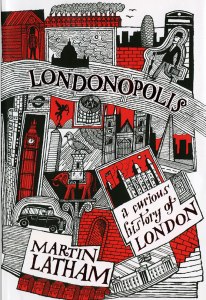
Book Review: Londonopolis- A Curious History of London

Londonopolis Front Cover
Londonopolis: A Curious History of London by Martin Latham.

Martin Latham. Londonopolis: A Curious History of London. London: Batsford, 2014.

To call Londonopolis: A Curious History of London a ‘history’ of London is, I think, a bit of a misnomer. It is a well presented book, full of fascinating facts about the city, but it is not a comprehensive narrative of London’s story. It is arranged chronologically, but if this was the only book you ever read about the city’s past then your knowledge would be patchy at best. To be fair, Latham doesn’t claim to be comprehensive; he has tried to “open a magic casement or two onto different moments of London’s past” (Latham, 2014; 11).

That’s not to say I didn’t enjoy Londonopolis. It makes a refreshing change from some of the other books about London’s past, which can be a little dry and repetitive. The facts Martin Latham has included are very interesting; for example, did you know that the British practice of driving on the left comes from London Bridge? During Tudor times it was decided that people would enter London on the left, and leave on the right, to reduce the chaos on London’s only bridge across the Thames.

As a boy, London was a fairy-tale city to me. The other tenants in my house (apart from us eight kids and my parents) were a female spy, a fading actress, a newly arrived Irish family and the mysterious Miss White, a Dickensian spinster… I used to walk for hours randomly across London and it never disappointed…History was all around in such a way that I got temporal vertigo, that sensation of suddenly seeing the past as a reality.

(Latham, 2014; 10)

Latham’s love for the city is infectious. In fact, I feel that the best sections of the book are the ones where he talks about his own life in London. The paragraphs about the various bookshops he has worked in, and his father’s skill as a water diviner, are lovely. Latham captures beautifully the magic of living in London.

Like A.N. Wilson’s London: A Short HistoryLatham spends a lot of time talking about individuals who have shaped London, focussing especially on creative types- writers and artists. Latham does a better job than Wilson of including London’s notable women however. Turbulent Londoners like Eleanor Marx, Annie Besant, and Sylvia Pankhurst get a whole chapter to themselves. Virginia Wolff, and Dorothea Bate and Joan Proctor (both dedicated scientists at the National History Museum) are also featured. There is also a chapter dedicated to the pioneering fashion designers Mary Quant, Barbara Hulanicki, Lee Bender, and Vivienne Westwood.

Londonopolis-image
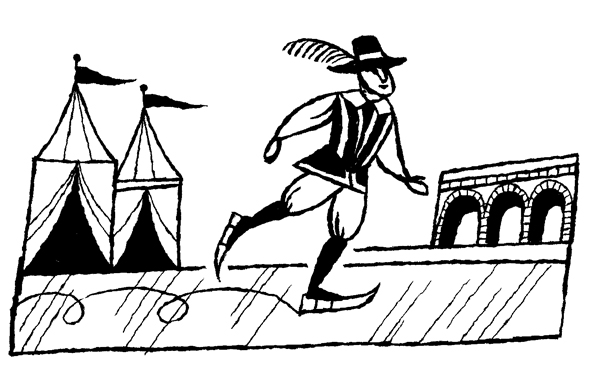
One of the simple but effective illustrations from Londonopolis. 

Londonopolis: A Curious History of London is different to the books I normally review on  Turbulent London. It is not necessarily supposed to be read cover to cover, Latham himself says “You can read this book in any order, or leave it in the lavatory for the occasional reverie” (Latham, 2014; 11). In fact, reading it cover to cover feels a bit disjointed. I would recommend the book however, particularly if you like obscure but interesting facts, or need a gift for a London-lover. It takes an irreverent but affectionate approach to London, which I like.

Book Review: London-A Short History

London- A Short History Book Cover
London: A Short History by A.N. Wilson

Wilson, A.N. London: A Short History. London: Phoenix, 2005.

An architectural tour of London is… so much more than merely and aesthetic experience. It is a personal encounter with Londoners of the past. Every district of London…is haunted by memories. The past and the present are always blended here.
(Wilson, 2005; p.146)

When I saw London-A Short History on the shelf in the bookshop, I had to buy it. The book is slim, and smaller than A5, and I had to see how the entire 2,000+ year history of London could possibly fit within it. A.N. Wilson takes the reader on a whistle-stop tour of the metropolis’ past, with an emphasis on the city’s architecture. I personally find his disdain for modern London hard to forgive, but nonetheless Wilson does a satisfactory job of fitting London’s vast history into just 166 small pages.

Perhaps the book’s most distinguishing feature is its brevity. Wilson’s account necessarily sticks to the most significant events in London’s history, and to say he is brief is putting it mildly; he spends just five pages on Tudor and Stuart London, for example. A disproportionate amount of pages are devoted to the city’s recent past, the last 100 years takes up around half the book. Each chapter is structured in a similar way, with a description of social, cultural and economic factors before turning to the architecture of the relevant period. Wilson also focuses on the great men (and they are overwhelmingly male) that he feels shaped London and the way it is perceived; Samuel Pepys, Charles Dickens, John Nash and Winston Churchill amongst others.

Look down upon London, as we did at the beginning of this chapter, from Hampstead Heath and a great splurge of needlessly dreary buildings spreads itself at your feet: hospitals, schools, roads, blocks of flats everywhere from the Isle of Dogs to Chiswick, from Hampstead to Sydenham—badly executed, badly designed and ugly, ugly, ugly.
(Wilson, 2005; p.11)

Reading this book, I discovered that I see London in a similar way to a close relative; I’m allowed to complain about it, but nobody else is. As far as Wilson is concerned, London has been going downhill since the end of World War II, ruined by modernist architecture, international capitalism and tourism. Unfortunately this attitude quickly influenced my perceptions of this book and Wilson’s writing. He argues that “much of modern London looks hideous by day, especially by wet day” (Wilson, 2005; p. 138). I don’t pretend to know much about architecture and aesthetics, but I think that is unnecessarily harsh. London does have ugly parts, but what city doesn’t?

Not only does Wilson criticise the city’s looks, he also disdains its people, accusing them of “extraordinary idleness” (Wilson, 2005; p123). He argues Londoners spend their time shopping, eating out, and being entertained. The service industry is significant in London, but Wilson is completely ignoring the workers that staff these shops, restaurants, pubs, clubs, and theatres. Perhaps London isn’t full of stevedores and labourers any more, but the suggestion that Londoners don’t work hard is extremely misleading.

Wilson does have hope for our city. He celebrates the diversity and vibrancy created by generations of immigration, and admires the architecture of the Jubilee Line underground stations. But it’s not enough to redeem him in my eyes. If you can’t face Peter Ackroyd’s epic 822-page London- A Biography, then London-A Short History will do the job. Otherwise, in the view of this London-loving incomer, probably don’t bother.