Some ribbons in the colours of the Ukrainian flag tied around a lamppost in the Meadows (Photo: Hannah Awcock, 12/03/22).
Since the Russian Army’s invasion of Ukraine on 24th February 2022, there has been an international outpouring of condemnation of Russia’s actions, and solidarity for the people of Ukraine. People have donated goods, time, and money to help those whose lives have been turned upside down by yet another senseless war. That solidarity has also found its way onto city streets in the form of ribbons, posters, and stickers, often using the blue and gold of the Ukrainian flag.
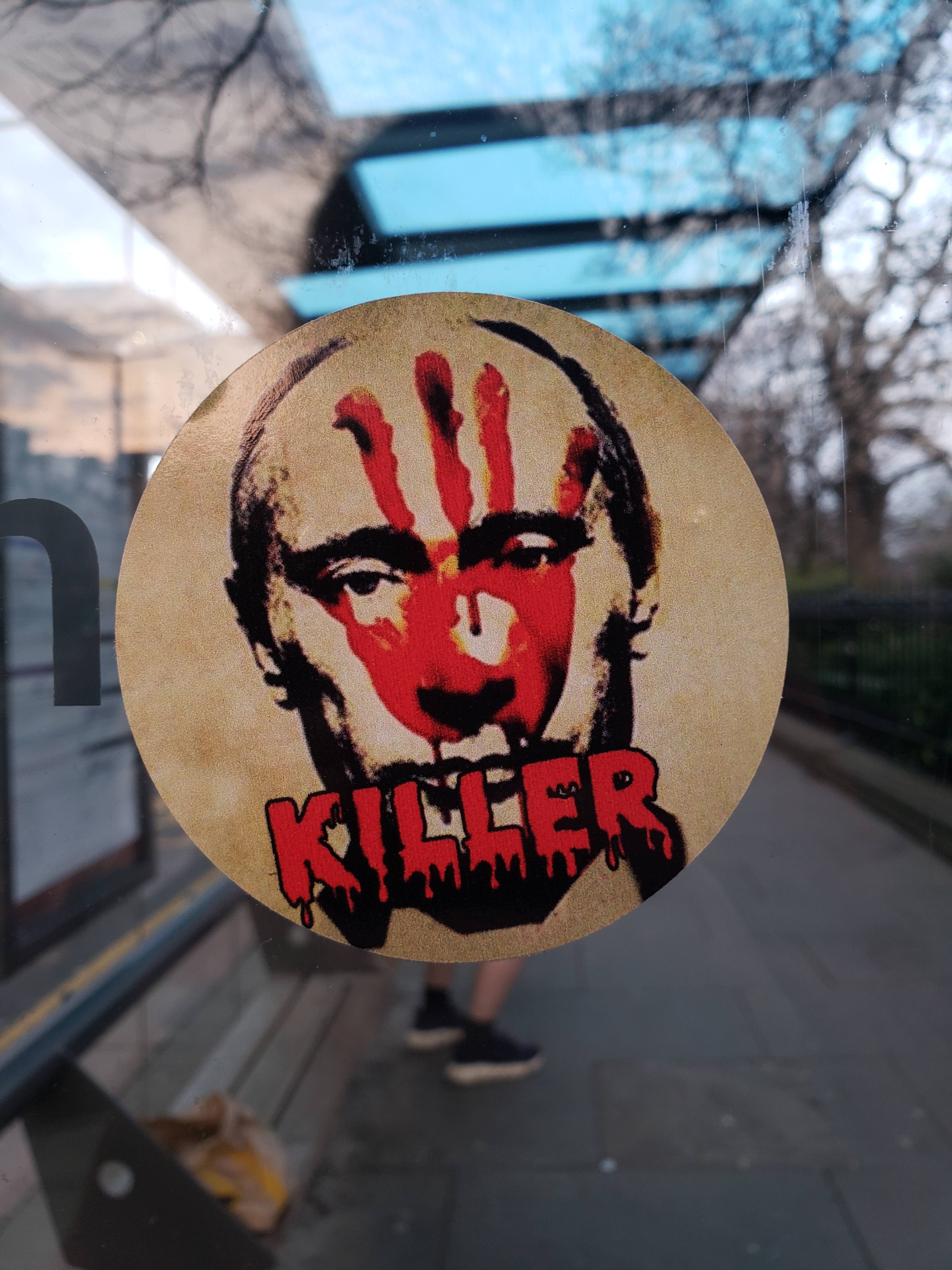
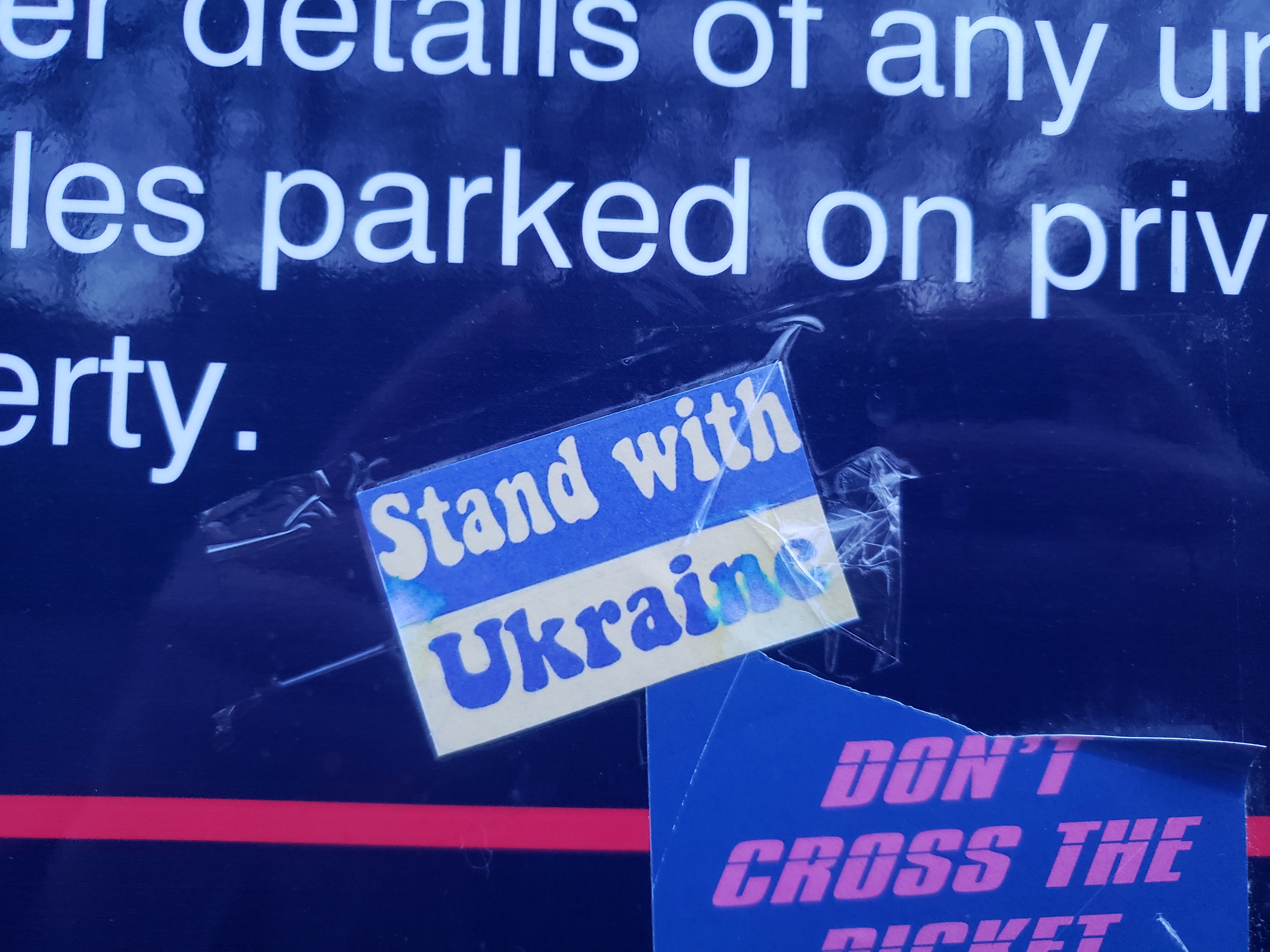
This is the first sticker relating to Ukraine that started appearing in Edinburgh, only a week after the invasion. The QR code links to a list of resources and websites for donating to/supporting Ukraine (Photo: Hannah Awcock, 02/03/2022).This is technically two strips of tape rather than a sticker, but it is a good illustration of how easy it can be to convey a message of support. The vibrant colours and simple design of the Ukrainian flag make it instantly recognisable and easy to replicate (Photo: Hannah Awcock, 12/03/2022).Although you can replicate the Ukrainian flag with coloured tape, stickers of it have been popping up all over Edinburgh too (Photo: Hannah Awcock. 15/03/2022).This design combines the Ukrainian flag with the ‘peace’ hand gesture (Photo: Hannah Awcock, 13/03/2022).This sticker also utilises the Ukrainian flag. According to Google Translate, it means ‘Fuck Off Putin’ in Croatian (Photo: Hannah Awcock, 05/04/2022).This is the Ukrainian coat of arms. It is a trident, based on the seal of Volodymyr, the first Great Prince of Kyiv, who ruled in the late 10th and early 11th centuries (Photo: Hannah Awcock, 13/03/2022).This design also uses the Ukrainian coat of arms (Photo: 05/04/2022).Other stickers choose to focus on the orchestrator of the invasion rather than Ukraine. Putin has always been a controversial figure, and I did find the occasional sticker criticising him before the invasion, but the number and variety has increased dramatically since February 2022 (Photo: Hannah Awcock: 13/03/2022).(Photo: Hannah Awcock, 13/03/2022).This sticker doesn’t directly refer to the invasion of Ukraine, but LGBTQIA+ people in Ukraine fear persecution if the Russian invasion is successful. Whilst it is legal to be gay or transgender in Russia, it is also legal to discriminate against LGBT people because of their sexuality or gender identity (Photo: Hannah Awcock: 13/03/2022).I didn’t want to give Putin the last word in this blog post, even a dragged-up version of him! This feels like a better message to end on (Photo: Hannah Awcock, 12/03/2022).
A ‘Queer Edinburgh for Trans Rights’ sticker near the Easter Road Stadium, home of Hibernian F.C. The sticker includes key features in Edinburgh, including the Dugald Stewart Monument on Calton Hill, Arthur’s Seat, the Scott Monument, and Edinburgh Castle (Photo: Hannah Awcock, 30/09/2021).
In a similar way to social movements more generally, there tend to be trends in the topics addressed by protest stickers. Over the last year or so, the number of protest stickers relating to Covid-19 has decreased. The number of stickers relating to transgender (trans) rights, on the other hand, has increased dramatically, perhaps in response to high-profile events and controversies in the media. I have found stickers that defend and celebrate trans people, and transphobic stickers that attack and criticise them. For this blog post, I have decided to only feature the former kind, as I do not believe that the existence and rights of trans people is a debate. It’s bad enough that transphobic stickers are on the streets in such large numbers, I am not going to use my blog to give them a platform, even if it is to criticize them.
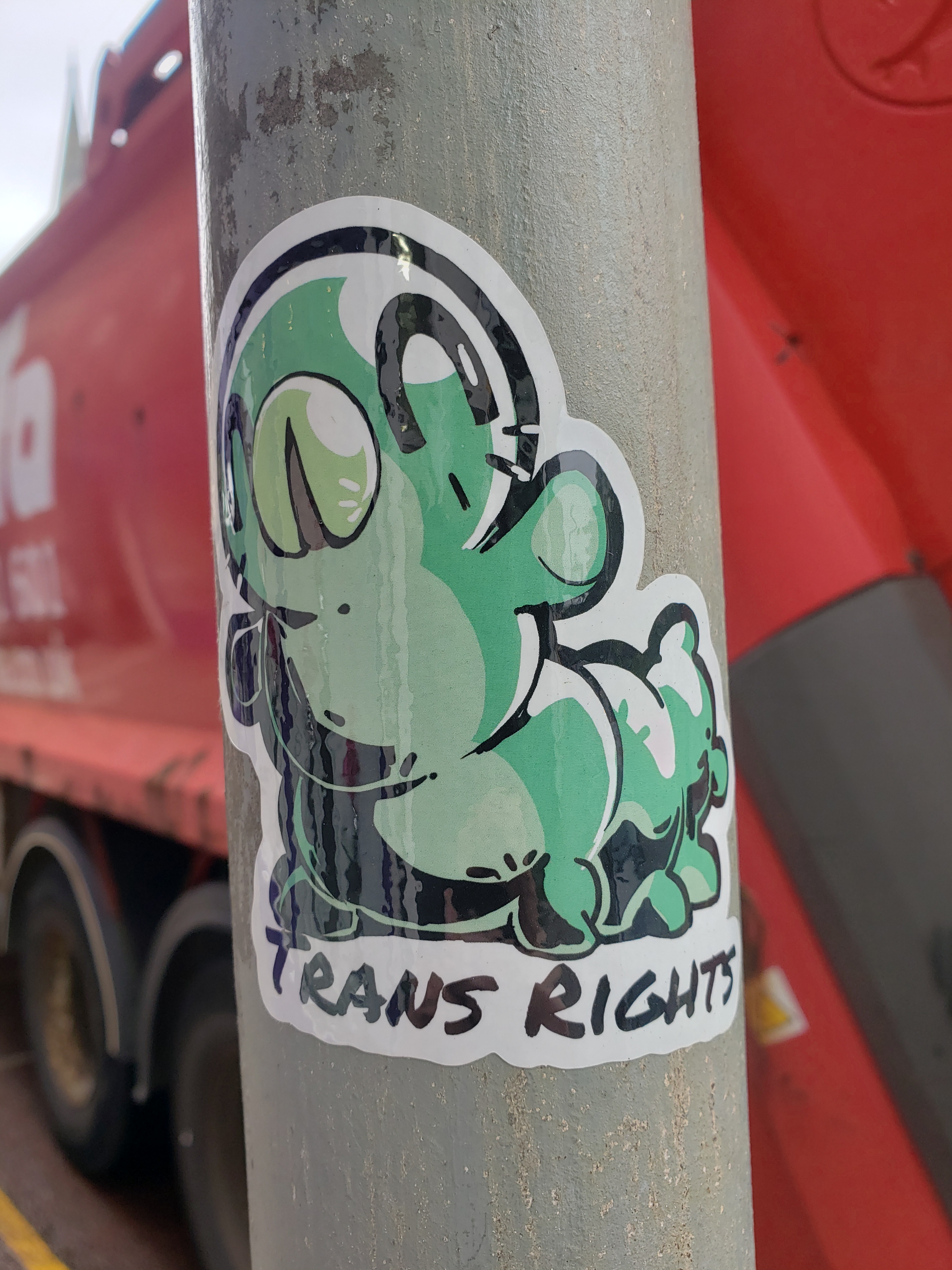
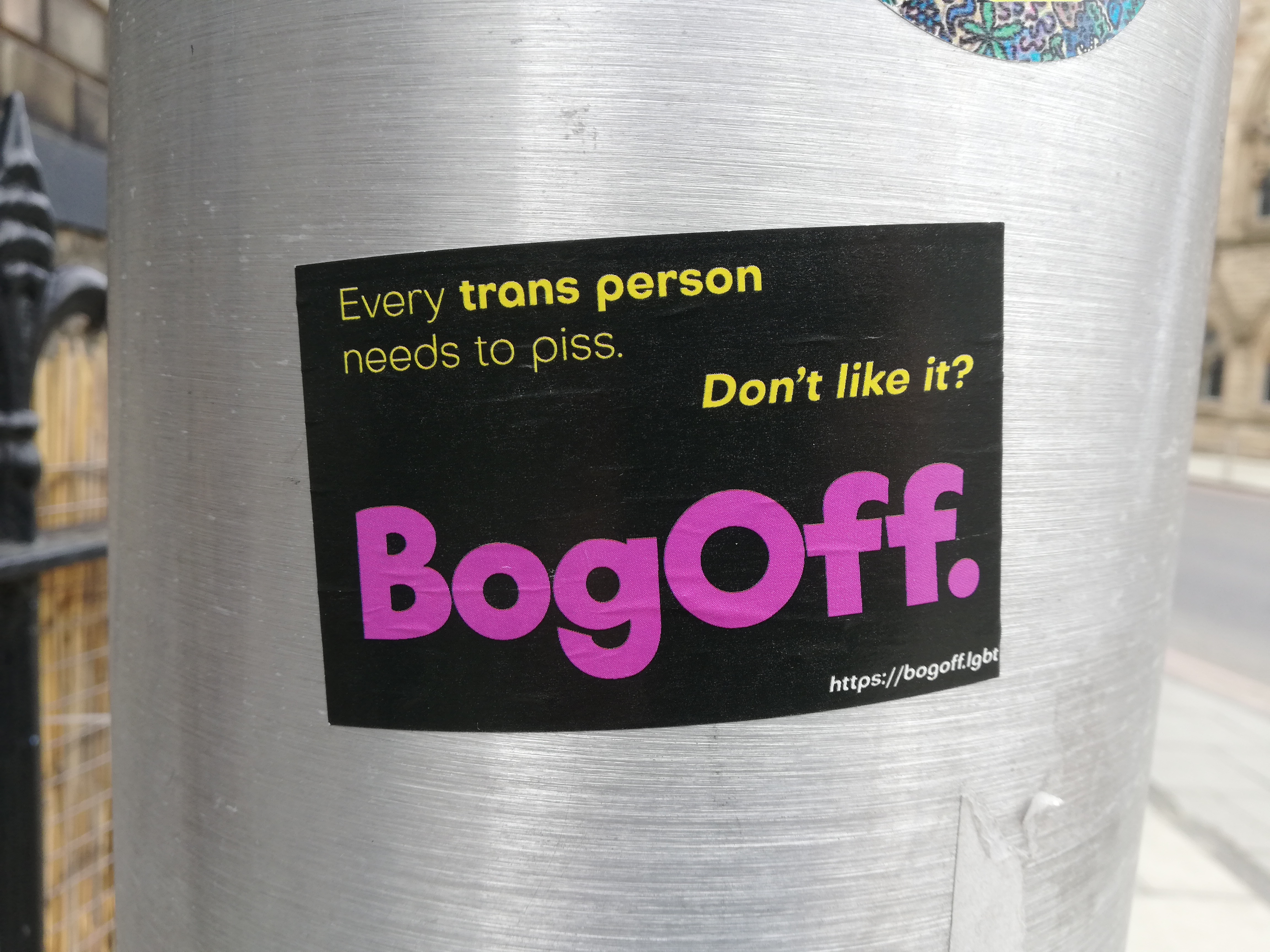
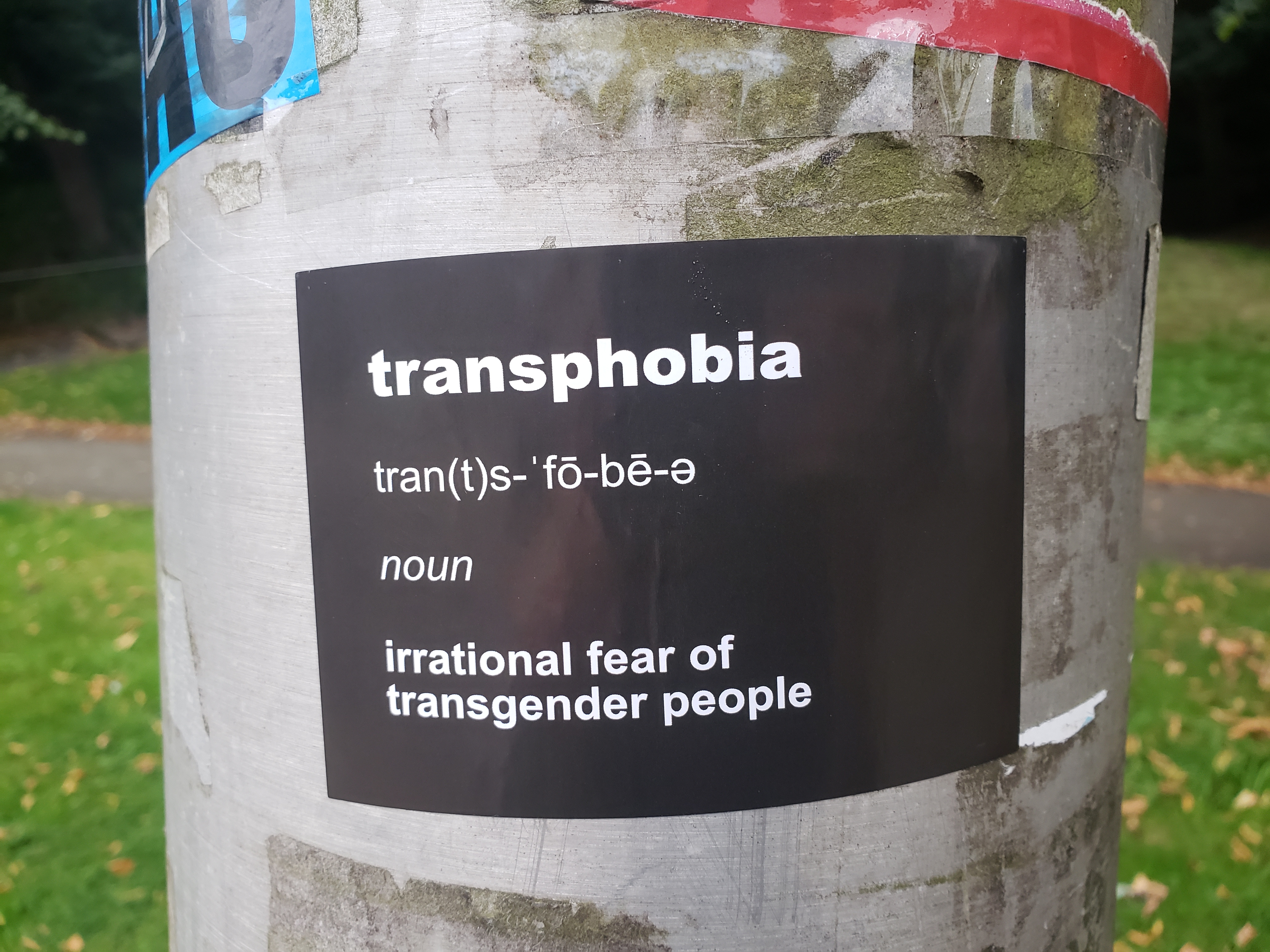
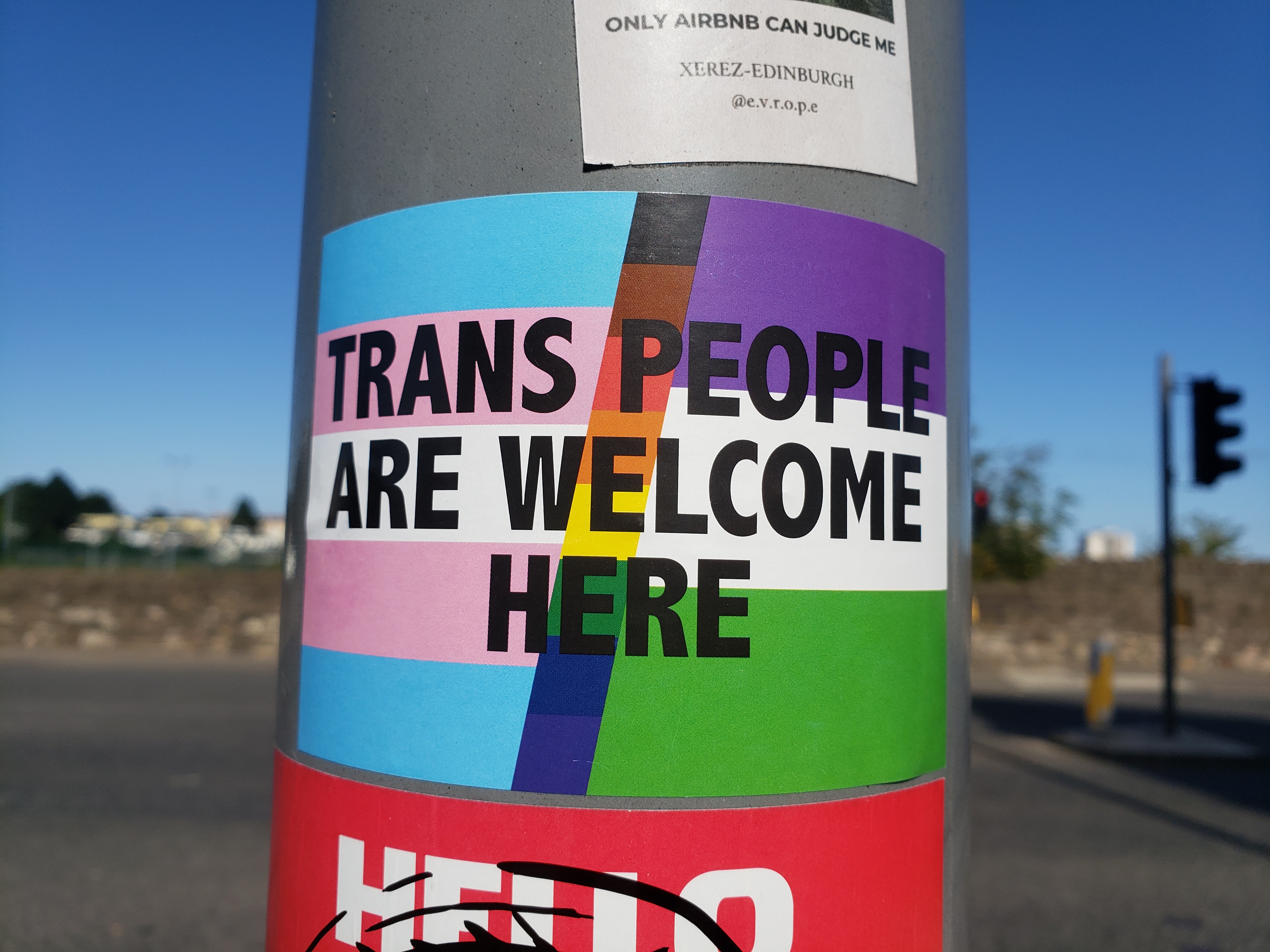
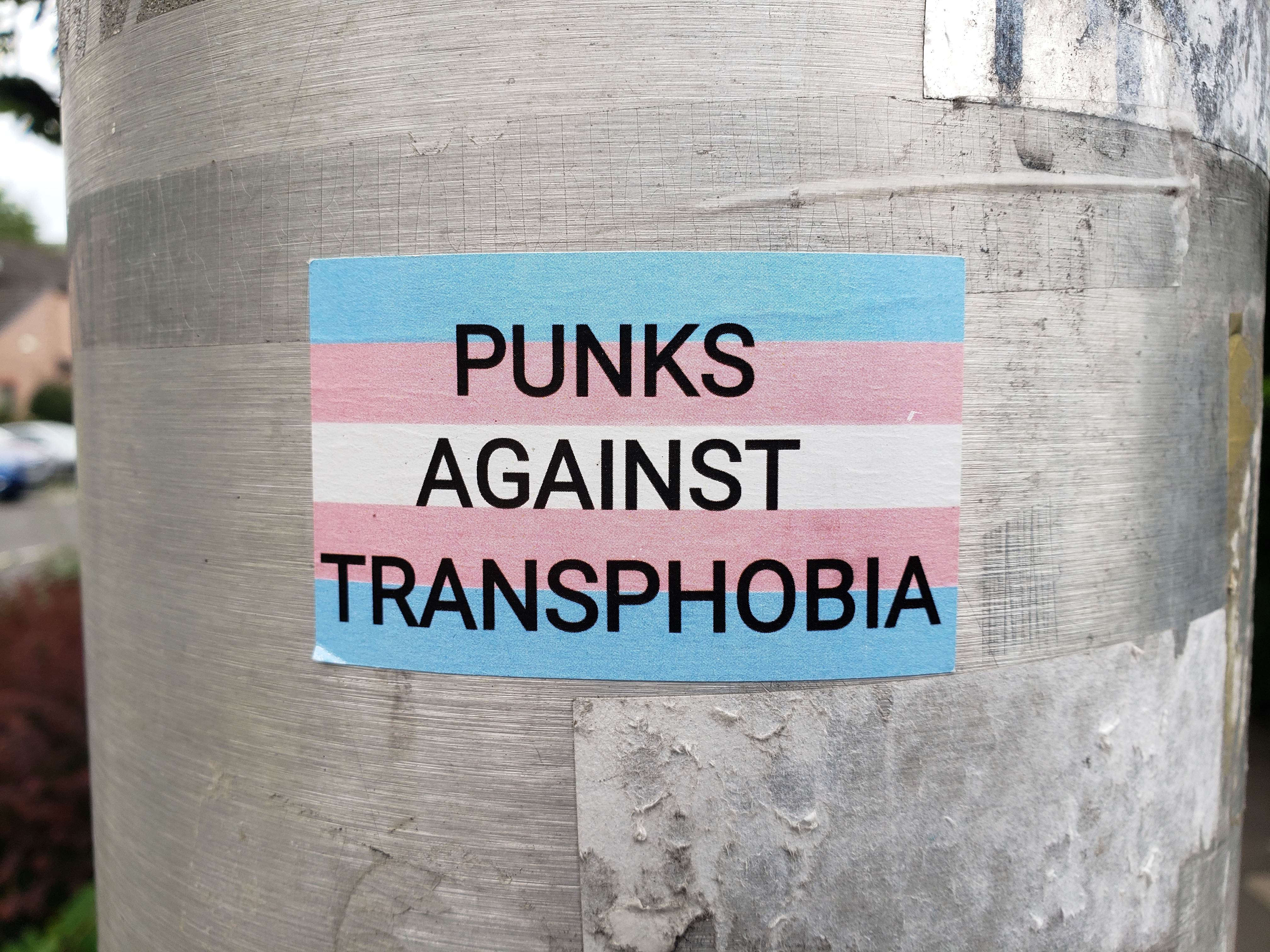
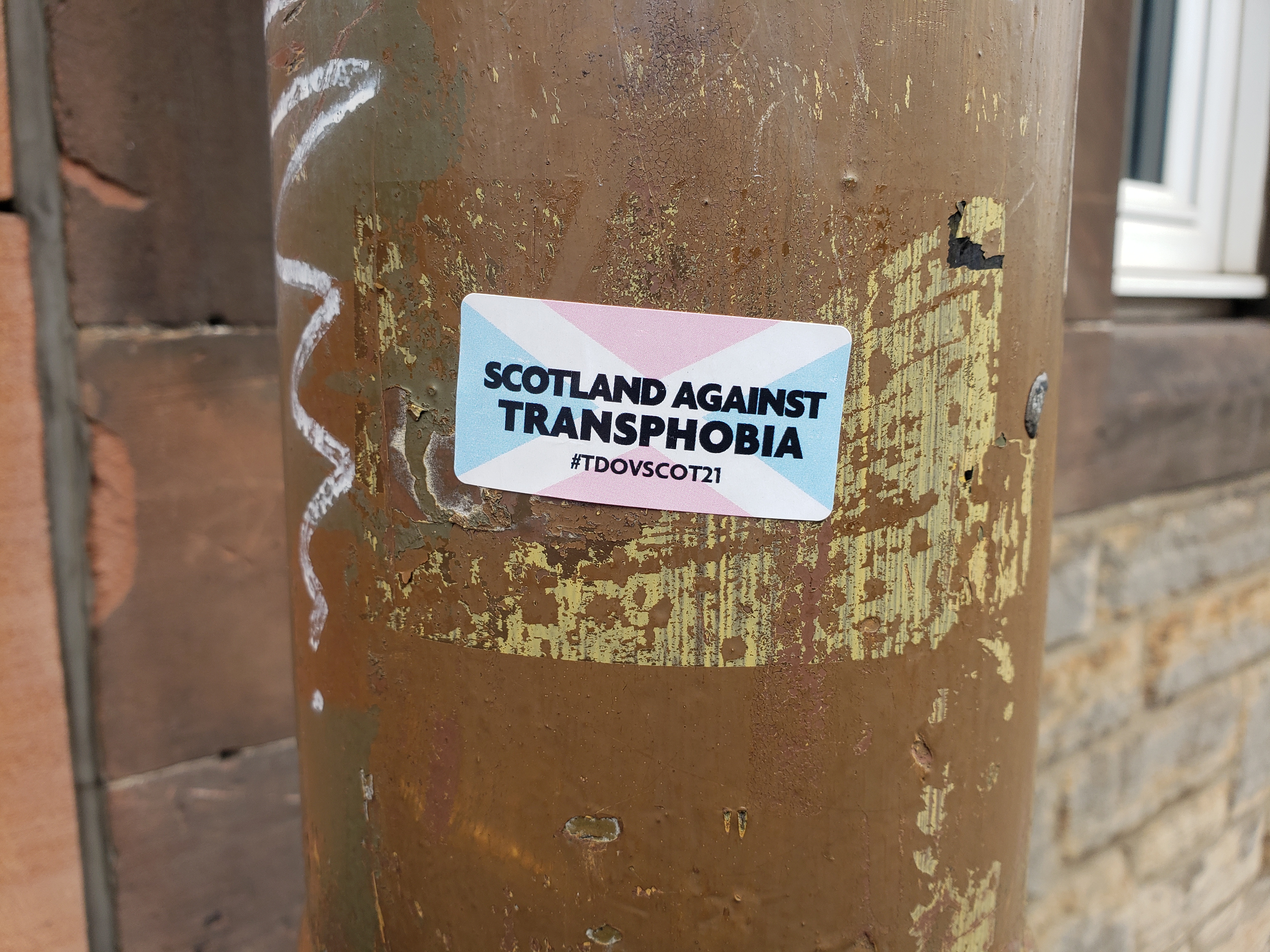
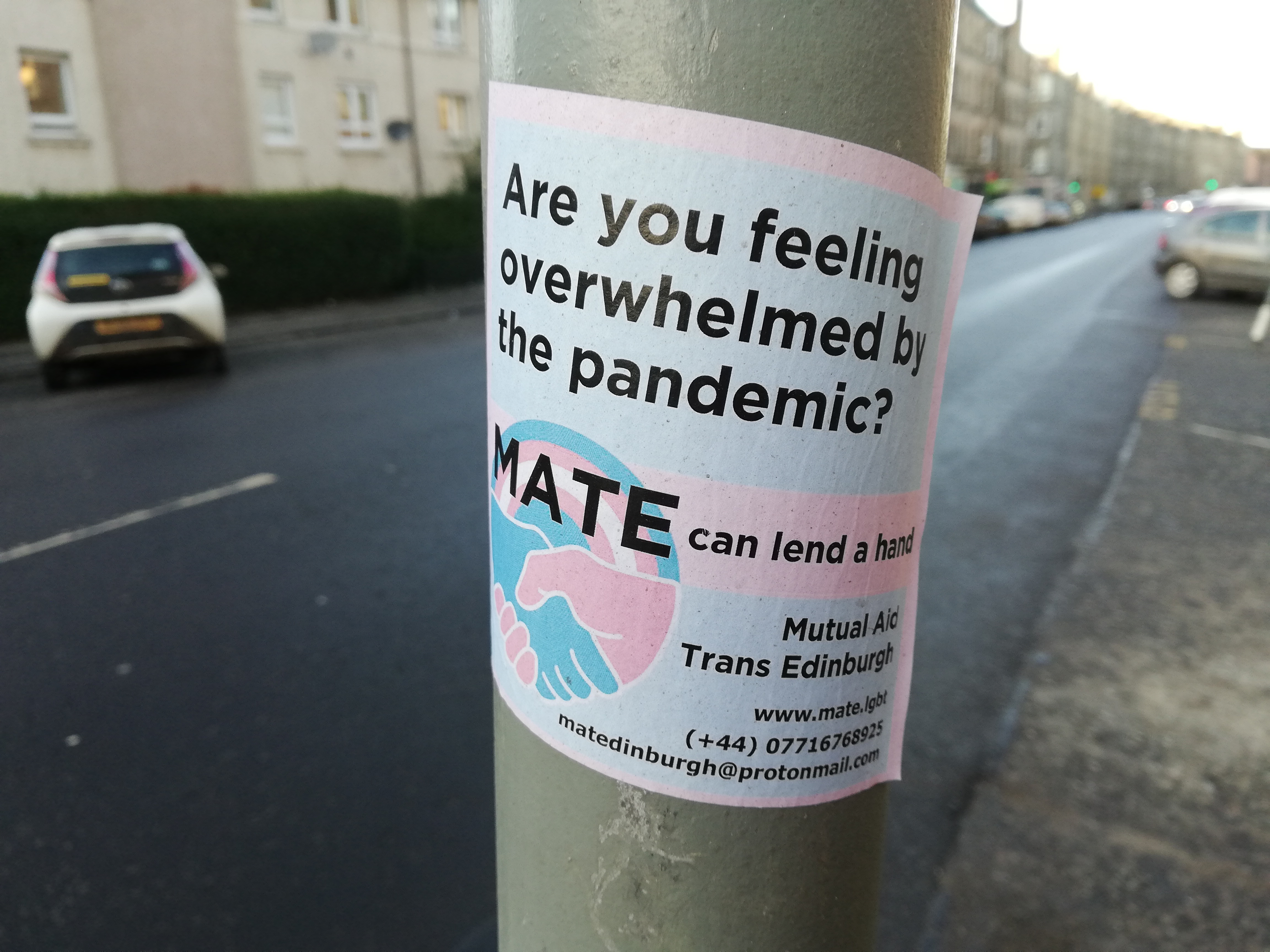
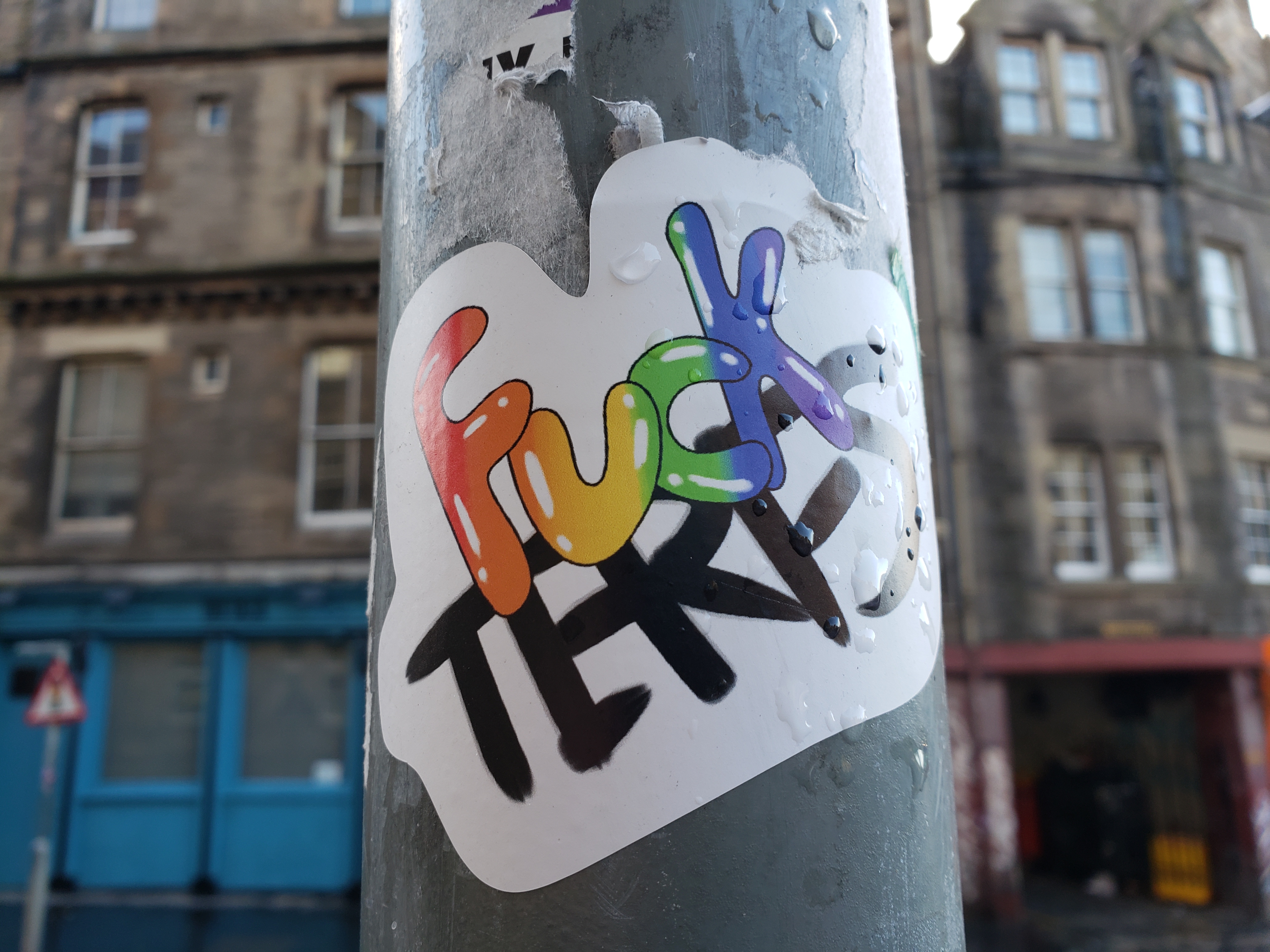
This sticker combines the most recent iteration of the Rainbow Pride with the Trans Pride Flag. The hashtag #LGBwiththeT is a way of showing solidarity between different elements of the LGBT+ community (Photo: Hannah Awcock, 18/04/2021). The Pokemon-Trans Rights crossover you never knew you needed! (Photo: Hannah Awcock, 01/07/2021).Who doesn’t love a good pun? Cisgender people are those whose gender identity aligns with the sex they were assigned at birth. The Trans Pride flag and its colours are a common feature of pro-trans stickers (Photo: Hannah Awcock, 20/07/2021).This sticker also uses a pun. BogOff is a campaign started in 2021 in response to an open consultation launched by the British government about ‘toilet provision for men and women’. They are campaigning for equal access to toilets for all people, including workers, unsheltered people, and disabled people as well as trans and gender-nonconforming people. (Photo: Hannah Awcock, 15/03/2021).This sticker subverts a popular transphobic sticker design. The design is exactly the same, but a definition of ‘woman’ has been replaced with a definition of ‘transphobia’. (Photo: Hannah Awcock, 13/09/2021).This sticker also plays with stereotypical transphobic designs. Recently, transphobic stickers and social media accounts have adopted the colour scheme of the Women’s Social and Political Union, the best-known of the suffragette organisations. I guess I wasn’t the only one extremely uncomfortable with feminist history being used in this way (although I am not pretending that the WSPU was a perfect organisation, far from it!), as this sticker is claiming the purple, white, and green colours for trans-inclusive feminism (Photo: Hannah Awcock, 23/08/2021).This sticker is also using the WSPU colours for a pro-trans message. I appreciate the sentiment, but for me the wording of this sticker misses the mark a bit. Saying that trans people are welcome still implies that they are outsiders in some way. Transgender people don’t need to be welcomed, because they have as much right to be ‘here’ as anyone else. It’s a bit like telling someone they are welcome in their own home (Photo: Hannah Awcock, 13/09/2021).I think this sticker puts it much better! (Photo: Hannah Awcock, 29/06/2021).Many of the accusations made against transgender people are similar to those that have been made against gay people. The way this sticker is placed over another suggests that the one underneath carries a transphobic message (Photo: Hannah Awcock, 19/11/2021).Solidarity is an important element of any social movement, and who doesn’t want punks on their side? (Photo: Hannah Awcock, 24/07/2021). This sticker was made by a charity based in Kirkcaldy called Pink Saltire to celebrate Transgender Day of Visibility on 31st March 2021. I walk past this lamppost often, and a few days before I took this photo there was a transphobic sticker on this spot. You can see the outline of it, as some paint came off with it when it was removed (Photo: Hannah Awcock, 30/06/21).Mutual Aid Trans Edinburgh was set up during the pandemic to provide support by and for trans and queer people in the city. The group went on hiatus in October 2021, but there is still a list of resources available on their website (Photo: Hannah Awcock,12/01/2021).With all the hate and discrimination that trans people face, it can be easy to forget that trans lives are not only characterised by hardship. This sticker, and the Instagram account TransHappinessIsReal, act as a reminder that this is not the case (Photo: Hannah Awcock, 19/11/2021).TERF stands for Trans-Exclusionary Radical Feminist. It first appeared in 2008, to refer to transphobic feminists. It is considered an insult by many of the people it applies to, who prefer the term ‘gender critical’. This sticker felt like an appropriate note to end this blog post on! (Photo: Hannah Awcock, 28/11/2021).
Peter Ackroyd. Queer City: Gay London from the Romans to the Present Day. London: Vintage, 2017. RRP £9.99 paperback.
Peter Ackroyd is a prolific writer of books about London, both fiction and non-fiction. I have read, and enjoyed, his books before (My review of London: The Biography (2001) can be found here), so when I saw Queer City: Gay London from the Romans to the Present Day, I was fairly sure it would be worth a read. It did not disappoint; like Ackroyd’s other non-fiction books, Queer City is well-written and engaging.
The book pretty much does what it says on the tin; it is a chronological history of queerness in London. It is difficult to research any section of society that has been traditionally overlooked, particularly one that was by necessity so secretive for large parts of history. A lot of the sources Queer City draws on were written about London’s queer population, rather than by them, and Ackroyd himself acknowledges that it can be impossible to tell whether these accounts are accurate, exaggerated, or even entirely fictional. Nevertheless, the book recounts an impressive number of examples, and just because researching an element history is difficult, doesn’t mean it shouldn’t be done.
This book is a celebration, as well as a history, of the continual and various human world maintained in its diversity despite persecution, condemnation and affliction. It represents the ultimate triumph of London.
Ackroyd, 2017; p. 232.
Queer City is descriptive rather than reflective or analytical. Ackroyd briefly engages with the question of whether or not London is particularly conducive to queer culture, but I would have liked to see more of this kind of discussion. At times the book can get a bit list-y, with example after and example, and limited analysis. But that is the kind of feedback I would give when marking an undergraduate essay, so maybe I’m being unreasonable.
Most history books that cover significant periods of history tend to get more detailed the closer the narrative gets to the present. This is understandable, because of the relative availability of historical sources, but it can be frustrating. Queer City bucks this trend, with far-flung historical periods getting significantly more coverage than the recent past. This is a refreshing change, but I actually would have liked more detail about the last 50 or so years, when there has been so much dramatic change for LGBT+ people. Significant events like the Wolfenden Report, the legalisation of gay sex, Section 28, the Civil Partnership Act, and the Gender Recognition Act are all covered only briefly.
In-depth, critical historical research is important because it can challenge our perceptions of continuity and normality in society. By helping to publicise London’s queer history, Ackroyd is helping to deconstruct the argument that being queer is abnormal. As well as being a good book, Queer City is an important one.












 Turbulent Isles