Christine L. Corton. London Fog: The Biography. Cambridge, MA: Harvard University Press, 2017. RRP £13.95 paperback.
I like books about London, and I like books that take very specific objects or phenomena, such as a particular weather condition, and links them to wider political, social, economic, cultural, and historical contexts (Tear Gas by Anna Feigenbaum is a really good example of this). So when I found London Fog: The Biography, I was excited to read it.
Although London’s location in the Thames basin means it has always been susceptible to mist and damp, London Fog begins in the 1840s, when the city’s rapid expansion and industrialisation meant London began to suffer from fog in earnest. The book’s narrative ends in the 1960s; the last major period of fog London experienced was in December 1962. For more than a century the city suffered from dense, cloying fog during the winter months that was capable of shutting down the city by reducing visibility to almost zero, and caused breathing difficulties, respiratory illnesses, and even death.
Christine L. Corton uses the fog to tell a social, cultural, and political history of London between those two dates. She explores the way that fog was constructed and interpreted in various narratives, including political debates and identity. Over the course of the century in which fog was a defining characteristic of London life it was the subject of many arguments about what caused the fog, what was so dangerous about it, what could be done to prevent it, and whose responsibility it was. Corton traces these debates with skill and patience.
There is also a lot of literary and art criticism in London Fog; Corton devotes significant attention to how fog in London has been represented in various art forms including paintings, photography, novels, and films. In this way, London Fog reminds me of Nightwalking by Mathew Beaumont, which explores the literary history of London at night. Whereas Nightwalking suffers from a distinct lack of female writers, however, London Fog does discuss female artists.
London Fog is obviously the product of extensive and detailed research. It is full of wonderful images, often in colour. This is a big plus; it is quite unusual for books like this to have so many high-quality images. The narrative is incredibly detailed, which occasionally causes the pacing to suffer; readers with only a mild interest in the topic may struggle.
There are a huge number of books about London’s history, and it takes a lot to write one that stands out from the crowd. London Fog is about a subject that is quintessentially London, but also manages to be original. It is an excellent example about how something small and specific can be used to better understand the large and general.
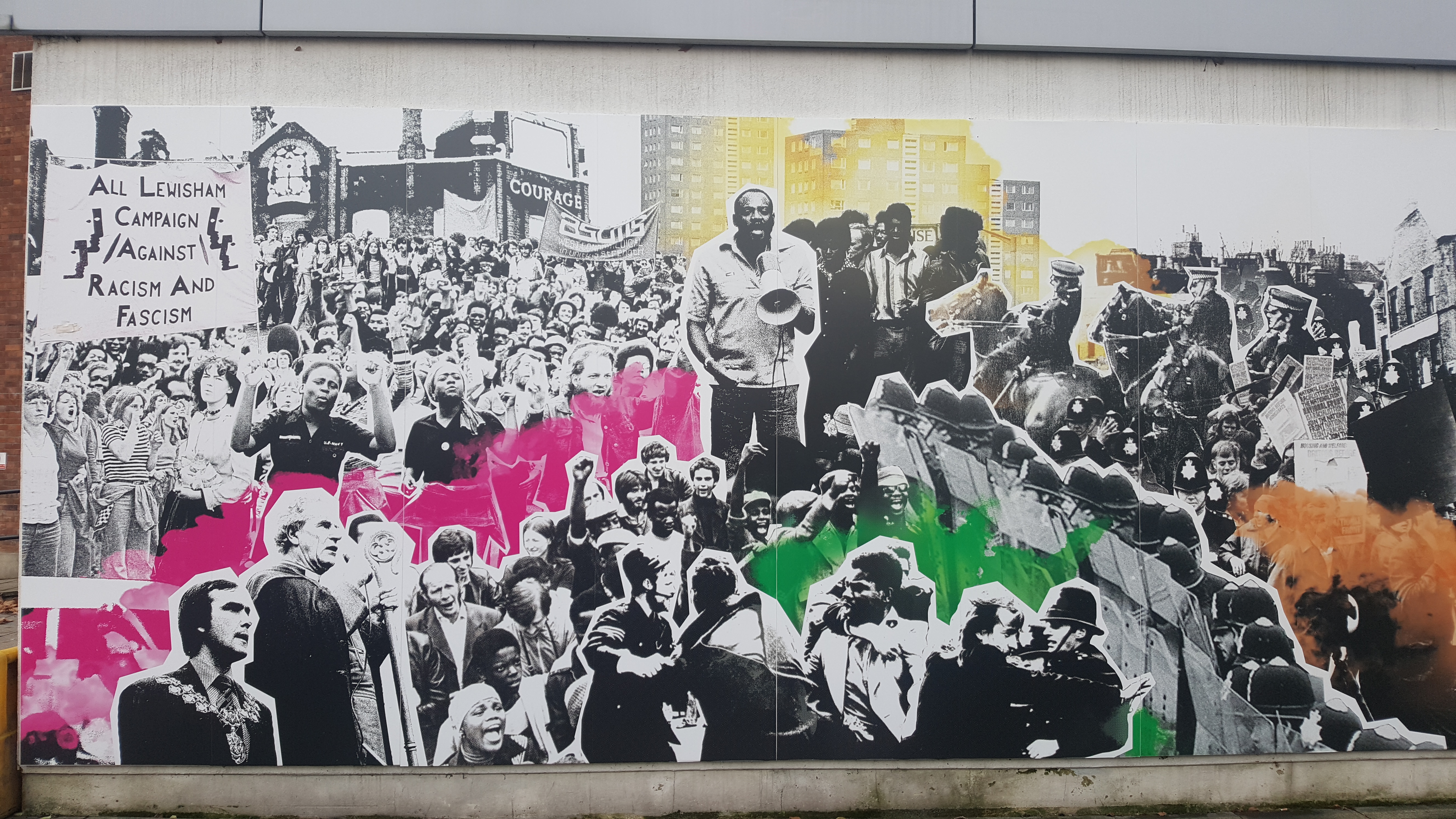
Mural commemorating the Battle of Lewisham by graphic artist Ted Low and local community groups outside Goldsmiths College on Lewisham Way (Source: Independently London).
Most people who know anything about the history of protest in London are familiar with the Battle of Cable Street, which is remembered by many as a victory of anti-fascism over the anti-Semitic British Union of Fascists in 1936. Less well-known is the Battle of Lewisham, which took place four decades later in South East London. The two events share many similarities; the Battle of Lewisham was also sparked by attempts to prevent a far-right group from promoting a xenophobic message by marching through the streets of London, and it also ended with clashes between demonstrators and police. It is also seen as the beginning of a decline in the fortunes of the fascist group involved, the National Front, leading to a significant period of unpopularity for far-right ideologies which has only recently come to an end.
The events known as the Battle of Lewisham were spread out over quite a large area, so I put together this map to help make sense of things:
During the mid-1970s, New Cross in south east London was a focus for the organising activities of the National Front, a far-right fascist group. The National Front was quite popular in the area, and in 1976 the All Lewisham Campaign Against Fascism and Racism (ALCARAF) was set up in order to counter this growing popularity. In 1977, tensions increased further due to the arrest and trial of the ‘Lewisham 21,’ 21 young black people whom the police accused of being part of a gang responsible for 90% of the street crime in south east London. The National Front decided to capitalise on this tension, and announced plans for an ‘anti-mugging’ march in the area on the afternoon of 13th August.
Local church leaders, Lewisham Council and the Liberal Party all called for the march to be banned, but David McNee, the Commissioner of the Metropolitan Police, refused. Anti-fascist groups started planning how to disrupt the march itself, but could not agree on the best response. As a result, 3 separate counter demonstrations were planned by different groups:
ALCARAF organised a peaceful demonstration for the morning of the 13th August.
The 13 August Ad Hoc Committee planned to occupy the National Front’s meeting point at Clifton Rise.
The Anti-Racist/Anti-Fascist Co-ordinating Committee (ARAFCC) called for support for the ALCARAF march and for a physical attempt to stop the National Front. To confuse matters further, the ALCARAF was a member of the ARAFCC.
At 11:30 on the 13th of August, the ALCARAF demonstration gathered in Ladywell Fields in Lewisham. Around 5000 people listened to speeches by the Mayor of Lewisham, the Bishop of Southwark and the exiled Bishop of Namibia. After the rally, ALCARAF marched as far as Algernon, where the police turned them back towards Ladywell Fields. After this, however, ARAFCC stewards led people through back streets to New Cross Road, which was part of the National Front’s planned route. As a result, lots of people made it from the ALCARAF demonstration to the afternoon protests.
The first clashes between police and counter-demonstrators happened at about 12:00 pm, when Socialist Worker Party activists were evicted from a derelict shop on New Cross Road near Clifton Rise. There were further clashes when the police tried to force the demonstrators down Clifton Rise, away from Achilles Street, where the National Front started assembling at about 1:30 pm. At 3:00 pm, the police escorted the National Front out of Achilles Street and onto New Cross Road. The police had cleared a route with some difficulty, but the road was still lined with people, and the National Front were pelted with bricks, smoke bombs, bottles and other objects. Some protesters managed to break through the police lines and separate the back of the march from everyone else. National Front banners were captured and burnt before the police managed to separate the two groups. Mounted police were used to clear a path through crowds who were trying to stop the National Front advancing along New Cross Road. The police used roadblocks to keep people out of the area, and officers surrounded the National Front 3 deep.
Anti-fascist protesters went to Lewisham town centre, where the National Front march was supposed to finish, and blocked the High Street. As a result, the National Front had a short rally in a car park on Cressington Road, then were escorted by the police to trains which were waiting at Lewisham Station to take them out of the area. Most counter-demonstrators were not aware that the National Front had left the area, and clashes continued between them and the police for several more hours. At one point, the police briefly lost control of central Lewisham, a period that was later dubbed ‘the People’s Republic of Lewisham Clock Tower.’ Throughout the day, more than 100 people were injured, about half of them police officers, and around 200 were arrested.
The Battle of Lewisham was a humiliation for the National Front. They were vastly outnumbered by counter demonstrators, and what was meant to be a show of strength and legitimacy made them look weak and unpopular. It was also a significant moment in the history of protest policing: it was the first time riot shields were used on the British mainland (many tools used to police protesters were used in northern Ireland first). Baton charges and mounted police were also used to try and disperse protests, a technique which has become familiar to activists in London over the last few decades.
According to the Remembering the Battle of Lewisham project, undertaken by Goldsmiths to coincide with the 40th anniversary of the Battle in 2017, very few people know what happened in south east London that day in 1977. On the 40th anniversary of the Battle, a plaque commemorating the protest was installed on 314 New Cross Road. There are also plans for a community memorial to be situated on nearby Batavia Road. Perhaps projects like these will make more people aware of what happened during the Battle of Lewisham. As people like Donald Trump, Nigel Farage, Boris Johnson, and Jacob Rees Mogg continue to gain power and influence, it can only be a good thing for people to know that fascism can be defeated by popular protest.
Sources and Further Reading
Goldsmiths, University of London. “Remembering the Battle of Lewisham 40 Years on.” No date, accessed 8 August 2018. Available at https://www.gold.ac.uk/history/research/battle-of-lewisham/ (There are a lot of great resources on these webpages).
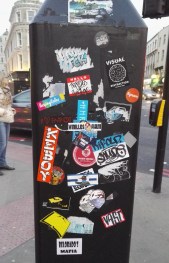
Stickers of all kinds are common in urban areas (Photo: Hannah Awcock, King’s Cross Station, 27/02/16).
Since austerity began a decade ago, people in all forms have employment have had to endure a fall in their working conditions. Issues include reductions in pensions, reductions in pay, increased workload, and the rise of zero-hour and fixed term contracts.
There are a number of groups that campaign for improved working conditions and better wages. Most of them are unions, although working conditions and wages are also the concern of campaign groups and social movements. Unions range in size; from the very large and powerful, such as Unite and the National Union of Teachers, to the small and specific. Many unions in the UK are part of the Trades Union Congress, which offers support to unions and campaigns for the rights of working people. Many of these organisations can be found amongst the work-related protest stickers on London’s streets.
Some protest stickers related to work are quite general, like this one. This sticker was produced by Strike! a dissident female-run collective that publishes a quarterly magazine (Photo: Hannah Awcock, Bethnal Green Road, 13/09/15).
This sticker links wages with quality of work. I’m not sure that many people in low-paid work would feel confident enough to take this kind of action, out of fear of losing their jobs completely. The text is yellow is the same message in Polish. Workers from Poland and other countries in eastern Europe are often blamed for low wages, but many radical groups understand the need for solidarity with non-British workers, rather than their victimisation. This sticker was produced by Workers Wild West, a worker’s newspaper based in Ealing in West London (Photo: Hannah Awcock, Cable Street, 09/10/16)
This sticker was produced by the Communist Party of Great Britain (Marxist-Leninist) (CPGN-ML). The 1st of May is celebrated as a holiday in many cultures, but it has been closely associated with the international worker’s movement for more than a century. It seems that someone disapproved of the image of Lenin on this sticker, and tried to remove it (Photo: Hannah Awcock, Charing Cross Road, 23/03/17).
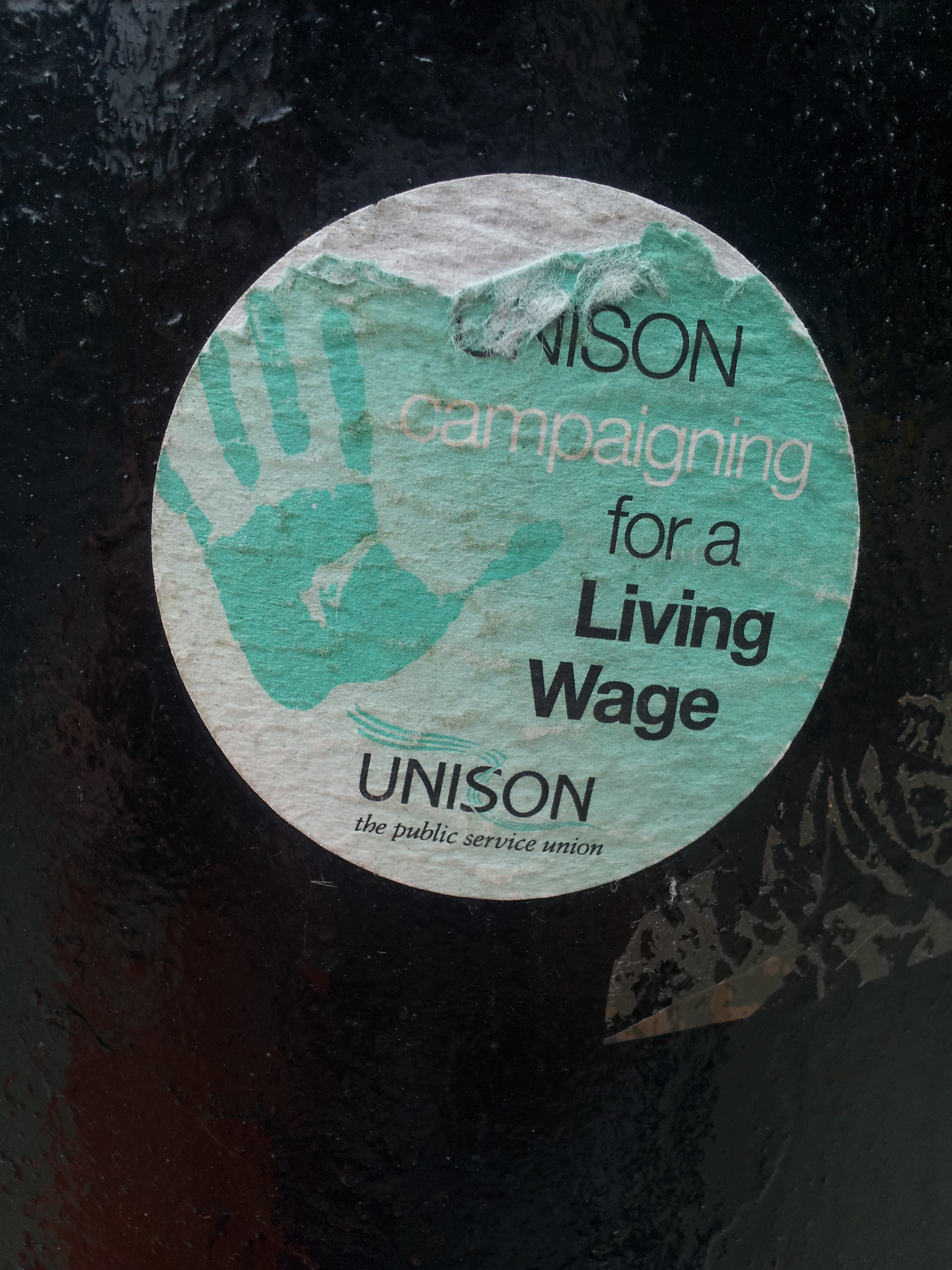
Unison is the UK’s largest union for public services, with 1.3 million members. The living wage, which is higher than the minimum wage, is an important issue in places like London, where the cost of living is so high (Photo: Hannah Awcock, 18/08/15 Mile End Road).
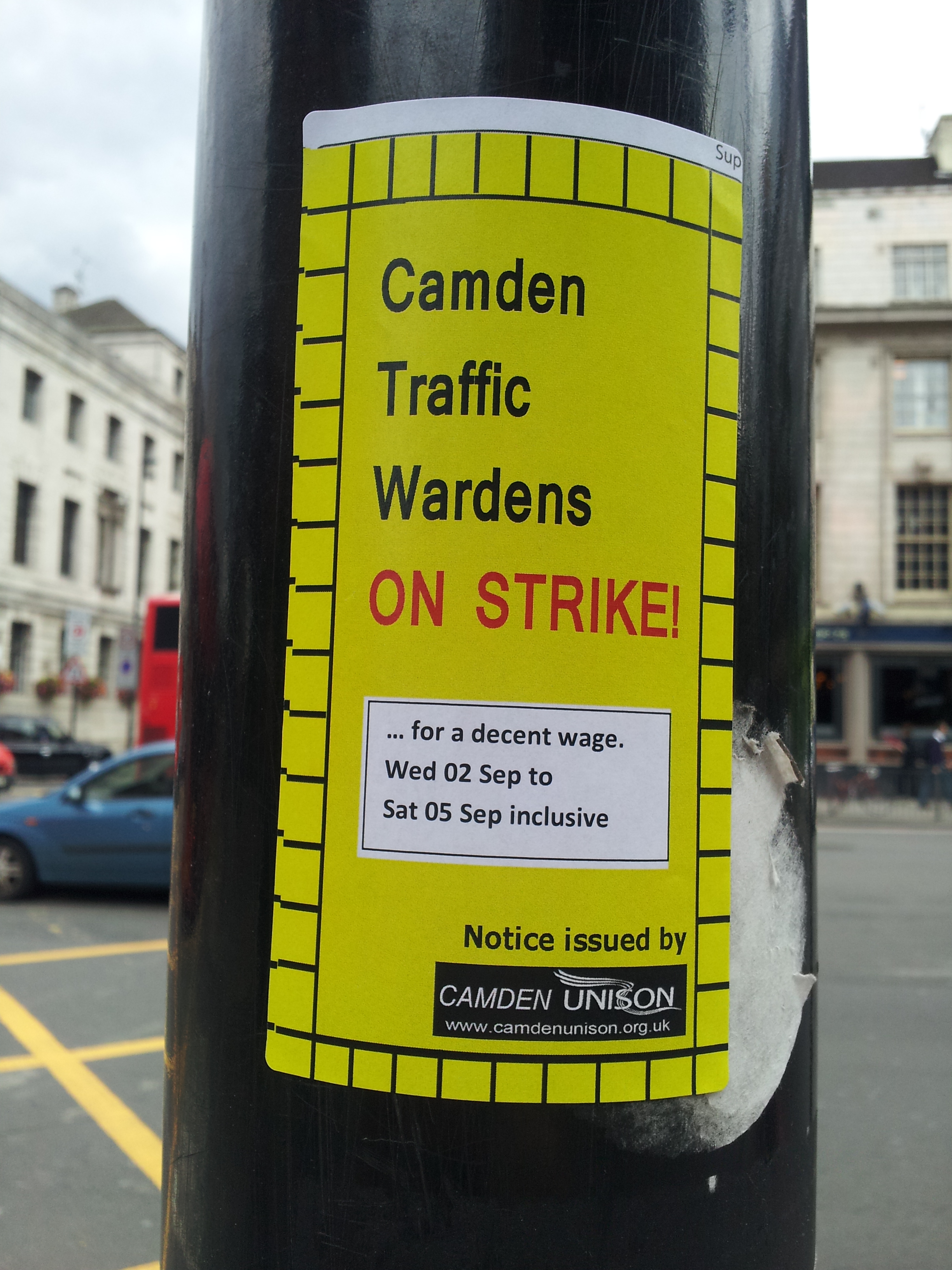
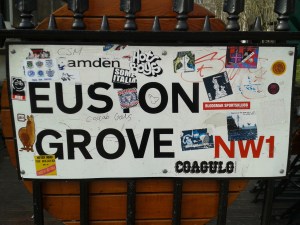
The bigger unions are often organised into local branches. This sticker was produced by Camden Unison, and advertises a strike by traffic wardens in the area. The sticker is designed to look like a parking fine ticket–I’m not sure many drivers would find it amusing! (Photo: Hannah Awcock, 03/09/15, Euston Road).
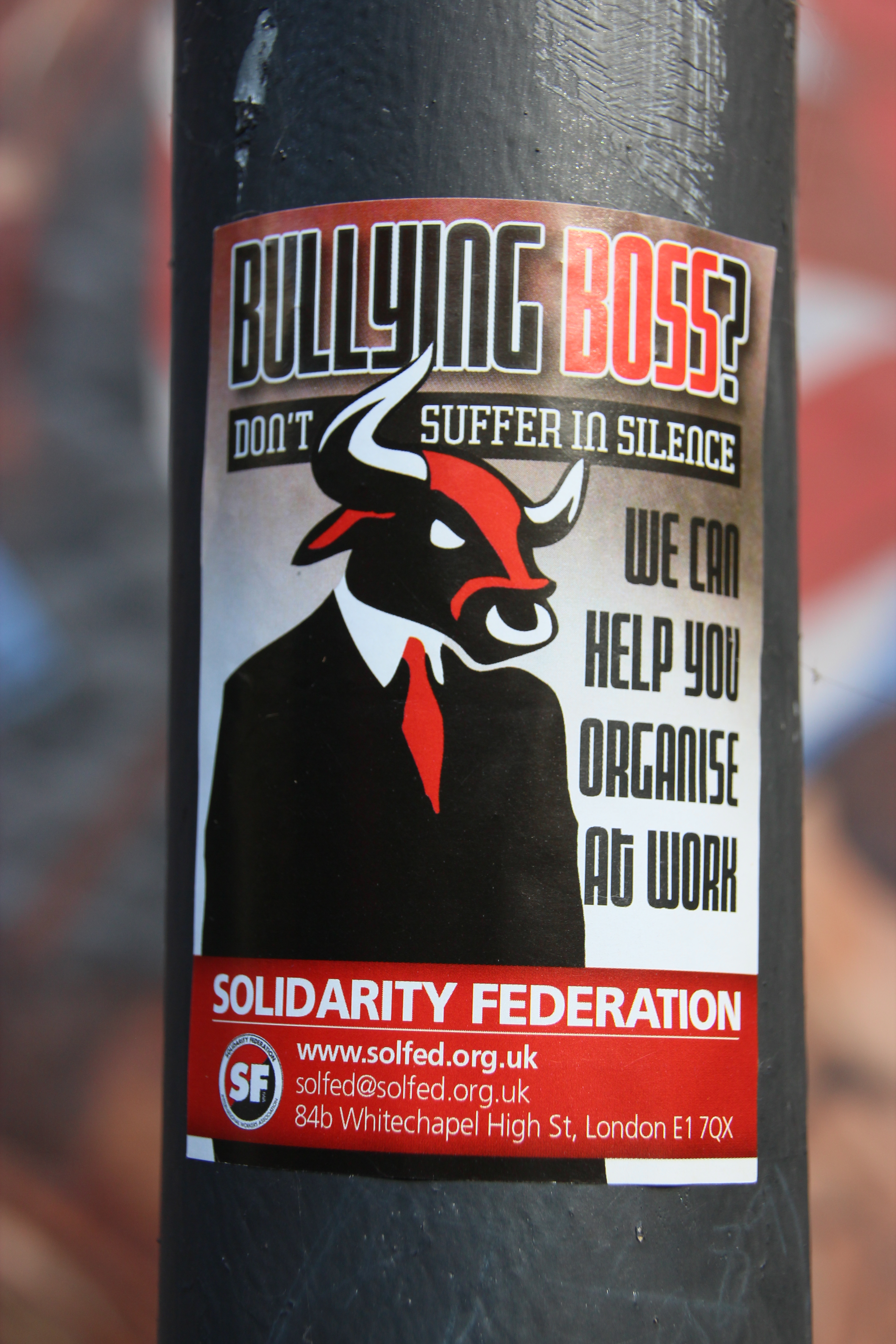
The Solidarity Federation is not a union, it is the British branch of the International Worker’s Association. They support the formation of local groups and networks in order to form a worldwide solidarity movement (Photo: Hannah Awcock, 09/10/16, St George’s Garden).
This sticker was produced by the Fire Brigades Union, which is fairly self-explanatory. In 2015, when this photo was taken, they were in a dispute with the government over plans for firefighter’s pensions, which led to strike action (Photo: Hannah Awcock, 12/03/15, Malet Street).
This sticker was produced by the RMT union (otherwise known as the National Union of Rail, Maritime and Transport Workers) represents workers from all sectors of the transport industry. It has been in the news a lot recently, because of conflicts over the use of guards on trains (Photo: Hannah Awcock, 14/04/15 Upper Street, Islington).
This sticker was produced by the Wirral branch of the TUC. The politician Esther McVey was the Minister of State for employment between 2013 and 2015. Zero hour contracts, where the number of hours workers are given each week are not guaranteed, are another controversial development of recent years (Photo: Hannah Awcock, 15/04/15, Euston Road).
PCS is the Public and Commercial Services Union, representing employees in the civil service and government agencies. (Photo: Hannah Awcock, 18/02/15, Inner London Crown Court).
The GMB began life in 1889 as the Gas Workers and General Union. It is not a general union, which means anyone can join, no matter how they make their living. This sticker is demanding the minimum wage rise to £10 an hour (Photo: Hannah Awcock, 18/10/16, Broad Sanctuary).
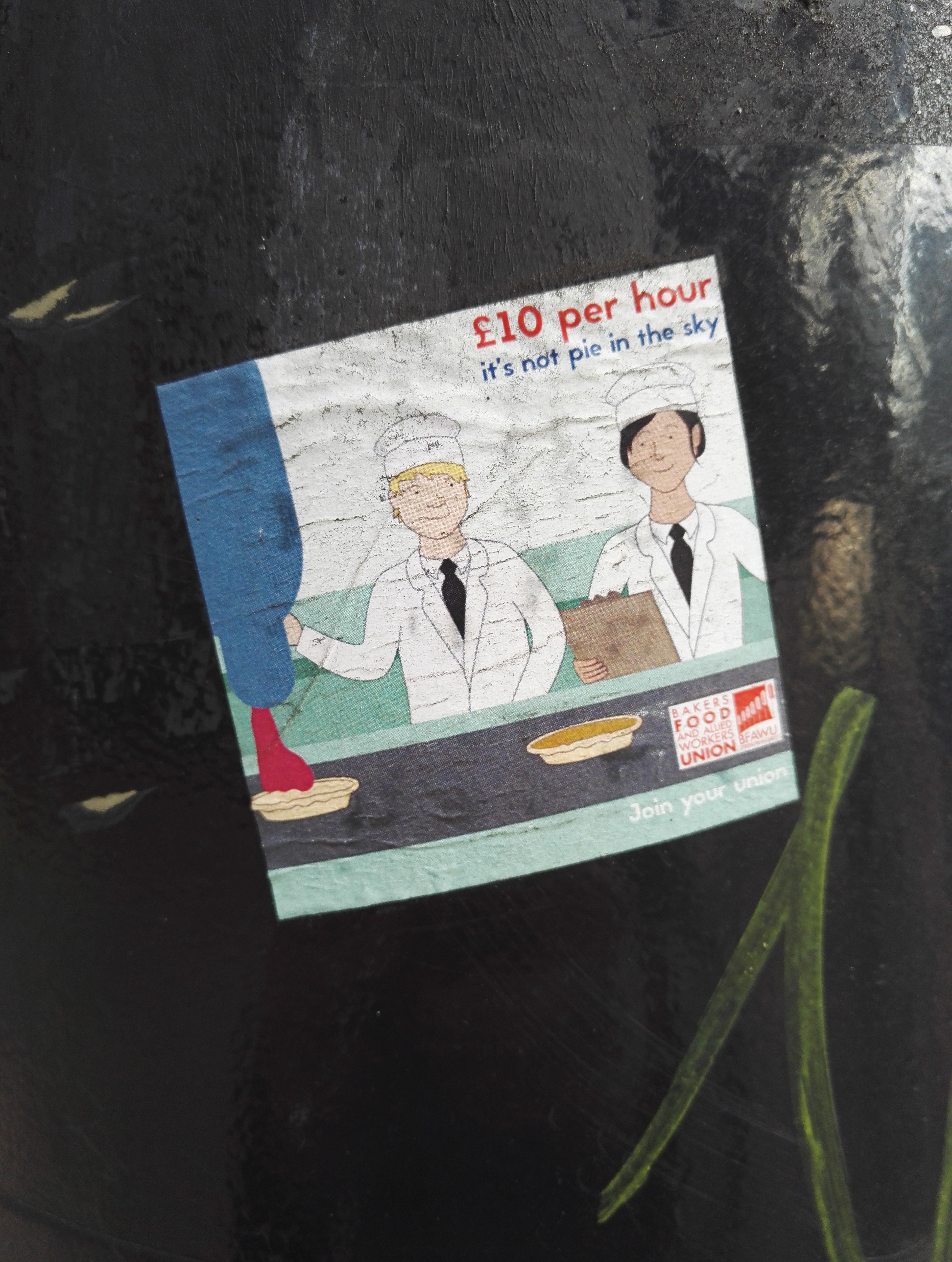
This sticker is also calling for a £10/hr minimum wage. It is produced by the Bakers Food and Allied Workers Union, hence the pun that the sticker uses (Photo: Hannah Awcock, 23/03/17, Euston Road).
This sticker does not promote a particular campaign group or union. The text at the bottom of the sticker is Spanish for “the fight continues!” Cleaners are often very poorly paid. I found this sticker near the University of London buildings in Bloomsbury, which has been the focus of a campaign in recent years over the rights of cleaners. Many employers subcontract out work such as cleaning, which frequently results in low pay and poor working conditions (Photo: Hannah Awcock, 09/02/15, Gordon Street).
Unless this sticker was produced by a rap group or a clothing label, I haven’t been able to figure out who ‘Foreign Boyz’ are. Whoever they are, they oppose zero hour contracts (Photo: Hannah Awcock, 21/09/17, Tottenham Court Road).
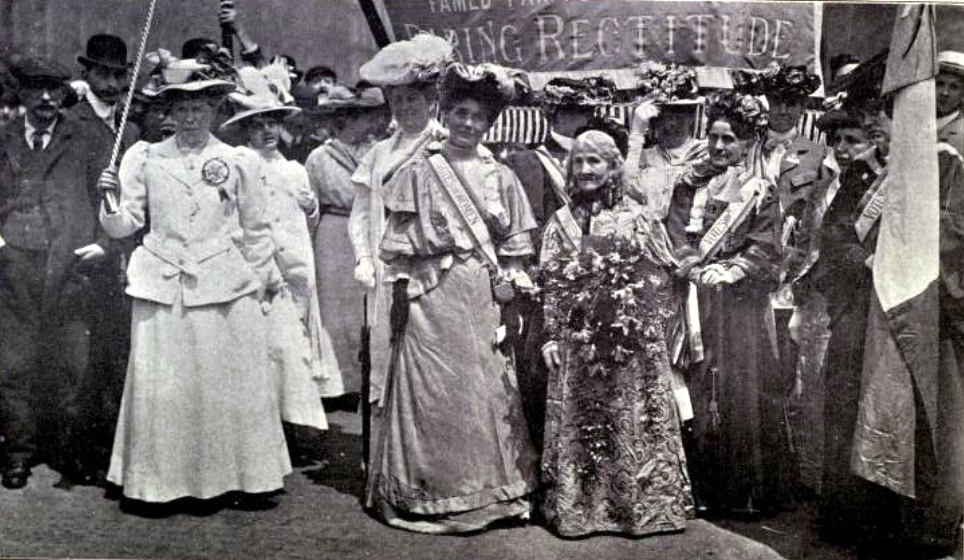
Head of the procession, Women’s Sunday (suffragette march), Hyde Park, London, 21 June 1908. At the front: Emmeline Pankhurst and Elizabeth Wolstenholme Elmy of the Women’s Social and Political Union (Source: Sylvia Pankhurst (1911). The Suffragette: The History of the Women’s Militant Suffrage Movement, 1905–1910. New York: Sturgis & Walton Company)
On the 13th of June 1908, the National Union of Women’s Suffrage Societies (NUWSS), organised a huge march in London to demonstrate the strength of their commitment to women’s suffrage. Just a week later, on the 21st of June, the Women’s Social Political Union (WSPU) organised a ‘monster meeting,’ also in London. The WSPU was much smaller than the NUWSS, but its militant tactics were better at grabbing headlines, and it is by far the best-known women’s suffrage group now. In June 1908, however, the WSPU decided to try a more peaceful method of campaigning, which was a resounding success. Up to 500,000 people gathered in Hyde Park to hear 80 speakers talk about women’s suffrage at the biggest political demonstration the UK had ever seen.
The meeting was organised by WSPU Treasurer, Emmeline Pethick-Lawrence, and her husband Frederick. Like the NUWSS’s march a week earlier, the demonstration was organised in response to Prime Minister Herbert Asquith’s challenge to prove the strength of feeling behind the demand that women be given the vote. Special trains were chartered to transport WSPU supporters to London from around the country, and a Sunday was chosen in order to maximise working class attendance.
7 processions totaling 30,000 suffragettes marched from around London to Hyde Park. This was the first time that the WSPU’s now infamous colours of purple, green, and white were featured in public. Women were asked to wear white dresses, and accessorise with green and purple. The effect was striking. Emmeline Pankhurst and Elizabeth Wolstenholme-Elmy led the procession from Euston Road, Annie Kenney headed the march from Paddington, and Christabel Pankhurst and Emmeline Pethick-Lawrence helmed the demonstration from Victoria Embankment. Flora ‘the General’ Drummond, a formidable suffragette known for leading marches in a military-style uniform, visited each of the 7 processions. Like the NUWSS procession the previous week, banners played an important role in the marches. The suffragettes carried up to 700, although none are known to survive.
20 raised platforms had been constructed in Hyde Park, from which 80 prominent supporters of women’s suffrage gave speeches, including Emmeline Pankhurst (of course!) Keir Hardy, Barnard Shaw, Israel Zangwill, and Amy Catherine Robbins (wife of H.G. Wells). The meeting was considered to be a great success, although several newspapers pointed out that most of those attending were there out of curiosity rather than support for the cause. I don’t really see this as a problem though; surely it was a good opportunity to win over a few converts to the cause.
It seems unlikely that the WSPU deliberately planned Women’s Sunday to be a week after the NUWSS procession, but the sight of women marching through the streets of London, proud, defiant, and well-ordered, was still enough of a novelty to draw hundreds of thousands of people to Hyde Park.
There were quite a few stickers relating to veganism and animal rights stuck on these phone boxes in Charing Cross Road (Photo: Hannah Awcock, Charing Cross Road, 23/03/17).
I have written about protest stickers related to animal welfare before, but I have since collected enough stickers to put together a post solely about vegetarianism and veganism. According to The Vegan Society, there are more than half a million vegans in the UK. Whilst this isn’t many, it’s more than three and a half times the number there was in 2006. There are also around 1.2 million vegetarians in the UK and the variety of vegan alternatives in shops and restaurants is increasing all the time. Whether it’s a fad or a lasting trend remains to be seen, but there are certainly plenty of protest stickers on the issue.
To see whereabouts in London I found these stickers, check out the Turbulent London Map.
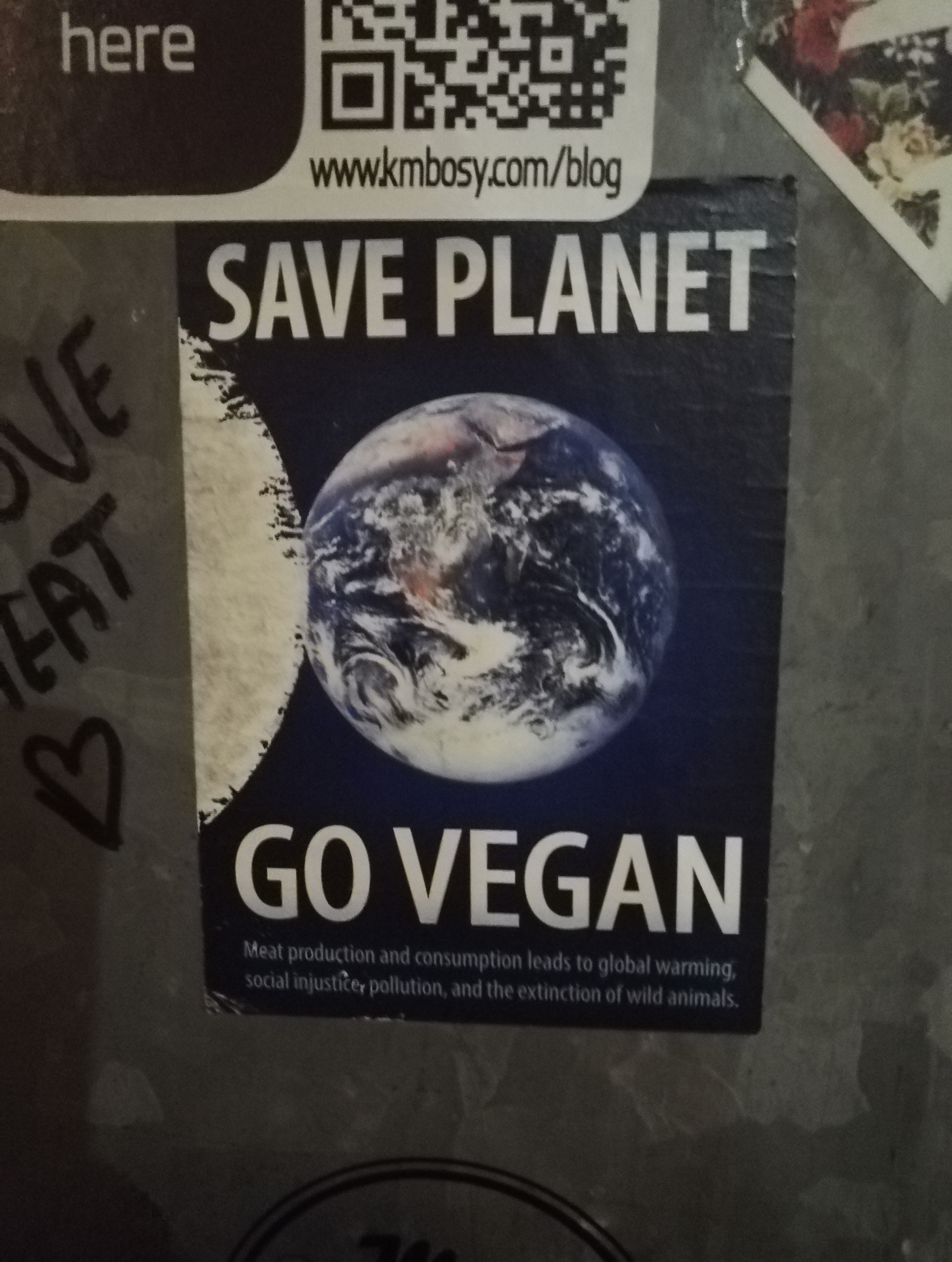
This sticker makes a connection between veganism and the environment, arguing that meat production contributes to global warming and pollution, amongst other things (Photo: Hannah Awcock, 14/02/17, Tate Modern).
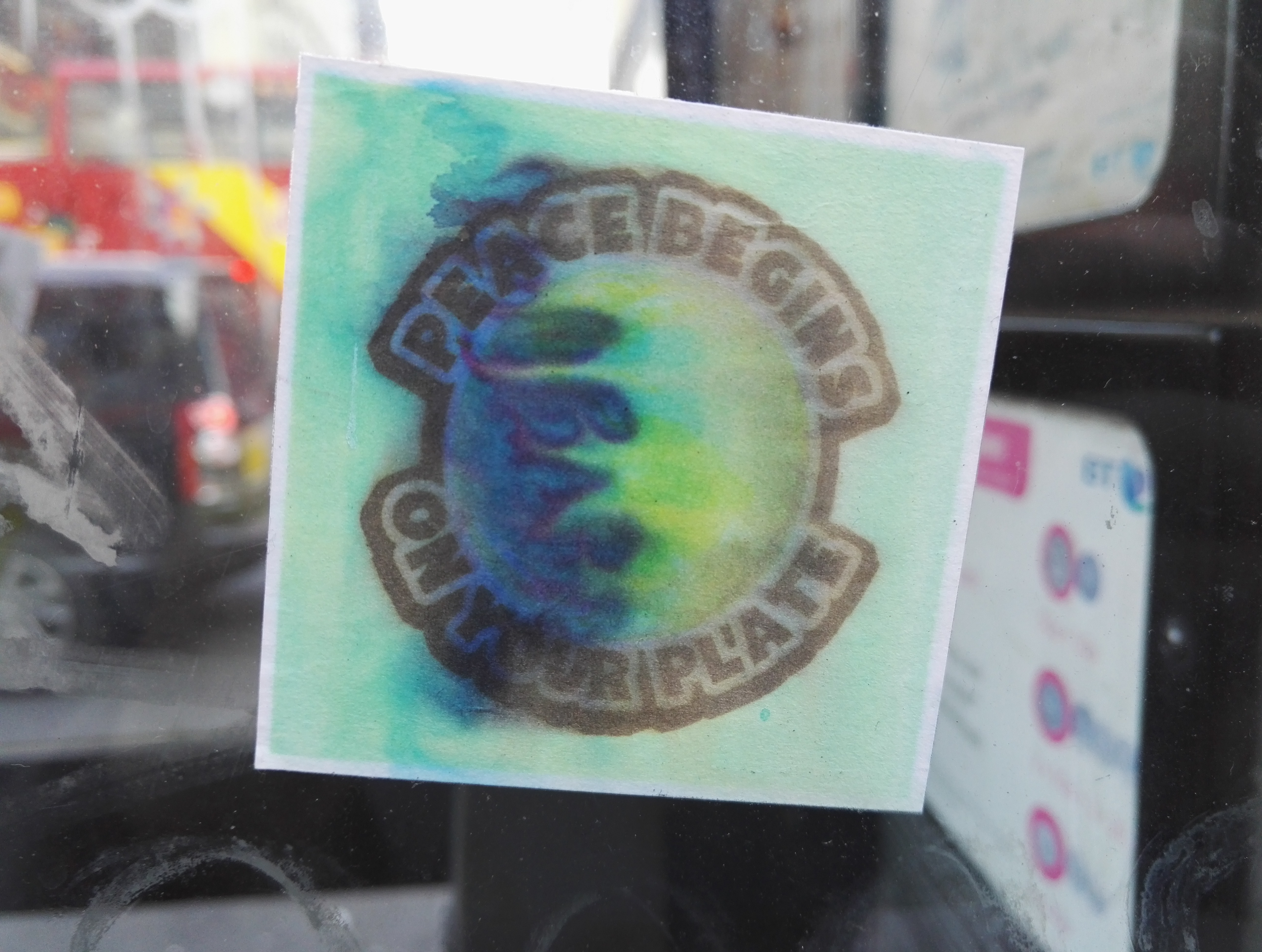
This sticker implies support of veganism rather than actually spelling it out. Rain has caused the ink to bleed, making quite a pretty pattern (Photo: Hannah Awcock, Charing Cross Road, 23/03/17).
This sticker is disputing the argument that animals for the meat industry can be killed humanely (Photo: Hannah Awcock, Charing Cross Road, 23/03/17).
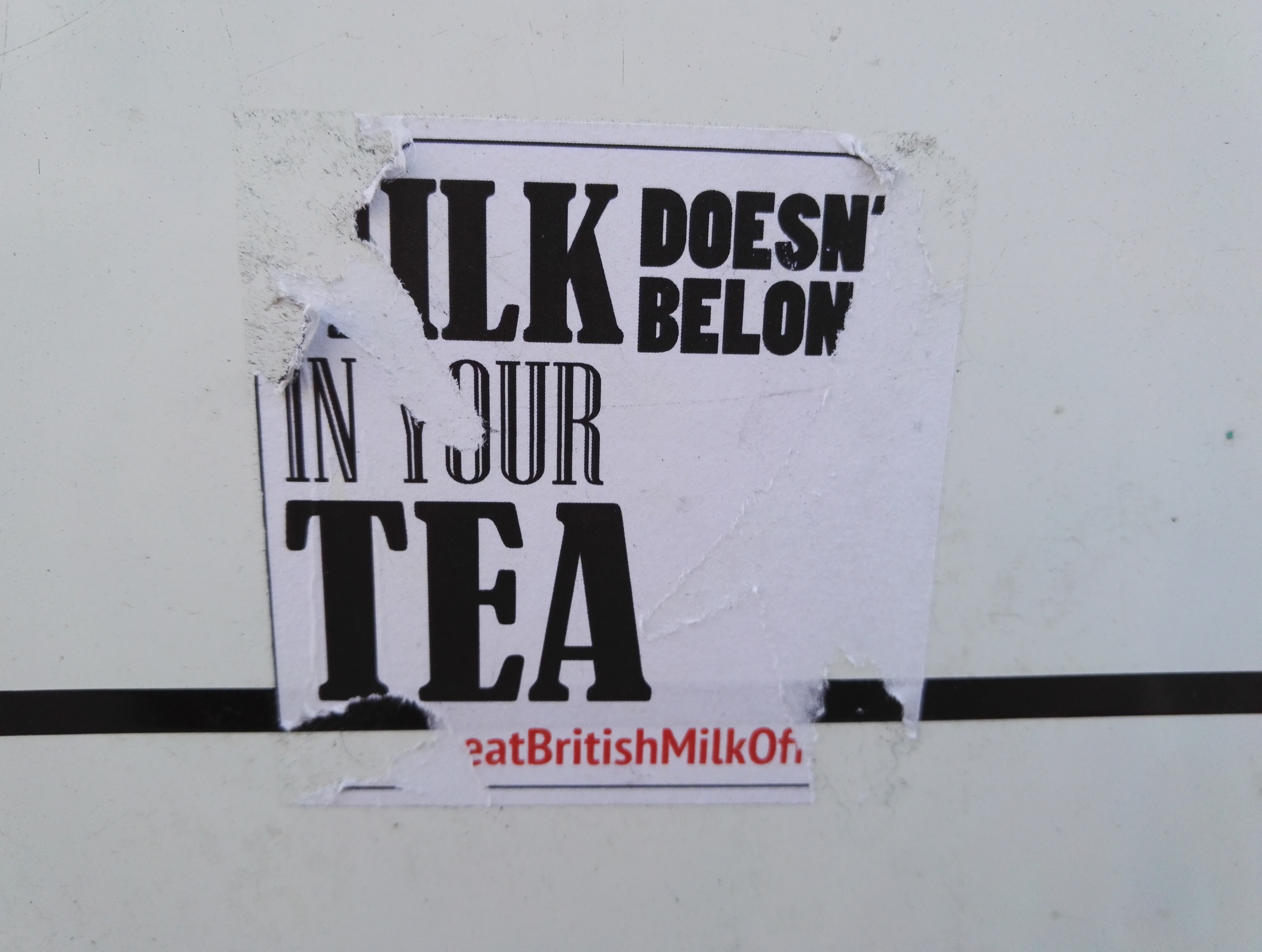
This sticker targets the stereotypically British drink, tea, as a way of protesting the mass consumption of milk (Photo: Hannah Awcock, Charing Cross Road, 23/03/17).
This sticker goes into more detail about the milk industry, portraying it as vicious and cruel (Photo: Hannah Awcock, Charing Cross Road, 23/03/17).
This stickers builds on the arguments above by suggesting milks derived from alternative sources. The web address belongs to an organisation called Animals Deserve Absolute Protection Today and Tomorrow (ADAPTT–I suspect the name was chosen for the acronym rather than anything else), which promotes veganism and animal rights (Photo: Hannah Awcock, Charing Cross Road, 23/03/17).
This sticker focuses on fish, listing characteristics seemingly intended to invoke sympathy. I suspect that most people would not normally associate these attributes with fish, and many vegetarians do eat fish (pescatarians) (Photo: Hannah Awcock, Charing Cross Road, 23/03/17).
This sticker aims to persuade the viewer that veganism is healthy, suggesting that eating meat leads to higher rates of cancer. It also promotes a YouTube video, a particularly common tactic on animal rights stickers (Photo: Hannah Awcock, Charing Cross Road, 23/03/17).
The key slogan of this sticker has been obscured, but it’s message is clear, condemning the attitude that human appetites are more important than the suffering of animals. It utilises another common tactic of animal rights stickers, photos of cute animals (Photo: Hannah Awcock, Pentonville Road, 23/03/17).
Turbulent Londoners is a series of posts about radical individuals in London’s history who contributed to the city’s contentious past, with a particular focus of women, whose contribution to history is often overlooked. My definition of ‘Londoner’ is quite loose, anyone who has played a role in protest in the city can be included. Any suggestions for future Turbulent Londoners posts are very welcome. To celebrate the centenary of the Representation of the People Act, all of the Turbulent Londoners featured in 2018 will have been involved in the campaign for women’s suffrage. Next up is Rosa May Billinghurst, known at the time as ‘the cripple suffragette.’
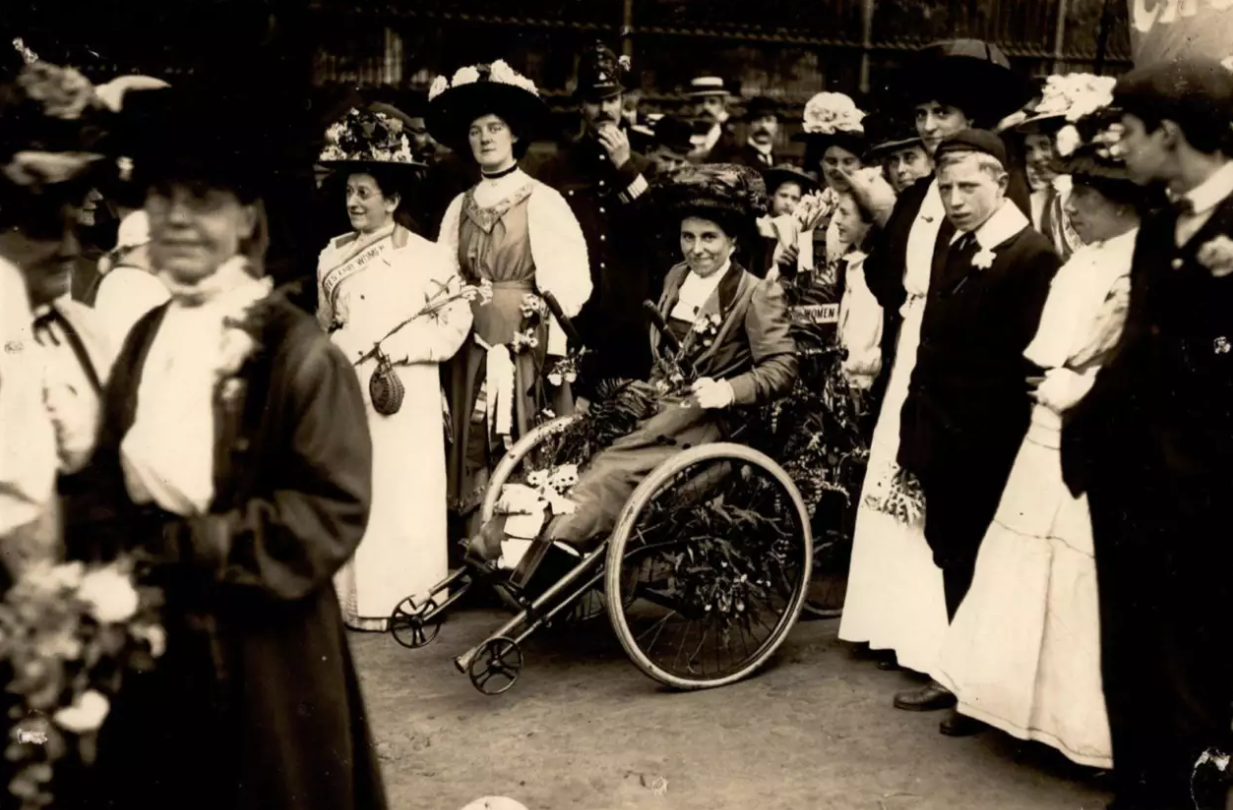
Rosa and her adapted tricycle at a Votes for Women demonstration (Source: LSE Library 7ewd j 55).
Rosa May Billinghurst was born on the 31st May 1875 to a well-off middle class family in Lewisham, south east London. She suffered with polio as a young child which left her unable to walk; she wore leg irons and used crutches or a modified tricycle for the rest of her life. This would not prevent her from throwing herself headlong into the campaign for women’s suffrage however. In fact, she often used her disability to the advantage of the cause.
As a young women Rosa volunteered with the poor in Greenwich, taught Sunday School, and was a member of the Band of Hope, a charity which taught children about the benefits of sobriety and teetotalism. She was also a member of the Women’s Liberal Association, although she later rejected the Liberal Party because of its approach to women’s suffrage. Rosa came to believe that women’s inferior position in society held back society as a whole.
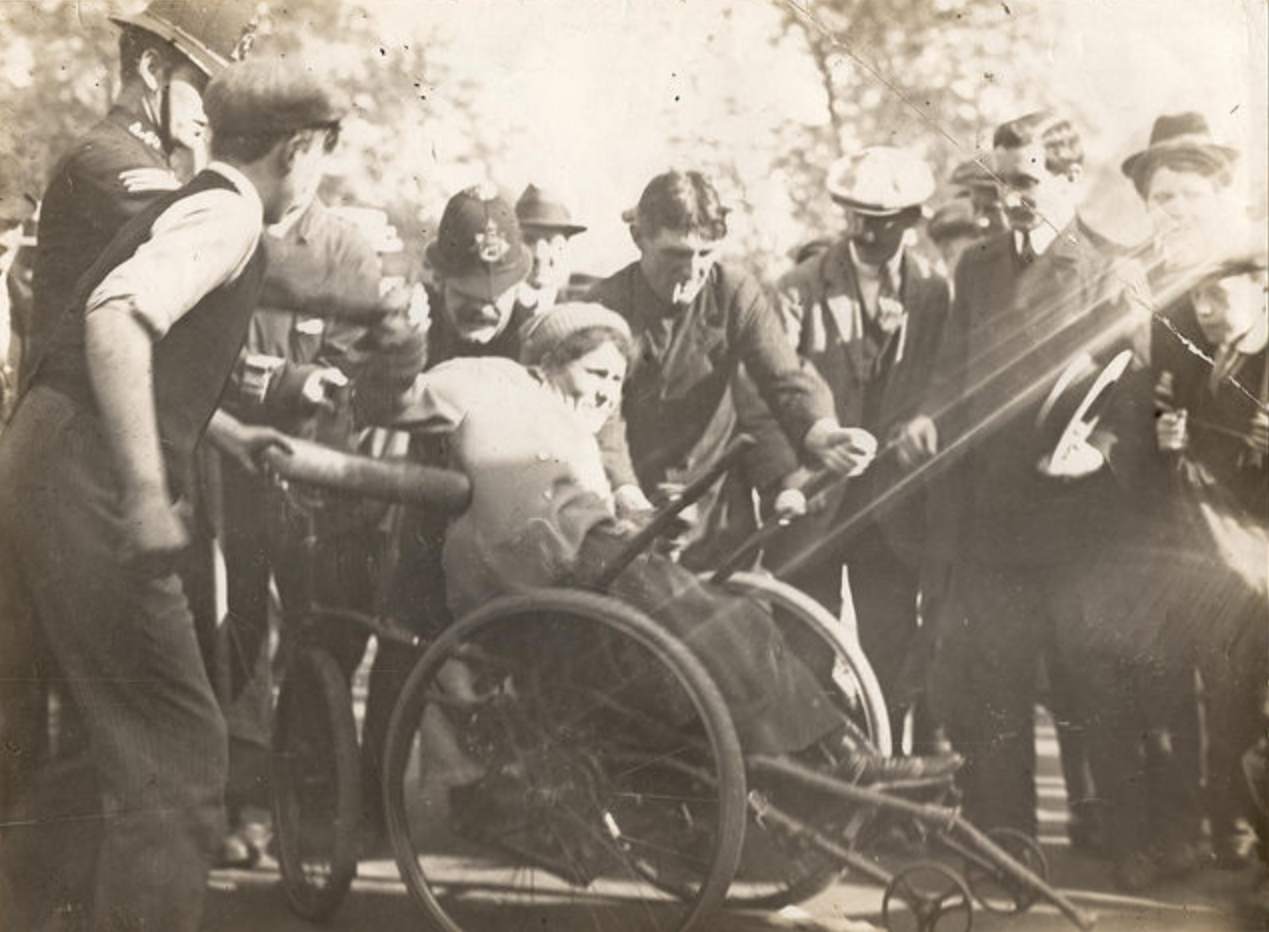
Rosa joined the Women’s Social and Political Union (WSPU) in 1907 and took an active part in marches and demonstrations despite her limited mobility. In 1910, she founded a Greenwich branch of the WSPU and served as its Secretary. On the 18th of November, she took part in the demonstration that would become known as Black Friday. The demonstration was organised to protest the government’s abandonment of the Conciliation Bill, which would have given about one million of the wealthiest women the right to vote. The police used excessive force in quelling the demonstration, arresting 119 people, and assaulting many more. In a pattern that would become familiar to Rosa, police officers threw her out of her tricycle and sabotaged it, leaving her unable to move. Unfortunately, this behaviour was echoed by police officers almost a century later, when Jody McIntyre was pulled from his wheelchair twice during the Student Tuition Fee Demonstrations in 2010.
Rosa used her tricycle to its full advantage however. During demonstrations, she would decorate her tricycle with coloured ribbons and WSPU banners. During confrontations with the police, she would place her crutches on either side of the tricycle and repeatedly charge at police lines, happy to use herself as a battering ram. She was also known to hide the tools of the suffragette’s trade–stones for smashing windows and packages of thick brown liquid for pouring into post boxes and destroying letters–under the blanket that covered her knees. In addition, Rosa was fully aware of the publicity she could attract as a disabled suffragette; it was very difficult to portray her in a negative light without seeming particularly callous.
In March 1912 Rosa took part the WSPU’s campaign of mass window smashing. She was sentenced to one month’s hard labour for smashing a window on Henrietta Street. The sentence caused confusion amongst prison authorities, who did not know what kind of labour she could be put to. In December, she was caught sabotaging post boxes in Deptford, also part of a wider WSPU campaign. She was apparently glad to be arrested, believing that it would finally get the media attention the campaign had been trying to achieve. Rosa was sentenced to 8 months in prison. She went on hunger strike, and the subsequent force-feeding had such an effect on her health that she was released after two weeks.
Despite this traumatic ordeal, Rosa continued to participate in direct action. On the 24th of May 1913, she chained herself to the gates of Buckingham Palace. The following month, on the 14th of June, she took part in Emily Wilding Davison’s funeral procession. Emily had died after attempting to attach a Votes for Women sash to the King’s horse during the Epsom Derby, and she was celebrated as a martyr for the cause.
Emmeline and Christabel’s decision to suspend WSPU campaigning at the outbreak of the First World War in order to concentrate on the war effort was a controversial one. Rosa joined the Women’s Freedom League, who continued to campaign, suggesting that she didn’t personally agree with the Pankhurst’s decision. However, she remained loyal to the Pankhursts and the WSPU, helping in Christabel’s 1918 election campaign in Smethwick as the candidate for the Women’s Party. Emmeline and Christabel had founded the Women’s Party when the dissolved the WSPU in November 1917. Christabel lost, but only by 800 votes.
Rosa withdrew from activism after the passage of the Representation of the People Act in 1918. During her time in the WSPU, however, she was a fierce campaigner who used her disability to the best possible advantage.
Hanlon, Sheila. “Rosa May Billinghurst: Suffragette on Three Wheels.” SheilaHanlon.com. No date, accessed 22nd March 2018. Available at http://www.sheilahanlon.com/?page_id=1314
Stickers of all kinds are a common sight on the streets of London (Photo: Hannah Awcock, 12/03/15).
Gender-related issues and sexism have been hot topics of debate recently, thanks to campaigns such as #MeToo, and Time’s Up. #MeToo was a social media campaign to demonstrate the prevalence of sexual assault and harassment, with women sharing their own experiences to show just how common it is. The Times Up movement calls for an end to sexual harassment, assault and inequality in the film industry, developing in response to the Harvey Weinstein scandal. Many women wore back at the 2018 BAFTA awards to show their support. The campaign has also had an effect in the music industry, with attendees at the 2018 Brit awards showing their support by carrying white roses on the red carpet. This is a recent upsurge in an ongoing series of struggles to achieve gender equality that is reflected in London’s protest stickers.
To see where I found these stickers in the city, check out the Turbulent London Map.
This sticker connects feminism with anti-fascism. They two flags is the most common symbol of anti-fascism, and the phrasing of the sticker is also often associated with anti-fascist stickers; “Goodnight White Pride” is a particularly common phrase (Photo: Hannah Awcock, Albany Road, 02/04/15).
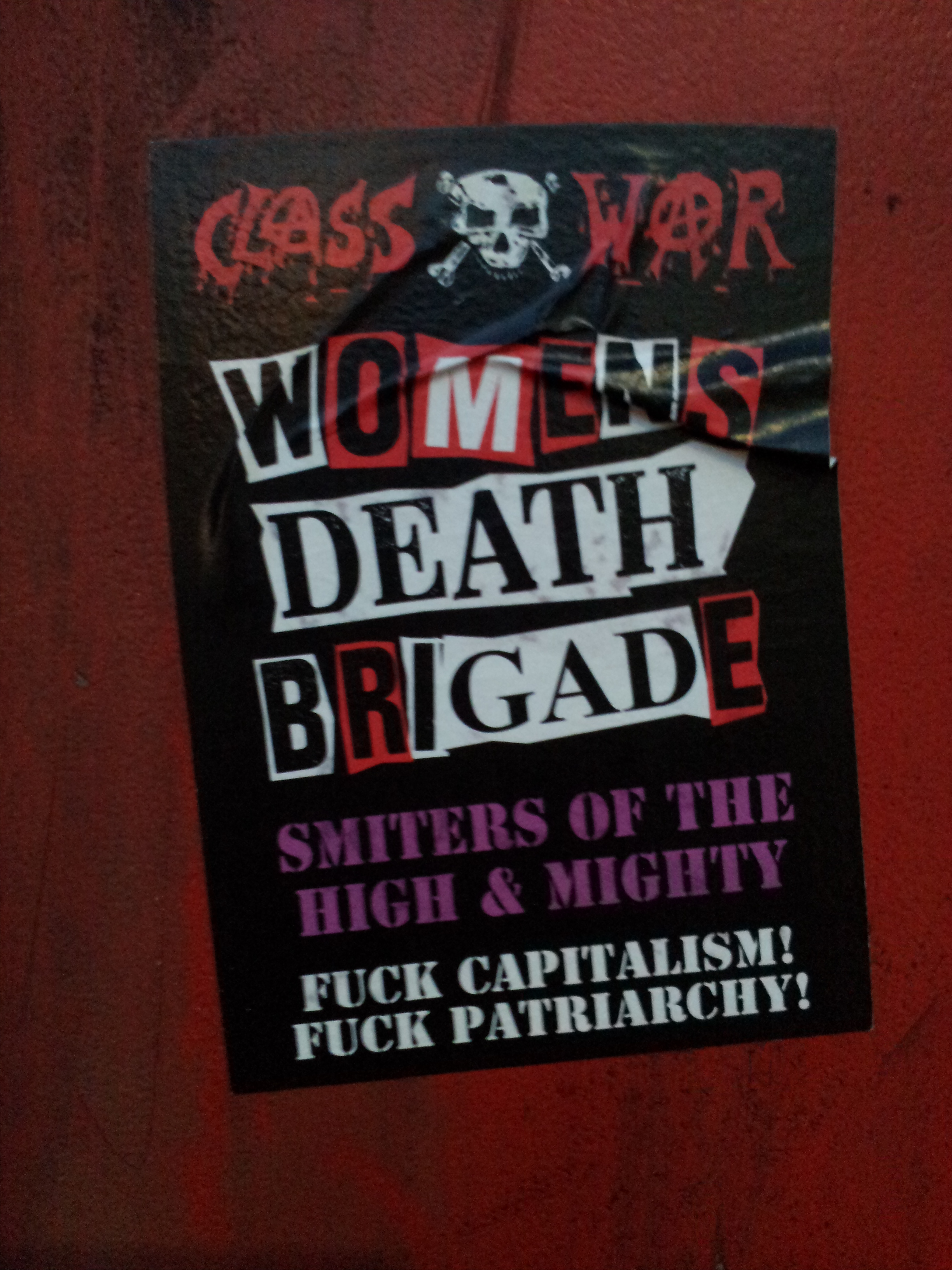
Class War is an anarchist group that organises direct action against a society that it sees as deeply unequal. The Women’s Death Brigade is a branch of Class War with a feminist focus (Photo: Hannah Awcock, Euston Road, 05/09/15).
Intersectionality is the idea that different aspects of a person (race, gender, sexuality etc.) do not exist separately from each other. Therefore, in order to solve issues such as sexism or racism, we need to combat all of them simultaneously, not just one. This sticker links sexism and homophobia, as well as representing Snow White in a more violent pose than we’re used to (Photo: Hannah Awcock, New Cross Road, 20/03/16).
One of Sisters Uncut’s best known tactics is crashing red carpets-they did it at the premier of the 2015 film Suffragette, and the 2018 BAFTA awards. The colours that Sisters Uncut use, white, green, and purple, echo those of the suffragette group the Women’s Social and Political Union (Photo: Hannah Awcock, Torrington Place, 20/10/15).
This is arguably more of a poster than a sticker, but I liked it too much to leave it out. George Osborne was the Chancellor of the Exchequer between 2010 and 2016 (Photo: Hannah Awcock, 20/03/16 New Cross Road).
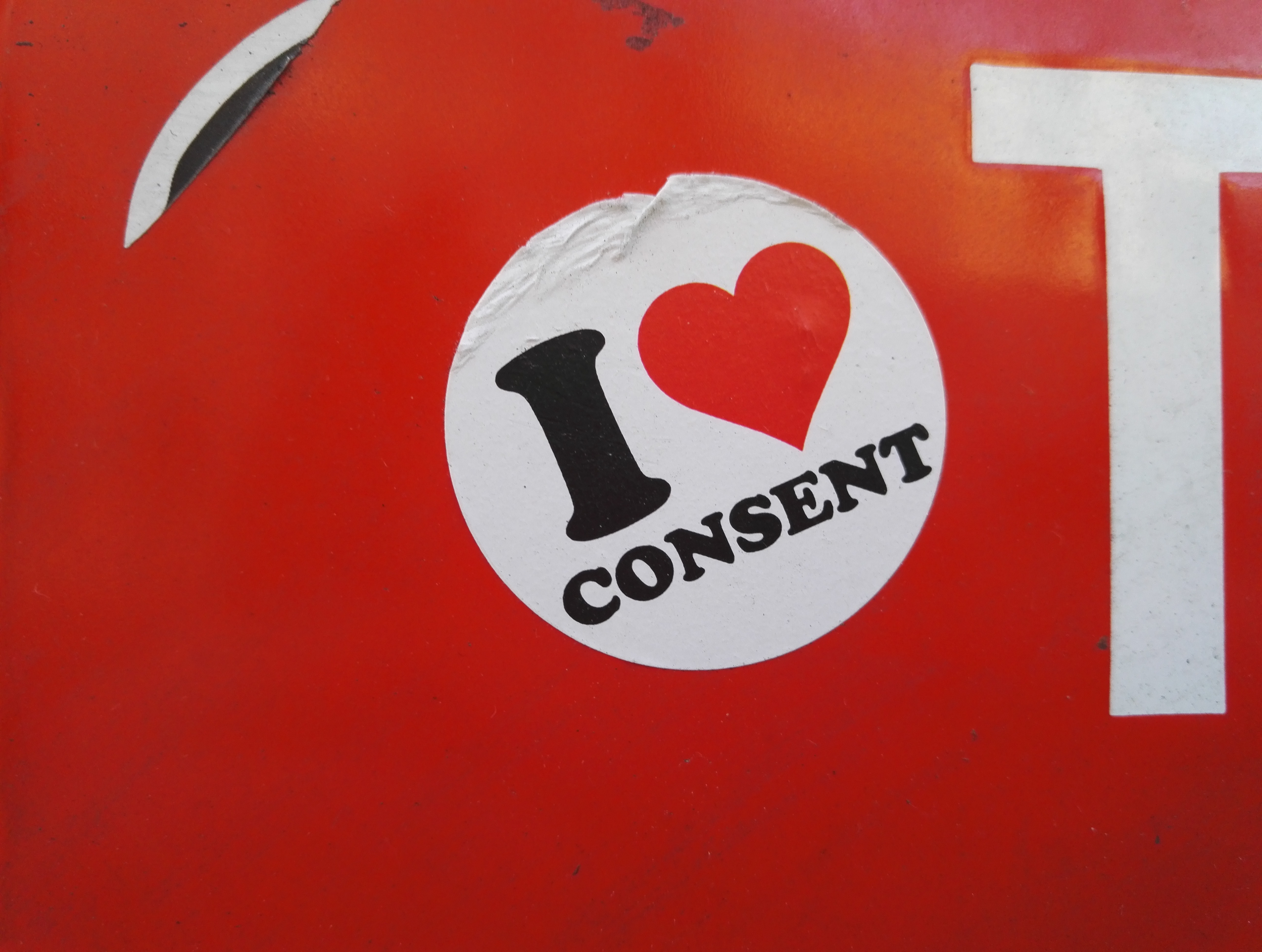
Sexual consent has been another big issue for feminist campaigns in recent years. I Heart Consent is an educational consent campaign ran by the National Union of Students and Sexpression UK which focuses on universities and colleges (Photo: Hannah Awcock, Charing Cross Road, 23/03/17).
This photo is a fantastic illustration of how the placement of a sticker can contribute to its meaning and impact (Photo: Hannah Awcock, King’s College London, 31/05/15).
Unfortunately, feminism does not always present a united front. There is an ongoing debate over whether transgender women count as ‘real’ women, with some feminists arguing that transgender women cannot truly understand what it is like to deal with the prejudices faced by women. More generally, some people question whether or not is even possible to be genuinely transgender. This sticker is a reaction to such debates (Photo: Hannah Awcock, Victoria Station, 10/03/15)
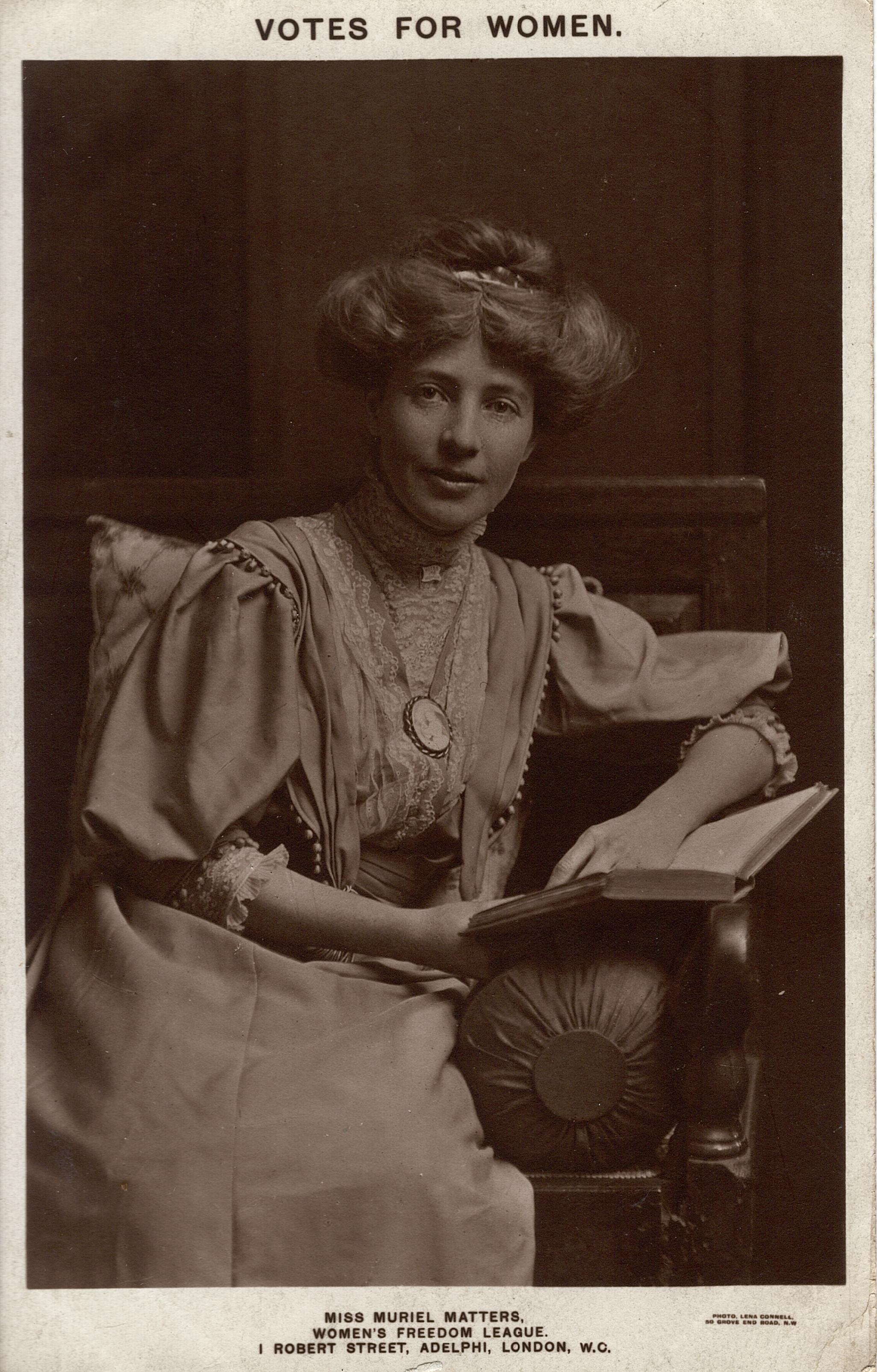
Turbulent Londoners is a series of posts about radical individuals in London’s history who contributed to the city’s contentious past, with a particular focus of women, whose contribution to history is often overlooked. My definition of ‘Londoner’ is quite loose, anyone who has played a role in protest in the city can be included. Any suggestions for future Turbulent Londoners posts are very welcome. To celebrate the centenary of the Representation of the People Act, all of the Turbulent Londoners featured in 2018 will have been involved in the campaign for women’s suffrage. The third of my suffrage activists is Muriel Matters, an Australian actress, lecturer, and journalist with a flair for dramatic stunts.
All of the suffrage campaigners I have featured so far as Turbulent Londoners have been British. London has always been a city of migrants, however, and many of the activists involved in the campaign for women’s suffrage were born elsewhere. Muriel Matters was an Australian lecturer, journalist, actress, and elocutionist who put her flair for the dramatic to good use fighting for a right that South Australian women had had since 1894.
Muriel Matters was born on the 12th of November 1877 to a large Methodist family in Adelaide, South Australia. As a child she was introduced to the writing of Walt Whitman and Henrik Ibsen, who strongly influenced her political consciousness. In 1894, when Muriel was still a teenager, South Australia became the first self-governing territory to give women the vote on the same standing as men.
Muriel studied music at the University of Adelaide, and by the late 1890s she was acting and conducting recitals in Adelaide, Sydney, and Melbourne. In 1905, at the age of 28, Muriel moved to London to try and further her acting career. Leaving a country where women had the right to vote in all federal elections, Muriel arrived in a country where women could not vote at all. Facing stiff competition for acting work, Muriel also had to take on work as a journalist. She interviewed the exiled anarchist Prince Peter Kropotkin, and later performed at his home. Kropotkin challenged Muriel to do something more useful with her talents than acting–she later identified this as a defining moment in her life. She joined the Women’s Freedom League (WFL), a group which had broken away from the WSPU in 1907 because of the lack of democracy in the organisation. The President of the WFL was Charlotte Despard, a formidable woman who is one of my favourite Turbulent Londoners.
Women’s Freedom League caravan tour: Muriel Matters seated in the window, [in Guildford, Surrey], 1908 (Source: LSE Library twl 2002 326).
Between early May and Mid-October 1908, Muriel was the ‘Organiser in Charge’ of the first ‘Votes for Women’ caravan tour around the South of England. WFL activists visited towns in Surrey, Sussex, East Anglia, and Kent, with the aim of talking about women’s suffrage and forming new branches. Despite problems with hecklers, the tour was very successful, and many of the other suffrage societies would later run caravan tours of their own.
Not one to rest on her laurels, on the 28th of October 1908 Muriel took part in a dramatic protest at the House of Parliament organised by the WFL. They were protesting against an iron grille in the Ladie’s Gallery that obscured the view of the House of Commons and was seen as a symbol of women’s oppression. Muriel and another activist called Helen Fox chained themselves to the offending grille, and loudly lectured the MPs below on the benefits of women’s enfranchisement. The grille had to be removed so that a blacksmith could remove the two women. Released without charge, Muriel rejoined the protest outside the House of Commons, and was eventually arrested for trying to rush the lobby. The next day she was sentenced to one month in Holloway Prison.
A few months later, the state opening of Parliament on the 16th of February 1909 was marked by a procession led by King Edward. In order to gain attention and promote the suffrage cause, Muriel hired a dirigible air balloon. With ‘Votes for Women’ on one side, and ‘WFL’ on the other, she planned to fly over central London, showering the King and Parliament with pro-suffrage leaflets. The weather conditions and a poor motor meant that Muriel didn’t make it to Westminster, but she did fly over London for one and a half hours, dropping 56lbs of leaflets. The stunt made headlines all over the world.
From May to July 1910, Muriel embarked on a lecture tour of Australia. She was an engaging speaker, making use of illustrations and even changing into a replica of the dress she wore whilst in prison. She advocated prison reform, equal pay, and the vote. At the end of the tour, she helped persuade the Australian senate to pass a resolution informing the British Prime Minister Asquith of the positive experiences of women’s suffrage. In October 1913, Muriel helped persuade the National Federation of Mineworker’s to support women’s suffrage.
On the 15th October 1914, Muriel married William Arnold Porter, a divorced dentist from Boston. She decided to double-barrel her surname. In June 1915, she laid out her opposition to war in an address called ‘The False Mysticism of War.’ She argued that it was not an effective method of solving problems, and justifications for it were based on false pretences. She particularly objected to Christianity as a justification for war, and questioned the significance of nationality. Views such as these were extremely unpopular at the time, and it took great bravery to voice them.
In 1916 Muriel went to Barcelona for a year to learn about the Montesorri method of teaching, a child-centred approach which promotes the development of the whole child, including physical, social, emotional, and cognitive development. Muriel believed that access to education should be universal, and she took what she learnt in Barcelona back to charity work she was doing in East London. In 1922, she toured Australia again, this time advocating the Montesorri method.
In the 1924 General Election, Muriel ran as the Labour candidate for Hastings. She ran on a socialist platform, advocating a fairer distribution of wealth, work for the unemployed, and gender equality. She didn’t win- Hastings was a safe Conservative seat, and wasn’t won by Labour until 1997. The ability to stand in itself was victory enough for Muriel. After the election, Muriel and her husband settled in Hastings. William died in 1949, and Muriel died 20 years later, on the 17th of November 1969, at the age of 92. Provocative until the end, she was remembered locally as being partial to a spot of skinny dipping at the nearby Pelham Beach.
Australian-born Muriel Matters launched herself wholeheartedly into the the campaign for women’s suffrage in her adopted country. Her flair for dramatic acts of non-violent civil disobedience helped her attract valuable attention and publicity for the cause of women’s suffrage.
Lauren Elkin. Flaneuse: Women walk the City in Paris, New York, Tokyo, Venice, and London. London: Vintage, 2017. RRP £9.99 paperback.
As a Geographer, the flaneur is a familiar figure. It refers to some one who walks through cities, normally with no specific destination in mind, observing the city, it’s people, and it’s character. Flaneurs are mostly wealthy, and overwhelmingly male. But that has never quite sat right with me. After all, I love wandering around cities seeing what I can see, and I am not wealthy. Or male. So when I first heard Lauren Elkin speak, at an event at the Museum of London, I was intrigued by what she had to say about the female flaneur; the flaneuse.
But surely there have always been plenty of women in cities, and plenty of women writing about cities, chronicling their lives, telling stories, taking pictures, making films, engaging with the city in any way they can…The joy of walking in the cities belongs to men and women alike.
Elkin, 2017; p.11
Flaneuse: Women Walk the City in Paris, New York, Tokyo, Venice, and London is hard to categorise. It’s publisher defines it as memoir/social and cultural history and whilst this sounds like an odd mix, it is quite accurate. I think at its heart, it is an argument to redefine the concept of the flaneur to include women. Elkin offers up her new definition, and then spends the rest of the book providing us with examples; attempting to persuade us of the existence of the flaneuse. As evidence, Elkins tells us about women whose walking in cities is in some way central to who they are, such as their identity or livelihood. Some of the examples are well known; Virginia Woolf in London and George Sand in Paris. Others are perhaps less so: French filmmaker Agnes Cards in Paris and Elkin herself in Tokyo and Paris. I would say Elkin makes a very convincing argument, but she was pushing against an open door with me; others may be harder to convince.
If you are expecting a straight social history of women walking in cities, then you will be disappointed. It is more a series of snapshots into this history. Some of these snapshots contain quite detailed descriptions of the cultural outputs of the women featured, such as the novels of Jean Rhys and the art of Sophie Calle. Elkin is an English Lecturer, and at these points in the book this background comes through the clearly. In this way, Flaneuse is similar to Nightwalking: A Nocturnal History of Londonby Matthew Beaumont, about the writings of the (overwhelmingly male) people who walked the streets of London after dark. Nightwalking feels like a more coherent history than Flaneuse, but that is largely because it focuses on one city rather than five. To be fair to Elkin, I don’t think she set out to narrate a history, and what she has done is done well.
I read Flaneuse over two days, mainly on two long journeys. Even if I am enjoying a book, I sometimes lose focus after an hour or two of reading. This wasn’t the case with Flaneuse; chapter after chapter kept me hooked. Elkin is a good writer, her work is engaging and thoughtful. The book is a nice balance of Elkin’s own story and the stories of the women and cities who have shaped her.
Some sections of Flaneuse were published elsewhere first, but there was only one point that I guessed the book wasn’t written as a coherent whole. The chapter on Tokyo revolves around Elkin’s relationship with a French banker–she moves to Japan to be with him when he is transferred. In a later chapter, she mentions this relationship as if she is telling the reader about him for the first time. It is a minor detail however, perhaps made so noticeable because it is the only such slip-up in the whole book. Each chapter is named after the city in which it is set. I think this is slightly misleading as, although the cities are very important, it is the women who wander them that are the book’s driving force.
I thoroughly enjoyed reading Flaneuse: Women Walk the City in Paris, New York, Tokyo, Venice, and London. I would recommend it to anyone interested in women’s or urban history, anyone who fancies something a bit different, or anyone who just appreciates a good book.
A film poster for We Are Many, directed by Amir Amirani (Source: We are Many).
Many of you who has ever been to a protest will be familiar with at least part of the above quote, the final stanza of a poem written by Percy Shelley after the Peterloo massacre. We Are Many, a documentary film that tells the story of the Stop the War protests on the 15th February 2003, takes it’s name from the final line of this evocative poem. The film is not unjustified in borrowing such powerful words; it is a forceful and effecting documentary.
Directed by Amir Amirani, and first released at Sheffield Doc/Fest in 2014, We Are Many tells the story of the global protests against the imminent Iraq War on the 15th of February 2003. Up to 30 million people in nearly 800 cities took part, many of whom had never been to a protest before. The film uses news footage, interviews with participants, experts, and journalists, footage of protests, and clips of political speeches to tell the narrative of the protests themselves, as well as the events that led up to them, and the political movements they helped to inspire (you can see the trailer here).
Starting with 9/11 and the beginning of the War on Terror; the documentary traces the foundation of the Stop the War coalition; the growing opposition to military intervention in Iraq; the protests themselves; further attempts to prevent Western intervention in Iraq; the war itself; and the Tahir Square protests in Egypt. It ends with the vote by British Parliament in 2013 in which they decided against military intervention in Syria, an indication that, although the Iraq War was not prevented, the protest was not necessarily a waste of time. It is a comprehensive account, and I think it could have benefited from doing less, the last half and hour or so does drag somewhat.
A shot of the march against the Iraq war in London from the We Are Many press material (Source: We Are Many).
Overall, however, I thought it was a brilliant documentary. The interviews were particularly effective: a US air force veteran who came to oppose the war and US government officials admitting the war was wrong make for convincing viewing. The documentary also featured footage of the interviewees speechless. When the narrative arrives at the 19th of March when the war started, many of the interviewees were lost for words, even after a decade. That was pretty powerful.
When a protest doesn’t result in direct changes, it can be difficult to assess its impact. We Are Many admits that the Stop the War protests failed in their primary objective, and left many so demoralised that they withdrew from political engagement. The documentary does, however, make the argument that the 2003 demonstrations had long-term, positive impacts. It argues that the democracy movement in Egypt in 2011 was the product of the global anti-war movement, and highlights that when Britain faced the choice to invade Syria in 2013, MPs made a different decision than the government made a decade before. It is an interesting attempt to assess the impacts that a protest can have.
We Are Many is a comprehensive and emotive account of the events of the 15th February 2003. The global day of protest is thoroughly contextualised in both the events leading up to it, and the possible impacts it may have had. I would recommend this film as a teaching resource about both dissent and the Iraq War, or for those who are just curious about one of the biggest globally coordinated protests the world has ever seen.



















 Turbulent Isles