The People’s History Museum

img_2194
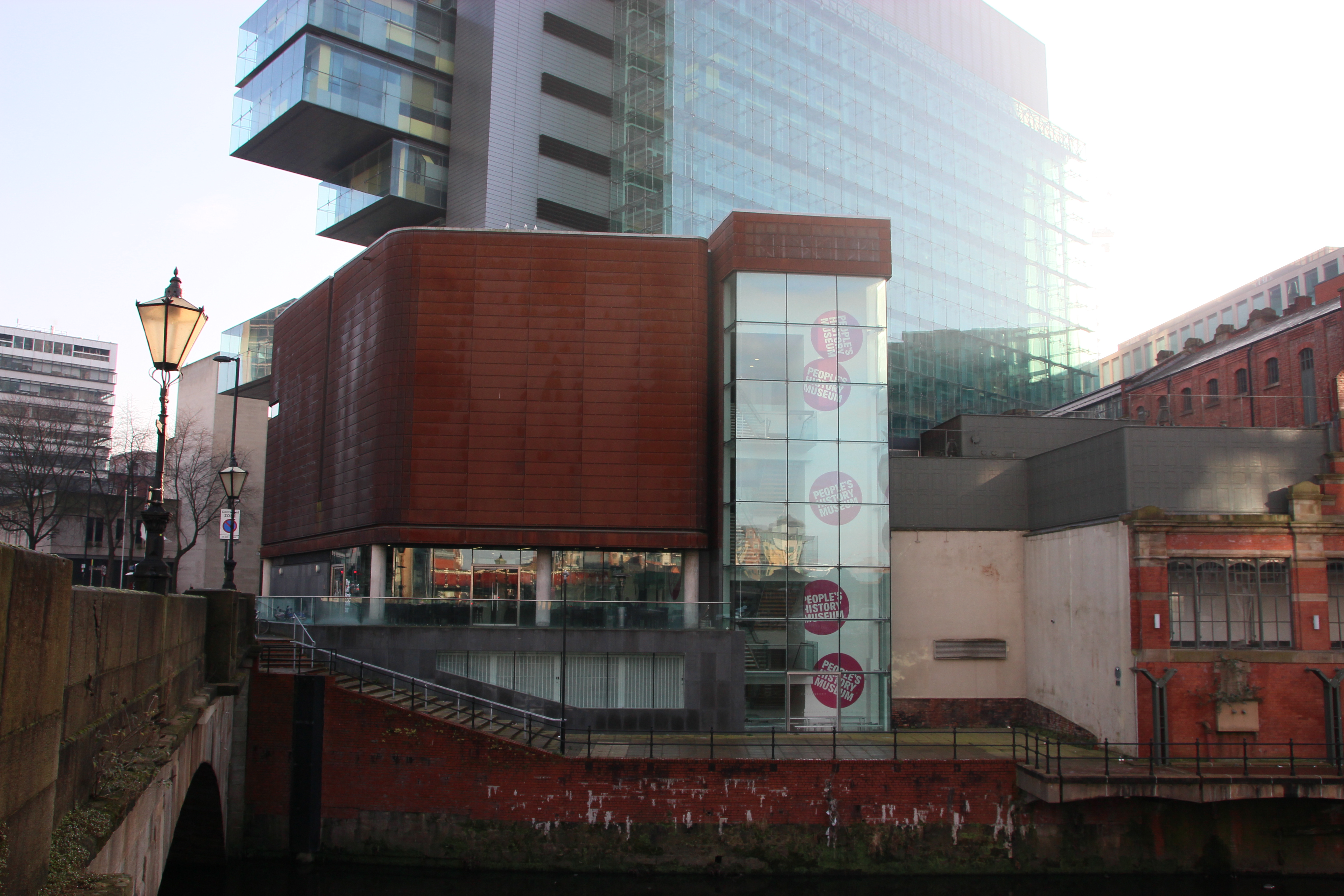
The People’s History Museum is housed in an old pump house on the banks of the river Irwell in Manchester (Photo: Hannah Awcock).

I have been studying the historical geography of protest for the last four years. For most of that time, I have wanted to visit the People’s History Museum. The problem was that I am normally in the south of England, and the museum is in Manchester. Last week, I visited Manchester and finally got to see the museum, and I was not disappointed!

The People’s History Museum started life as a collection of protest-related material belonging to a group of activists in the 1960s. They opened a museum in London in the 1970s, but it struggled financially. In the 1980s, the collection was rescued by Manchester City Council and Greater Manchester authorities, with some help from the TUC. In 1990, the People’s History Museum opened on Princess Street in Manchester, in the same building where the TUC had its first meeting, over one hundred years before. In 1994, the museum opened a second site at its current location—an old pump house on Bridge Street. In 2010, the museum relaunched in a restored and expanded pump house. Now the museum has several permanent galleries, a temporary gallery space, and meeting and conference rooms. It describes itself as “the national museum of democracy,” and receives around 100,000 visitors a year.

The permanent gallery spaces are arranged in a largely chronological order. The zones are colour coded, each colour chosen for its symbolism in radical culture (e.g. red for courage and revolution, blue for loyalty). The galleries are accessible, interactive, child-friendly, and well-paced. There is a nice balance between individuals, groups, and events, and between parliamentary and extra-parliamentary politics. I think it is important to highlight the connections between these elements, as it is all too easy to focus solely on one. Whilst the galleries begin with the Peterloo massacre, a local event, the rest of the museum covers the whole country. The museum presents itself as a national museum, and I think it lives up to that.

img_2058
The ‘Reformers’ section of Main Gallery 1. Each section is colour coded according to the symbolism of radical culture. Fittingly, green means reform (Photo: Hannah Awcock).

For me, there were two threads running through the galleries that connected everything together. The first was a series of videos about 5 generations of one family. With each family member, the videos and accompanying text explained what life was like for the individual, what rights and services they were entitled to, and whether or not they could vote. They demonstrated how the conflicts and struggles described in the displays affected people in very real ways, from working conditions to healthcare.

The second unifying thread running through the galleries was the banners. The People’s History Museum has one of the largest collection of protest banners in the country, and they are the only group that specialises in the restoration and preservation of these kinds of banners. There are banners on display in every area of the galleries, from the oldest surviving trade union banner, to a banner protesting the 2012 Bedroom Tax. Some are highly detailed, others were obviously made very quickly, but all are striking. They illustrate that whilst there have been many changes over the past two and a half centuries, there are also a lot of continuities in radical culture. Banners have provided a sense of identity and belonging for radical groups for decades.

img_2144
Some of the magnificent banners on display in the museum. The are spread throughout the gallery spaces, but banners do have their own devoted section in Main Gallery 2 (Photo: Hannah Awcock).

The museum has an open approach to curation which I like. The plaques describing items often explain how the items came into the museum’s collection. Many items were donated by activists or their descendants, and there can sometimes be a disconnect between the received history of an event and the stories that are attached to particular items and passed down through generations. All museums have to make decisions about the authenticity of the items in their collections, but most cover up this process. The People’s History Museum does not, asking the visitor to reflect on such issues—would you trust the descendants of a protester over historians? I liked this honesty, and appreciated the way it engaged visitors in the ongoing debate about how best to represent history.

The People’s History Museum is well worth a visit, even if protest is not something that particularly interests you. It is a museum of social history as well as radical history, and as I look back on 2016 it is a much-needed reminder that many of the rights and privileges we take for granted today had to be fought for, tooth and nail, by earlier generations. If we are not willing to fight, just as fiercely, to protect them, we will lose them.

Soldiers and Suffragettes: The Photography of Christina Broom

Me outside the Museum of London Docklands, contributing to the #museumselfie Twitter hashtag (Photo: Hannah Awcock).

Soldiers and Suffragettes: The Photography of Christina Broom is a temporary exhibition at the Museum of London Docklands in Canary Wharf, open until Sunday the 1st of November. I went along because not only did Christina Broom photograph the campaign for female suffrage in the early twentieth century, she was also an impressive woman in her own right, as the first female British press photographer. The exhibition is worth checking out if you are interested in photography or social history, as well as the two main topics; Brooms photography of the suffrage movement and the armed forces.

In 1903 at the age of 40, Christina Broom noticed the increasing popularity of postcards, and began photographing local views and events in order to produce her own. Her husband had never fully recovered from an injury acquired during a game of cricket, and she took up photography to provide for her family. For the next four decades Broom hauled her heavy camera and tripod back and forth across London documenting the city and its people. Soldiers and Suffragettes is the first exhibition devoted solely to Broom’s work, and aims to share her story so she can receive some of the appreciation she deserves.

Suffragette March in Hyde Park
by Mrs Albert Broom (Christina Livingston)
cream-toned velox print, 23 July 1910
NPG x17396

Because of my own interests I was mostly drawn to Broom’s photos of the suffrage movement, but I also found her military photography engaging. Broom was trusted by the soldiers, and she photographed many before they left to take part in the First World War. The photos of soldiers with their families on the platforms at Waterloo Station are particularly moving. The knowledge that this might have been the last time the men ever saw their loved ones is haunting, and the fact that Broom was allowed to capture these significant moments is an indication of how good she was at her job.

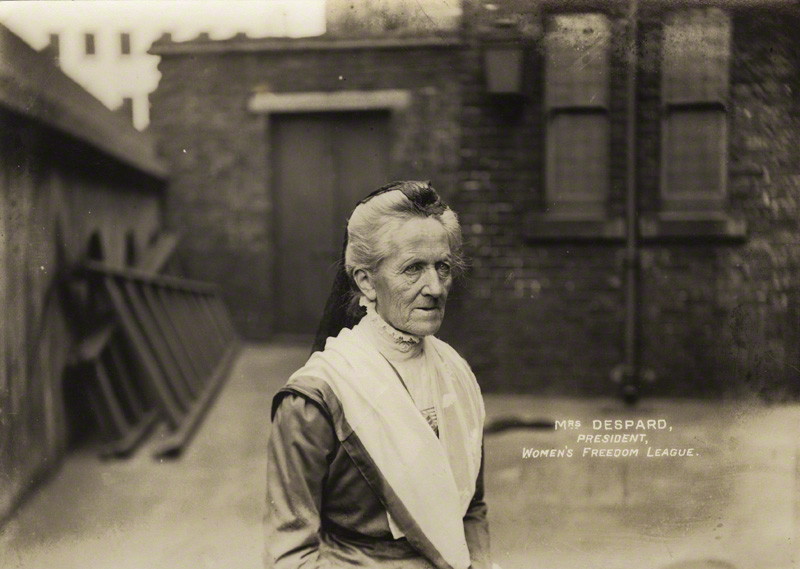
Broom’s pictures of the suffrage campaign are wonderful. She photographed campaigners both famous (including the Pankhursts) and obscure, capturing the sheer number of people involved. It is easy to think that Emmeline and Christabel Pankhurst won the vote for women single-handed, but this is far from the case. Broom’s photos depict many of the organisations involved in the campaign, including the National Union of Women’s Suffrage Societies, and the Women’s Freedom League, led by the incredible Charlotte Despard.

A photograph of Charlotte Despard taken by Christina Broom (Sources: National Portrait Gallery).
Charlotte Despard (née French)
by Mrs Albert Broom (Christina Livingston)
cream-toned velox print, 1908-1910
NPG x13391
© National Portrait Gallery, London

The exhibition also highlights the economics of the suffrage campaign. Although a supporter of female suffrage, Broom’s main reason for photographing the movement was financial. Supporters of female suffrage would collect memorabilia, the proceeds of which helped to fund campaigning. The WSPU had their own shops, in which they sold everything from postcards like the ones Broom produced to tea sets designed by Sylvia Pankhurst. The exhibition also includes photos of fairs held by various suffrage groups. One of the purposes of these fairs was to raise money. For example, at the Women’s Exhibition in Knightsbridge in 1909, a replica prison cell was constructed. Visitors were charged 6d to see inside and hear about what life was like for suffragettes in prison. The economics of social movements is something that I think gets frequently overlooked, so it was good to see it so prominent in Soldiers and Suffragettes.

Soldiers and Suffragettes is an exhibition that appeals on a whole range of levels. I even enjoyed the section about the technology of developing and printing the images- the backlit negatives of Broom’s photos were beautiful, making the Suffragettes look like vibrant ghosts. I would definitely recommend checking it out over the new few weeks before it closes.

Not only was Christina Broom a pioneer, leading the way for other female professional photographers, she was also very talented. Her images are moving and personal, as well as a fantastic record of a dynamic period in London’s history.

Sans Dust: Flickr and Instagram as Archives

Rachel Taylor graduated from Royal Holloway’s research-based MA Cultural Geography last year. She is currently working for the Royal Geographical Society (with IBG). Her research interests include public engagement with academia, museums, identity politics and how we understand human remains. Here she reflects on online archives, particularly photographic ones, as a research method. The internet is not one of the first things that springs to mind when you think of archives, but it is a valuable resource for academics if we only made use of it. Follow Rachel on Twitter: @mereplacenames


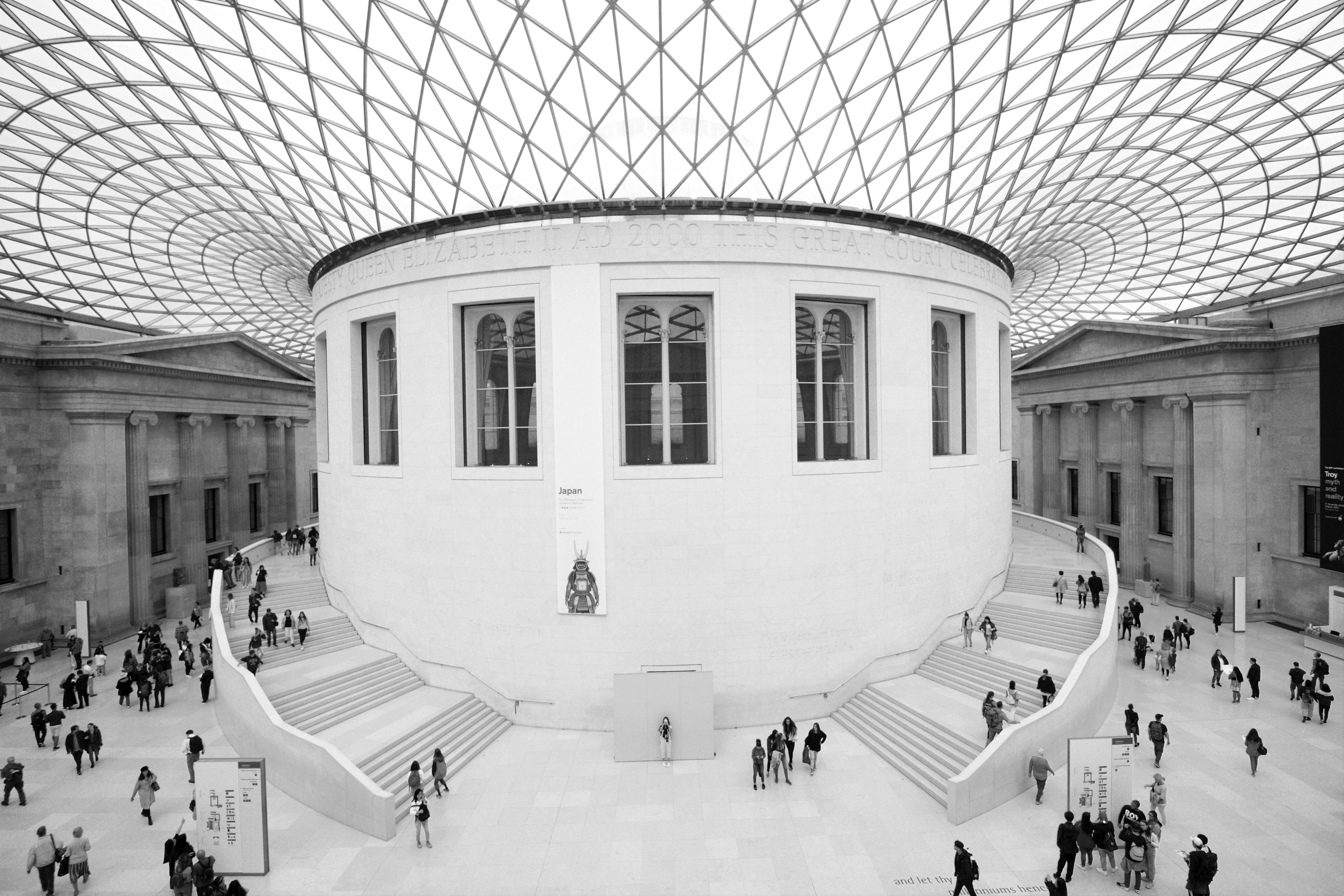
A photo of the British Museum available on Flickr. Rachel Taylor used websites such as Flickr and Instagram to analyse visitor behaviour in museums in the research for her Masters dissertation (Source: Patrick Down).

In an age where the most popular ‘camera’ used by Flickr uploaders is the iPhone 4S, it’s time to reconsider photography, contemporary archival methods and move beyond the idea that dust – “the scholar’s choice of dirt” (Lorimer, 2009: 248) and tangibility are the only bedfellows of archival scholarship. Cultural geographers and non-geographers alike are beginning to consider the importance of the online archives that are increasingly playing an important role in our day to day life, and what follows are some brief reflections on the promise and pitfalls of working with these modern archives.

The field of online research is still in its infancy. Having conducted research on the place of Web 2.0 in understanding modern museum behaviour, I’m interested in the many ways in which this infancy provokes questions on the methodological difficulties of working with online archives.

While working with archives has often involved accessing material fiercely guarded by gatekeepers, with a strong emphasis on the physicality of the archive, contemporary visual archives such as Flickr and Instagram offer the chance to conduct research from any location and to gain an immediate appreciation of how the ‘photographers’ that use these sites articulate their social identities and make memories. Rather than delving into little seen and barely touched sources, the empirical data of online archives is generally available to anyone with an internet connection, with “the family photo album, once confined to living rooms…brought into the equivalent of the town square” (Kramer-Duffield and Hank, 2008: 1).

Visitors look at cares in the Otrębusy Museum in Poland (Source: Sabastian Jakubik).

Despite online photographic repositories offering innovation in archival methodology, both Flickr and Instagram can be accused of hosting throwaway images, with each Instagram photograph “rapidly replaced by the next” (Champion, 2012: 86). Champion draws upon van Dijk in considering the disposability of Instagram images, suggesting they can be equated “to postcards which were meant to be thrown away” (2012: 87). While online visual archives act as a repository of memory, the very fact that they serve as repositories means permanence and importance are not privileged. In a world where some feel the need to photograph every morsel of food they eat, images are no longer confined to capturing the extraordinary. Rather, the banal, everyday moments of life take centre stage.

On a practical note, this disposable nature of the online world hinders attempts at locating images, often exponentially increasing the labour of data collection and encapsulates the difficulties of carrying out research on the Internet. Instagram’s web platform allows a maximum of twenty images to be viewed at any one time, with no means of viewing large amounts of images at once. Web platform such as spots.io and Websta do provide assistance, but issues with cached data and partial information ensure data collection remains a demanding task.

Opening of the “Taoid”, Museum of the Cordilleras in Ilocos Norte, located at the La Tabacalera Lifestyle Center in Laoag City (beside Museo Ilocos Norte). November 21, 2015 (Source: Ilocos Norte).

While paper may crumple and ink fade, webpages can be edited, deleted and moved. More traditional forms of archival scholarship are reliant upon gatekeepers’ superior knowledge of their collections to guide the researcher in knowing what to look for. In the online world, images are effectively lost if one does not know what they are looking for, with elements such as hashtags, captions and geotags all serving as digital clues to contextualise the images in the vast visual banks of photographic repositories. The wealth of information contained within these non-visual cues demonstrate that when carrying out archival research with online sources, visuality is only one element of the photographic archives.

Despite these challenges, platforms such as Instagram and Flickr offer the chance to engage with how users visually curate their lives. The act of photographing something denotes it as something ‘worth’ seeing. These images then are “increasingly active objects” (de Rijcke and Beaulieu, 2011: 665). These active objects shouldn’t be viewed as objective records, but rather seek to actively represent the person taking the photograph, “negotiated” with an audience in mind (Goffman, 1959 in Larsen, 2005: 419). Photographic practice acts as a form of memory making and establishing one’s presence, allowing content producers to self-curate their everyday life and activities. In an ever increasingly visual world, online archival work offers the ability to understand and interpret contemporary behaviour – sans dust.

Rachel Taylor.

Disobedient Objects: Mainstreaming the Subversive

IMG_6372
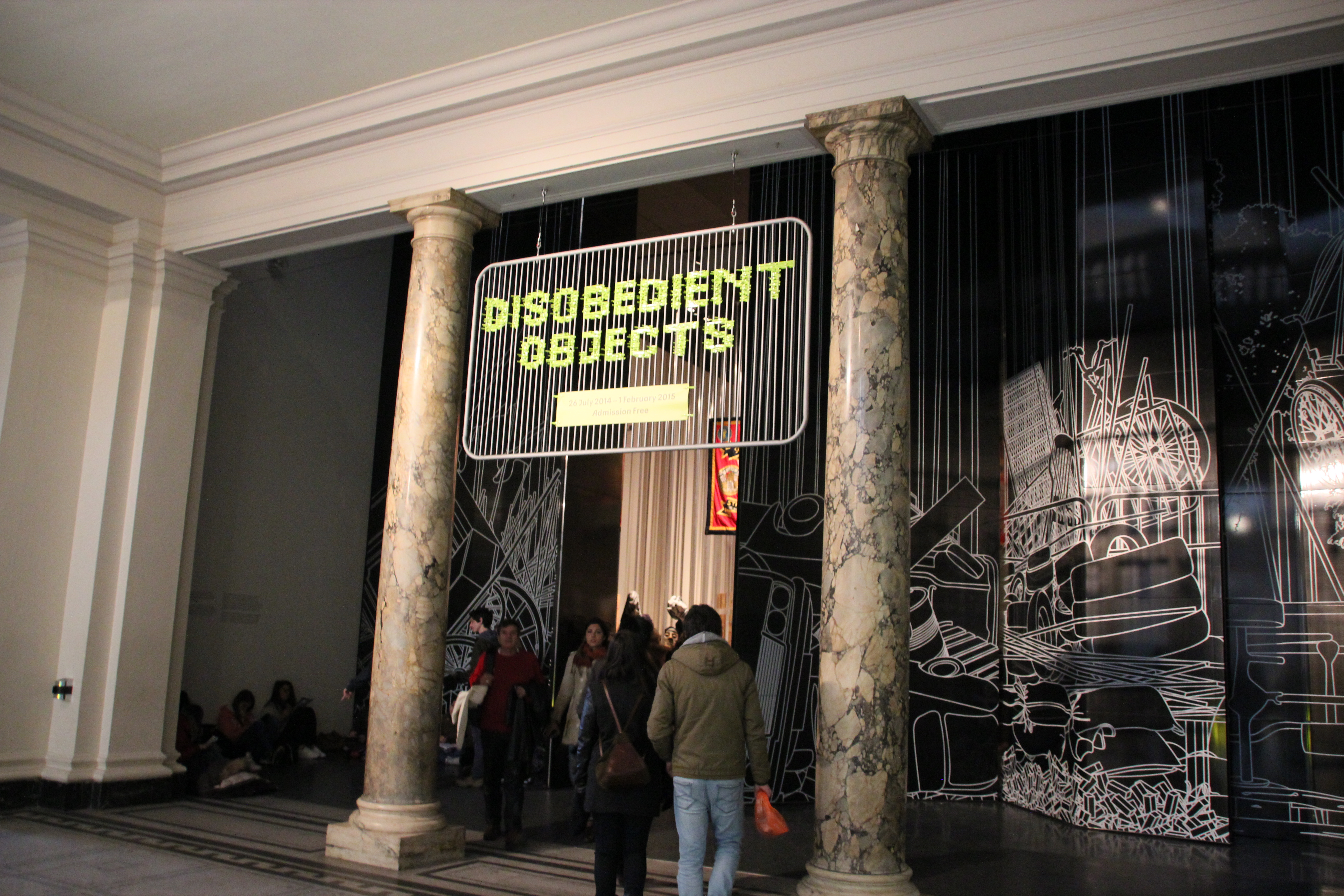
The entrance to the ‘Disobedient Objects’ exhibition at the V&A museum (Photo: Hannah Awcock).

Last weekend, the Disobedient Objects exhibition at the V&A museum in South Kensington closed. For the past 6 months, when you walked into the front entrance of the museum on Cromwell Road you could turn right and walk into a gallery filled with the objects of protest, from a suffragette branded teacup, through a remote-controlled spray-paint machine, to giant inflatable cobblestones. Safe to say it’s not what you would usually expect to find in “the world’s greatest museum of art and design.”

Since its foundation in 1852, the V&A museum (named after Queen Victoria and her husband Prince Albert), has housed a collection representing 5,000 years of human history, in the form of art works of all kinds, from all over the world. The purpose of Disobedient Objects was “to examine the powerful role of objects in movements for social change” (V&A, n.d.) using “objects that open histories of making from below.” (Flood and Grindon, 2014; 8).

The 'Disobedient Objects' exhibition.
The ‘Disobedient Objects’ exhibition (Photo: Hannah Awcock).

I visited the exhibition several times, and I thought it was fantastic. It had objects of all shapes and sizes from social movements and protests all over the word, and it even had an empty space on the wall for visitors to contribute to as more social movements and contentious issues developed over the course of the exhibition. However I did notice some interesting conflicts between the culture of the museum and the cultures of protest represented by the objects in the exhibition. Protest is ephemeral, messy, and anti-hierarchical, and it was very interesting to observe how the museum, a place of quiet permanence, dealt with these characteristics.

The ceramic 'intervention' at the entrance to the V&A.
The ceramic ‘intervention’ at the entrance to the V&A (Photo: Hannah Awcock).

The first example of conflict appeared before you even entered the exhibition. On the walls outside the main entrance to the V&A is a ceramic ‘intervention,’ made by Carrie Reichardt and the Treatment Rooms Collective. It is beautiful, but it was done with the full permission and approval of the museum, and is mounted on metal frames, so it can easily be removed. It demonstrates a common phenomenon that occurs when subversive subcultures are accepted into mainstream culture; they lose some of their edge, their spontaneity, often the things that made them so exciting in the first place.

The seating provided for watching a short film.
The seating provided for watching a short film (Photo: Hannah Awcock).

Another example I noticed of the clash between museum and protest culture was during my last visit. It was the final day that the exhibition was open, and it was very busy. A short film was projected onto the back wall of the gallery, and there were a few bench-like things in the ply-wood used for displays so that people could sit and watch it. On this day people were sitting on the backs of the benches, with their feet on the ‘seat’ bit, to watch the film because it was so busy. They were ordered down by a V&A employee, a triumph of the strict rules of museum spaces over the freedom of protest spaces.

A sticker in the exhibition protesting a pay cut for V&A staff.
A sticker in the exhibition protesting a pay cut for V&A staff (Photo: Hannah Awcock).

My final example is less a contradiction, and more just something I thought noteworthy. I have already mentioned the space in the exhibition set aside for visitor-generated materials as the exhibition progressed. On this wall, and dotted around the rest of the exhibit were stickers protesting a 10% pay cut at the V&A. If you celebrate methods and practices of criticism, you have to be prepared to receive some criticism yourself.

Subversive subcultures such as graffiti, skateboarding and protest have all been appropriated by mainstream culture to various extents over the past few decades. I think that Disobedient Objects is a good example of this process, and highlights some of the difficulties involved. The social norms and expectations of museums are very different from those of protest. Disobedient Objects existed on the border between the two, a precarious position that was reflected in the constant negotiations around how the space was used by visitors and controlled by the museum.

Sources

“Disobedient Objects: About the Exhibition.” V&A. No date, accessed February 2nd, 2015. http://www.vam.ac.uk/content/exhibitions/disobedient-objects/disobedient-objects-about-the-exhibition/

Flood, Catherine and Gavin Grindon. “Introduction” in Catherine Flood and Gavin Grindon (eds.) Disobedient Objects. London: V&A, 2014.

“Victoria and Albert Museum.” Wikipedia. No date, accessed February 2nd, 2015. http://en.wikipedia.org/wiki/Victoria_and_Albert_Museum