Young People and Protest Exhibition at the National Justice Museum

On a recent trip south I wandered past the National Justice Museum in Nottingham and noticed that they had an exhibition on called ‘Young People and Protest’. I couldn’t resist going in to check it out, and I was pleasantly surprised. It is a small exhibition, but it does an excellent job of representing the concerns and interests of young people in an engaging and interactive way.

The Crime Gallery in the National Justice Museum contains a large mural by artist Neequay Dreph portraying important moments in the history of resistance (Photo: Hannah Awcock).

The National Justice Museum contains a Victorian courtroom, a Georgian gaol, and cells that date back to the Saxon era. You have to pay to visit these, but the museum also has some free exhibition spaces. The largest one of these, The Crime Gallery covers a broad range of themes including Protest, Riot and Terrorism. If I’m honest, this gallery was much more even-handed and critical than I thought it would be, encouraging visitors to think about what crime is, and who gets to decide what is (il)legal. This gallery contains a jukebox playing protest songs and a mural by local artist Neequay Dreph depicting local, national, and international protest events.

The Young People and Protest Exhibition features an artwork by Tim Onga, which combines designs by three young artists (Photo: Hannah Awcock).

The Young People and Protest exhibition was co-produced with thousands of young people and is designed to continue to evolve and change as more people interact with it. It doesn’t contain many historic artifacts (exceptions include button badges donated or lent to the Museum, and a bludgeon used by protesters during the 1887 Bloody Sunday demonstration in Trafalgar Square). Instead, it features objects co-produced by young people and artists, including placards, a mural, and an ever-changing wall of images from social media. This has the impact of foregrounding the opinions of young people, which is quite uncommon for a museum exhibition.

These placards were co-designed by young people during a series of workshops and designer and educator Saria Digregorio (Photo: Hannah Awcock).

The Gallery Guide is also worth checking out; it contains further information about the themes of the exhibition and highlights specific examples of recent protests that have been driven and shaped by young people, such as Black Lives Matter and the School Strike for Climate. It also hints at the huge variation of contexts for protest around the world, detailing the harsh treatment of young protesters in Tunisia, Belarus, Cuba, and Thailand. It may be becoming increasingly difficult to protest in the UK, but there are many other countries where the risks of protesting are even greater. Young people continue to accept those risks every day.

There are opportunities for visitors to interact with and respond to themes and issues raised by the exhibition, including altering newspaper headlines and answering the question ‘who has the privilege to protest?’ Sometimes these kinds of features can feel like an afterthought in museum exhibitions; either they are located right at the end of the exhibition, or the materials to take part have run out. This is not the case here – the activities are located in central spaces, and it feels like encouraging visitors to reflect on their own feelings and perspectives is a central goal.

Responses from exhibition visitors to the question ‘Who has the privilege to protest?’ (Photo: Hannah Awcock).

The Young People and Protest exhibition demonstrates what can be achieved when museums adopt creative approaches and engage with the communities they are attempting to represent. It is vibrant, engaging, and centres the voices and priorities of young people. The exhibition is open until October 2022, and I highly recommend going to check it out if you’re in the East Midlands before then.
Ecological Depletion is Scary: Halloween Extinction Rebellion Protests on the Royal Mile

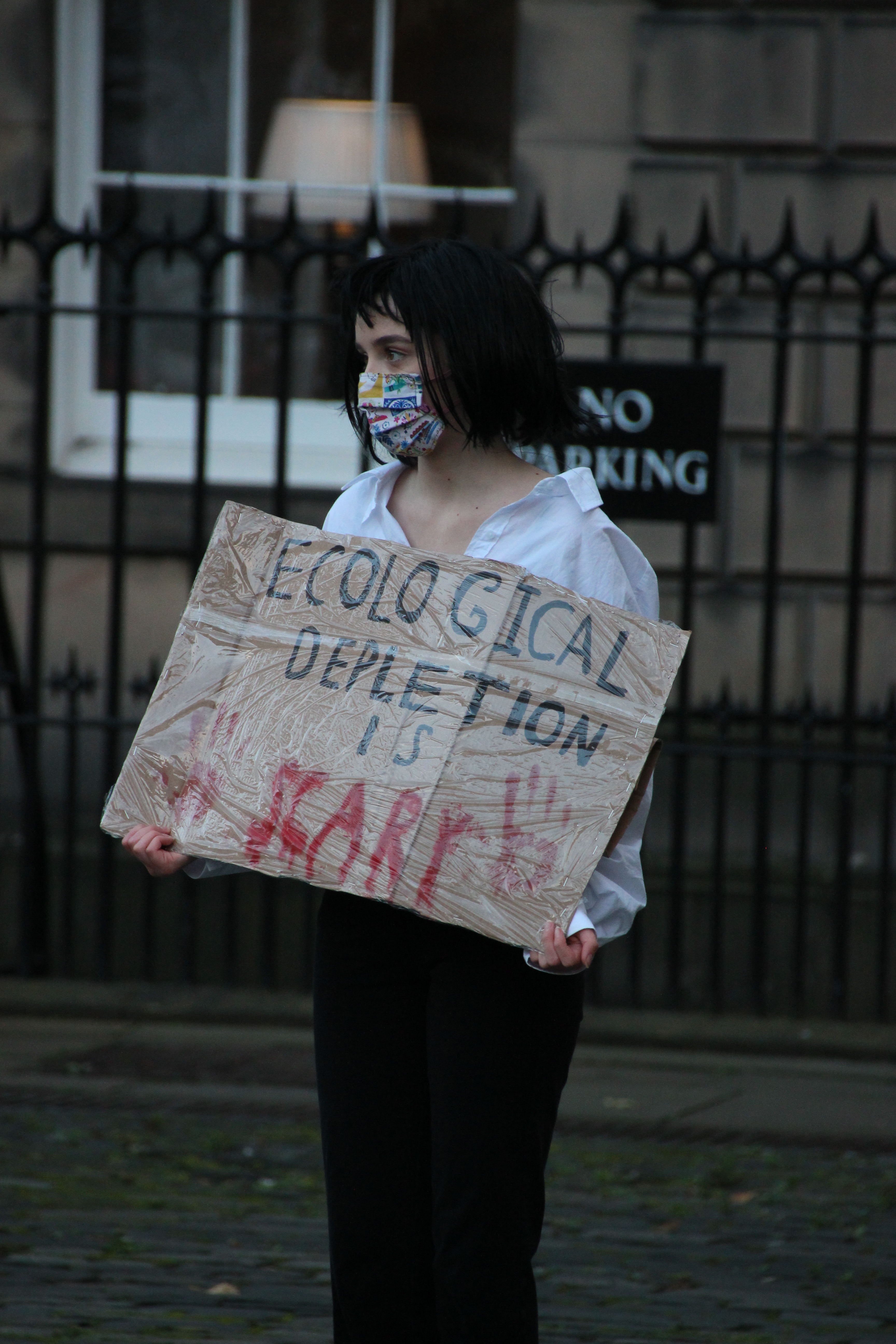
An Extinction Rebellion protester with a Halloween themed placard in West Parliament Square (Photo: Hannah Awcock).

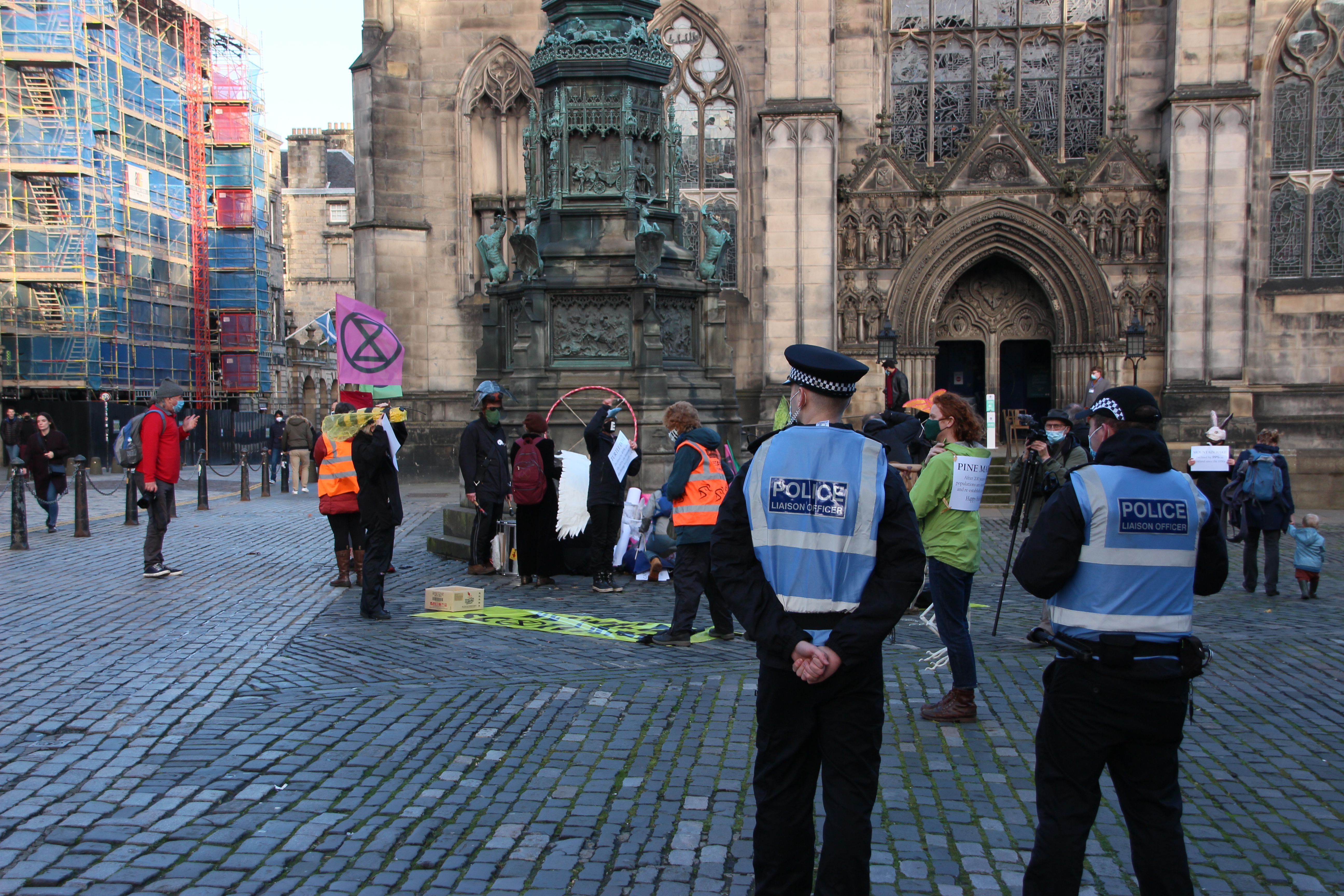
Last weekend I was out on the Royal Mile preparing for a Geographies of Protest walking tour for the third year students. It just so happened that I witnessed a protest organised by Extinction Rebellion whilst I was out and about. The protest was in two parts: the first was an animal die-in in West Parliament Square, and the second was a march down the Royal Mile from Edinburgh Castle to the Scottish Parliament. It is always interesting to witness a protest first hand, and this was no exception.

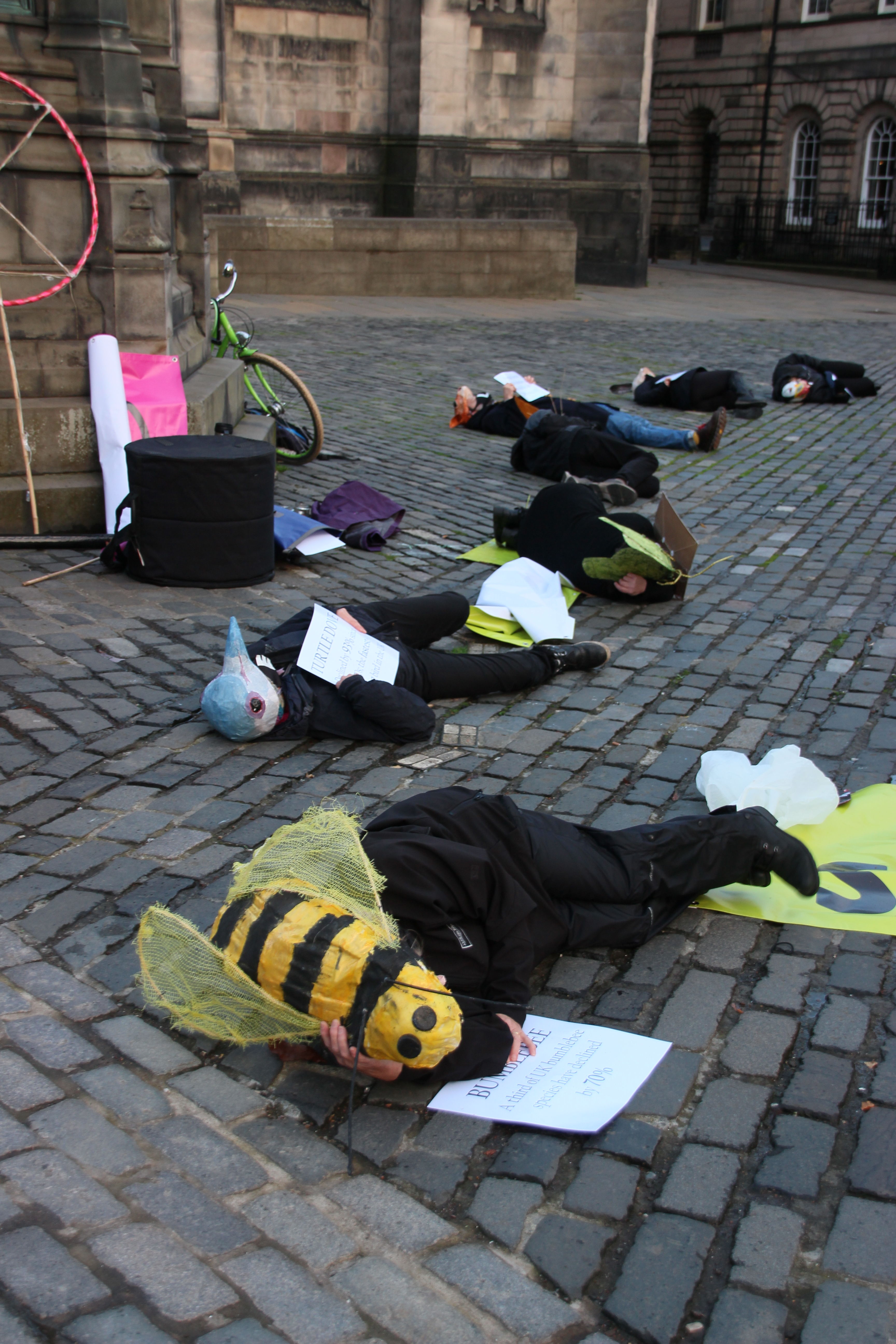
A die-in is a type of protest where activists simulate pretend to be dead. It is a tactic that Extinction Rebellion have used before. This die-in was designed to highlight the decline of wildlife in Scotland (Photo: Hannah Awcock).
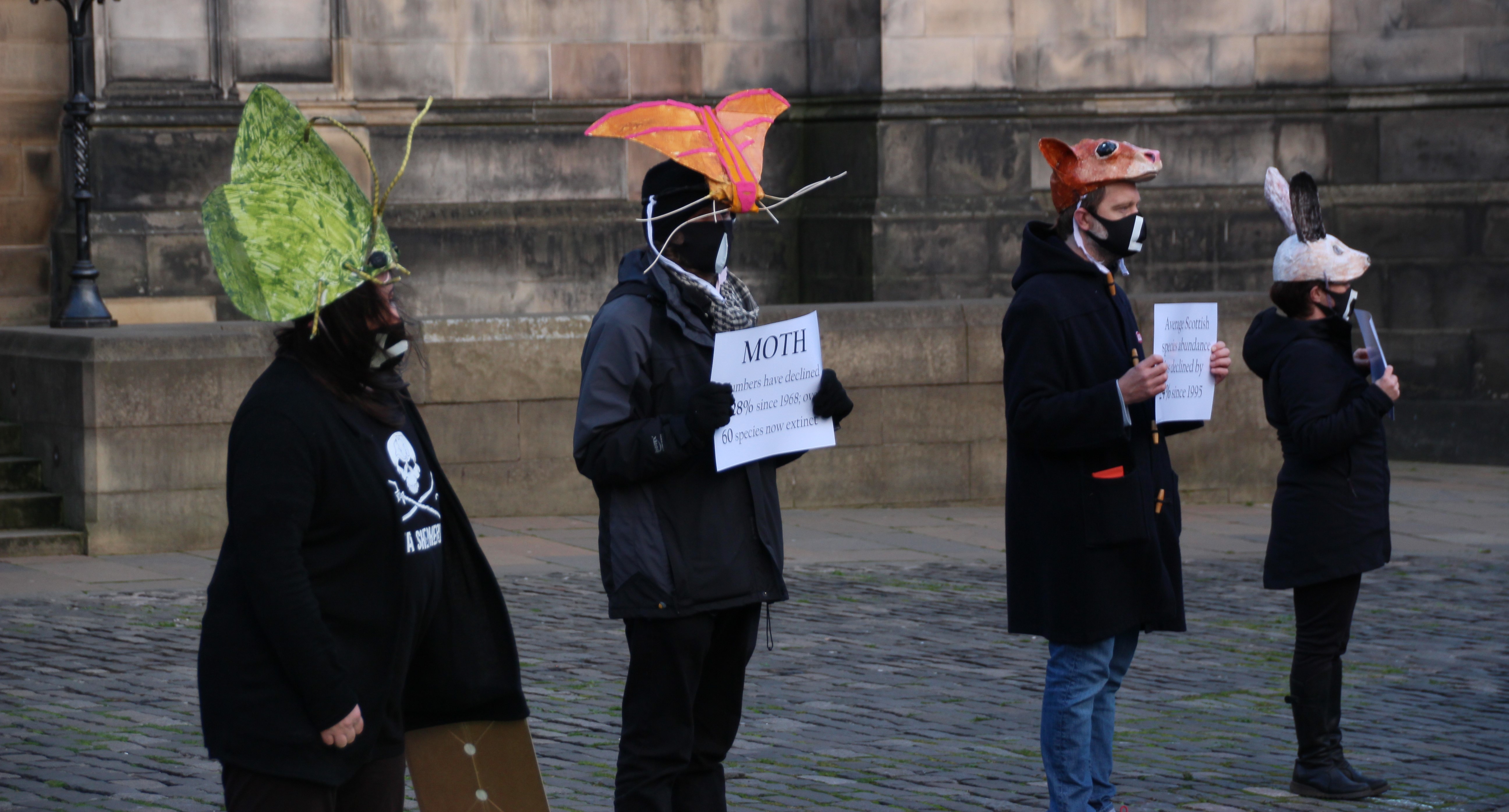
The protesters wore hats that represented different British and Scottish species (Photo: Hannah Awcock).
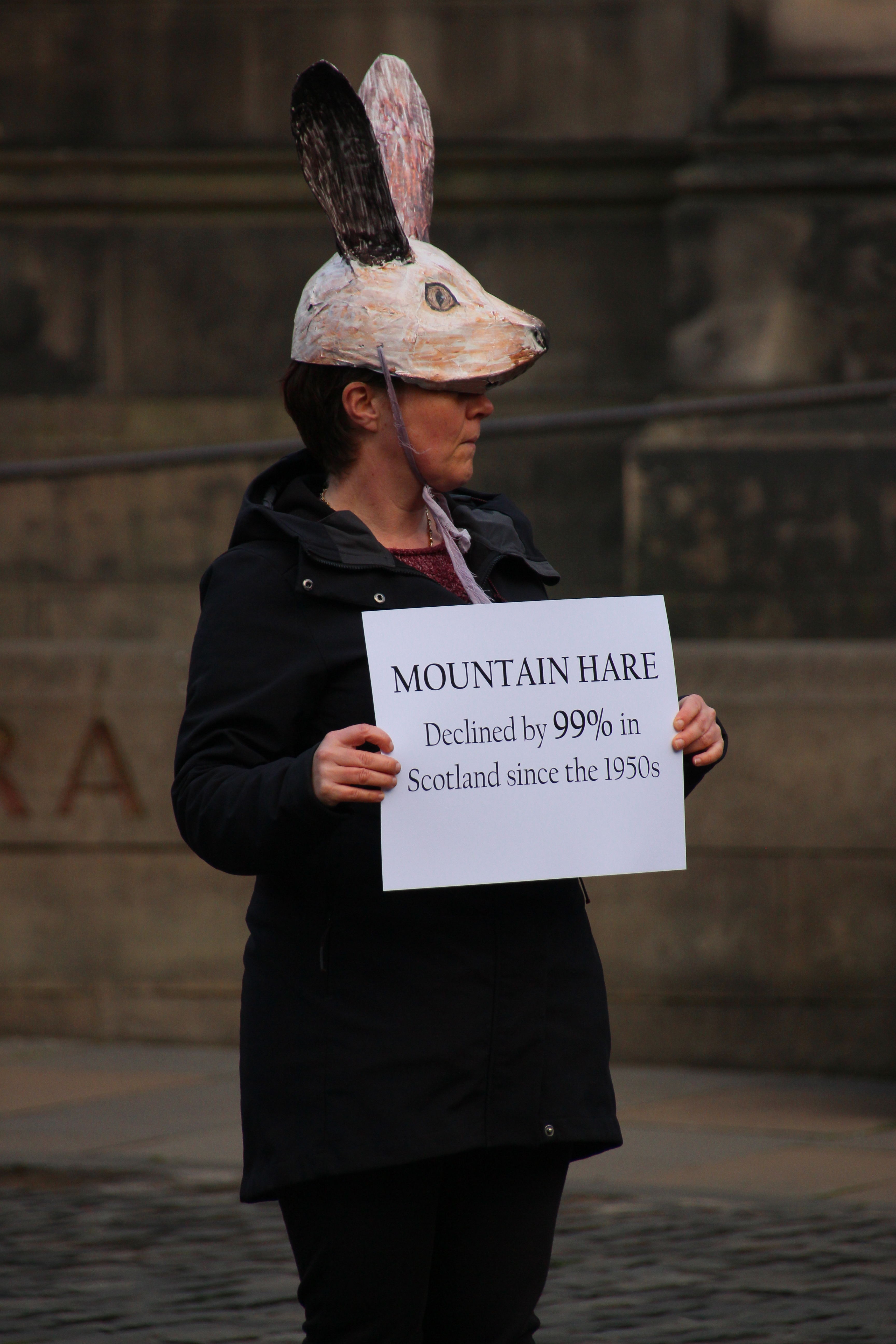
They also displayed facts about the decline of each species (Photo: Hannah Awcock).
After an ominous drum-beat, each activist read out the fact about their species, then lay down on the ground (Photo: Hannah Awcock).
It wasn’t a large protest, there were maybe 20 activists involved, but they chose an effective way to get their point across (Photo: Hannah Awcock).
This banner faced out onto the Royal Mile to convey the main message of the protest action to passersby (Photo: Hannah Awcock).
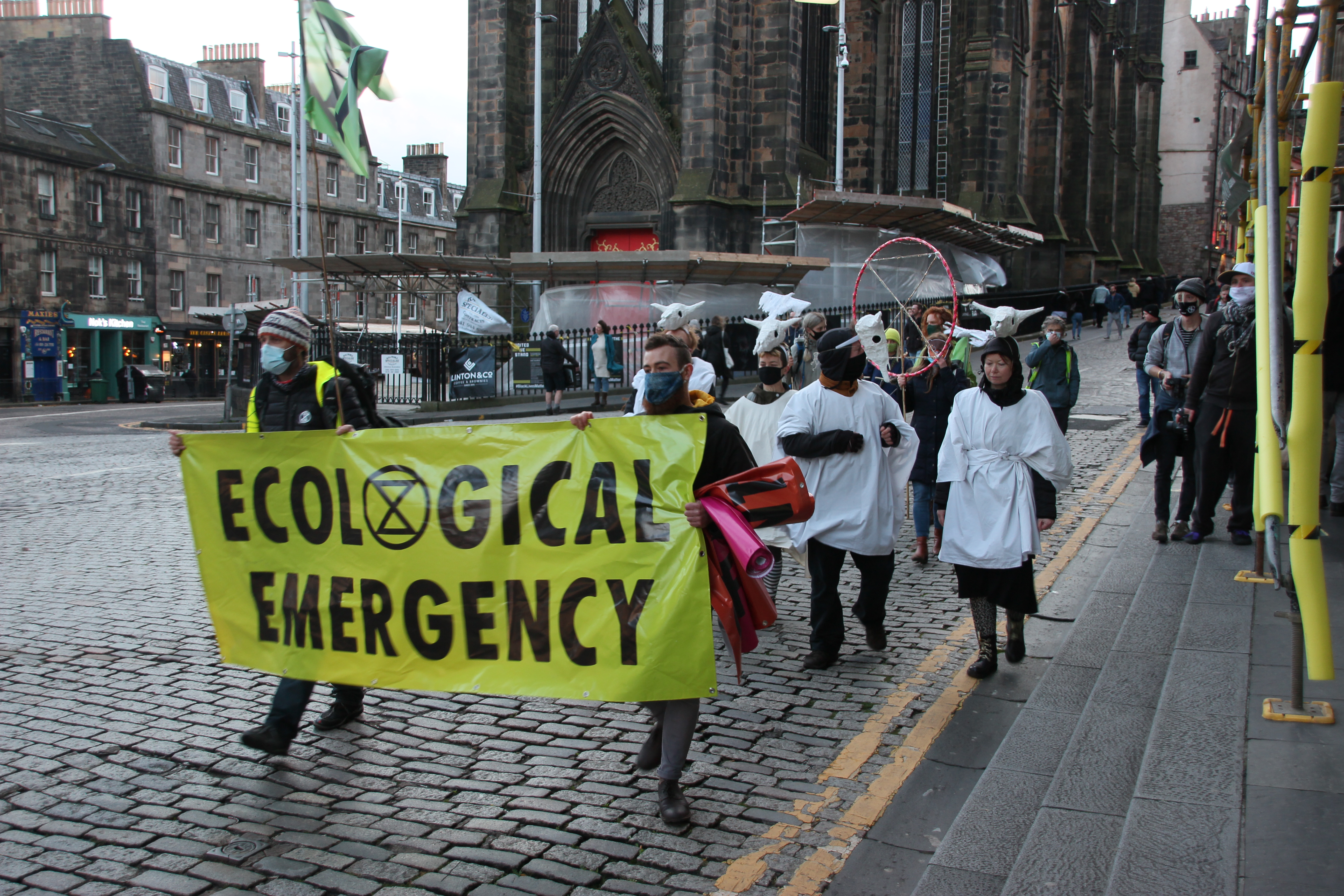
After the die-in, another group of activists started to march down the Royal Mile from Edinburgh Castle. Again, it was a relatively small group (Photo: Hannah Awcock).
Once the march reached the Scottish Parliament the activists arranged their banners for photographers and observers. There was one or two speeches, but I got the impression that these were more for the activists themselves than any observers (Photo: Hannah Awcock).
This was the first protest I have attended since social distancing and face masks became necessary. It felt like a more muted experience, but that could also have been because the numbers were relatively small. I am impressed with the way that activists are adapting their strategies and tactics to this new normal though (Photo: Hannah Awcock).
There was a visible police presence throughout the protest, and there were several police vans parked nearby that presumably contained more officers. It felt over the top, but wasn’t too intimidating (Photo: Hannah Awcock).

Protest Sydney: Stickers

IMG_6093
A World Wildlife Fund sticker in front of the Sydney Opera House (Photo: Hannah Awcock).

In the summer of 2019, I was lucky enough to spend 3 weeks travelling around Australia and New Zealand with my sister. As usual, wherever I went I kept an eye out for protest stickers, and the Antipodes did not disappoint. The first city we visited was Sydney. Founded in 1788 by the British as a penal colony, it is now Australia’s largest city.

IMG_6111
I thought this sticker might have something to do with immigration policy, but it turns out that Keep Sydney Open was founded to campaign for an evidence-based approach towards policy on the nighttime economy. They felt that they weren’t being listened to as a campaign group, however, so in 2018 became a political party and broadened the range of issues they are concerned with. I found this sticker in Bondi Beach, one of Sydney’s most famous suburbs (Photo: Hannah Awcock).
IMG_6114
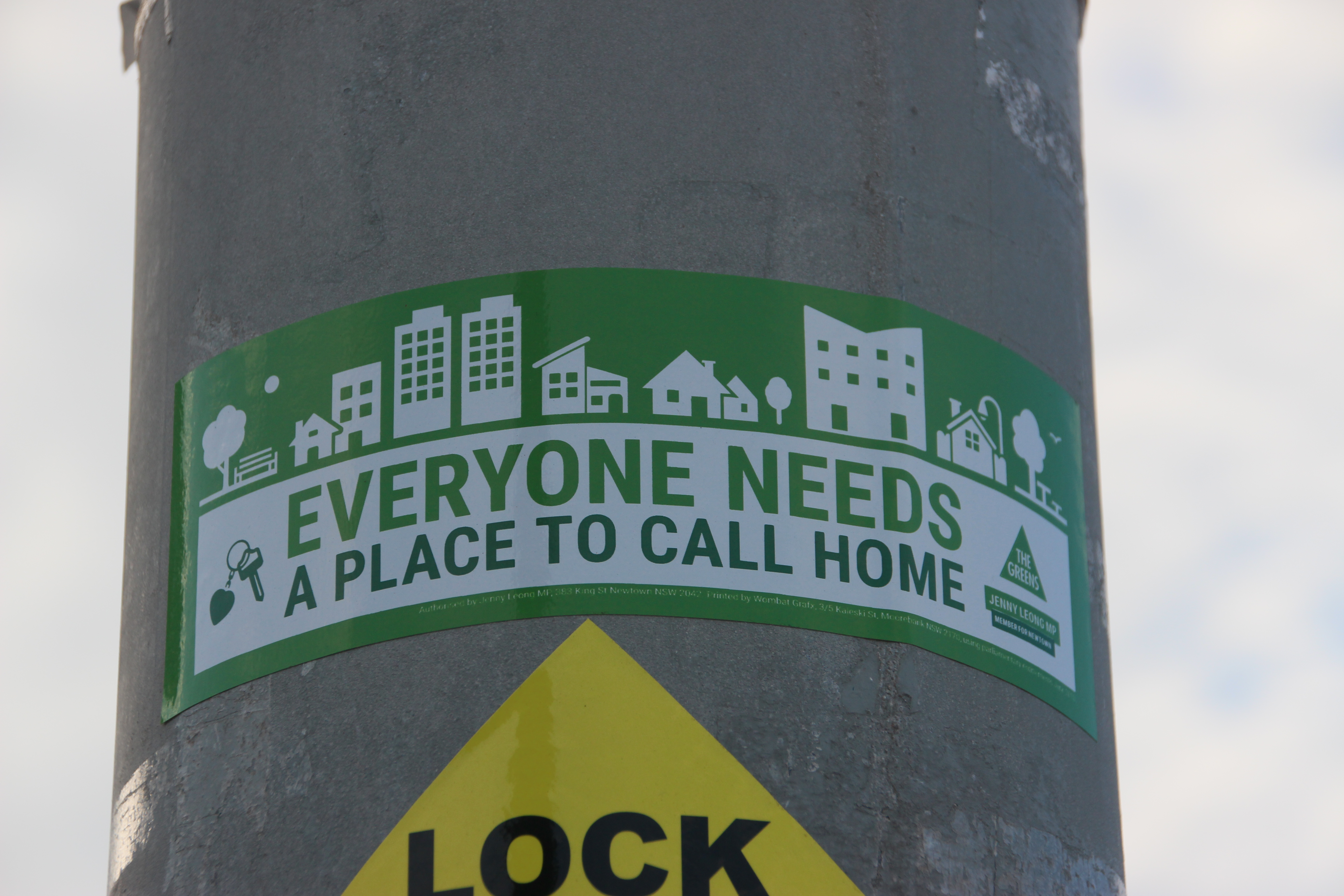
Another political party who have left their traces in Bondi Beach is The Greens, a left wing party with four main principles: ecological sustainability, grassroots democracy, social justice and peace and non-violence. Sydney is one of the most expensive cities in the world, so it is not surprising that housing is an important political issue (Photo: Hannah Awcock).
IMG_6339
Alongside local politics, the protest stickers in Hong Kong also reflected global issues. Here, a post-it note has been drafted into service as a protest sticker supporting the recent protests in Hong Kong. Since June, protesters have been clashing with police in Hong Kong over China’s increasingly repressive rule. At the time of writing this post in early October, there is no sign of either the protesters or the Chinese government backing down. Solidarity protests have taken place around the world, including Sydney, Taiwan, and Melbourne (Photo: Hannah Awcock).
2019-07-29 09.15.52
Another global movement that only seems to be increasing in momentum is Extinction Rebellion. Founded in the UK in late 2018, this leaderless, nonviolent movement has spread around the world, including several global days of action. The Australian Extinction Rebellion seems just as determined as any other group to get their demands met (Photo: Hannah Awcock).
IMG_6106
It is clear that not everyone supports the aims of Extinction Rebellion, as someone has tried to obscure the message of this sticker. There is something written over the image too, but I cannot make it out. The Australian government is currently led by Prime Minister Scott Morrison, who does not seem to view climate change as too much of a priority (Photo: Hannah Awcock).
IMG_6190
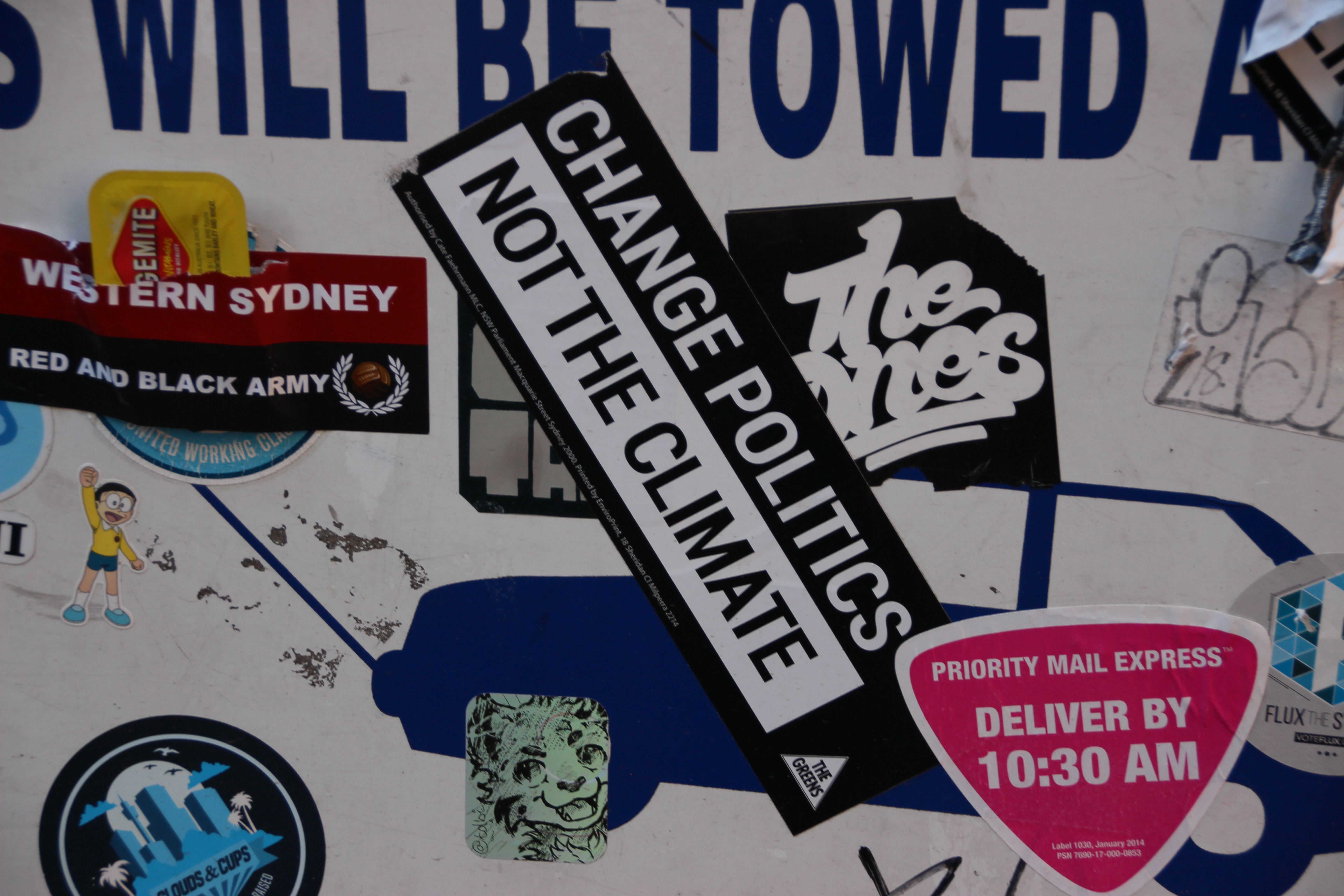
This sticker, produced by the Greens, is also suggesting that significant political reform is needed in order to effectively counter climate change (Photo: Hannah Awcock). 
IMG_6134
This sticker was also produced by the Greens, and it highlights the negative impacts of climate change that go beyond climate change (Photo: Hannah Awcock).
2019-07-27 09.35.17
Save Poppy is an organisation that aims to persuade people to give up meat by sharing information about the “cruelty, environmental destruction and the health impact of animal agriculture.” (Photo: Hannah Awcock).
2019-07-29 20.25.35
This is another sticker promoting SavePoppy.com. Protest stickers promoting veganism have become increasingly common over the last few years. Many of them take a similar approach to this one, arguing that it is hypocritical to love animals and eat meat (Photo: Hannah Awcock).
IMG_6115
This is very poetic for a protest sticker. The A in a circle is a common anarchist symbol, and many anarchists believe that prisons should be abolished (Photo: Hannah Awcock). 
IMG_6189
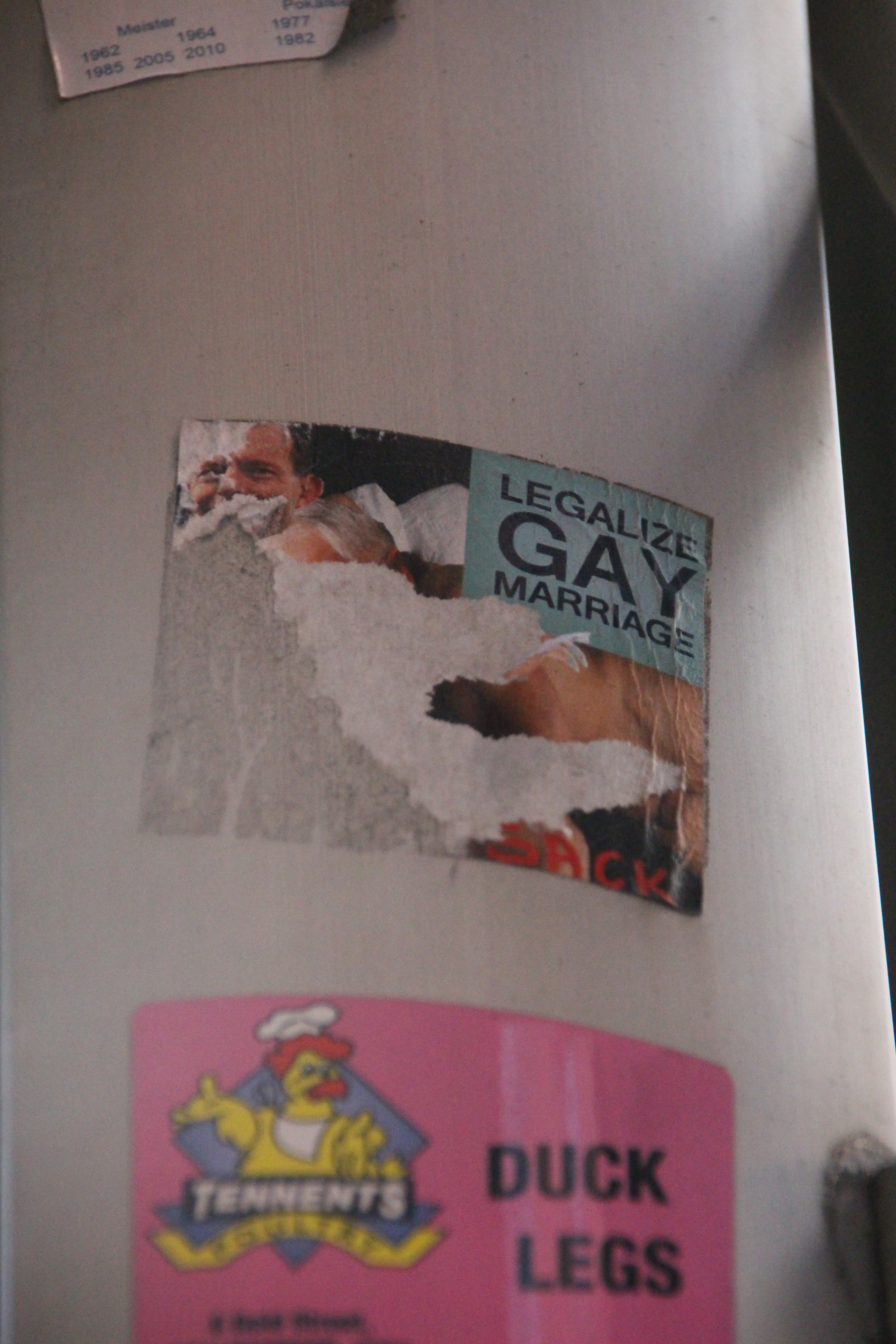
Same-sex marriage was legalised in Australia in 2017, so this sticker is a bit of an antique by protest sticker standards! (Photo: Hannah Awcock). 
IMG_6137 (2)
What protest sticker blog post is complete without an anti-fascist sticker? Anti-fascist Action was originally founded in the UK in 1965, but there are now branches all over the world (Photo: Hannah Awcock).

Lennon Wall for Hong Kong: Solidarity in Melbourne

img_6560-e1567507001465.jpg
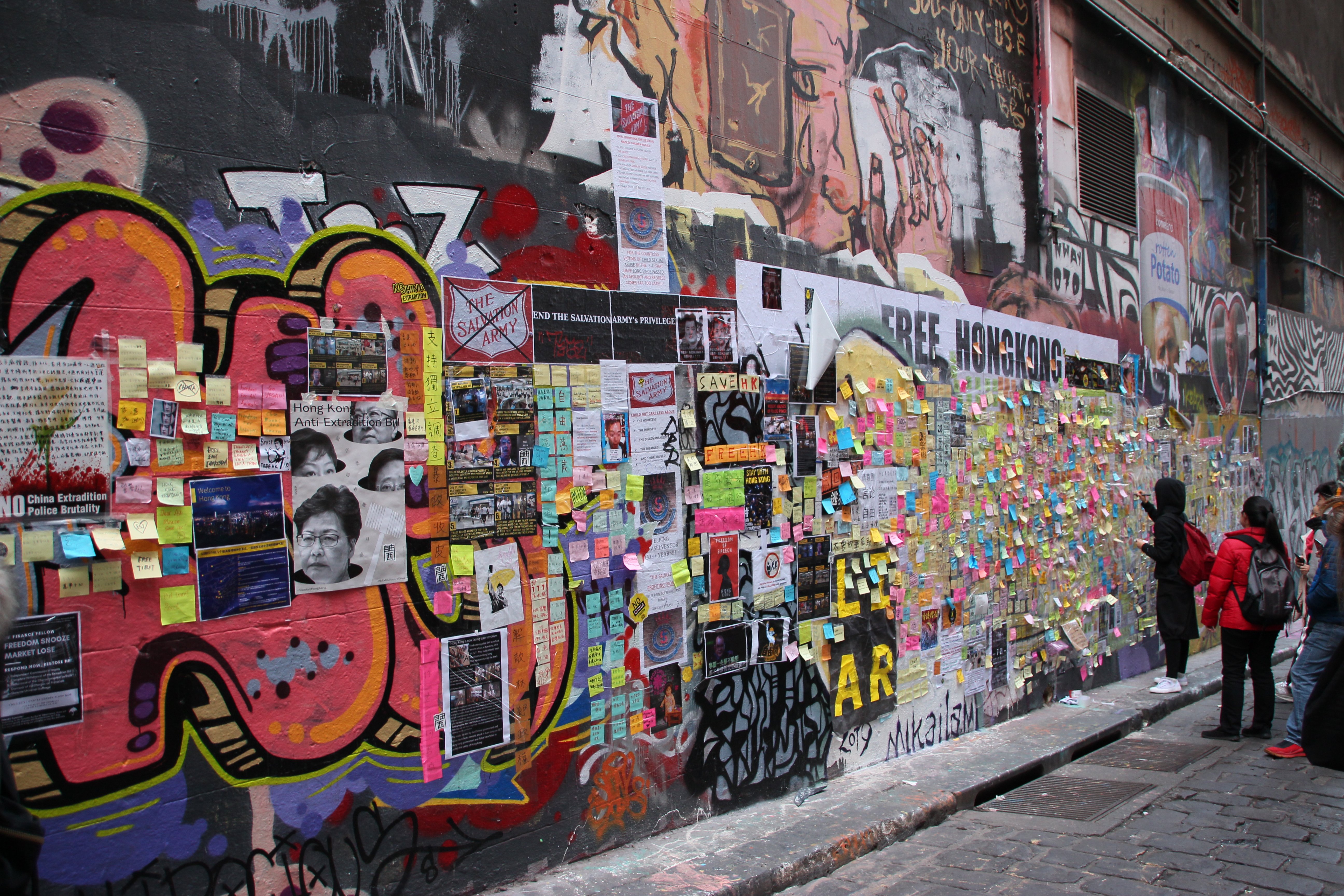
“Free HK”, part of the Hong Kong solidarity wall in Melbourne, Australia (Photo: Hannah Awcock).

At the time of writing this blog post in early September 2019, there appears to be no end in sight to the protests which started in Hong Kong in June. The spark which lit the tinder was a proposed extradition bill which would make it easier to transport people from Hong Kong to mainland China for questioning and trial. People in Hong Kong do not trust China’s justice system to be fair and impartial. Under pressure from protests whose intensity seemed to take everyone by surprise, the Hong Kong government shelved the extradition bill. This did not end the protests however, as the bill had tapped into a deeply held fear among the people of Hong Kong. Since being returned to China by Britain in 1997, residents of Hong Kong have enjoyed a lot more freedom than citizens of mainland China do, and they protect this freedom fiercely. For the protesters, the extradition bill was just one part of a much broader attempt to strip Hong Kong of its cherished freedom, and they are not willing to give their special status up without a fight. Over the last few months, protesters have clashed with police around the city.

img_6532.jpg
Hosier Lane in Melbourne is famous for it’s street art, and has become a significant tourist attraction (Photo: Hannah Awcock).

At the start of August 2019, I visited Melbourne in Australia, and I was quite surprised to find a wall full of messages expressing solidarity with, and seeking support for, the protesters in Hong Kong. Perhaps I shouldn’t have been: Australia has strong connections with China. China is Australia’s largest trading partner, and in 2017 there were 500,000 Chinese-born migrants living in Australia. Melbourne is known for its cosmopolitanism, and the city’s Laneways (alleys) are famous for edgy street art, shops, bars, and restaurants. The most famous for street art is Hosier Lane; it has become a popular tourist attraction. The solidarity wall is at the bottom of Hosier Lane, near the junction with Flinders Street.

IMG_6540.JPG
The Hong Kong solidarity wall in Hosier Lane, Melbourne (Photo: Hannah Awcock)

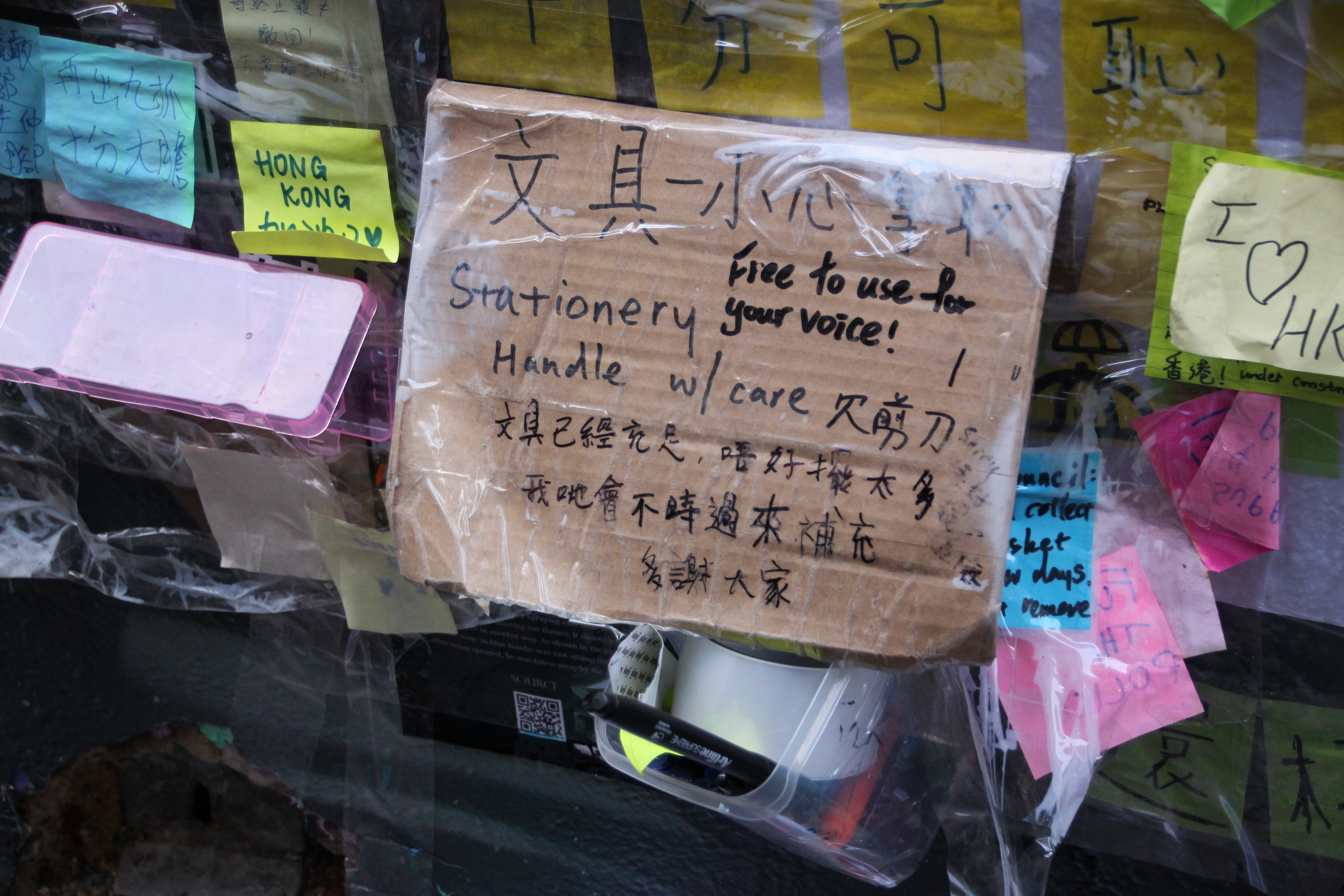
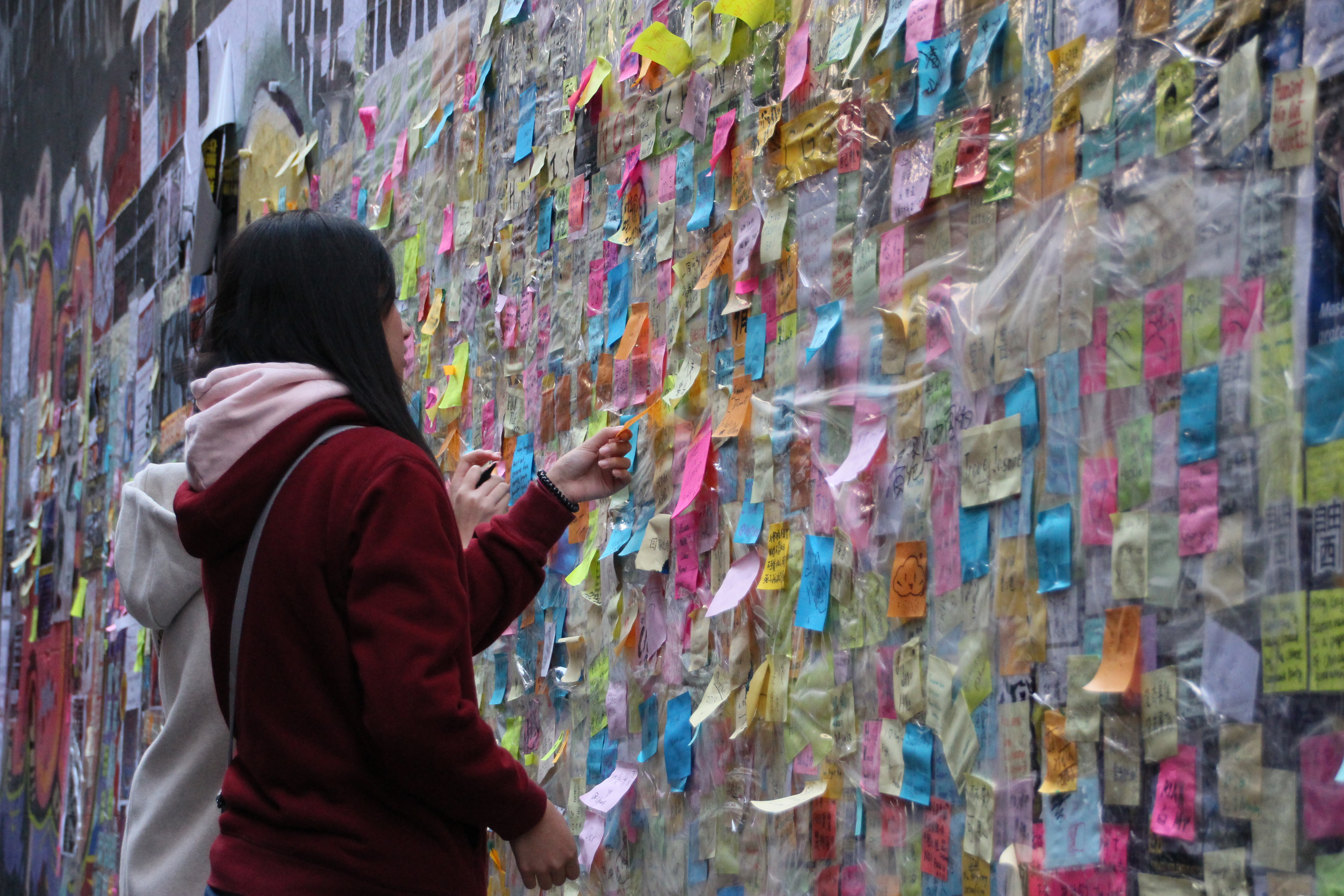
The wall is made up of posters calling for support and explaining what is happening in Hong Kong, and post-it notes with messages of solidarity. It feels spontaneous, but it is actually the result of a piece by Chinese artist Badiucao. He created a piece of street art featuring Chinese leader Xi Xingping and Chief Executive of Hong Kong Carrie Lam, then invited people to add their own messages of solidarity. A box of post-it notes and marker pens has been left so that visitors can add their own messages. This practice has become known as ‘Lennon Walls,’ which have appeared all over Hong Kong during the protests. They are now springing up elsewhere, including Toronto and Tokyo. The original artwork of Lennon Wall for Hong Kong can just about still be seen in the above image: it is the black text on the white background peeking out above the post-it notes.

I spent a little while watching other visitors interact with the wall. Many had little interest, others seemed to be interested in finding out what all the fuss was about, and some, particularly those who appeared to be of Asian origin, seemed quite moved by the outpouring of solidarity. I would be curious to know if this message of solidarity reaches protesters in Hong Kong however: do they know how much support they have in Melbourne?

IMG_6547
A box of stationary attached to the wall so that people can add their own messages of support (Photo: Hannah Awcock).
IMG_6544
A message left by a member of an airline crew, explaining how much the wall meant to them (Photo: Hannah Awcock).
IMG_6555
A visitor to the wall adds their own message (Photo: Hannah Awcock).

It is very important to the protesters in Hong Kong that people around the world know about their struggles and understand them, which is one of the reasons they have targeted Hong Kong International Airport over the summer; a controversial tactic which risks alienating travelers instead of convincing them that the cause is just. The Lennon Wall suggests that the message is getting through, however. It gives a strong sense of solidarity and obviously means a lot to people from Hong Kong. It also highlights the obvious overlaps between street art and resistance; a subversive medium to begin with, street art is an obvious companion to protest.

Sources and Further Reading

BBC News. “Hong Kong Anti-Government Protests.” Last modified 3rd September 2019, accessed 3rd September 2019. Available at https://www.bbc.co.uk/news/topics/c95yz8vxvy8t/hong-kong-anti-government-protests

Clark, Helen. “Should Australia Fear an Influx of Chinese?” This Week in Asia. Last modified 30th July 2017, accessed 3rd September 2019. Available at https://www.scmp.com/week-asia/geopolitics/article/2100798/should-australia-fear-influx-chinese
Dalziel, Alexander. “Post-it Protest in Support of Hong Kong Backlash over Extradition Plan.” The Age. Last modified 20th August 2019, accessed 3rd September 2019. Available at https://www.theage.com.au/national/victoria/post-it-protest-in-support-of-hong-kong-backlash-over-extradition-plan-20190720-p5293c.html

Sydney Morning Herald. “Chinese Political Artist Badiucao supports Hong Kong Protesters with Hosier Lane ‘Lennon Wall.'” Last modified 20th July 2019, accessed 3rd September 2019. Available at https://www.smh.com.au/world/chinese-political-artist-badiucao-supports-hong-kong-protesters-with-hosier-lane-lennon-wall-20190720-h1ge99.html

Book Review: The Headscarf Revolutionaries-Lillian Bilocca and the Hull Triple-Trawler Disaster

The Headscarf Revolutionaries Front Cover
The Headscarf Revolutionaries by Brian W. Lavery

Brian W. Lavery. The Headscarf Revolutionaries: Lillian Bilocca and the Hull Triple-Trawler Disaster. London: Barbican Press, 2015.

Whenever I move to a new place, I like to find out about its history, particularly its radical history. I recently moved to Hull in east Yorkshire, and one of the most famous episodes of protest in the city’s history took place in 1968. In early 1968, three trawler ships from Hull were lost in the Artic ocean in the space of just a few weeks. All three crews were lost, apart from one sole survivor. For some women in Hull, this was a tragedy that could have been avoided with better equipment and more stringent safety checks on the trawler ships, and better training for inexperienced crew members. The women started a campaign which captured national attention, won concessions from the ship owners, and changed government policy. They were largely pushing against an open door, but they did face hostility and criticism, including from some trawlermen who didn’t like women interfering in their working lives. The women became known as the Headscarf Revolutionaries because of their distinctive headwear. In The Headscarf Revolutionaries: Lillian Bilocca and the Hull Triple-Trawler Disaster, Brian W. Lavery tells the story of the campaign, the women involved, and the men who lost their lives on the St. Romanus, the Kingston Peridot, and the Ross Cleveland.

Lily’s Headscarf Revolution may have been a naïve one. But it was a powerful action from the heart that caught the imagination of the world and shamed an industry and a Government into action. Hands that rocked the cradle shook the world and changed it for the better.
Lavery, 2015; p.190

I was not surprised to find out the Brian Lavery has training in both journalism and creative writing. The Headscarf Revolutionaries is incredibly well-researched; it seems like Lavery interviewed almost everyone who is still alive and had any involvement in the campaign. Virginia Bilocca-McKenzie, is the daughter of Lillian Bilocca’s, who kickstarted and was one of the key leaders of the movement. Virginia obviously had significant input into the book; multiple conversations between her and her mother are included. Many sections of the book feel more like fiction than non-fiction; it is much more descriptive that many of the other history books I read. It is an effective approach, particularly the section near the beginning in which some of the men on the crews of the doomed ships say goodbye to their families and head out to sea for what the reader knows is the final time.

There are some elements of Lavery’s writing style that I am not so keen on, however. He has an odd way of using commas that I found irritating. It’s not necessarily wrong, but there are lots of commas in places where I wouldn’t put them, which I found distracting.  Also, some details are repeated in a way that felt unnecessary. These are minor issues in what is otherwise an excellent book, and I guess it isn’t Lavery’s fault that I am quite pedantic when it comes to grammar and style; I blame it on all the undergraduate marking I do.

The Headscarf Revolutionaries is about a local tragedy which sparked a campaign which had national implications. It shines a light on both labour and gender relations amongst Britain’s working classes in the mid-twentieth century, and as such has a much broader appeal than those who are just interested in local history.

London’s Protest Stickers: Work

dav
Stickers of all kinds are common in urban areas (Photo: Hannah Awcock, King’s Cross Station, 27/02/16).

Since austerity began a decade ago, people in all forms have employment have had to endure a fall in their working conditions. Issues include reductions in pensions, reductions in pay, increased workload, and the rise of zero-hour and fixed term contracts.

There are a number of groups that campaign for improved working conditions and better wages. Most of them are unions, although working conditions and wages are also the concern of campaign groups and social movements. Unions range in size; from the very large and powerful, such as Unite and the National Union of Teachers, to the small and specific. Many unions in the UK are part of the Trades Union Congress, which offers support to unions and campaigns for the rights of working people. Many of these organisations can be found amongst the work-related protest stickers on London’s streets.

To see where I found these stickers, check out the Turbulent London map.

13-09-15 Bethnal Green Road
Some protest stickers related to work are quite general, like this one. This sticker was produced by Strike! a dissident female-run collective that publishes a quarterly magazine (Photo: Hannah Awcock, Bethnal Green Road, 13/09/15).
dav
This sticker links wages with quality of work. I’m not sure that many people in low-paid work would feel confident enough to take this kind of action, out of fear of losing their jobs completely. The text is yellow is the same message in Polish. Workers from Poland and other countries in eastern Europe are often blamed for low wages, but many radical groups understand the need for solidarity with non-British workers, rather than their victimisation. This sticker was produced by Workers Wild West, a worker’s newspaper based in Ealing in West London (Photo: Hannah Awcock, Cable Street, 09/10/16)
dav
This sticker was produced by the Communist Party of Great Britain (Marxist-Leninist) (CPGN-ML). The 1st of May is celebrated as a holiday in many cultures, but it has been closely associated with the international worker’s movement for more than a century. It seems that someone disapproved of the image of Lenin on this sticker, and tried to remove it (Photo: Hannah Awcock, Charing Cross Road, 23/03/17).
18-08-15 Mile End Road
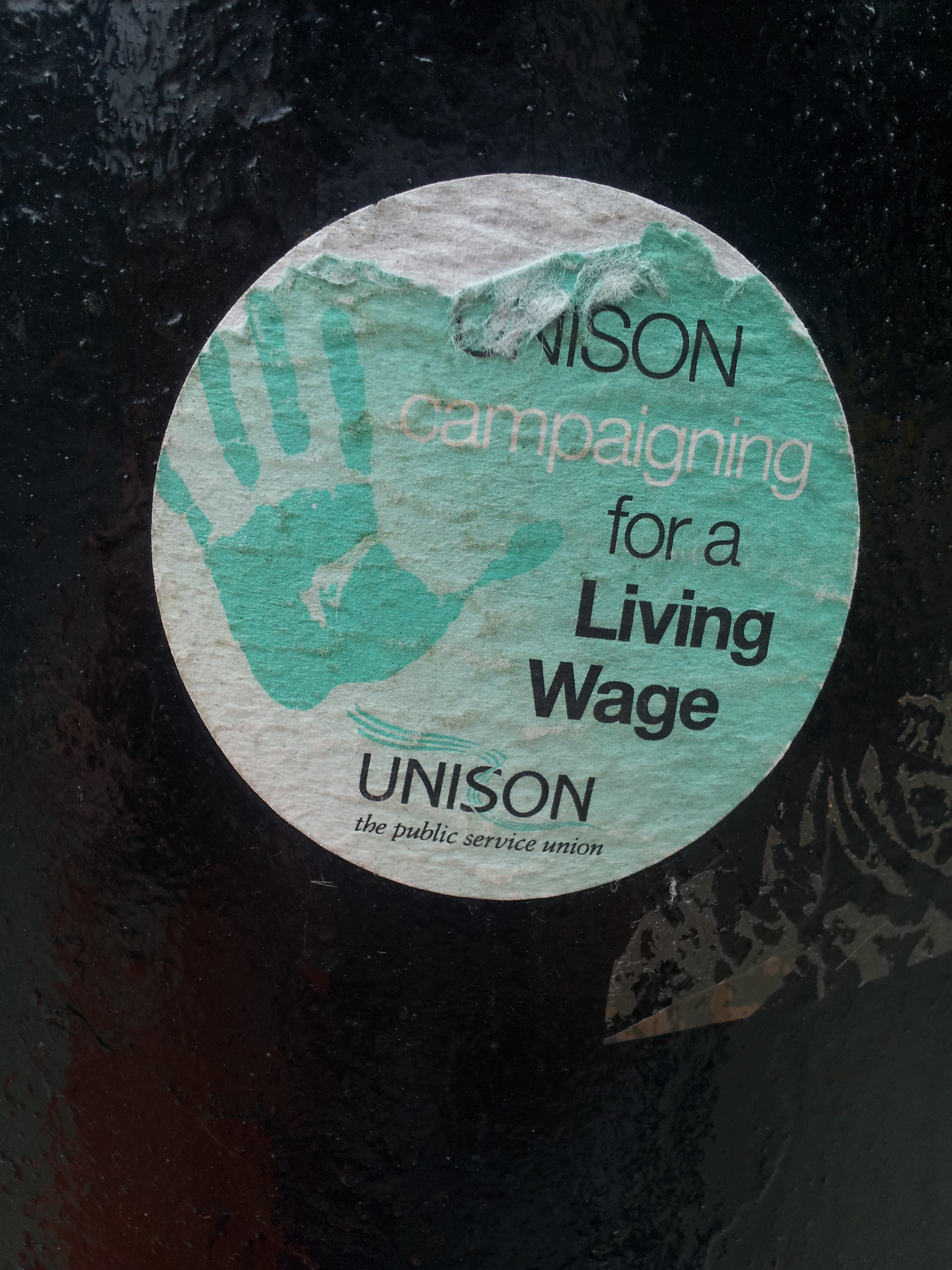
Unison is the UK’s largest union for public services, with 1.3 million members. The living wage, which is higher than the minimum wage, is an important issue in places like London, where the cost of living is so high (Photo: Hannah Awcock, 18/08/15 Mile End Road).
03-09-15 Euston Road (8)
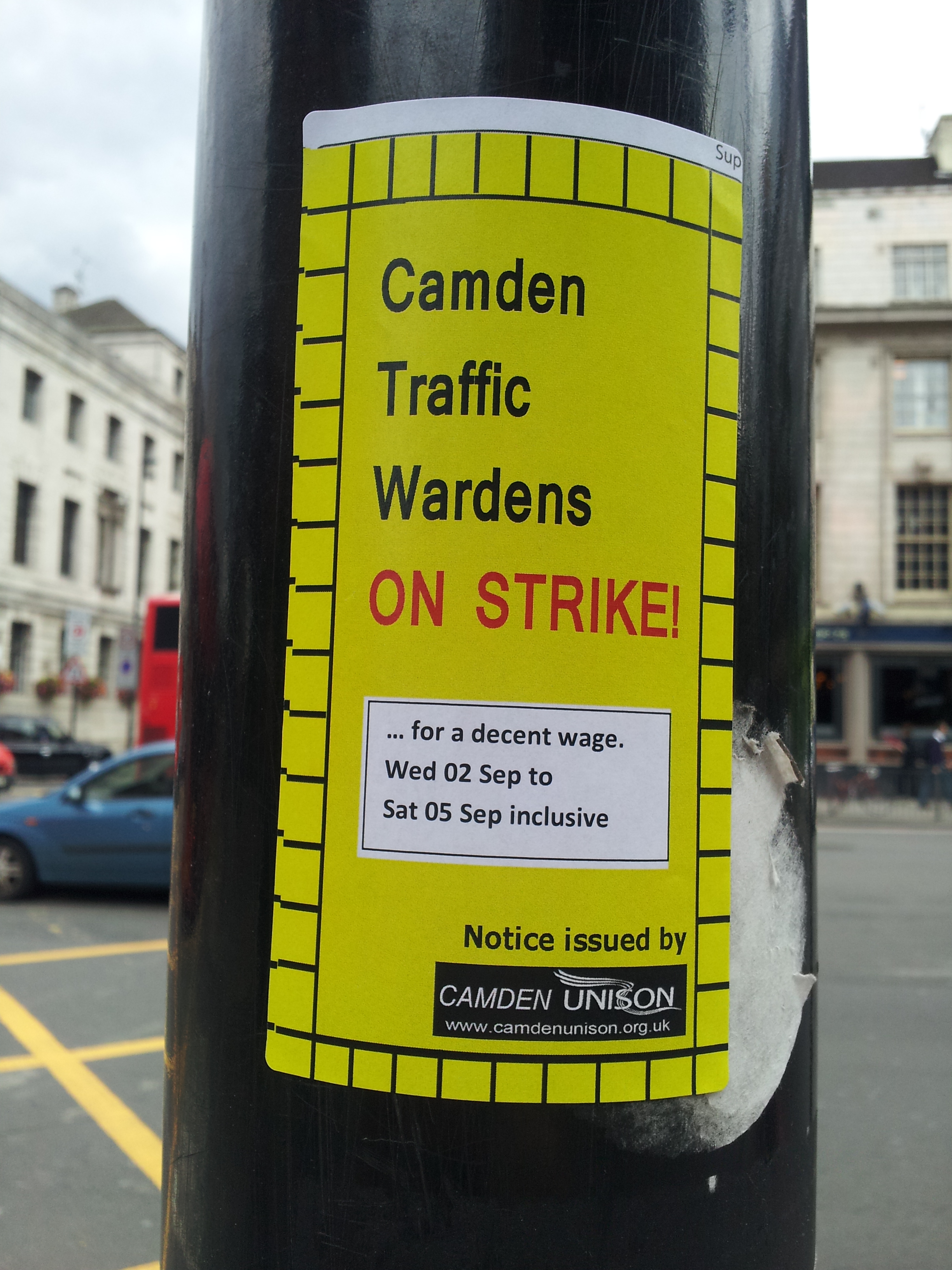
The bigger unions are often organised into local branches. This sticker was produced by Camden Unison, and advertises a strike by traffic wardens in the area. The sticker is designed to look like a parking fine ticket–I’m not sure many drivers would find it amusing! (Photo: Hannah Awcock, 03/09/15, Euston Road).
09-10-16 St. George's Gardens (15)
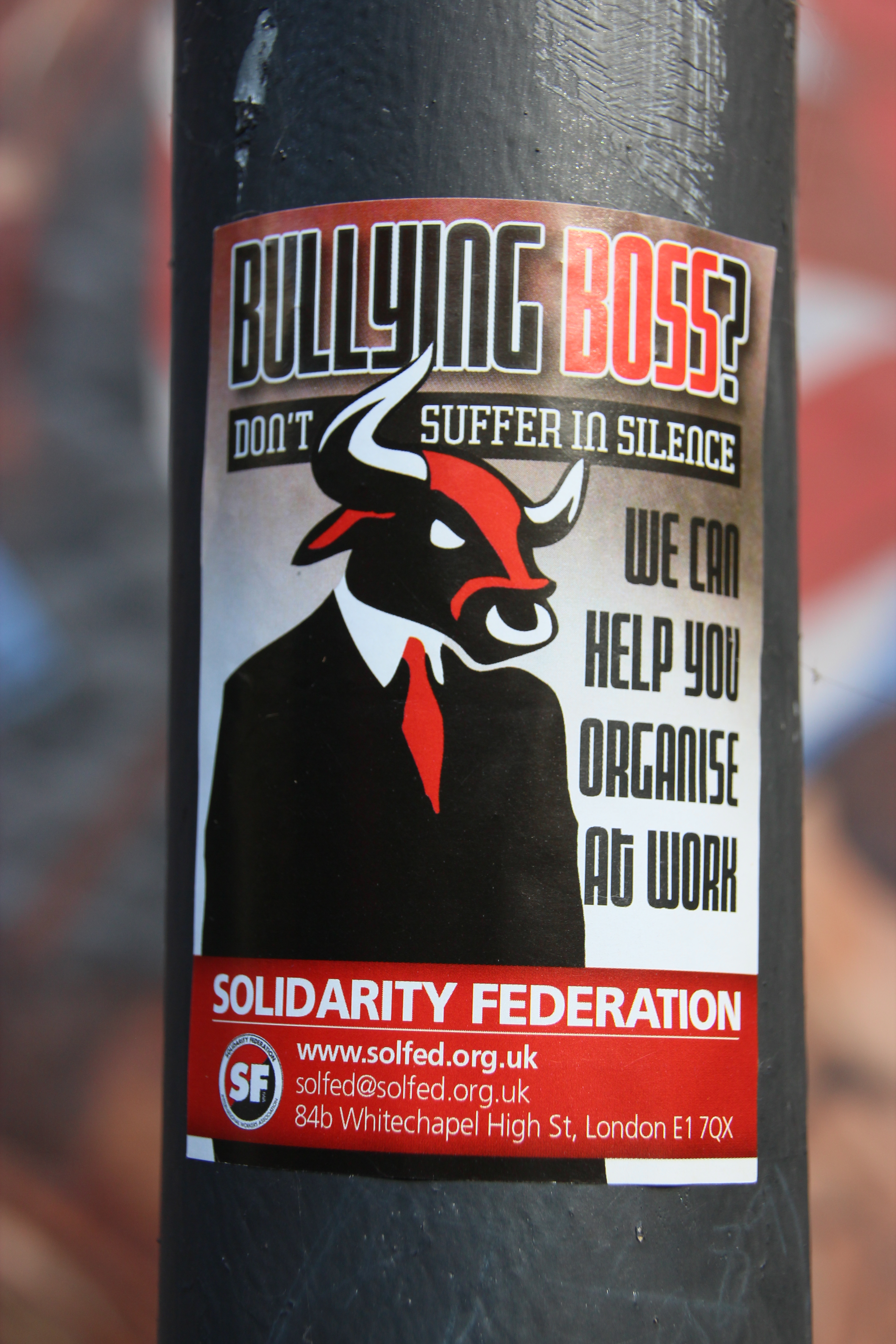
The Solidarity Federation is not a union, it is the British branch of the International Worker’s Association. They support the formation of local groups and networks in order to form a worldwide solidarity movement (Photo: Hannah Awcock, 09/10/16, St George’s Garden).
12-03-15 Malet Street
This sticker was produced by the Fire Brigades Union, which is fairly self-explanatory. In 2015, when this photo was taken, they were in a dispute with the government over plans for firefighter’s pensions, which led to strike action (Photo: Hannah Awcock, 12/03/15, Malet Street).
14-04-15 Upper Street, Islington
This sticker was produced by the RMT union (otherwise known as the National Union of Rail, Maritime and Transport Workers) represents workers from all sectors of the transport industry. It has been in the news a lot recently, because of conflicts over the use of guards on trains (Photo: Hannah Awcock, 14/04/15 Upper Street, Islington).
15-04-15 Euston Road
This sticker was produced by the Wirral branch of the TUC. The politician Esther McVey was the Minister of State for employment between 2013 and 2015. Zero hour contracts, where the number of hours workers are given each week are not guaranteed, are another controversial development of recent years (Photo: Hannah Awcock, 15/04/15, Euston Road).
18-02-15 Inner London Crown Court
PCS is the Public and Commercial Services Union, representing employees in the civil service and government agencies. (Photo: Hannah Awcock, 18/02/15, Inner London Crown Court).
dav
The GMB began life in 1889 as the Gas Workers and General Union. It is not a general union, which means anyone can join, no matter how they make their living. This sticker is demanding the minimum wage rise to £10 an hour (Photo: Hannah Awcock, 18/10/16, Broad Sanctuary).
dav
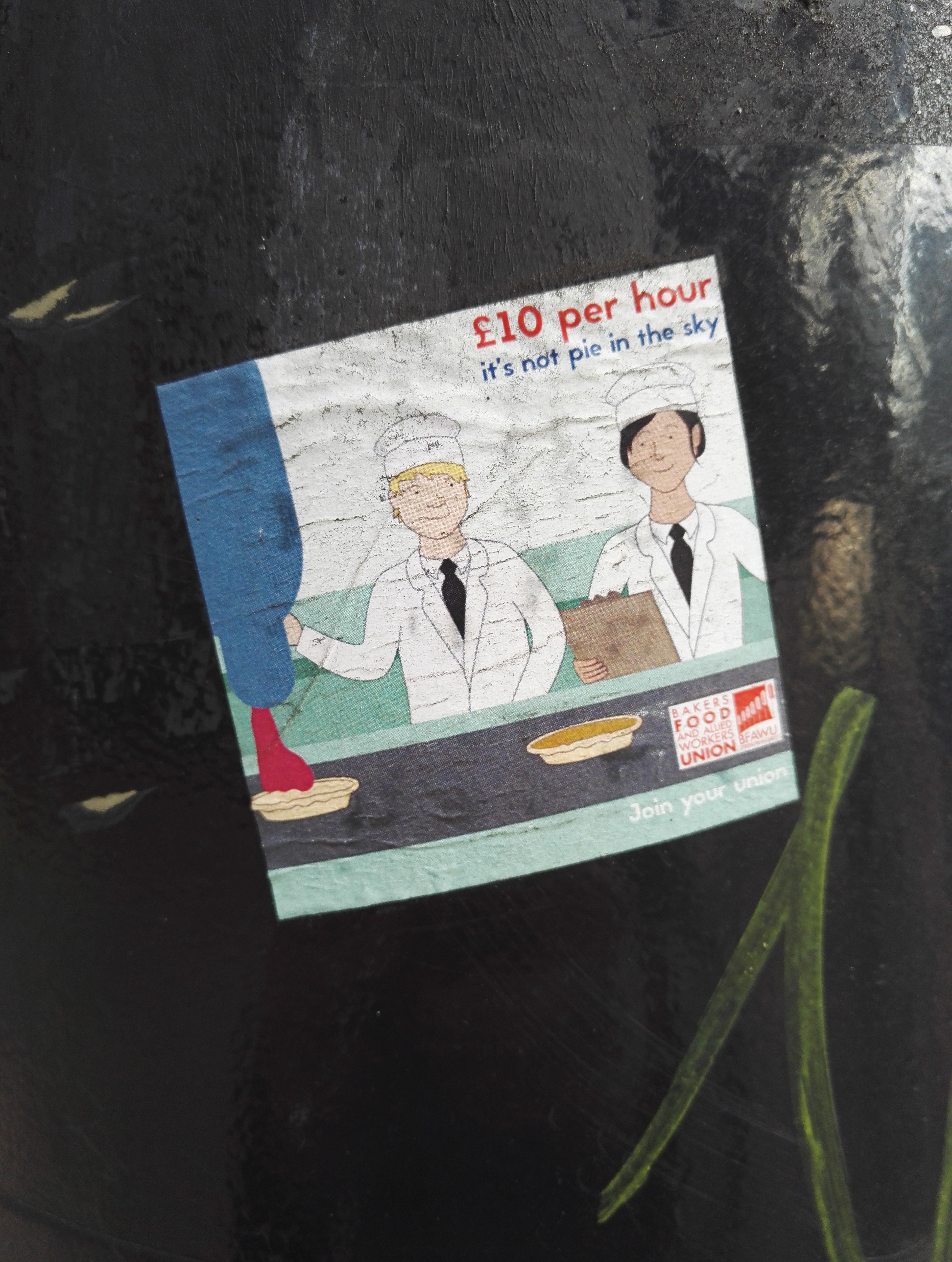
This sticker is also calling for a £10/hr minimum wage. It is produced by the Bakers Food and Allied Workers Union, hence the pun that the sticker uses (Photo: Hannah Awcock, 23/03/17, Euston Road).
hdr
This sticker does not promote a particular campaign group or union. The text at the bottom of the sticker is Spanish for “the fight continues!” Cleaners are often very poorly paid. I found this sticker near the University of London buildings in Bloomsbury, which has been the focus of a campaign in recent years over the rights of cleaners. Many employers subcontract out work such as cleaning, which frequently results in low pay and poor working conditions (Photo: Hannah Awcock, 09/02/15, Gordon Street).
sdr
Unless this sticker was produced by a rap group or a clothing label, I haven’t been able to figure out who ‘Foreign Boyz’ are. Whoever they are, they oppose zero hour contracts (Photo: Hannah Awcock, 21/09/17, Tottenham Court Road).

The Historical Geographies of Protest Reading List

(Source: Shena Tschofen)

As part of my thesis revisions, I had to read as much academic research on the historical geographies of protest as I could get my hands on. To keep track of it all, I made a database using Zotero, an open-source referencing programme. For those of you who aren’t familiar, Zotero is a wonderful free-to-use (unlike EndNote or RefWorks) referencing software that I have used to keep track of all my academic reading since I started my PhD. It occured to me that I might not be the only person that would find this list useful, so I have made it publicly accessible. You can view the database here. Each book or journal article is tagged with key information such as the time period and location of case studies, as well as key themes, ideas, theories, and thinkers addressed.

Zotero screen grab
A screen shot of the Historical Geographies of Protest reading list.

I will keep adding to the list as I find more. I am sure that I have missed things out too, so please do let me know and I will add them in. For example, the list is quite Anglo-centric so far, it would be great if we could get some more references about non-English speaking places. Or even some literature that is not written in English! I would really like this to be a resource that lots of people both contribute to and benefit from, so please do get in touch if you have something to add.

Afterlives of Protest: Researching Protest Memories Workshop

Protest Memory Network Logo
Source: Protest Memory Network.

The Protest Memory Network is funded by the Arts and Humanities Research Council and brings together archivists, curators, activists, artists, and researchers to think about how memories of protest are preserved, materialised, recirculated, and utilised. The Network is organising three workshops and a conference between 2018 and 2020, amongst other things. I was invited to take part in the first workshop, on the subject of Researching Protest Memory, at the University of Sussex on the 30th and 31st of May 2018.

The workshop was a combination of paper sessions and workshops exploring the methodological opportunities and challenges of researching such a broad and frequently intangible topic. A whole range of research methods were discussed, ranging from the conventional (oral histories, archival research, mapping, social media analysis) through the creative (film making and artistic engagements), to the rather unconventional (embroidering interview quotes onto handkerchiefs and baking them into empanadas). My contribution was a paper on my work on protest stickers.

img_20180530_163004.jpg
Alison de Menezes and Carmen Wang’s creative engagement with the interview transcripts of Chilean exiles, exploring the role of women in the maintenance and (re)production of social movements (Photo: Hannah Awcock).

We had workshops run by: the TAG Lab, (Text Analysis Group), which conducts research into the analysis of text and language by computers, and applies it to social media and other forms of communication; the Business of Women’s Words project, which explores feminist publishing in the UK during the 1970s and 80s; and the Mass Observation Archive, which is a fascinating collection about everyday life in Britain in the twentieth century. The workshop was also supported by the Sussex Humanities Lab, which looks at the ways in which digital technologies are shaping society and culture. Over the two days, I was reminded of just how many options there are when it comes to selecting a research method, and the importance of considering your options when embarking on a research project, rather than just falling back on what is easy or familiar. The workshop was a chance to learn about unfamiliar methodologies in a supportive environment, where I didn’t feel stupid asking potentially obvious questions.

Invariably, it is difficult to think of research methods without also thinking about research outputs. Over the two days, the topic of research outputs came up often, particularly in terms of how to make research more accessible and engaging for those outside of academia. The alternatives that came up ranged from working with cultural partners such as museums and libraries, to creative outputs such as documentary films and even board games. On the Tuesday evening, we were treated to a radical history of Brighton walking tour. It was fantastic, if a little fast-paced, and highly informative; I learnt a lot even though I have lived in Brighton for most of my life. There are a number of researchers who make use of walking tours as a form of public engagement, and I’d love to have a go myself.

dav
The radical history of Brighton walking tour (Photo: Hannah Awcock).

I have written before about how much I value the academic communities I am a part of (see Parts 1, 2 and 3), and the Researching Protest Memories workshop was a nice reminder of that. It was much smaller than most of the conferences I am used to (20-30 people), which meant I had a good chance to get to know everyone and their work. I came away feeling like I was part of a new (to me) academic community of supportive, creative, and energetic researchers, and as far as I’m concerned, the more communities I am part of, the better!

I don’t think I would be alone in saying that the Researching Protest Memory workshop was a resounding success. I went home exhausted, but with my head buzzing with thoughts and ideas. I would like to thank the Protest Memory Network, particularly Pollyanna Ruiz, for organising the workshop and inviting me to participate.

Brighton’s Protest Stickers: Electoral Politics

sdr
This is too big to strictly be a protest sticker, but it was too good to leave out! (Photo: Hannah Awcock, King’s Road, 26/03/17).

For the past year or so, I have been living in my home city of Brighton. As a place with a general anti-authoritarian vibe, the city has a pretty lively culture of radical street art and protest stickers. I have featured Brighton’s protest stickers on Turbulent London before, but now I’m living in the city again I’ve decided to do some more blog posts on the topic. Electoral politics often feature in protest stickers, mostly as the target of criticism. Occasionally, however, stickers are supportive of mainstream political parties, particularly Labour. Perhaps because Brighton regularly plays host to the Labour Party annual conference, quite a few of the protest stickers in the city relate to mainstream electoral politics. Below are some of the stickers that I’ve found on my various wanders around the city.

sdr
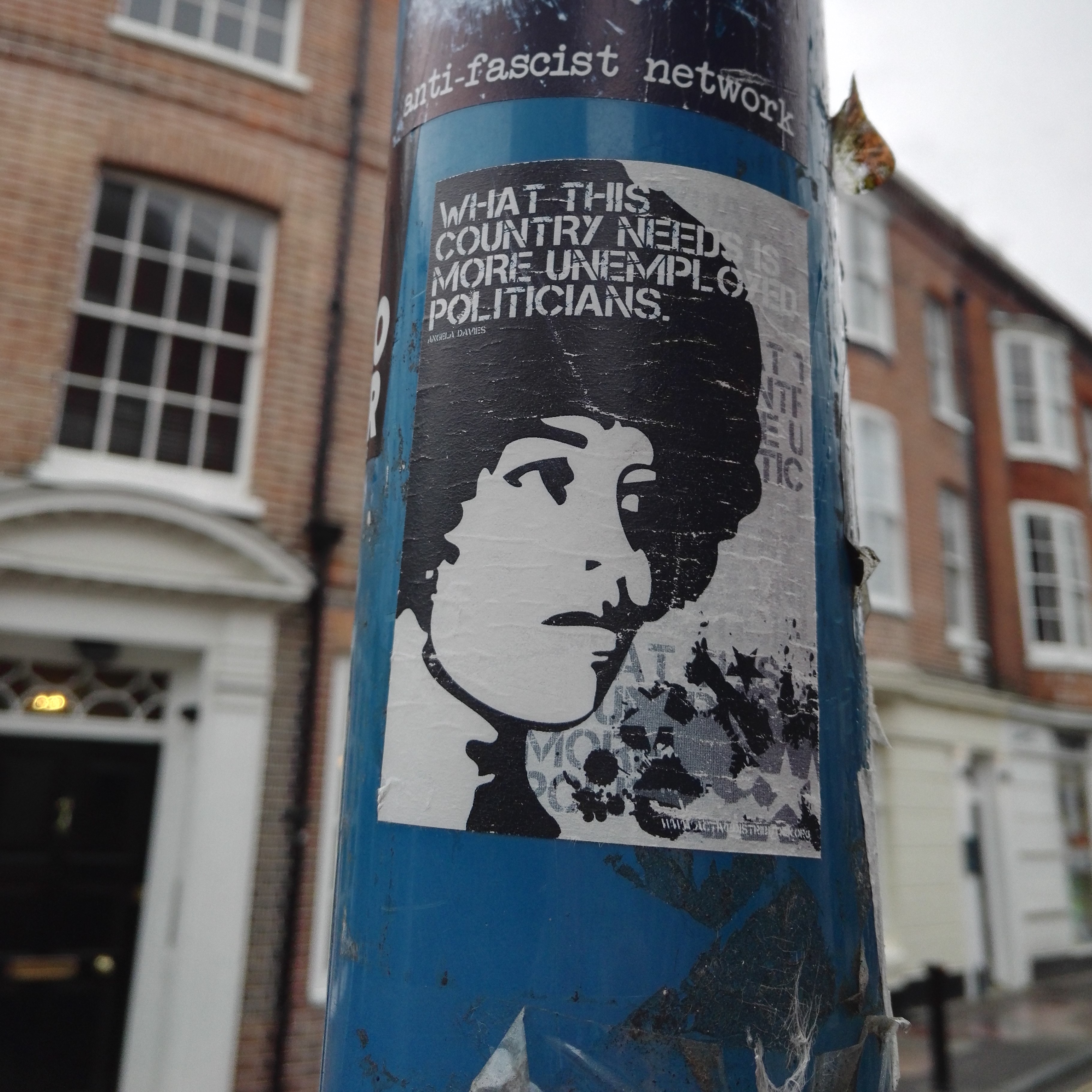
Some stickers are critical of the political system as a whole. This is a quote from the well-known American activist and scholar, Angela Davis (Photo: Hannah Awcock, Prince Albert Street, 09/08/17).
sdr
Brexit is just as controversial in Brighton as it is in the rest of the country. This sticker dates from before the referendum, and is encouraging people to think carefully about the implications of voting Leave (Photo: Hannah Awcock, 18/05/16 Queen’s Road).
dav
68.6% of Brightonians voted to remain in the European Union, and if this sticker is anything to go by, there are still people who are actively opposing Brexit (Photo: Hannah Awcock, West Street, 01/10/17).
dav
This sticker could be interpreted as supportive of Brexit, suggesting that Britain is making a timely exit from a burning building, escaping whilst it has the chance. I think it’s a clever use of imagery, reproducing a symbol that is so familiar to us in order to convey and political message (Photo: Hannah Awcock, Upper Gardner Street 09/05/16).
dav
The message of this sticker is much more explicit. I would guess that it was meant to be worn on clothing, but was placed somewhere on the street instead (Photo: Hannah Awcock, Gardner Street, 26/03/17).
dav
Some stickers are related to specific political parties. This sticker uses the colour scheme and logo of the Conservative Party to criticise their policies (Photo: Hannah Awcock, Ship Street, 09/08/17).
dav
This sticker has superimposed the face of Theresa May onto the face of Margaret Thatcher, implying that no matter who leads the Conservative Party, their policies and attitudes remain unchanged (Photo: Hannah Awcock, 09/08/17, King’s Road).
10-06-17 North Street (1)
The snap election called by Theresa May in June this year inspired it’s own set of anti-Conservative protest stickers. This sticker is playing on the use of the word landslide to describe an overwhelming victory in an election (Photo: Hannah Awcock, 10/06/17, North Street).
10-06-17 North Street (2)
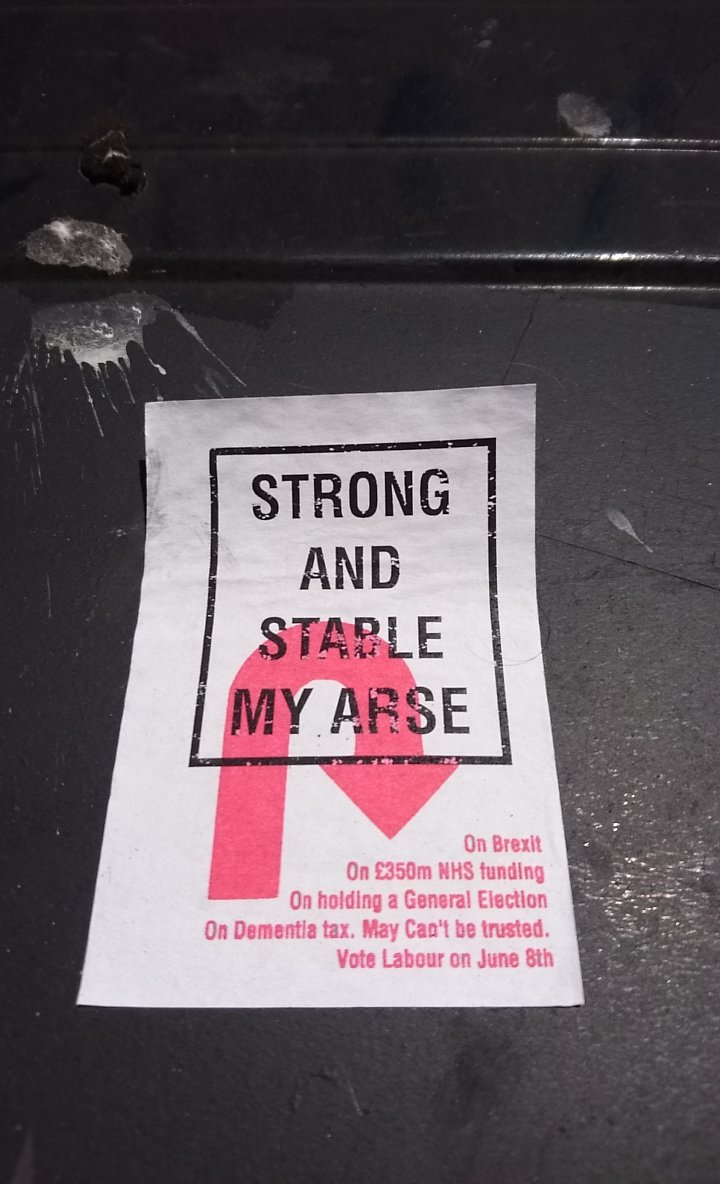
This sticker is referencing Theresa May’s favourite catchphrase during the election campaign, ‘Strong and Stable.’ It is drawing unfavourable comparisons between that phrase and May’s own behaviour (Photo: Hannah Awcock, 10/06/17, North Street).
10-06-17 North Street (3)
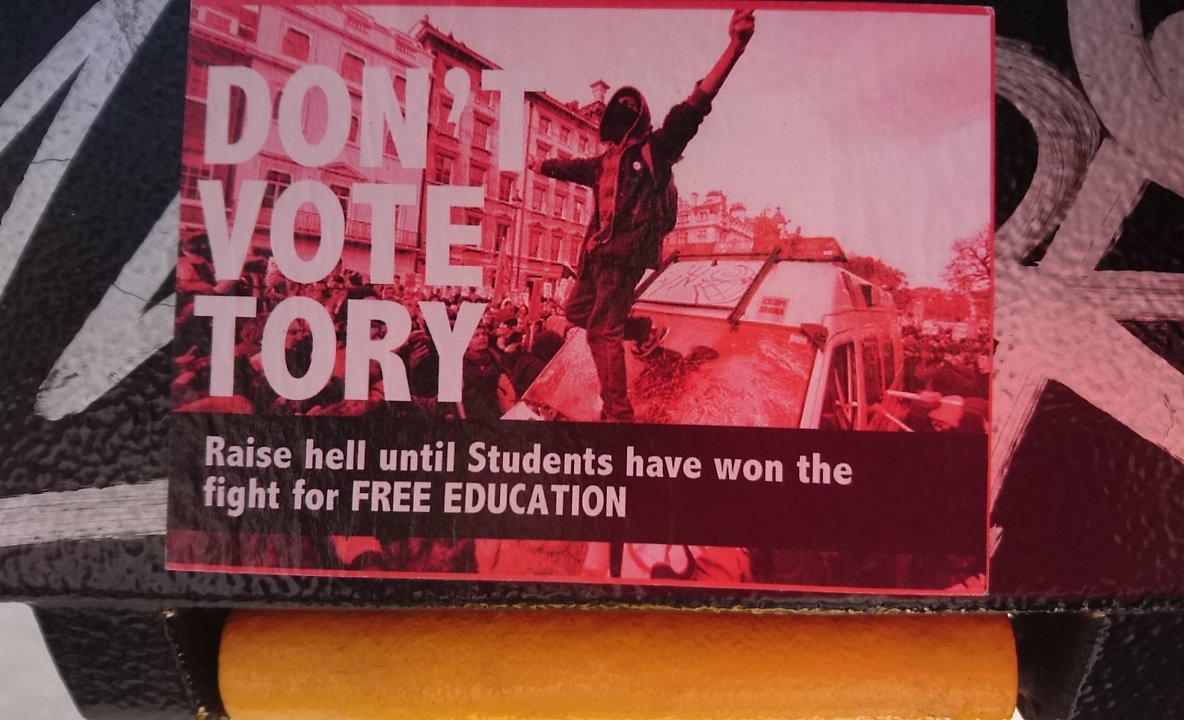
There are two universities in Brighton, as well as many schools and colleges, so there is a high number of students in the city. This sticker is appealing to them, although it doesn’t specifically mention the general election in June 2017 (Photo: Hannah Awcock, 10/06/17, North Street).
dav
Whilst protest stickers about the Conservative Party tend to be negative, those about the Labour Party are more likely to be supportive. This one is linking the Labour Party to support for the NHS (Photo: Hannah Awcock, 18/05/16, Queen’s Road).
dav
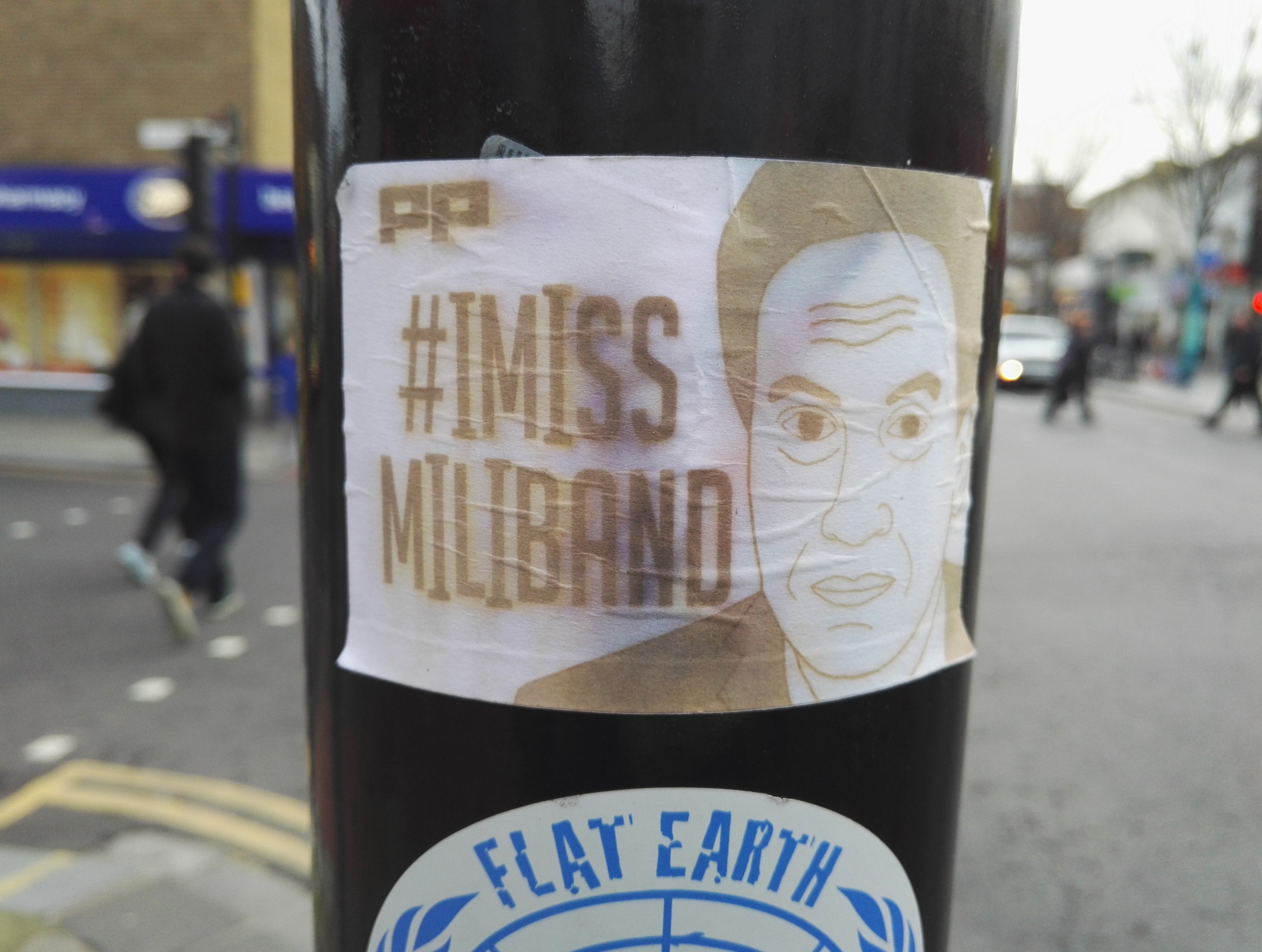
This sticker could be interpreted as critical of the current Labour Party leadership. Ed Miliband wasn’t especially popular when he was leading the party, but this sticker implies that even he did a better job than Jeremy Corbyn. Whatever the intent, the #Imissmiliband hashtag hasn’t caught on (Photo: Hannah Awcock, 24/12/16, London Road).
dav
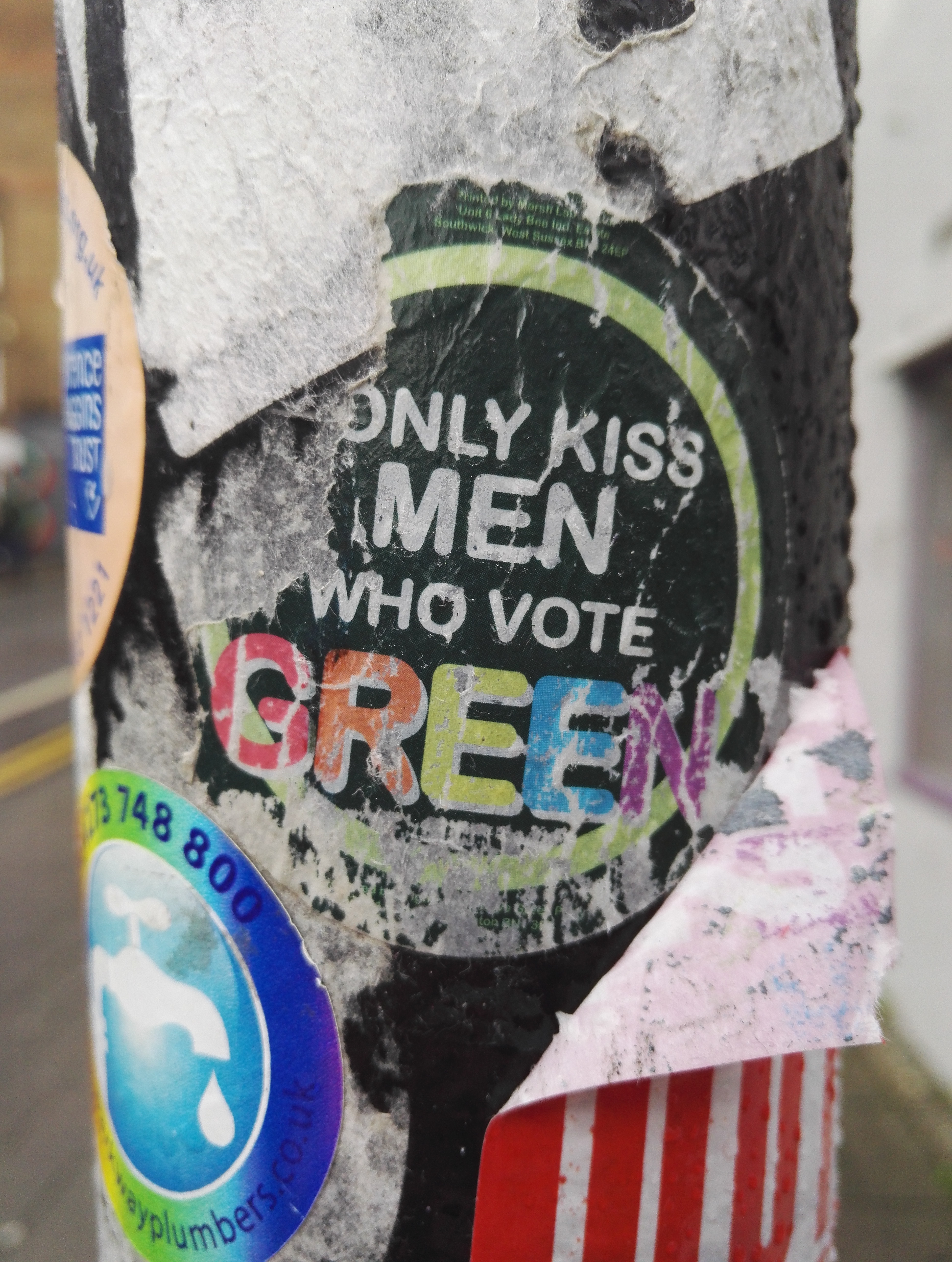
Brighton is the only city in the country that has a Green MP. The colours of the sticker suggest that it is also supporting something else Brighton is well-known for, the city’s large LGBTQI+ community (Photo: Hannah Awcock, 04/02/17, Church Street).
dav
It is not just British electoral politics that is the subject of protest stickers in Brighton, American politics, particularly Donald Trump, is also a focus. This sticker is fairly self explanatory, I think (Photo: Hannah Awcock, 26/03/17, York Place).
dav
I particularly like this sticker, as I think it would really upset Trump if he ever saw it. He is an incredibly vain man, and I don’t think his vanity would cope well with the representation of him (Photo: Hannah Awcock, 24/03/17 Queen’s Road).
mde
I also think that this sticker would massively upset Trump, so it’s another favourite of mine! It was produced by Sonny Flynn (Photo: Hannah Awcock, 18/05/16, Queen’s Road).

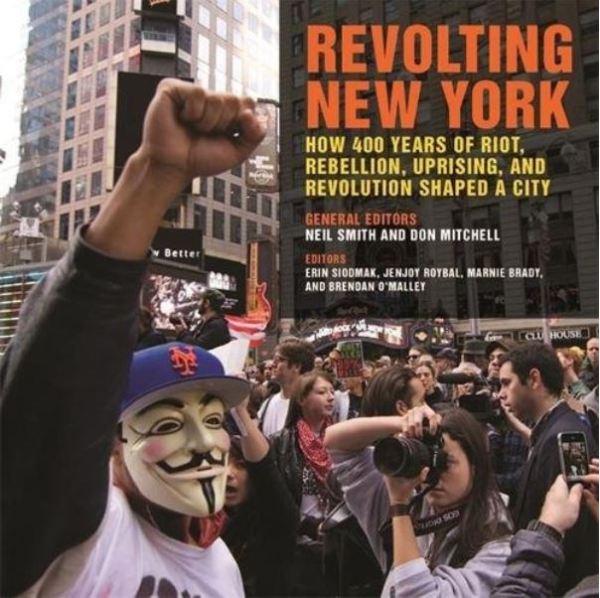
Revolting New York: How 400 Years of Riot, Revolt, Uprising, and Revolution Shaped a City

Revolting New York cover
Revolting New York will be published early next year.

On my trips to New York City (in 2015 and 2016), I have scoured bookshops looking for a history of protest in the city, assuming that there must be one. After all, there are at least two books about London’s turbulent past. Whilst there is lots of great research about dissent in New York, there has not been an overarching survey–until now. Next year, a book will be published not just about the history of protest in New York, but about the historical geography of protest in the city. Revolting New York: How 400 Years of Riot, Revolt, Uprising, and Revolution Shaped a City began as a project by Neil Smith with some of his post-graduate students at the City University of New York. When he passed away in 2012, Professor Don Mitchell took over the task of editing the collection, and it is finally being published next year. As you can imagine, I’m quite excited about it, whilst also being a bit frustrated that I didn’t get there first!

Last week, Professor Mitchell gave a lecture about the project at Queen Mary, University of London. I went along to find about more about the project. Mitchell used various examples to demonstrate the strength of the relationship between dissent and the material landscape. We tend to view demonstrations, riots, and other expressions of dissent as unusual events, but they are actually very common, particularly in large cities like London and New York. It is actually more uncommon to have a peaceful period.

Mitchell started the lecture with an in-depth look at a decade of bombings in New York, culminating in anarchist Mario Buda’s attack on Wall Street on the 16th of September 1920 (I have written a review of Mike Davis’ excellent book about this bombing’s part in the early history of the car bomb here.) The bombings contributed to the deindustrialization of New York, as the small-scale manufacturing and transport networks that produced and planted the bombs were driven out of the city. Finance, insurance, and real estate came to dominate the city’s economy. In attempting to strike a devastating blow against the bankers of Wall Street, Buda inadvertently helped them tighten their grip on New York.

Mitchell used this narrative, and others, to argue that “landscape is power materialised.” Whilst this is not a new argument, Revolting New York applies it in a new context. Space is produced through social struggle, the result of constant negotiation and conflict between groups with different visions for that space. Protest is just one form that this process takes. As such, protest shapes and reshapes the city you see when you look out the window (apologies to those of you who are not currently in a city!)

The lecture was an introduction to the Revolting New York project, outlining it’s history, structure, and key arguments. It is particularly exciting for me because of its parallels with my own work on London. The book will be affordable too, less than £25 for the paperback, so hopefully it will help bring historical geography to a wider audience. I for one can’t wait to read it!