This is one of the oldest buildings on the Royal Mile (Photo: Hannah Awcock).
At the end of 2019 I went on a last-minute trip to Edinburgh. It was great to explore the city, and it also meant I got to add to my protest sticker collection! There are a range of topics on protest stickers that often crop up in in big cities, including: gender, working relations, vegetarianism, housing conditions, elections, and Brexit. There are also specific local issues, which you don’t tend to find anywhere else. In Edinburgh, examples of these are: working conditions at the Fringe Festival, the use of public land for events which profit private companies, and Scottish independence.
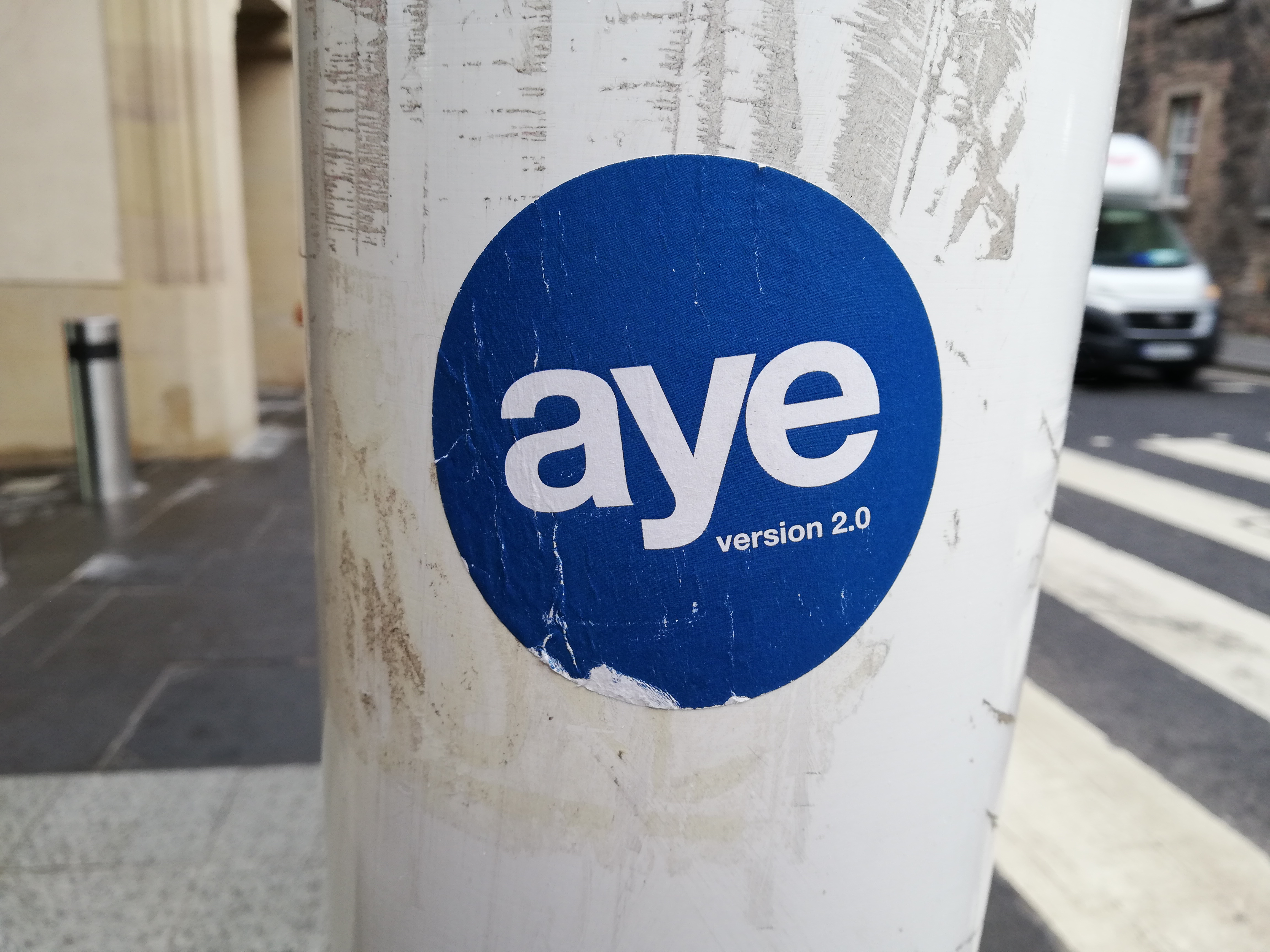
Fair Fringe is a campaign to improve the wages and working conditions of people working for the Edinburgh Fringe Festival. They are asking Fringe Employers to sign a charter guaranteeing they will give their employees certain working conditions (Photo: Hannah Awcock).Edinburgh is famous for several public events, including the Edinburgh Festival, the Fringe Festival, a Christmas Market, and Hogmanay. As these events have expanded, tensions have increased between organisers and local people, who often have to put up with significant inconvenience and restrictions on their movements around central Edinburgh. Some feel that the city doesn’t get enough benefits from these events. I think this sticker is referencing those ongoing debates (Photo: Hannah Awcock).Like most big cities, the cost of housing in Edinburgh is high, and increasing all the time. Living Rent is a tenant’s union which campaigns for tenant’s rights across Scotland, including calling for a nationwide rent cap (Photo: Hannah Awcock).The campaign for a second referendum on Scottish Independence has been boosted by Brexit, and it was the topic of quite a few protest stickers in Edinburgh. This sticker is responding to the argument that Scotland wouldn’t be able to make it as an independent country (Photo: Hannah Awcock).Just in case the Yes campaign wasn’t patriotic enough, this sticker takes it one step further! (Photo: Hannah Awcock).
The image on this sticker has faded so it’s quite difficult to make out, but the text is very clear (Photo: Hannah Awcock).
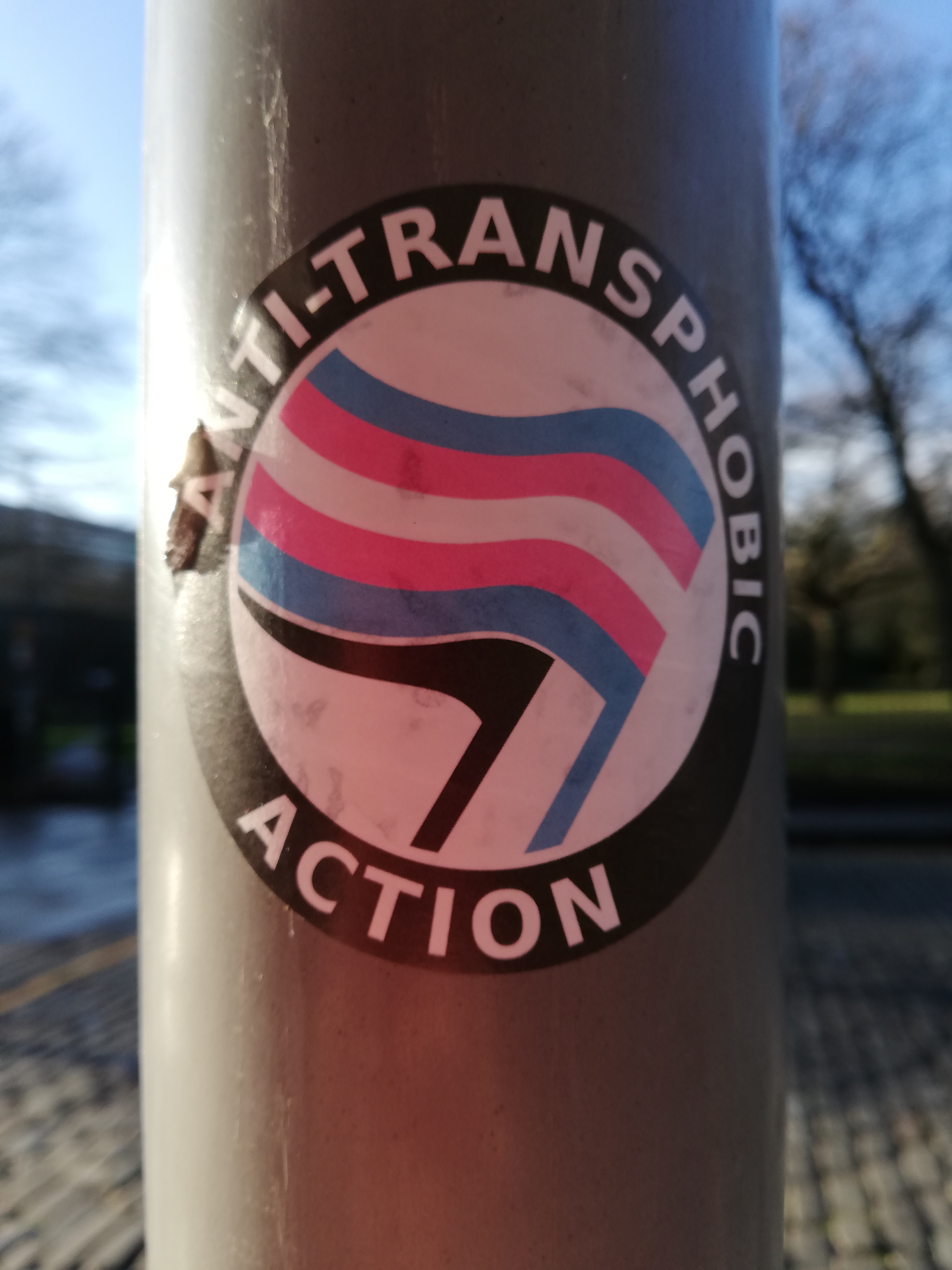
This sticker incorporates anti-fascist symbolism and design style with the transgender flag (Photo: Hannah Awcock).
This sticker, on the other had, is rather sarcastically criticising the transgenderism. This debate has split the feminist movement in recent years (Photo: Hannah Awcock).
In December 2019, university staff around the country went on strike over working conditions and changes to pensions. The Autonomous Design Group designed these stickers in solidarity with those on strike in Edinburgh (Photo: Hannah Awcock).
I found this sticker outside one of the University of Edinburgh’s buildings. It is also probably left over from the strike. Tuition fees were first introduced in the UK in 1998, but there are still some who oppose them. VCs, or Vice Chancellors, are the most senior people in the university hierarchy, so they often become the focus of opposition (Photo: Hannah Awcock).
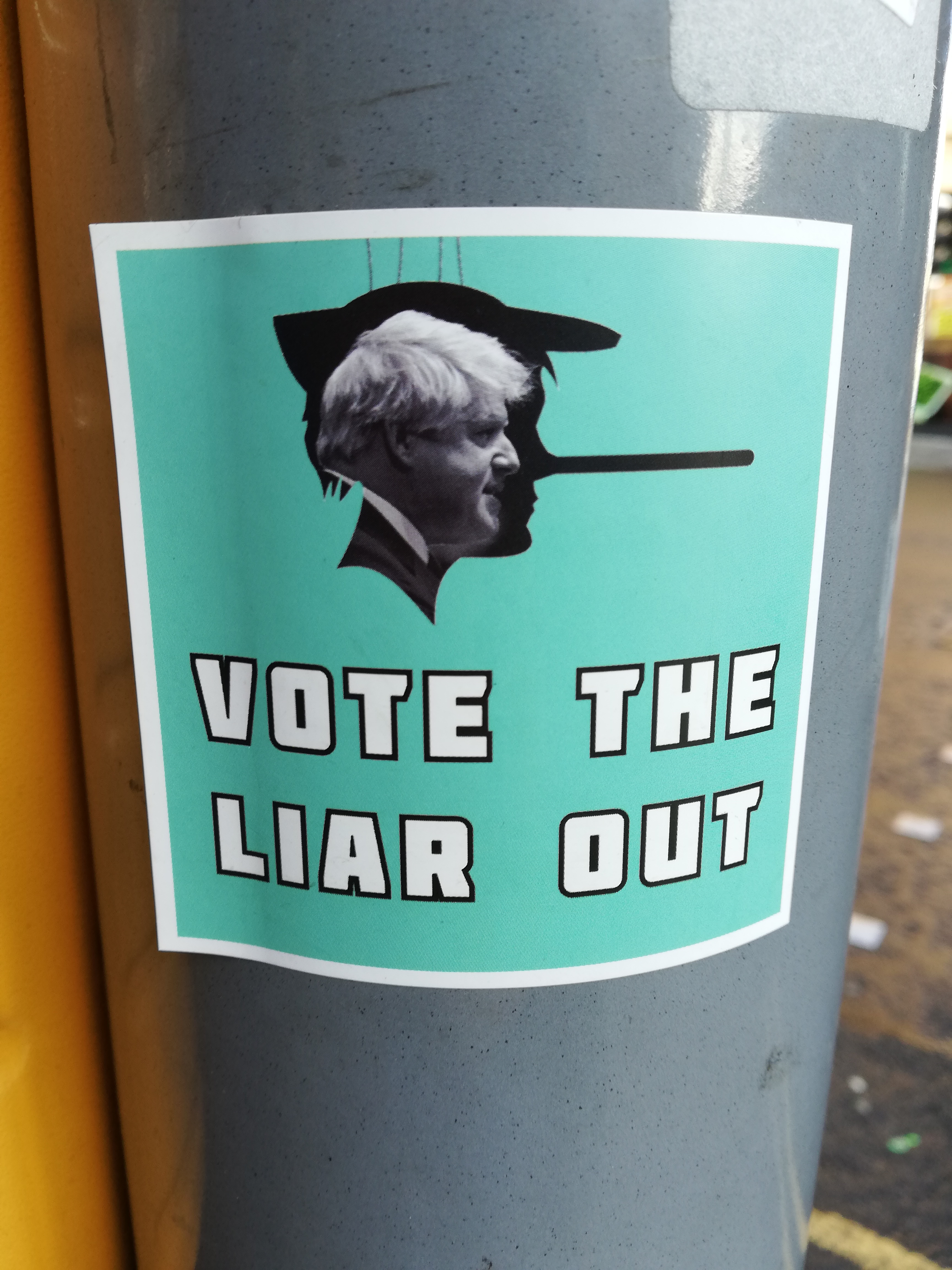
I’m guessing that this sticker is from before the General Election on the 12th of December. It is comparing Boris Johnson to Pinocchio, who’s lies famously got him into trouble (Photo: Hannah Awcock).
This sticker looks quite old, but it could just be that paper stickers don’t tend to last as well as other materials. Boris Johnson only agreed his Brexit deal with the EU in October 2019, so the sticker can’t be more than a few months old (Photo: Hannah Awcock).
Sometimes, you have to take a sticker’s location into account in order to appreciate it fully (Photo: Hannah Awcock).
This sticker is really interesting because I have seen quite a few stickers in various places calling for solidarity with Hong Kong since the latest round of protests started there in mid-2019. I have only seen this anti-solidarity stance in Edinburgh however. The graffiti is referring to the fact that the Extradition Bill which kick started the protests was in response to a woman from Hong Kong being murdered by her partner in Taiwan. Most people don’t know this however, and the Extradition Bill was almost universally criticised as an attempt by China to gain more power over Hong Kong (Photo: Hannah Awcock).
This sticker is advertising vegankit.com, a website that offers advice and guides on eating and living vegan. It isn’t clear who is behind the website though. (Photo: Hannah Awcock).
Triumph of Order: Democracy and Public Space in New York and London by Lisa Keller
Lisa Keller. Triumph of Order: Democracy and Public Space in New York and London. New York: Columbia University Press, 2009. RRP £24.00 paperback.
Cities are incredibly complex systems, made up of hundreds of interconnecting networks. Sanitation, transportation, power, housing, local government, and public order, amongst others, all have to function successfully in order for a city to thrive. The larger the city, the more complicated and chaotic it gets, and by the end of the nineteenth century London and New York were the two largest cities in the world. The governments of these two cities, and their residents, had to strike a balance between order and liberty. Triumph of Order: Democracy and Public Space in New York and London traces the struggle to find a balance between these two, frequently conflicting, concepts in the nineteenth century.
Liberal democracies such as the US and the UK place a strong emphasis on liberty and individual freedom. However, the fact is that we are all willing to give up some of that liberty so that the government can maintain order and protect us and our property. Exactly how much of our individual freedoms we are willing to sacrifice in order to feel safe is a matter of constant debate. In Triumph of Order, Lisa Keller argues that in London and New York during the nineteenth century the balance between liberty and order tipped towards order. Using a combination of examples, archival sources, and analysis, Keller makes a convincing argument that liberty, particularly freedom of speech, was curtailed in favour of minimising the risk of disorder and violence on the streets of two of the world’s greatest cities.
The legacy of the nineteenth century was a new structure for public order, in which liberty was expendable. Great Britain and America retained a framework for free speech and assembly, but democracy as an ideal became tempered by realities of city life. The principles and practices established in the nineteenth century yielded long-lasting societal parameters affecting public space, free speech, and assembly.
Keller, 2009: p.223
Although I read academic books as part of my research and teaching, most of the books I review on Turbulent London are aimed at a more general audience. Triumph of Order is written for an academic audience, and is therefore less accessible than most ‘popular’ history books. This is not a criticism, however, just an observation; Triumph of Order is a good book, but if you are looking for something to take on holiday with you, I wouldn’t suggest this. A small criticism that I do have is that Keller is often careless with chronology. The book is structured chronologically, with the first half looking at London and the second focused on New York, but within individual chapters there is a tendency to jump back and forward between different events and time periods that can be confusing.
As someone who studies London and has visited New York, I have always been curious about how the history of the two compares. Triumph of Order highlights the parallels and differences between the two cities. Some of them are relatively obvious: London, for example, was the first major city in the world to have a professional civilian police force (1829), which had clear implications for the way free speech and protest was controlled (New York City followed suit in 1845). Other insights Keller provided are less familiar to me as a British reader, such as the idea that Americans have always been more tolerant of bodily violence and loss of life than British people. Many people have died during riots in London, but it is mostly due to accidents and the violent tactics of authorities; in New York, rioters themselves are more likely to kill people. In Triumph of Order, Keller does a good job of comparing the two cities in a way that also provides insight into them as individual metropolises.
The balance between liberty and order is a difficult issue. In Triumph of Order, Lisa Keller has produced a book that illuminates the historical structures that underpin that balance in two of the most significant cities in Western liberal democracies. That’s no mean feat.











 Turbulent Isles