Melbourne is famous for its street art (Photo: Hannah Awcock).
This summer, I spent 3 weeks travelling around Australia and New Zealand. I have already written blog posts about Sydney’s Protest Stickers, and the Lennon Wall for Hong Kong in Melbourne. Melbourne has a reputation for being Australia’s most cosmopolitan city. It is also known for its culture, particularly the restaurants, bars, boutique shops, and street art in the city’s Laneways. As it turns out, it’s also pretty good for protest stickers. Like most large cities, Melbourne’s protest stickers address issues on a range of scales, from the local, through the national, to the global. I found some stickers that I have seen elsewhere in the world, and some that are uniquely Melburnian.
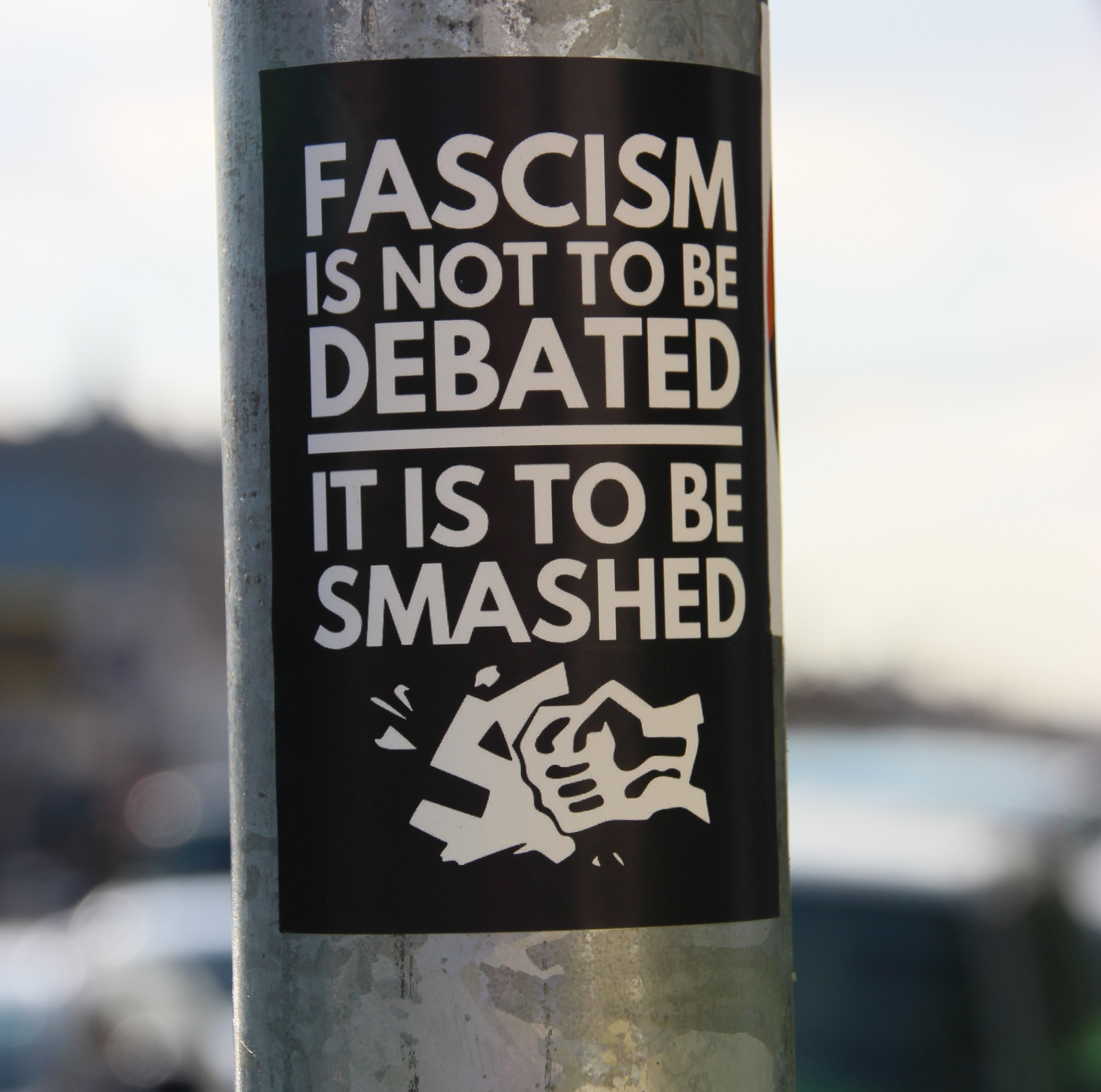
There has been a lot of debate recently about free speech and ‘no platforming’. The producer of this sticker is quite confident about the best way to counter fascist beliefs (Photo: Hannah Awcock).
This sticker is alluding to Australia’s colonial history. There is no one Aboriginal name for Australia, because there was a large number of Aboriginal communities and societies when Europeans arrived. Aboriginal peoples have suffered extensive hardship, prejudice and discrimination at the hands of Europeans, and although their treatment has improved, there is still a long way to go (Photo: Hannah Awcock).
Fin Free Melbourne is a group that campaigns for the banning of all shark-fin based products in Melbourne, with the ultimate goal of protecting shark species all over the world (Photo: Hannah Awcock).
Climate change is an increasingly popular topic of protest stickers around the world, and Melbourne is no exception (Photo: Hannah Awcock).
The School Strike for Climate is a global movement kickstarted by the Swedish teenager Greta Thunberg. School Strike 4 Climate is an Australian organisation that coordinates strikes around the country (Photo: Hannah Awcock)
Extinction Rebellion is another global climate movement. It started in the UK in late 2018, but now has a strong Australian branch (Photo: Hannah Awcock).Be Fair Be Vegan is a US-based campaign group that funds advertising campaigns to promote veganism. Melbourne is just one of the cities in which they have paid for advertising (Photo: Hannah Awcock).
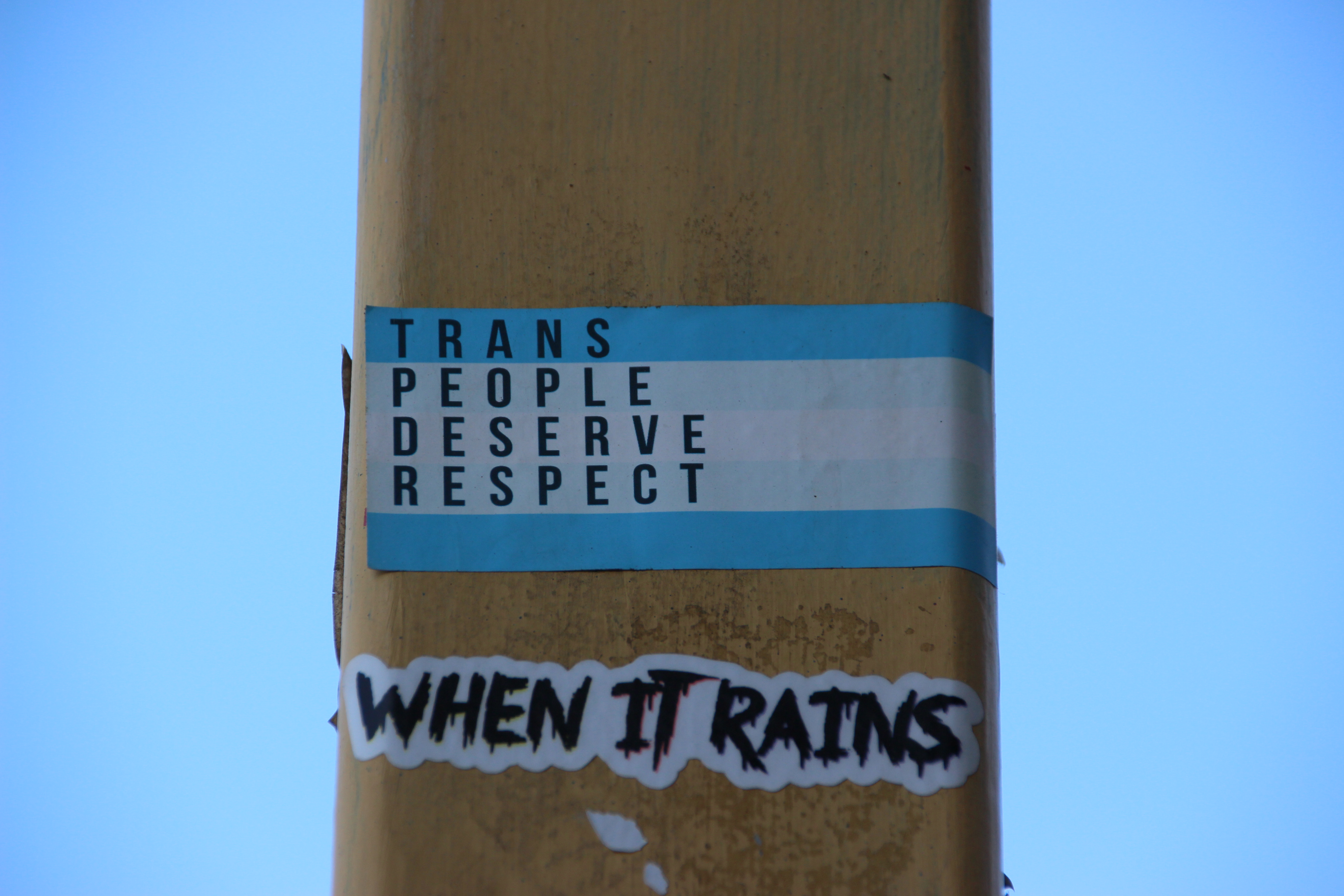
The colours on this sticker have faded, but at one point it would have been the Trans flag (Photo: Hannah Awcock).
Unfortunately, I sometimes find stickers that promote racist and far-right politics. It seems that I am not the only one who took offence at the message of this sticker however, as someone has tried to erase and obscure it (Photo: Hannah Awcock).
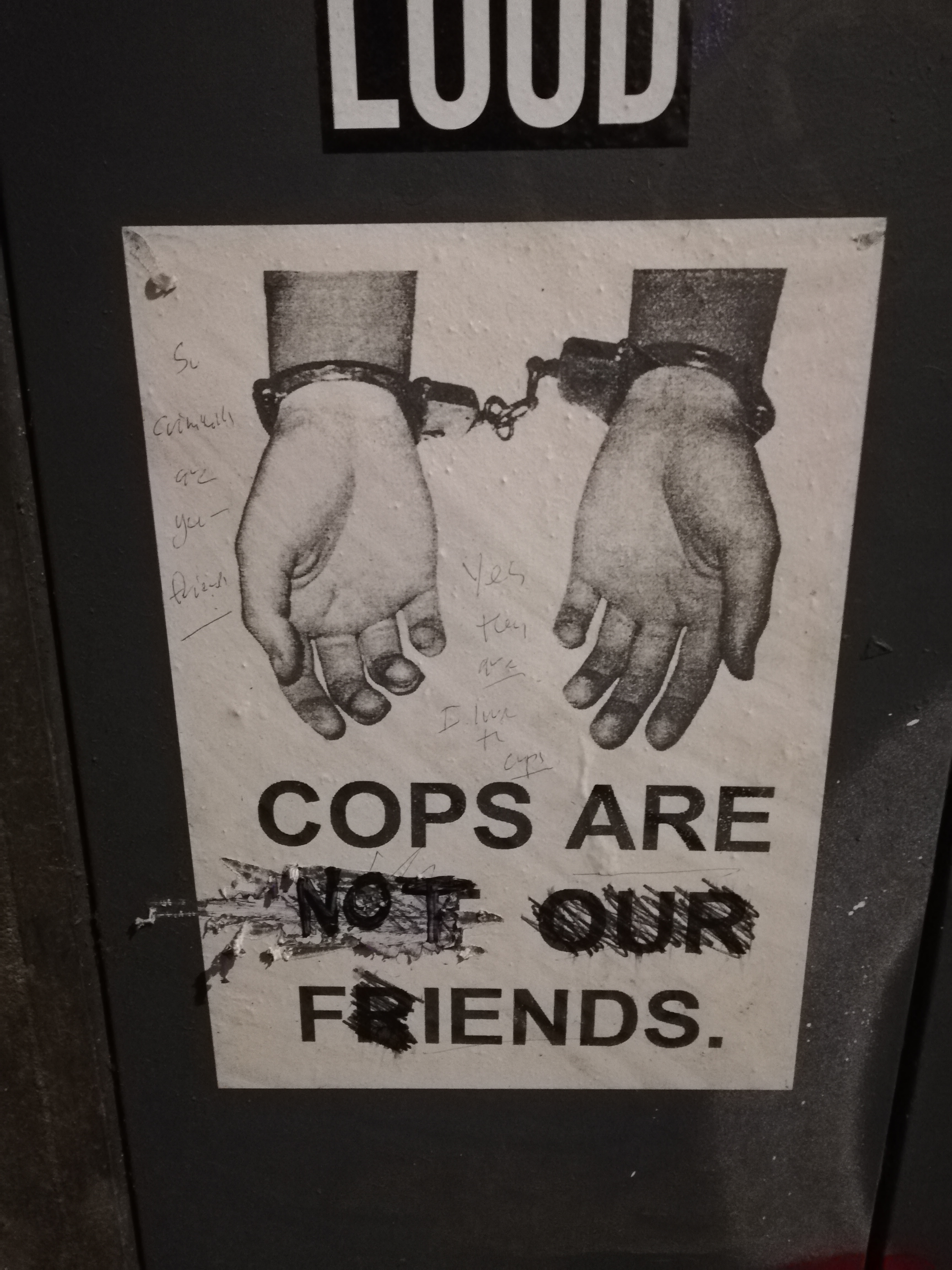
This sticker has also provoked some debate–words and letters have been removed, covered over and written again to alter its message. Police forces around the world can be controversial, with some appreciating the safety and protection they offer, whilst others think they abuse their power and discriminate against minority groups (Photo: Hannah Awcock).
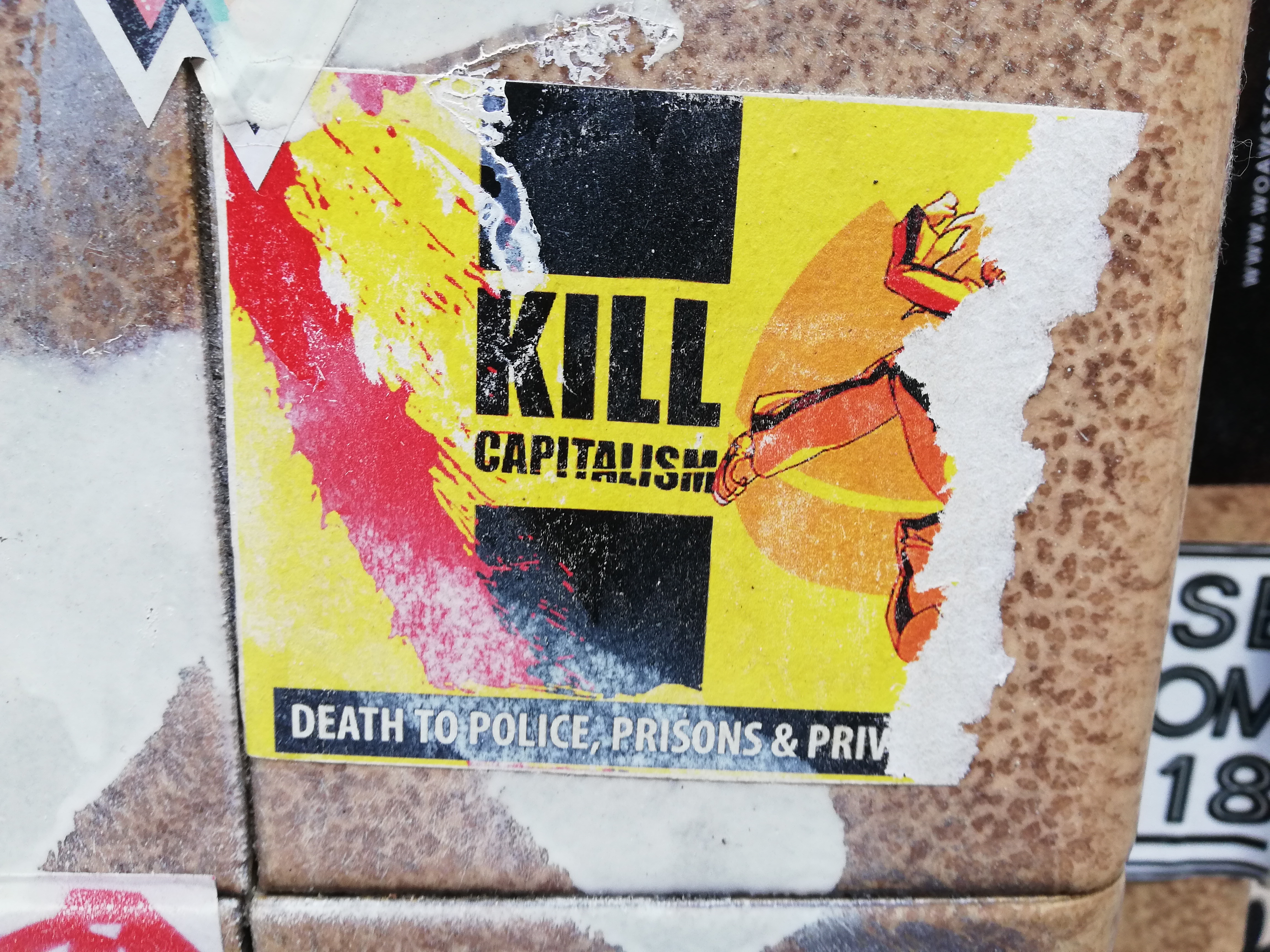
This sticker is also criticising the police, alongside prisons and more broadly capitalism. Some of it has been removed, but I can still tell from the colour scheme and blood splatter that it is playing on Kill Bill, the popular 2003 Quentin Tarantino film (Photo: Hannah Awcock).
This sticker is also criticising capitalism, arguing that workers deserve to keep everything (including wealth) that they generate. I don’t recognise the character in the middle of the sticker
I’m not sure I’ve ever seen a more comprehensive protest sticker! (Photo: Hannah Awcock).
Shaun Jeffery. The Village in Revolt: The Story of the Longest Strike in History. Higdon Press, 2018. RRP £14.99 paperback.
I recently went to Tolpuddle in Dorset, to find out more about the famous Tolpuddle Martyrs. In the gift shop of the Tolpuddle Martyrs Museum, there were a number of books about the martyrs, but also about other examples of rural strikes and trade unionism. The Village In Revolt: The Story of the Longest Strike in History appealed to me largely because I had never heard of the Burston School Strike before. My research is focused on urban protest, so I thought it would be interesting to find out more about an example of rural dissent.
The Village in Revolt tells the story of the Burston School Strike. Tom and Annie Higdon were well-loved teachers in the rural village of Burston in Norfolk. On 1st April 1914, the Higdons were fired based on a series of exaggerated and unfounded accusations. The Higdons were socialists, and since they had arrived in Burston in 1911, they had been in an escalating conflict with the village elites, particularly the rector, the Reverend Charles Tucker Eland. The Higdons were good teachers, and the school children and their families decided to support them. 66 out of 72 children went on strike, refusing to attend the village school unless the Higdons were reinstated. An alternative school was established on the village green, which would last until 1939. The strikers received support from around the country, and by 1917 had raised enough to build a Strike School, which still stands to this day.
Shaun Jeffery tells the story of the Burston School Strike with creativity and sympathy. Whilst obviously admiring of the Higdons and the strikers, Jeffery doesn’t shy away from their flaws, admitting that Tom Higdon could be quite a difficult man to get along with. The Village in Revolt is obviously the result of significant historical research; as well as the strike itself, the book also provides detailed discussion of the Higdons’ and Reverend Eland’s origins, and the history of rural trade unionism. The connection between a school strike and the unions of agricultural workers may not be immediately obvious, but Tom Higdon was a dedicated trade unionist, and the atmosphere that union activities created helped to give the striking students and their families the confidence to stand up to local elites.
My main criticism of The Village in Revolt is that the balance between context and the discussion of the strike itself feels off. Jeffery spends so much time discussing the background to the strike and the biographies of the people involved, that the section about the strike feels short by comparison. I understand that context is important, but it not more important than the story itself. As a result of this imbalance, the ending of the book feels quite abrupt.
If you are interested in the history of Norfolk, British education, or rural protest, then I think you will find something of interest in The Village in Revolt. It certainly is an inspiring story, and Burston is now on my list of places to visit!






 Turbulent Isles