Turbulent Prestonians: Edith Rigby, 1872-1948

Regular readers of this blog will know that I usually write about Turbulent Londoners, women who participated in some form of protest or dissent in London. However, I have recently moved to Preston in Lancashire, so I have decided to celebrate the turbulent history of my new city. As I was learning about Preston I came across Edith Rigby, a social reformer and suffragette, whose activism rivalled any of the London suffrage campaigners.
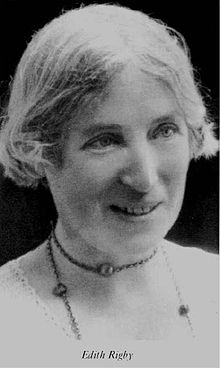

Edith_Rigby_(1872–1948)
Edith Rigby, 1872-1948 (Photo: Wikipedia)

Edith Rayner was born on the 18th of October 1872, one of seven children of a doctor. Although her family was quite well off, they lived in a working-class area, and Edith came to sympathise strongly with the poor and disadvantaged. She questioned the sharp divisions between Preston’s social classes, and devoted much of her life to improving the lives of working-class women, as well as fighting for women’s rights more generally.

It is though that Edith was the first woman to ride a bike in Preston, in the late 1880s. She was pelted with vegetables and eggs as she cycled around the town, but that did not put her off. In September 1893, at the age of 21, Edith married Dr. Charles Rigby. The couple moved into the elegant Winckley Square, which contained the kind of large, expensive homes that had led Edith to question the inequality between rich and poor in her early life. It seems likely that Charles was supportive of Edith and her beliefs–throughout her married life she was known as Mrs. Edith Rigby, rather than the customary Mrs. Charles Rigby. The couple adopted a two-year-old boy named Arthur in 1905, and by all accounts had a happy marriage.

In 1899, Edith founded St Peter’s School, which allowed working class women to continue their education after the age of 11. She was also critical of how Preston’s wealthy treated their servants. The Rigbys did employ servants, but they treated them well; for example, they were allowed to eat in the dining room and they did not have to wear uniforms. As the bicycle story might suggest, Edith was not afraid of causing a little scandal; she wore unconventional, practical clothing, and caused a stir by washing the front step of her house herself.

Edith Rigby House and Plaque v2.PNG
The plaque on number 28 Winckley Square, where Edith Rigby lived with her husband (Photo: Hannah Awcock).

At the time, children started work in the local factories and mills at the age of 11 as ‘half-timers.’ Edith founded an ‘after-mill club’ for half-timer girls in Preston on Brook Street. The club was both educational and recreational , and activities included cricket, music, and trips to the swimming baths and theatre, as well as more traditional lessons such as debating. The trip to the theatre gave rise to the Brook Street Drama Society which performed An Enemy of the People by Henrik Ibsen, a play about corrupt local officials and the morality of whistle blowing.

Edith was also involved in a series of campaigns to help specific groups of female workers. For example, the women of the Woods Tobacco Factory suffered from illnesses caused by nicotine poisoning and poor ventilation in the factory. When they were forced to work an extra hour per day for the same wages, Edith stepped in. She persuaded Woods’ best customer, the Co-Operative Wholesale Company, to boycott Woods until working conditions improved. In 1906, she formed a Preston branch of the Women’s Labour League, a union for female workers.

In 1907, Edith founded a Preston branch of the Women’s Social and Political Union (WSPU), the organisation founded by Emmeline Pankhurst to campaign for women’s suffrage in 1903. Edith was an active recruiter, encouraging members of the local Labour party to join the WSPU. Although soft-spoken, she was known for being incredibly persuasive. In 1908, Edith travelled to London to participate in a march on the Houses of Parliament. Along with 56 other women, Edith was arrested and sentenced to a month in prison. This was the first of seven prison sentences Edith would endure for the cause of women’s suffrage. She embarked on a hunger strike, and was subjected to force-feeding.

The following year, Winston Churchill, at this point President of the Board of Trade, visited Preston. Edith was arrested at a meeting at which Churchill spoke. After her release, she followed Churchill to Liverpool, where she smashed a window at a police station. For this, she was sentenced to two weeks imprisonment. In 1913, she threw black pudding at the local MP at a meeting in the Manchester Free Trade Hall. She chose black pudding because it was more demeaning than other foodstuffs usually used in such a protest, like milk or eggs.

Edith employed militant tactics to get her point across, even by the standards of the WSPU. On the 5th of July 1913, she planted a bomb in the Liverpool Cotton Exchange. No one was hurt, and the damage was minimal. Edith had planned it this way, because she wanted people to understand how angry the suffragettes were, and how much harm they could do if they wanted to. Edith turned herself in, and was sentenced to 9 months in prison. She also claimed responsibility for setting fire to Lord Levelhulme’s bungalow on the West Pennine moors just two days later, on the 7th July 1913. The fire destroyed valuable paintings and caused around £20000 worth of damage.

With the outbreak of World War One, the WSPU ceased campaigning and threw themselves behind the war effort. Edith disagreed with this decision, and joined the breakaway group the Independent Women’s Social and Political Union (IWSPU), setting up a branch in Preston. Although not opposed to the war like some groups such as the Women’s Freedom League and the East London Federation of Suffragettes, the IWSPU continued to campaign for the vote until it dissolved in 1918.

During the war, Edith bought a cottage outside Preston called Marigold Cottage, which she used to produce food for the war effort. Charles retired and lived with Edith at the cottage. Charles died in 1925, and Edith moved to North Wales the following year. During her later life, Edith became interested in the work of Rudolf Steiner, eventually forming her own Anthroposophical Circle. She died in 1950 near Llandudno, Wales.

Edith Rigby was a formidable woman, fiercely committed to her principles. She dedicated her life to fighting for women’s rights, particularly those of working class women, who were so frequently exploited in the factories of Lancashire. She was willing to take drastic action, and whilst I do not necessarily agree with her methods, I certainly admire her courage.

Sources and Further Reading

Caslin, Sam. “Why did Suffragette Edith Rigby Plant a Bomb at the Cotton Exchange in Liverpool?” University of Liverpool. Last modified 6th February 2018, accessed 20th March 2018. Available at  https://www.liverpool.ac.uk/history/blog/2018/suffragette-edith-rigby/

Machel, Hilary. “‘Of Course, she was Years Ahead of her Time’: Preston Suffragette Edith Rigby.” Friends of the Harris. Last modified 25th June 2014, accessed 1st March 2018. Available at http://friendsoftheharris.tumblr.com/post/89842164634/of-course-she-was-years-ahead-of-her-time 

Wikipedia. “Edith Rigby.” Last modified 18th February 2018, accessed 1st March 2018. Available at  https://en.wikipedia.org/wiki/Edith_Rigby

Wikipedia. “Independent Women’s Social and Political Union.” Last modified 3rd December 2017, accessed 1st March 2018. Available at https://en.wikipedia.org/wiki/Independent_Women%27s_Social_and_Political_Union

Turbulent Londoners: Emmeline Pethick-Lawrence, 1867-1954

Turbulent Londoners is a series of posts about radical individuals in London’s history who contributed to the city’s contentious past, with a particular focus of women, whose contribution to history is often overlooked. My definition of ‘Londoner’ is quite loose, anyone who has played a role in protest in the city can be included. Any suggestions for future Turbulent Londoners posts are very welcome. To celebrate the centenary of the Representation of the People Act, all of the Turbulent Londoners featured in 2018 will have been involved in the campaign for women’s suffrage. First up is Emmeline Pethick-Lawrence, one of the key members of the Women’s Social and Political Union until 1913.


Emmeline Pethick-Lawrence by Bassano Ltd. Whole-plate glass negative, 28 October 1910. NPG x28361 (Source: National Picture Gallery).

Most of you probably know this already, but 2018 marks the centenary of the Representation of the People Act, which granted some British women the right to vote. There are a huge number of events, exhibitions and book publications happening this year to commemorate the event, but I wanted to play my own small part in marking the event on Turbulent London. As such, all Turbulent Londoners featured this year will have played some role in the campaign for women’s suffrage. First up is Emmeline Peckith-Lawrence, one of the key members of the Women’s Social and Political Union (WSPU) between 1906 and 1913.

Emmeline Peckith was born in Bristol on the 21st of October 1867 to a wealthy Methodist family. One of 13 children, Emmeline was sent to boarding school at the age of 8. Reluctant to conform from an early age, she was often in trouble at school, and the teachers thought she was a bad influence on other children. In 1891 Emmeline moved to London to work with some of the city’s poorest inhabitants as a voluntary social worker. She worked at the Sisterhood of the West London Mission, where she helped to run the girl’s club. It was here that Emmeline became a socialist.

Growing frustrated with the constraints of the Mission, in 1895 Emmeline left to co-found the Esperance Club, a girl’s club which experimented with dance and drama. She also started the Maison Esperance, a dress-making co-operative with a minimum wage, an 8 hour day and a holiday scheme. She wanted to give the young women she worked with a practical example of socialism. In 1899 Emmeline met, and fell for, the wealthy lawyer Frederick Lawrence, but she refused to marry him unless he shared her socialist ideals. By 1901, he had come around to her way of thinking. The equality of their marriage was unheard of in polite society–they chose to double-barrel their surnames and kept separate bank accounts to retain their independence.

In 1906, Emmeline joined the WSPU. She must have thrown herself into the movement wholeheartedly; in October of that year she was arrested and imprisoned with other prominent suffragists such as Annie Kenney, Dora Montefiore, and Adela and Sylvia Pankhurst after a ‘riot’ in the House of Commons lobby. Emmeline would go to prison six times for her political beliefs. Frederick publicly declared that he would donate £10 to the suffrage movement for each day that his wife remained in prison. It was the start of a close relationship between the Pethick-Lawrence’s and the WSPU’s finances–Emmeline became the group’s Treasurer, and raised £134000 over 6 years. The couple also donated large amounts of their own money. Also in 1906, the Pankhursts moved the headquarters of the WSPU from Manchester to London. The Peckith-Lawrences offered their own home as the location for the new offices. They also opened their home to activists recovering from prison sentences. The couple masterminded, edited, and funded the journal Votes for Women from 1907.

Emmeline Pethick-Lawrence; Dame Christabel Pankhurst by Unknown photographer. Postcard print, 21 June 1908. NPG x45194 (Source: National Picture Gallery).

As the years passed the WSPU turned to increasingly violent tactics. In 1912, Emmeline and Christabel Pankhurst endorsed a campaign of window smashing. Emmeline Peckith-Lawrence did not support these violent methods, but remained loyal to the WSPU. In March, she was arrested along with her husband and imprisoned for conspiracy, despite not participating in the window smashing. Christabel Pankhurst escaped to France, but the Peckith-Lawrences spent 9 months in prison, including being force-fed. They were also successfully sued for the costs of the window smashing campaign, which left them close to bankruptcy. After the Pethick-Lawrence’s release, the Pankhursts announced plans for the WSPU to begin a campaign of arson. For Emmeline and Frederick this was too far, and they spoke out against the increasingly violent actions and rhetoric of the WSPU. Emmeline and Christabel Pankhurst hated dissent within the WSPU, and despite all the Pethick-Lawrences had done for the group, they were expelled.

For Emmeline Pethick-Lawrence, the expulsion was a personal as well as a political betrayal. It did not halt or even slow her activism however. She joined the Women’s Freedom League, which had formed after another group of campaigners left the WSPU in 1907 (Charlotte Despard was the group’s first President). She also joined the United Suffragists, which was formed in 1914 by former WSPU members. Unlike the WSPU, they admitted men and non-violent suffragists, and continued to campaign throughout World War One. The United Suffragists adopted Votes for Women as their official paper.

During the war, Emmeline was a member of the Women’s International League for Peace. She saw the conflict as the ultimate demonstration of men’s unsuitability to being responsible for humanity. At the beginning of the war, Emmeline was invited to America to promote the cause of women’s suffrage. She went, hoping she could also persuade Americans to support peace negotiations. Because she was travelling from the US and not Britain, Emmeline was one of only 3 British women who were able to attend the Women’s Peace Congress at the Hague in 1915. At the end of the war, she argued that  a fair peace settlement was the only way to prevent further conflict. She lived long enough to see herself proved right.

EPL at Women's Peace Congress
Emmeline Pethick-Lawrence travelled to the 1915 Women’s Peace Congress with the American delegation–she is on the far left of this picture (Source: Bain News Service/United States Library of Congress)

When women finally won the right to vote in 1918, Emmeline stood as the Labour candidate for Manchester-Rusholme, with policies such as nationalisation and equal pay. Pacifists were incredibly unpopular at the time however, and she came last, winning a sixth of the vote. During the 1920s and 30s she worked for the Women’s International League, which campaigned for World Peace. Between 1925 and 1935, she was President of the Women’s Freedom League. She was also involved in Marie Stopes’ campaign to provide information on birth control to working class women. Emmeline continued campaigning until she had a serious accident in 1950. Frederick looked after her until her death on the 11th of March 1954.

At the time, Emmeline Pethick-Lawrence was one of the most well-known campaigners for women’s suffrage. Nowadays, she is largely unknown, which I think is a real shame. Born into privilege, she used her advantages to help others, and to fight for what she believed in. Her political activism spanned six decades and huge social and political change. As I’m sure will become clear as 2018 progresses there were many brave and remarkable women involved in the campaign for women’s suffrage. Emmeline Pethick-Lawrence is just one of many who deserves our admiration and respect.

Sources and Further Reading

Hawksley, Lucinda. March, Women, March: Voices from the Women’s Movement from the First Feminist to the Suffragettes. London: Andre Deutsch, 2013.

Simkin, John. “Emmeline Pethick-Lawrence.” Spartacus Educational. Last modified September 2015, accessed 17 January 2018. Available at  http://spartacus-educational.com/Wpethick.htm 

The Men Who Said No. “Emmeline Pethick-Lawrence.” No date, accessed 17 January 2018. Available at  http://menwhosaidno.org/context/women/pethicklawrence_e.html

Wikipedia. “Emmeline Pethick-Lawrence, Baroness Pethick-Lawrence.” Last modified 28 December 2017, accessed 17 January 2018. Available at  https://en.wikipedia.org/wiki/Emmeline_Pethick-Lawrence,_Baroness_Pethick-Lawrence

Book Review: Sophia- Princess, Suffragette, Revolutionary

Sophia front cover
Sophia: Princess, Suffragette, Revolutionary by Anita Anand.

Anita Anand. Sophia: Princess, Suffragette, Revolutionary. London: Bloomsbury, 2015. Paperback £9.99.

If you asked the average person to name individual suffragettes, they would probably say Emmeline or Christabel Pankhurst, or perhaps Emily Davison. There were, however, many individual women who contributed to the campaign for female suffrage, including Sylvia Pankhurst, Daisy Parsons, Clementina Black, and Charlotte DespardSophia: Princess, Suffragette, Revolutionary tells the story of Princess Sophia Duleep Singh, one of these lesser known, but just as fascinating, women who devoted herself to the fight.

Granddaughter of Ranjit Singh, the Maharaj of the Punjab, Princess Sophia and her siblings occupied a unique position in British society. Her father, originally beloved by Queen Victoria, had turned against the British empire which had taken his birthright. Her family relied on the British government for everything, but their status as Indian royalty gave them a degree of protection that meant they could still be troublesome. Sophia did not resent the British government like her father and some of her siblings, but she did care deeply for the people of India, which she visited several times. There was little she could do for the burgeoning independence movement from so far away, however, and women’s suffrage became the cause to which she devoted her energies.

Sophia is a well-written, thoroughly researched, and detailed biography. Anita Anand has included a wealth of rich details that makes you feel like you really know Sophia, that you understand her motivations. Personally, I welcome anything that helps to extend popular awareness of the suffragettes beyond Emmeline Pankhurst and her most famous daughter, and I also appreciate the way Sophia puts the suffragettes in the context of contemporary non-British social movements, particularly the early campaign for Indian independence. They are mostly seen as a stand-alone phenomena, but the campaign for women’s suffrage took place in the context of a whole range of other social justice movements.

Whilst I understand the necessity of context, there are times where it feels like the book goes into too much contextual detail. Sophia isn’t even born until page 44, and the narrative sometimes veers away from Sophia to dwell on other people and events. It feels a little like padding, which seems unnecessary considering how much source material Anand was able to find about Sophia herself.

Sophia is an enjoyable read, and Anita Anand deserves the praise she has received for it. I would recommend it to anyone interested in women’s history, colonialism, or the women’s suffrage movement.

Turbulent Londoners: Minnie Baldock, c.1864-1954

Turbulent Londoners is a series of posts about radical individuals in London’s history who contributed to the city’s contentious past, with a particular focus on women, whose contribution to history is often overlooked. My definition of ‘Londoner’ is quite loose, anyone who has played a role in protest in the city can be included. Any suggestions for future Turbulent Londoners posts are very welcome. My next Turbulent Londoner Minnie Baldock, an early member of the WSPU who helped establish the organisation in East London


Minnie Baldock 1909: Photograph by Colonel L. Blathwayt (Source: Wikipedia, image in the public domain). 

Minnie Baldock was an early member of the Women’s Social and Political Union (WSPU), who helped the organisation establish a presence in London, particularly amongst the working class women of the East End. Born in the East End in about 1864, she worked in a shirt factory as a young woman, and had two sons after her marriage to Harry Baldock.

Female suffrage was not the cause which brought out Minnie’s radicalism; she was a member of the Independent Labour Party, and in 1903 held a public meeting to complain about women’s low wages with her MP, Keir Hardie. As a member of the WSPU, however, Minnie flourished as an activist.

Minnie joined the WSPU early on, before it moved to London, and was soon involved in many of its activities in the capital. In December 1905 she was ejected from not one but two public meetings for heckling Herbert Asquith and Henry Campbell Bannerman, leader of the Liberal Party. In January 1906, Minnie established the first London branch of the WSPU in Canning Town, in an attempt to recruit working class women. Several other branches soon followed in the East End. Minnie was at the heart of networks of radical women in London; she helped Annie Kenney make connections when she first moved to London, she knew Sylvia Pankhurst and Charlotte Despard, and was a mentor to Daisy Parsons.

Also in 1906, Minnie became a full-time organiser for the WSPU. For the next few years she toured the country, promoting the cause of female suffrage. In October that year she was arrested at the opening of Parliament. She was arrested again outside Parliament in February 1908, and this time spent a month in Holloway Prison. She was worried about leaving her two sons alone with her husband, which illustrates the tension many female activists feel between their activism and their caring responsibilities.

Minnie worked for the WSPU until 1911, when she became seriously ill with cancer. She did not return to the WSPU after she recovered, although she remained a member of the Church League for Women’s Suffrage, which united all kinds of suffragists who were also religious. This suggests that she had become disillusioned by the WSPU’s methods rather than their main objective; they became increasingly violent, authoritarian, and dismissive of the concerns of working class women in the years before the First World War. Minnie moved to Southampton with her family in 1913, and was living in Poole when she died in 1954.

The WSPU was much more than the Pankhurst family; women like Minnie Baldock were essential to the successful running of the organisation. Minnie helped the WSPU establish a presence in London, and went on to campaign tirelessly for them around the country. Her name may not have survived the lottery of history, but the impact of her actions still resonates.

Sources and Further Reading

Brooker, Janice. “Suffragette.” Lost in London. Last modified 1st May 2007, accessed 11th October 2016. Available at http://www.brooker.talktalk.net/suffragette.htm

Simkin, John. “Minnie Baldock.” Spartacus Educational. Last modified January 2015, accessed 12th October 2016. Available at http://spartacus-educational.com/WbaldockM.htm

Walker, John. “Forest Gate’s Proud Suffragette Legacy.”E7 Now and Then. Last modified 6th March 2015, accessed 14th October 2016. Available at http://www.e7-nowandthen.org/2015/03/forest-gates-proud-suffragette-legacy.html

Turbulent Londoners: Daisy Parsons, 1890-1957

Turbulent Londoners is a series of posts about radical individuals in London’s history who contributed to the city’s contentious past, with a particular focus of women, whose contribution to history is often overlooked. My definition of ‘Londoner’ is quite loose, anyone who has played a role in protest in the city can be included. Any suggestions for future Turbulent Londoners posts are very welcome. My next Turbulent Londoner is Daisy Parsons, a Suffragette and the first female Mayor of West Ham.


Daisy Parsons- Beckton Lido
Daisy Parsons at the opening of the Beckton Lido in August 1927 (Source: © Newham Heritage Service).

Daisy Parsons was a formidable woman. Despite leaving school at the age of 12 to help support her family she became a force to be reckoned with in East End politics, working closely with Sylvia Pankhurst in the East London Federation of Suffragettes (ELFS), then going on to become the first female Mayor of West Ham.

Born Marguerite Lena Millo on the 25th of May 1890, Daisy must have had a difficult childhood. She was born in Poplar in East London, her family moving to nearby Canning Town when Daisy was 8 months old. She had 5 younger brothers, and because her father was an invalid, her mother had to take on washing and charring work. Daisy was given a certificate of exemption in 1902 so that she could leave Beckton Road School early to look after her brothers, a necessity she always regretted. When she was 14 she left home to work as a maid, but later became a cigarette packer at the Carreras Tobacco Company in Aldgate, because the pay was better. Women and girls were paid 3d for every 1000 cigarettes they packed (most managed about 3000 a day).

It was whilst working at the tobacco company that Daisy had her first contact with the trade union movement; male employees at the factory had a fixed lunch hour and a space to eat because their union had fought for them. Female employees had to eat in the toilets! Daisy’s husband Tom was a driver for Stepney Borough Council and an active union member. They married in December 1908 when Daisy was 18.

Daisy obviously had a keen interest in politics in her own right- she joined the Women’s Social and Political Union and the International Labour Party, and was one of the founding members and the secretary of the ELFS. She was remembered as being assertive and persuasive. She was clearly not one to shy away from action- at Suffragette demonstrations she carried a ‘Saturday Nights’ (a length of hemp rope tied at one end, a sort of improvised cosh) hidden up her sleeve in case she needed to defend herself.

Daisy took part in a deputation of working women to Prime Minister Asquith on the 12th of June 1914, trying to persuade him of the necessity of female suffrage. By this point she had 2 daughters, and was also looking after her niece. Daisy stuck with Sylvia Pankhurst after the split with her mother and sister, and ELFS worked tirelessly during the first world war, setting up a Mother and Child Welfare Centre in West Ham to help women who were struggling whilst their husbands were away, or had been killed.

When women over 30 were given the right to vote in 1918 Daisy still couldn’t vote because she was only 29! This did not deter her from moving into mainstream local politics however, and she was elected as a Labour Councillor for Beckton ward in 1922. She became deputy Mayor of West Ham in 1931, and Mayor in 1936. She also became a Justice of the Peace in 1933, and an Alderman of West Ham in 1935. During World War 2 Daisy organised the evacuation of local children and helped to organise the Women’s Voluntary Service. Her efforts did not spare her from tragedy however; her brother and niece were killed in the Blitz.

Daisy Parsons was obviously respected and admired. She was awarded the Freedom of West Ham in 1939, the highest honour which the borough can bestow, and was made an MBE in 1951 in recognition of her public service. She had gone from radical Suffragette to respected local official, but I get the impression she retained her determined and caring nature.

Sources and Further Reading

Anon. ‘Daisy Parsons, MBE.’ The Newham Story. No date, accessed 21st March 2016.  http://newhamstory.com/node/991

Brooker, Janice. ‘Daisy Parsons.’ Lost in London. Last modified 1st May 2007, accessed 21st March 2016. http://www.brooker.talktalk.net/daisy_parsons.htm

McCarthy, Ka. ‘Daisy Parsons.’ The Great British Community. Last modified 8th March 2016, accessed 21st March 2016. http://greatbritishcommunity.org/daisy-parsons/

Discovering Brighton’s Suffragettes

Last Friday, I went on a walking tour in Brighton about the city’s suffragettes. Organised by Dr. Louise Fitzgerald of the University of Brighton, the tour was given by Karen Antoni, a historian and actress. I have written about protest in my home town before, but I still have a lot to learn, so I was keen to go along and find out more. The event was organised to coincide with the release of the film Suffragette (which I still haven’t seen- I want to see it with my Mum, who is hard of hearing, and subtitled film showings are in woefully short supply!) and The Time is Now Campaign, a series of events focused around film exploring the role women play in affecting change.

Historian and actress Karen Antoni led a wonderful walking tour about Brighton's suffragettes (Photo: Hannah Awcock)
Historian and actress Karen Antoni led a wonderful walking tour about Brighton’s suffragettes (Photo: Hannah Awcock)

With Brighton’s reputation as a cosmpolitan and contentious city, it is no surprise that Brightonians were no strangers to the campaign for women’s suffrage. The Women’s Social and Political Union (WSPU) set up a local branch in 1907, and many of the organisation’s most well known members, such as Christabel Pankhurst, Annie Kenney, and Emily Wilding Davison, came to visit the city. The tour started in Pavilion Gardens, which is bordered by the Royal Pavilion and the Brighton Dome, both of which were used for meetings which the WSPU hosted, and tried to disrupt. We learnt the lyrics to a popular suffragette song, which adapted the well-known Mine Eyes Have Seen the Glory/The Battle Song of the Republic, and sung the song as we travelled around the city. There’s nothing quite like the feeling of singing an empowering song in the middle of the street with over 50 other people, even if we did get a few funny looks!

Glory glory hallelujah, glory glory hallelujah,

Glory, glory hallelujah,

And the cause goes marching on!

Rise up women for the fight is hard and long,

Rise in thousands singing loud a battle song,

Right is might and in its strength we shall be strong,

And the cause goes marching on!

Suffragette song, sung to the tune of Glory glory hallelujah. If the religious reference puts you off, you can always replace ‘hallelujah’ with ‘revolution’, although most of those campaigning for female suffrage would probably not have approved!

Karen Antoni outside the Brighton Dome. Two suffragettes, Eva Bourne and Mary Leigh, once tried to sneak into a meeting by hiding in the organ overnight. They were discovered because the organ was so dusty that it made them sneeze (Photo: Hannah Awcock)
Karen Antoni outside the Brighton Dome. Two suffragettes, Eva Bourne and Mary Leigh, once tried to sneak into a meeting where Henry Asquith was speaking by hiding in the organ the night before. They were discovered because the organ was so dusty that it made them sneeze (Photo: Hannah Awcock).

The next stop on the tour was the intersection of North Street and West Street/Queen’s Road (the Clock Tower). This is where the headquarters of the Brighton WSPU branch was located, above the Singer Sewing Machine Company. The building is still there, although the ground floor is taken up by more contemporary chain stores now. Just around the corner on Queen Square used to stand a church where a suffragette-themed wedding was held; the wedding vows were adapted accordingly (the wedding was still between a man and a woman, the suffragettes weren’t that radical!)

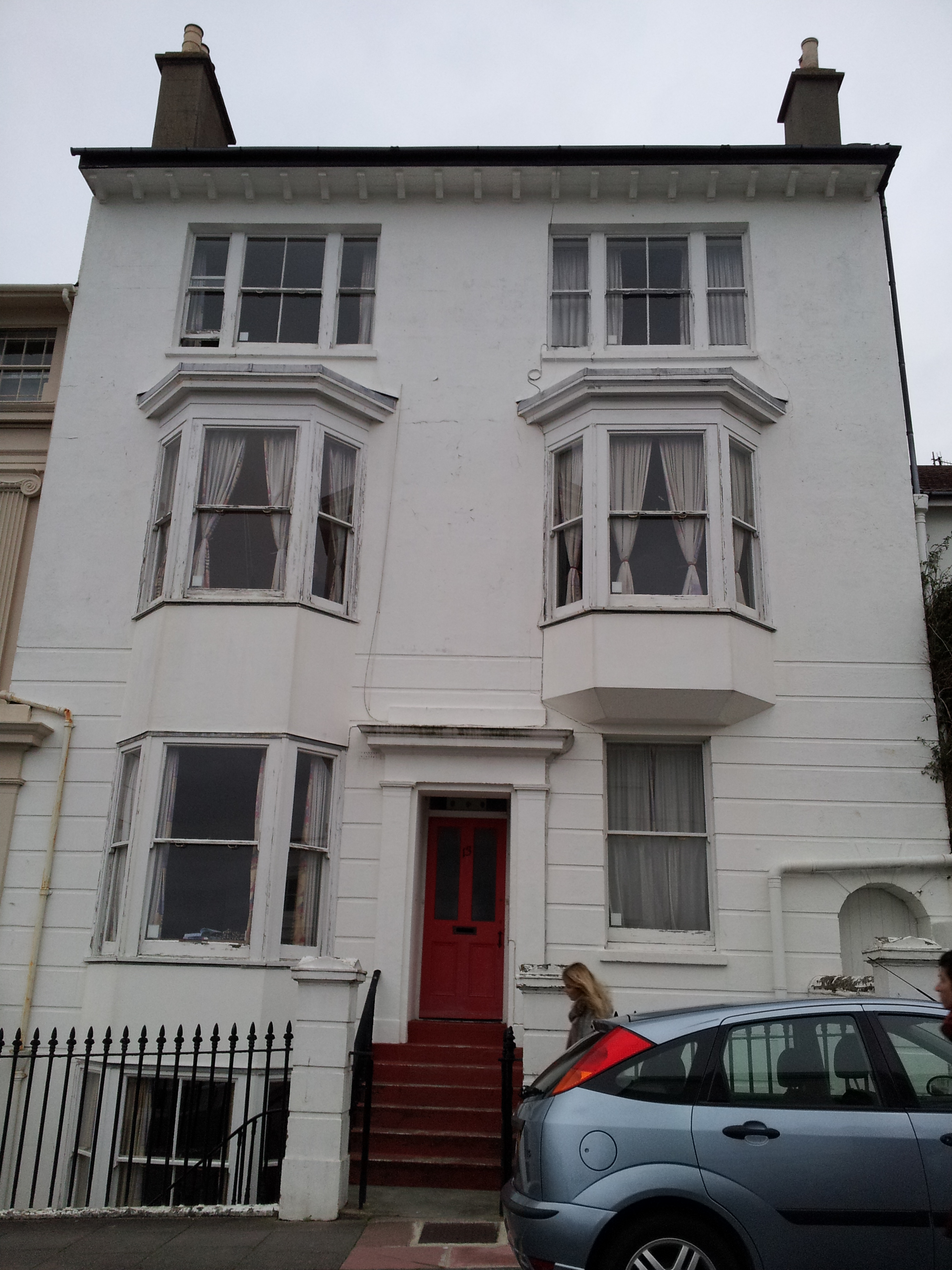
The next stop was Victoria Road, a short walk from the town centre. Number 13/14 used to be a boarding house called Sea View, run by local suffragette Minnie Turner. By 1913 Minnie’s guest house had a reputation for hosting suffragettes, and in April her windows were stoned by disgruntled locals. Minnie was arrested 3 times for her suffragette activities, and imprisoned in Holloway Prison for 3 weeks in 1911 for breaking a window at the Home Office. In July 1912 Emily Wilding Davison stayed at Sea View whilst recovering from being on hunger strike in prison. The tour finished outside Churchill Square, the city’s main shopping centre, where we had one final sing song.

Minnie Turner's House in Victoria Road, Brighton. The current resident's are aware of the their home's proud past (Photo: Hannah Awcock).
Minnie Turner’s House in Victoria Road, Brighton. The current residents are aware of the their home’s proud past (Photo: Hannah Awcock).

I have always thought that walking tours are a fantastic way of communicating and engaging with historical research, and this Brighton Suffragette walking tour is no exception. It is informed by 7 years of research- many hours spent trawling though local newspapers and the collections of the Brighton Museum. It is wonderful research, and it is so important that it is accessible to all, academic or otherwise. Walking tours are just one of the many ways to disseminate historical research, but they are a very good one.

I couldn't resist the opportunity to wear a suffragette sash (Photo: Tricia Awcock).
I couldn’t resist the opportunity to wear a suffragette sash (Photo: Tricia Awcock).

A campaign is being started to try and get some blue plaques put up around Brighton honouring the city’s suffragettes. To join the campaign or find out more, check out the Facebook group here.

Sources and Further Reading

Dyhouse, Carol. “Minnie Turner’s “Suffragette Boarding House,”” Clifton Montpelier Powis Community Alliance. Last updated ….accessed on 26/10/15. Available at http://www.cmpcaonline.org.uk/page_id__85_path__0p36p21p55p.aspx

Kisby, Anna. “Found! Suffragettes Hiding in the Brighton Dome.” Brighton Museums. Last updated 11th March 2011, accessed 26th October 2015. Available at http://brightonmuseums.org.uk/discover/2011/03/08/found-suffragettes-hiding-in-the-brighton-dome/

Simkin, John. “Minnie Turner.” Spartacus Educational. Last updated August 2014, accessed 26th October 2015. Available at: http://spartacus-educational.com/WturnerM.htm

Book Review: March, Women, March

'March, Women, March' by Lucinda Hawksley.
‘March, Women, March’ by Lucinda Hawksley.

Hawksley, Lucinda. March, Women, March. London: André Deutsch, 2013.

Lucinda Hawksley’s March, Women, March, recently released in paperback, serves as a fantastic introduction to the history of the women’s movement in the UK, introducing the reader to all the key players from Mary Wollstoncraft through to Christabel Pankhurst, including quite a few who are not so well known nowadays. The book traces the struggle for women’s rights and female suffrage from the end of the eighteenth century to the late 1920s, using extensive quotes from those directly involved to help tell the story.

Hawksley uses numerous extracts from the diaries, letters and publications from those directly involved in the events she describes, so much of the story is told in the words of those who were there and took part. Not only does this act as proof of the huge amount of research that must have gone into the book, it also gives it a personal feel; you can almost feel the determination and strength of the women emanating from the pages.

One of the great strengths of this book is the fact that it tells the whole story of the women’s movement, putting the well-known suffragettes into the context of their predecessors and contemporaries. The Women’s Social and Political Union (WSPU) and the suffragettes did not spring up out of nowhere- they were inspired by, and worked alongside, vast numbers of other women such as Caroline Norton, Clementina Black and Charlotte Despard. March, Women, March acknowledges and celebrates the whole of this history, not just the bits that have successfully made their way into the collective consciousness.

In fact, my main criticism of the book is that I would have liked more detail about the early pioneers of the women’s movement. Women such as Caroline Norton, who railed against the way that she was treated by both her husband and the law after her marriage, and campaigned tireless for the rights of married women to see their children and control their own income, are much less familiar to me than the Pankhursts, and I would have liked to hear more about them.

March, Women, March also puts the campaign for suffrage into the context of other campaigns that aimed to benefit women, such as attempts to raise awareness about sexual health and contraception, and the ‘rational dress’ movement, which sought to free women from the physical constraints of tight corsets, high heels and excess frills and bows. These campaigns made social pariahs of their champions, appalling mainstream society with their frank and radical opinions. Many of the campaigners, such as Clementina Black who worked tirelessly to improve the conditions of working women, believed that the situation would not truly improve until women were granted the vote, for why should politicians listen to them when they could not influence the outcome of elections? Everything came back to suffrage.

If you are acquainted with the events and figures of the women’s suffrage campaign after 1900, much of this book will feel familiar, although you will probably still learn something new. If you are not familiar with the activities of the WSPU and others, then this book is an ideal introduction to the topic. Either way, March, Women, March is a very enjoyable read, and I would highly recommend it.

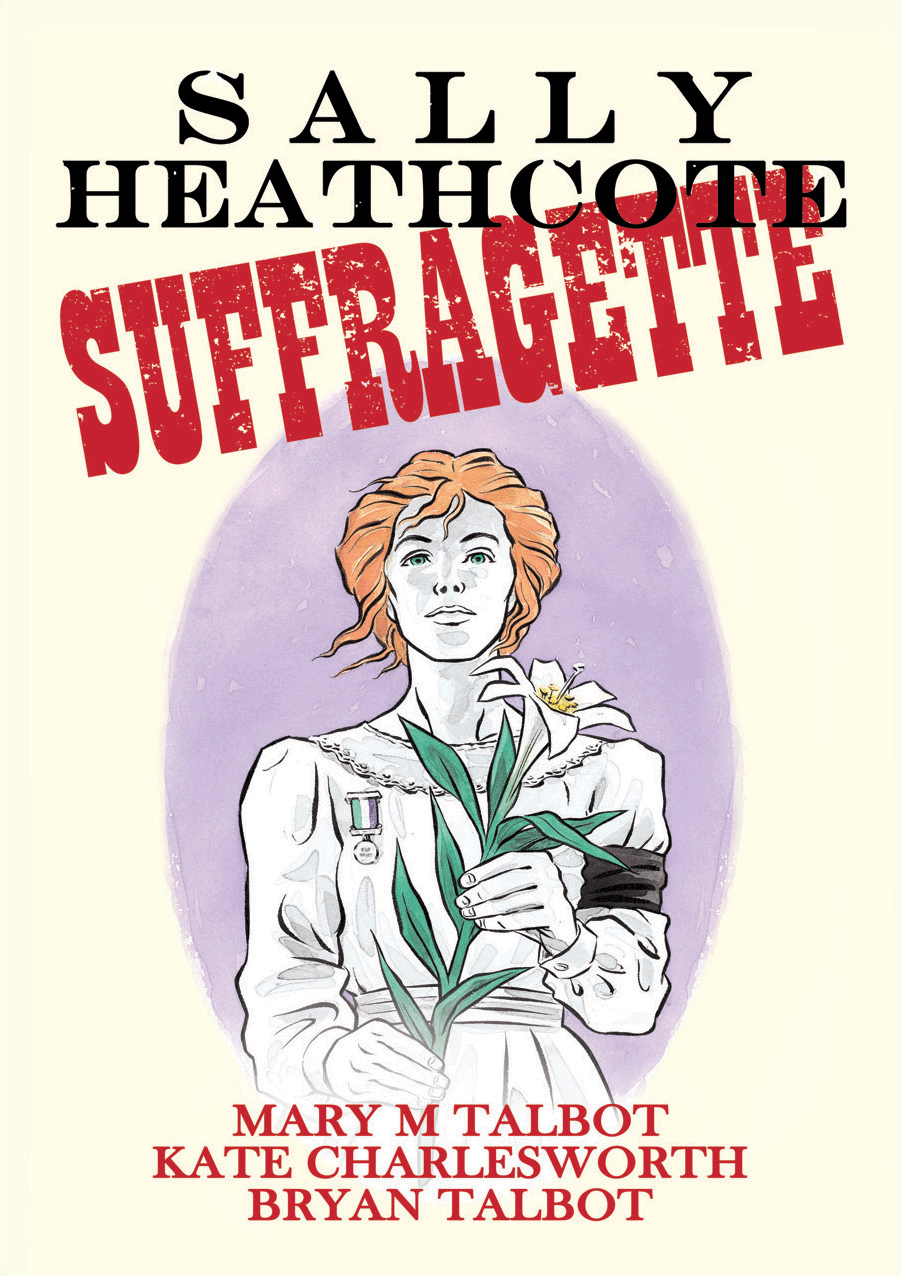
Book Review: Sally Heathcote: Suffragette

'Sally Heathcote: Suffragette' by May Talbot, Kate Charlesworth and Bryan Talbot.
‘Sally Heathcote: Suffragette’ by Mary Talbot, Kate Charlesworth and Bryan Talbot.

Talbot, Mary M, Kate Charlesworth and Bryan Talbot. Sally Heathcote: Suffragette. London: Jonathan Cape, 2014.

Sally Heathcote: Suffragette is a graphic novel that follows Sally Heathcote, a fictional young woman from Manchester who works for the Pankhurst family before they move to London. The story of the suffragettes, from the early days in Manchester through to World War One, is told through the eyes of Sally, a young working class woman who grew up in the workhouse. The book is thoughtful, historically accurate and beautifully illustrated; and a refreshing alternative to traditional depictions of the suffragettes.

Protest and graphic novels are not strangers. I recently reviewed Fight the Power  on this blog, which tells the story of many key examples of historical protest in the English-speaking world. V for Vendetta is a well-known example, with V masks becoming a common feature at marches and demonstrations across the world over the past few years. The recent Comics Unmasked exhibition at the British Library had a whole section on the connections between comics, graphic novels and dissent, which showed that comics frequently constitute protest as well as just representing them.

Sally Heathcote in a WSPU march (Source: Sally Heathcote, 2014).

In a nursing home in Hackney in 1969, an aged Sally dreams about her youth as a suffragette. After leaving the workhouse, Sally became a domestic servant for the Pankhursts. She moves to London several years after the family, and eventually gets a job working for the WSPU. All of the major features of the history of WSPU are then told through Sally’s own experience of them. She is arrested and imprisoned, where she embarks on a hunger strike and is force-fed, like many real-life suffragettes did when they were refused the right to be treated as political prisoners. She  joins the Young Hot Bloods, a secretive militant group within the WSPU, and participates in the bombing of a house belonging to Lloyd George. The divisions within the women’s suffrage movement are seen through Sally’s eyes, as is the death of Emily Wilding-Davison, who was killed by the King George V’s  Horse at the Epsom Derby in 1913.

Apart from the fictional main character, Sally Heathcote is historically accurate and incredibly well researched, with several pages at the back of the book dedicated to explaining the historical sources and contexts of particular events in the story. Also, some speeches and newspaper articles in the book are lifted directly from genuine historical documents. The story does not idealise the WSPU, depicting many of the movement’s weaknesses and divisions. Throughout the book, Sally talks with a mancunian accent, and her story illustrates the class prejudices that were present amongst the leading members of the WSPU. The splits and acrimony between the Pankhursts and many of their closest allies are also shown. As a result the book is a balanced account of history, showing that maintaining solidarity across differences is one of the most difficult challenges faced by a social movement.

Sally is imprisoned in Holloway Jail (Source: Sally Heathcote, 2014)

Sally Heathcote is not perfect however. Frequently with graphic novels I struggle to tell some of the characters apart, and I find myself failing to develop a connection with the characters, gaining little insight into their emotions and motivations. Although Sally can always be identified by her bright red hair (colour is used sparingly and to great effect within the book), I often couldn’t identify which of the other main protagonists were speaking. This difficulty may be accentuated if the reader is not familiar with the leading members of the women’s suffrage movement. In addition the reader never gets an explanation as to why Sally is so committed to the WSPU.  As the book progresses we learn she is headstrong and brave, and feels like she owes a debt to Emmeline Pankhurst for hiring her when she left the workhouse, but she never actually says why the right to vote is so important to her. I think this is a major oversight, as it is harder to identify with Sally if you don’t understand her motives.

Sally Heathcote: Suffragette is a poignant, realistic tale of struggle at the turn of the twentieth century. The Suffragettes are possibly one of the most well-known social movements in British history, so it must be a daunting prospect to try and tell their story from a fresh perspective. Sally Heathcote, with it’s unusual format and brave protagonist, does a pretty good job.

Turbulent Londoners: Charlotte Despard, 1844-1939

Turbulent Londoners is a series of posts about radical individuals in London’s history who contributed to the city’s contentious past. My definition of ‘Londoner’ is quite loose, anyone who has played a role in protest in the city can be included. Any suggestions for future Turbulent Londoners posts are very welcome. The second Londoner to be profiled is Charlotte Despard, an inspirational pacifist, feminist and socialist campaigner.


Charlotte Despard (née French)
attributed to Charles Mendelssohn Horsfall
oil on canvas
NPG 4345
© National Portrait Gallery, London

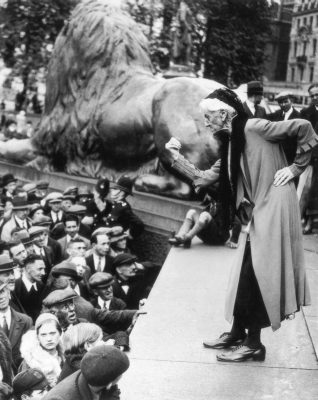
Charlotte Despard was a prominent feminist and social campaigner in the late-nineteenth and early twentieth centuries, who fought for many causes during her long life. Born into a wealthy French family in Kent in 1844, she married in 1870. She was brought up as a young Victorian lady should be, and frequently railed against her lack of a proper education. After her husband died in 1890, she became a dedicated and inspiring campaigner, although she was well known for her simple black clothing for the rest of her life.

Despard organised and funded a health clinic, a soup kitchen for the unemployed and youth and working men’s clubs in the slum called Nine Elms in Battersea, London. Not content with mere philanthropy, she actually moved into the area, living amongst those she worked so hard to help. In 1894 she became a Poor Law Guardian in Lambeth, a job at which she excelled, using her position to care for the most vulnerable ‘paupers’.

Politically, Despard was an active supporter of the Social Democratic Party and the Independent Labour Party, running in the 1918 general election as a pacifist Labour candidate for Battersea. By the time the Women’s Social and Political Union moved to London in 1906, she was a well-known progressive speaker, and an obvious choice for an ally. She became the WSPU’s honorary secretary, and was imprisoned twice in 1907 for her actions as a suffragette, at the age of 63. However, later that year the Suffragette movement split, and Despard became President of the Women’s Freedom League, which unlike the WSPU was democratically organised and advocated a campaign of passive resistance.

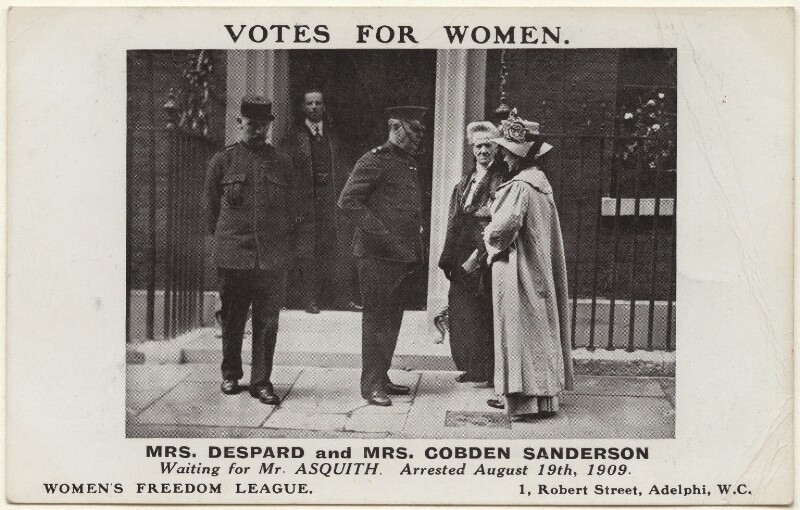
Charlotte Despard (née French); Anne Cobden-Sanderson with three unknown men
by Unknown photographer
halftone postcard print, 19 August 1909
NPG x45197
© National Portrait Gallery, London

Despard was a pacifist, opposing the Boer War and World War One, despite her brother, Sir John French, being the commander-in-chief of the British Expeditionary Force in France until 1915. The two remained close throughout the First World War, until Charlotte declared her support of Irish home rule and later independence. As the Lord Lieutenant of Ireland, Sir John French was tasked with trying to supress the very people she supported, and their previously close relationship suffered badly. In 1921 she moved to Ireland, where she continued to campaign for civil rights and the relief of poverty and distress. Despite her advanced years, she was classed as a dangerous subversive under the Irish Free State’s 1927 Public Safety Act. In 1933 her house in Dublin was attacked by an anti-communist mob.

As if all that wasn’t enough, Despard was also active in promoting a variety of other causes, including Save the Children, the Indian independence movement, theosophy, and the London Vegetarian Society. She died after a fall at the age of 95, but left behind an enduring legacy. Charlotte Despard was a confident, strong-willed, independent woman, who frequently defied convention and suffered hardship to fight for what she believed in. She is an inspiration.

Sources

History Today. http://www.historytoday.com/sites/default/files/despard1.jpg (accessed 12/11/14).

Hochschild, Adam. To End All Wars: A Story of Protest and Patriotism in the First World War. London: Pan Books, 2011.

Mulvihill, Margaret. ‘Despard, Charlotte (1844–1939)’, Oxford Dictionary of National Biography, Oxford University Press, 2004; online edn, May 2014 [http://www.oxforddnb.com/view/article/37356, accessed 12 Nov 2014.

Open University, The. ‘Charlotte Despard.’ Making Britain (no date) http://www.open.ac.uk/researchprojects/makingbritain/content/charlotte-despard (accessed 12/11/14).

Oxford Dictionary of National Biography (no date) http://www.oxforddnb.com/images/article-imgs/37/37356_1_200px.jpg (accessed 12/11/14).

Book Review: Voices From History- East London Suffragettes

'Voices from History: East London Suffragettes' by Sarah Jackson and Rosemary Taylor.
‘Voices from History: East London Suffragettes’ by Sarah Jackson and Rosemary Taylor.

Jackson, Sarah and Rosemary Taylor. Voices from History: East London Suffragettes. Stroud: The History Press, 2014.

Voices from History: East London Suffragettes marks 100 years since the formation of the East London Federation of Suffragettes (ELFS), a group led by Sylvia Pankhurst which was asked to leave the Women’s Social and Political Union after they refused to toe the party line. Not content with  campaigning for female suffrage, this inspiring group of women worked to aid and empower the local community. They started a nursery, 3 ‘cost-price’ restaurants and a co-operative toy factory, as well as campaigning for a living wage and better housing. Voices from History is a brilliant account of these achievements and others.

Voices from History is aptly named, telling the story of the ELFS with the aid of numerous first-hand accounts. One of the aims of the book is to celebrate the work of everyone involved in the Federation, even if their names have now been forgotten. The extensive quotes from multiple contemporary sources does this well, highlighting that the achievements of the Federation were down to the efforts of hundreds of individuals, not just well known leaders like Sylvia Pankhurst.

The book is very well contextualised, with female activism in the East End of London both before and after the  ELFS being detailed. I think it is often easy to view groups like the Suffragettes as isolated and unusual incidents, but in fact that is most often not the case, and the structure of the book demonstrates that well. There is a long tradition of radical activism in the East End, and the book situates the ELFS within this history. The final chapter discusses women’s activism in the East End since the suffragettes, right up to the present day. I particularly liked this way of concluding the book, as it shows that the story is not in fact over; there are many more battles to be fought against poverty and inequality in the East End.

Any criticisms that I have are minor really. In the middle of the book there are some wonderful pictures that illustrate the story brilliantly, but I would prefer it if they were interspersed throughout the book, so that you don’t have to keep skipping back and forth to the relevant images. Also, I would have liked more information about the archives and sources used during the research for the book. Even just a few sentences about how and where the research was conducted would have been much appreciated.

Voices from History is a thoroughly enjoyable read about a fascinating period of radicalism in the history of the East End of London. I attended the launch of the book as part of the East London Suffragette Festival in August this year and it was clear that the project was a labour of love for the two authors. Their admiration of the East London Suffragettes, and their determination that the ELFS get the recognition it deserves, shines through the pages of the book. The reader can’t help but feel the same.