The March for Homes

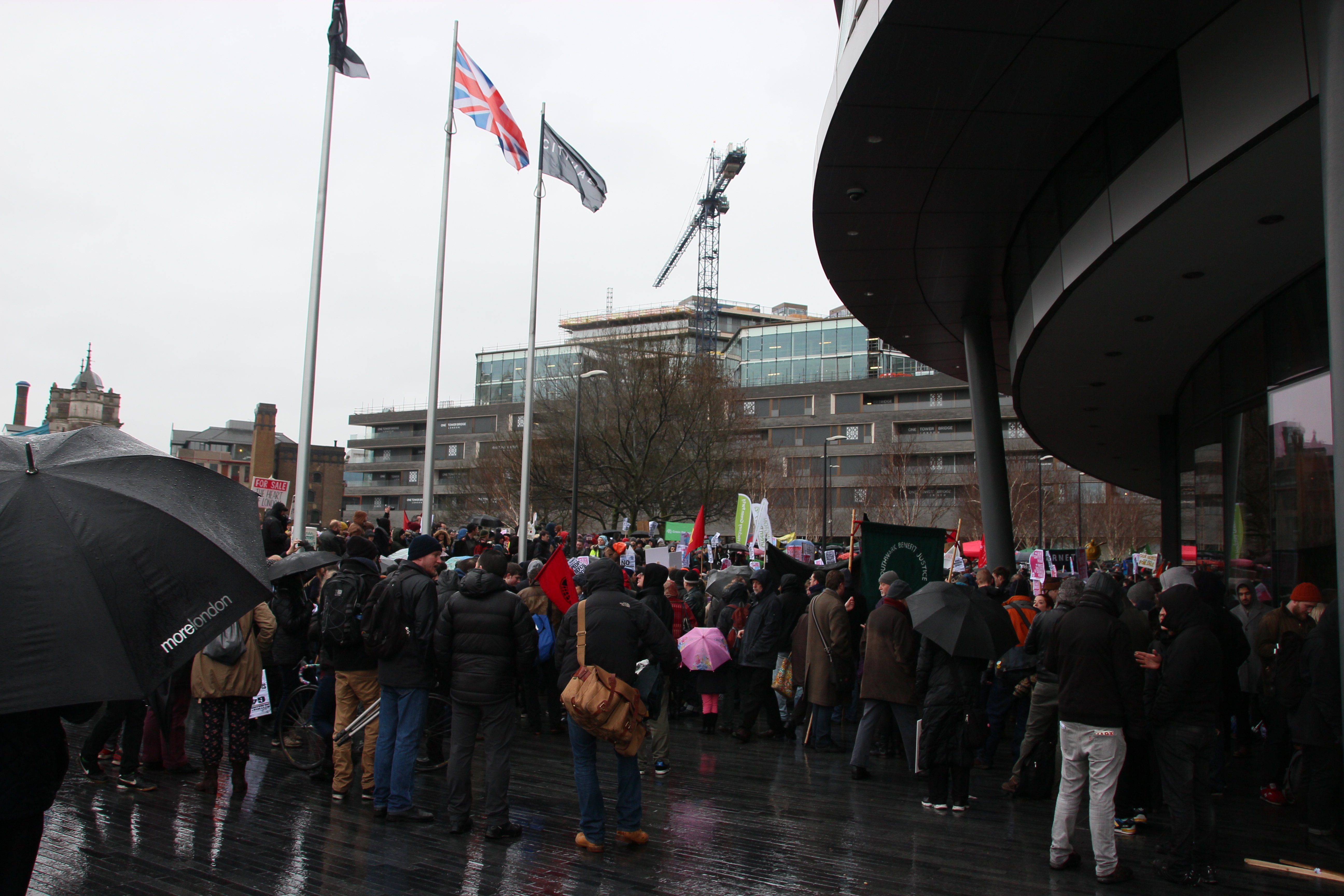
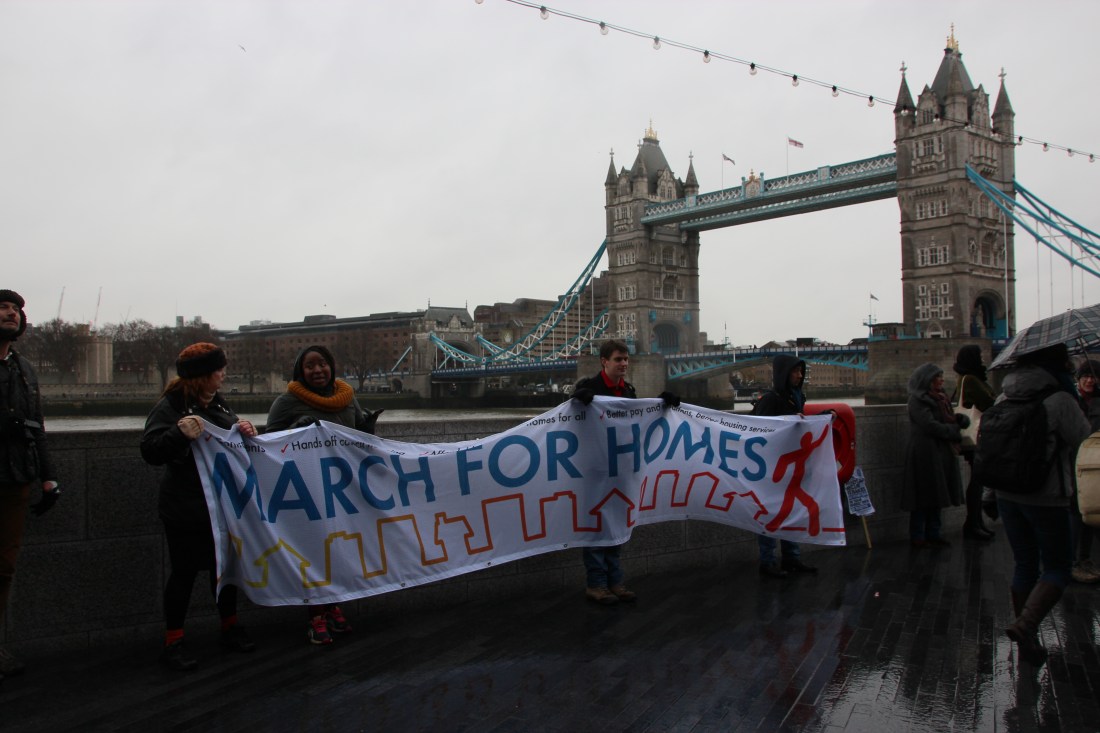
The March for Homes finished with a rally at City Hall.
The March for Homes finished with a rally at City Hall (Photo: Hannah Awcock).

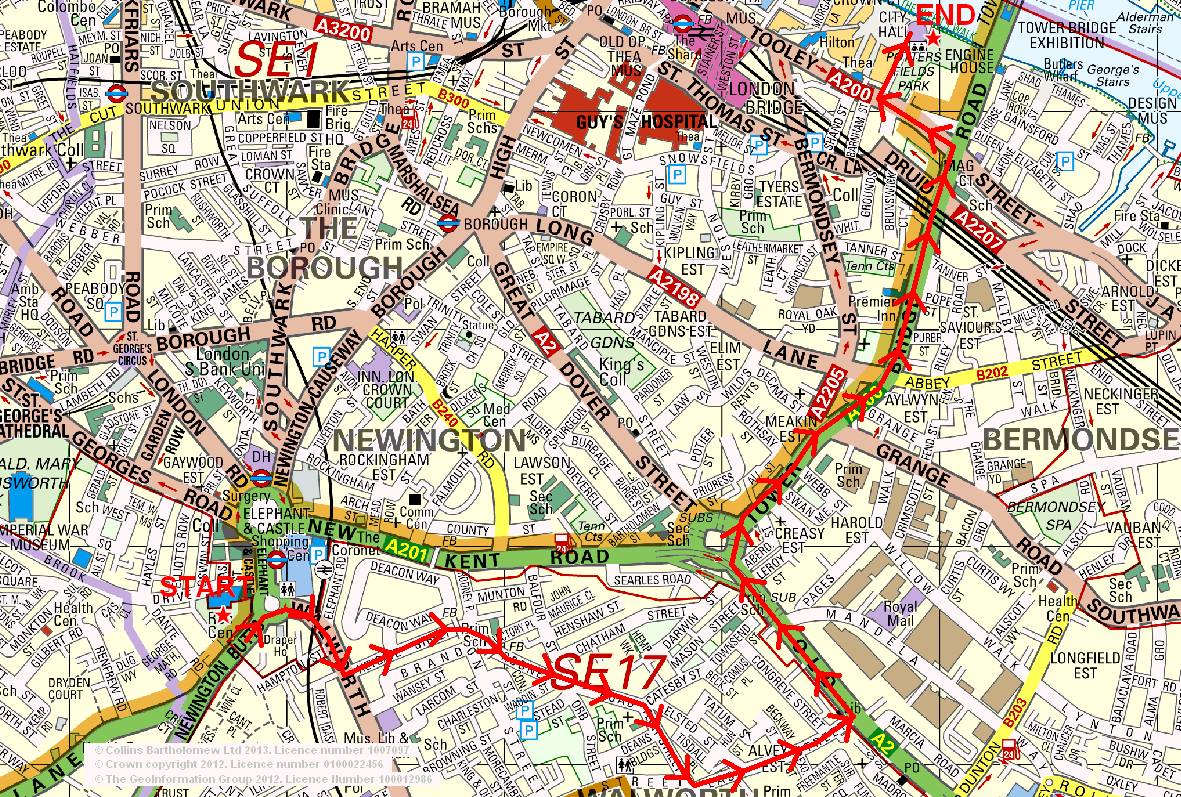
Today I took part in the March for Homes, a demonstration calling for more affordable housing in London. There were 2 marches, starting in Elephant and Castle and Shoreditch, that met at Tower Bridge and then proceeded to City Hall for a rally. In this post are some of the photos I took of the event, with a few of my reflections thrown in.

IMG_6440
The marchers starting to gather in Elephant and Castle (Photo: Hannah Awcock).

I was on the march starting in Elephant and Castle, because I live in the area, and I see the effects of the housing crisis every day. There are at least 2 major developments going on there at the moment; One the Elephant, which can be seen in the above photo, and the redevelopment of the former Heygate Estate. The amount of social housing that is included in these two developments is tiny, and laughably insignificant.  The housing crisis in London is something that I feel very strongly about. I am lucky enough to have funding for my PhD and no dependents, so I can afford housing quite easily. But there are many thousands who are not so fortunate, and although I love London, I know that I won’t be living here long term, because the city is simply not affordable, even if you manage to get a decent job.

IMG_6441
Large groups often provide placards for demonstrations, like this made by the Socialist Workers Party (Photo: Hannah Awcock).
A speaker at Elephant and Castle from the National Union of Teachers.
A speaker at Elephant and Castle from the National Union of Teachers (Photo: Hannah Awcock).

Speakers at Elephant and Castle included many representatives from local housing campaigns. I believe that the fundamental cause of the housing crisis is that housing in London is viewed primarily as an investment. Houses and flats are bought as a means of making money, and the owners don’t even need to bother renting them out, because prices are rising so fast that they can make plenty of money anyway, just by selling them on after a year or two. The fundamental purpose of housing is providing a space of safety and warmth, but this has been forgotten, or is ignored, by those in charge. As a result, people suffer.

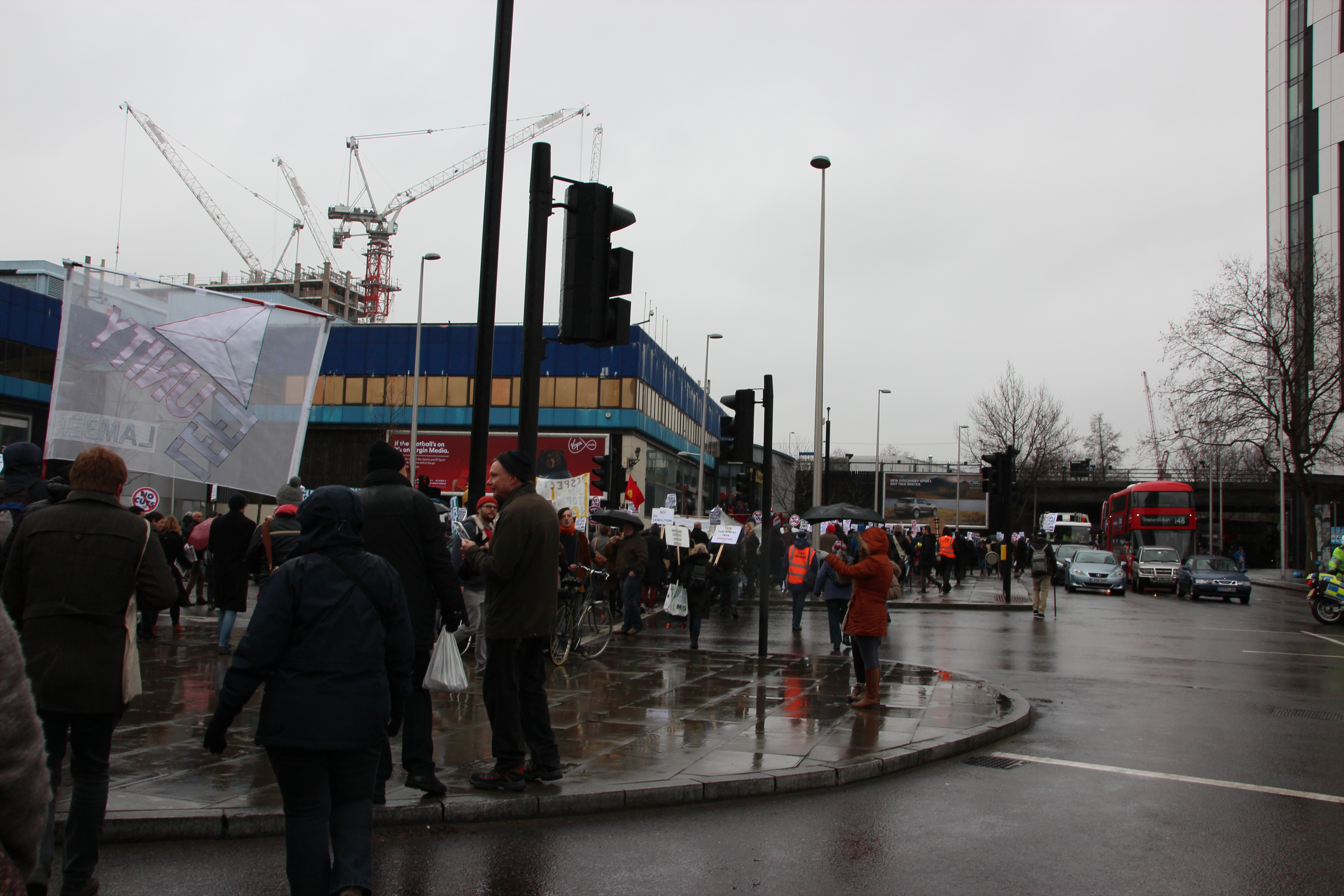
IMG_6457
Another placard at Elephant and Castle (Photo: Hannah Awcock).
The march set off towards the empty wasteland that used to be the Heygate Estate.
The march set off towards the empty wasteland that used to be the Heygate Estate (Photo: Hannah Awcock).
The south route of the March for Homes went through several large areas of social housing (Source: March for Homes, 2014).

We marched through several large council housing estates on the way to City Hall. These are the areas in which people are directly affected by the crisis, and I hope that some of those took heart from the sight of us  processing down the streets in the rain. Protests can be an expression of solidarity as well as a method of publicising a cause, and I hope that we did both today.

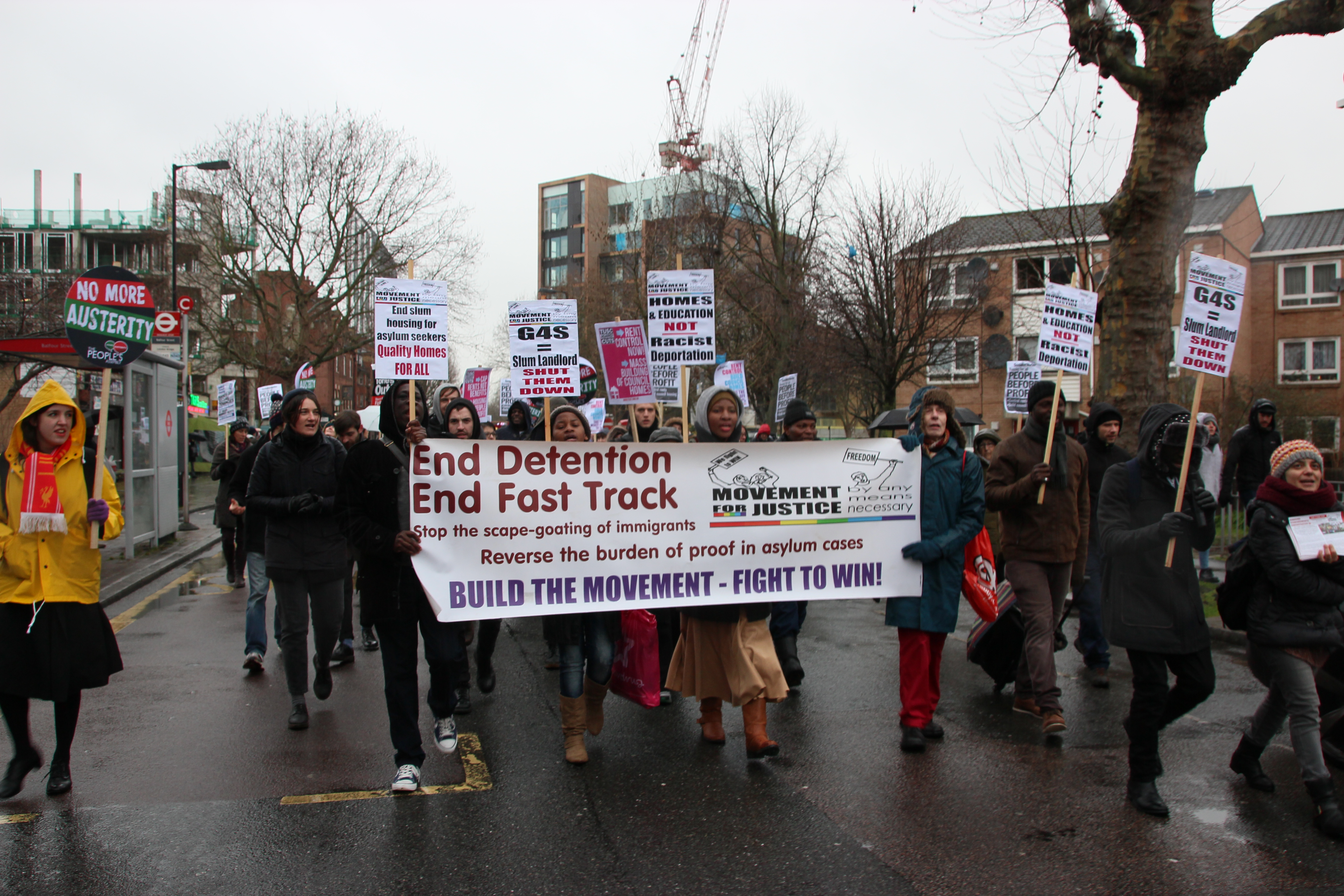
IMG_6466
The march went right through the middle of what used to be the Heygate Estate (Photo: Hannah Awcock).
Many groups were represented at the March for Homes.
Many groups were represented at the March for Homes (Photo: Hannah Awcock).
IMG_6469
Some creative editing of a hoarding for a development by L&Q (Photo: Hannah Awcock).
IMG_6483
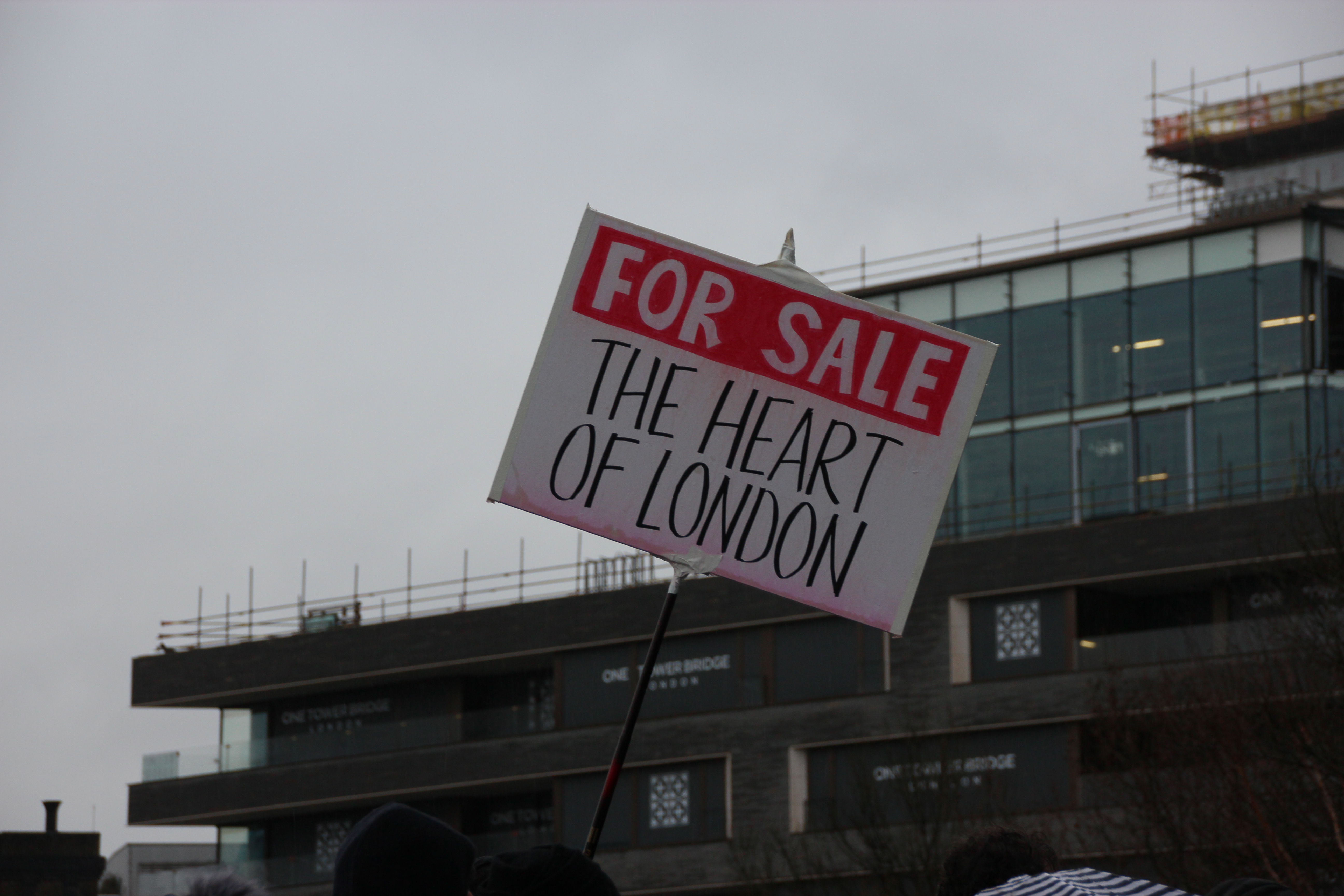
A placard in front of Tower Bridge, one of London’s most famous landmarks (Photo: Hannah Awcock).

This was very much a London-focussed demonstration. The marches culminated at City Hall, the seat of power for London, rather than Parliament Square, the seat of power for the UK. Housing is a problem in many places across the country, but today was specifically about London. The protest aimed to get the attention of the government of London, not the government of the UK, and this was reflected in the routes and locations of the demonstration.
IMG_6489
Some placards were home made, but these are often the most creative (Photo: Hannah Awcock).
IMG_6493
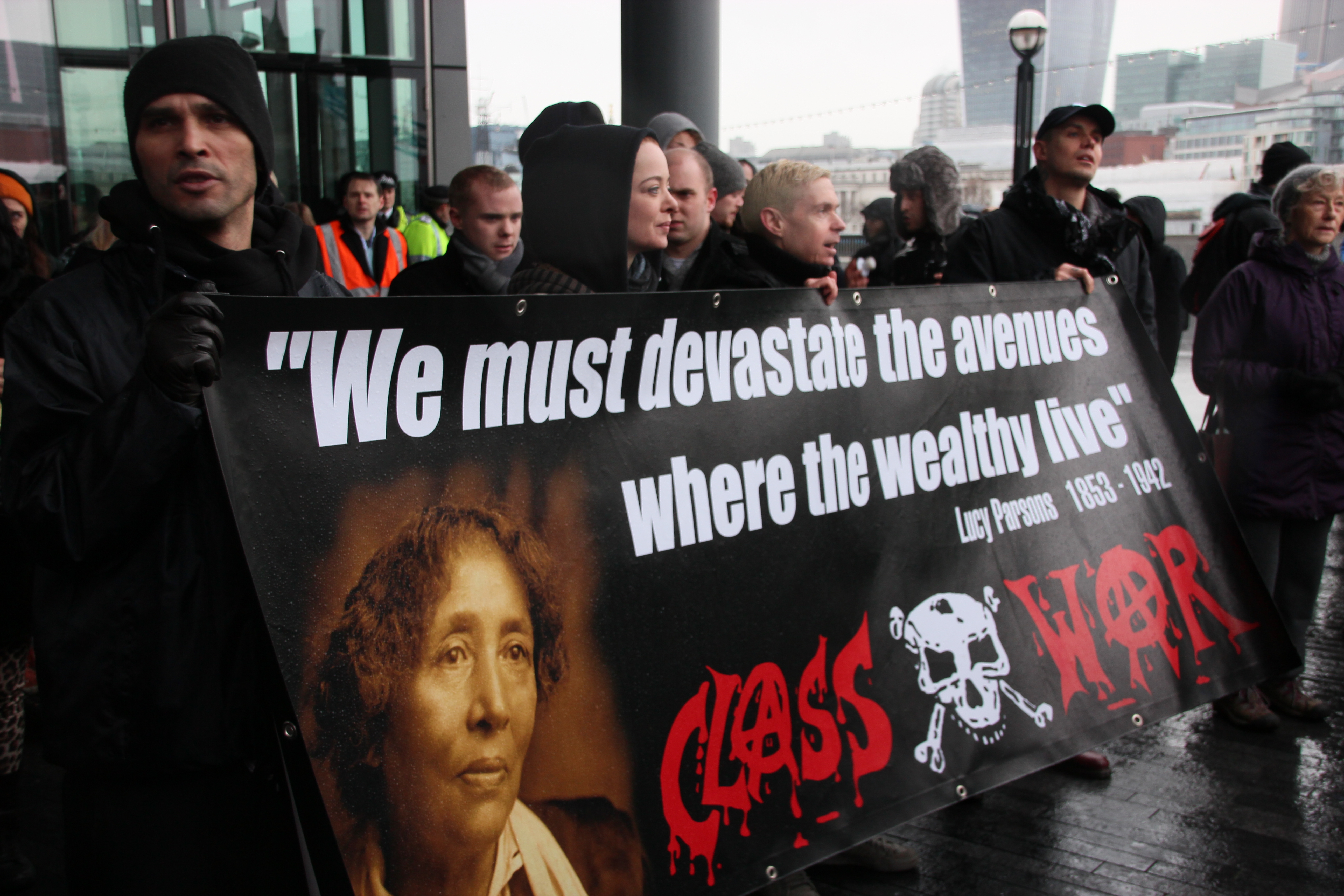
Anarchist groups also took part in the demonstration (Photo: Hannah Awcock).
The rally at City Hall, although I doubt Boris Johnson was listening from his office.
The rally at City Hall- I wonder if Boris Johnson was listening from his office (Photo: Hannah Awcock).

Despite the foul weather, I really enjoyed myself today. It was my first protest in a while, and I’m glad that it went off peacefully for my own sake, even if it perhaps means we won’t get any major news coverage. After I left, a breakaway group occupied some empty council houses on the Aylesbury Estate in elephant and Castle, and I will be following events there carefully. The housing crisis in London is a very real problem, and it needs to be tackled. Nothing will happen overnight, and the March for Homes is just one step in a process that will, in all likelihood, be very long. But I’m glad I was there, standing up to be counted for something I believe in.

Turbulent Londoners: Claudia Jones, 1915–1964

Turbulent Londoners is a series of posts about radical individuals in London’s history who contributed to the city’s contentious past. My definition of ‘Londoner’ is quite loose, anyone who has played a role in protest in the city can be included. Any suggestions for future Turbulent Londoners posts are very welcome. The third Londoner in the series would probably get on well with the previous Turbulent Londoner, Charlotte Despard. Claudia Jones was a black equal rights activist, and is known as the mother of the Notting Hill Carnival.


Claudia Jones was featured in the 2008 Women of Distinction series of British postal stamps (Source: Royal Mail).

Claudia Jones was an influential campaigner for London’s Caribbean community from the mid-1950s until her death a decade later. She is known as ‘the mother of Notting Hill Carnival’, and founded The West Indian Gazette, the first newspaper printed in London for the Black community. Born in Trinidad, she was deported to the UK from America after being imprisoned for ‘un-American activities.’ She continued to campaign right up until her death in 1964.

Claudia Jones was born in Port of Spain, Trinidad, in 1915. Her family emigrated to New York City when she was 9, where they unfortunately remained poor. When she was 17, Claudia caught tuberculosis, which irreparably damaged her lungs, troubling her for the rest of her life. Despite this ill health she became a committed campaigner, joining the American Communist party in 1936. She proved to be a talented journalist, in 1945, she became the youngest staff member for the Daily Worker, as the ‘Negro Affairs’ editor.

As well as writing, Claudia organised youth, Civil Rights and religious groups as well as immigrant rights committees. She was a victim of McCarthyism after World War II, and was deported in 1955. Trinidad refused to accept her, and she was eventually offered asylum in Britain in October.

Claudia arrived in the UK at a time of massive immigration from the Caribbean. Many of the new immigrants were discriminated against by landlords, shopkeepers, employers and even the government because of their colour. Finding that many British Communists were hostile to a black woman, Claudia became a key leader in the African-Caribbean community, organising access to basic facilities, as well as taking an active role in the early campaign for racial equality.

From her work in the US, Claudia knew it was important for minority groups to have a voice, so in 1958 she founded The West Indian Gazette and Afro-Asian Caribbean News, and edited it until her death 6 years later. Anti-racist and anti-imperialist, the paper provided a forum for the discussion of civil rights, and reported news that was frequently overlooked by the mainstream media.

In August 1958 racial riots occurred in Notting Hill in London and Robin Hood Chase in Nottingham. Claudia and several other leaders of the British black community were concerned by the racist analysis of the riots in the British media. She recognised the need to improve relations between different local communities, so she helped to organise the first Mardi-Gras style Caribbean carnival in St Pancras Town Hall in January 1959. It was a big event, and televised nationally by the BBC. Claudia and The West Indian Gazette also arranged five other annual indoor Caribbean Carnivals in London, which are seen as precursors to the Notting Hill Carnival, one of the most popular events in London’s calendar.

Claudia was one of the founders of what became the Notting Hill Carnival, which is still going strong today (Source: Rob Schofield).

Claudia died on Christmas Eve 1964, when she was just 49. Despite struggling with the impacts of tuberculosis for much of her short life, she faced the dual disadvantages of being female and black with confidence, becoming a successful journalist and respected community leader and activist. She didn’t chose to move to London but she embraced her new home with gusto, fighting hard to make the city a better place for its burgeoning black community.

Sources

Azikiwe, Abayomi. “Claudia Jones Defied Racism, Sexism and Class Oppression.” Workers World. Last modified February 6, 2013, accessed January 15, 2015. http://www.workers.org/articles/2013/02/06/claudia-jones-defied-racism-sexism-and-class-oppression/

“Claudia Jones.” Wikipedia. No date, accessed January 15, 2015. http://en.wikipedia.org/wiki/Claudia_Jones

“Claudia Jones Honoured on Postage Stamp.” The Cocoa Diaries. Last modified October 20, 2008, accessed January 23, 2015. http://cocoadiaries.com/uncategorized/claudia-jones-honoured-on-postage-stamp/

“Claudia Jones ‘the Mother of the Notting Hill Carnival.” Black History Month. No date, accessed January 15, 2015. http://www.blackhistorymonth.org.uk/claudia-jones/4566344886

Foster, Kimberly. “27 Black Women Activists Everyone Should Know.” For Harriet. Last modified February 28, 2014, accessed January 15, 2015. http://www.forharriet.com/2014/02/27-black-women-activists-everyone.html

“Home” The London Notting Hill Carnival. No date, accessed January 23, 2015 http://thelondonnottinghillcarnival.com/

“Jones, Claudia.” Exploring 20th Century. No date, accessed January 23, 2015. http://www.20thcenturylondon.org.uk/jones-claudia

Boisterous Brighton

IMG_5770
Brighton is a well-known seaside resort (Photo: Hannah Awcock).

I spent the Christmas holidays with my family in Brighton, my childhood home. Officially called Brighton and Hove, it is a city on the south coast of Britain with a population of just over a quarter of a million residents. About an hour on the train from London, it has been a popular seaside retreat for several hundred years. George IV built the Royal Pavilion as a luxurious retreat for himself between 1787 and 1823. In recent decades, it has become home to a thriving LGBT community, with Brighton Pride being one of the biggest Pride festivals in the UK. With a reputation for being cosmopolitan and easy-going, the city was a fantastic place to grow up, and it is very special to me.

IMG_6349
The city’s radical tendencies are obvious (Photo: Hannah Awcock).

With its open and accepting nature, it is not surprising that Brighton is a focus for protest. As Pollyanna Ruiz (2014; 119) describes it, “Brighton and Hove is a city that enjoys pushing social boundaries, and I would suggest that these qualities also characterise its political life.” Brighton Pride, arguably perceived by many as primarily a reason to have a good time, contains a strong campaigning element, raising the profile of issues faced by the LGBT community. Despite the progress made in recent years, homophobia is still a very real concern, as events in Brighton in October 2014 show. The Student’s Union of the University of Sussex organised a mass ‘kiss-in’ in a Sainsbury’s store in the city in protest about the treatment of two gay women by a security guard. The women were asked to leave after another customer complained to the security guard about them kissing. About 200 people attended the protest, designed to celebrate equality.

However, LGBT issues are not the only contested ones in Brighton. Since 2008, the group March for England have been holding annual marches in the city during the April bank holiday weekend. Since 2010, there has been a concerted campaign to oppose them, with counterdemonstrations attempting to disrupt the marches. In 2014, 150 marchers were opposed by at least 1,000 anti-fascists (Argus, 2014). The general perception is that Brighton was chosen as the location of these marches because of its liberal reputation. Personally, I think that the March for England continues to return to Brighton because they know they will be opposed, which results in a lot more publicity than they would otherwise get.

Another long running local campaign has been organised by the group Smash EDO. EDO MBM Technology Ltd. is a Brighton-based company that manufactures parts for military aircraft, including bomb release mechanisms. Smash EDO has been organising events and campaigning against the company for the last decade. They have also begun campaigning against Barclays Bank, whom Smash EDO argues profits from the weapons that EDO help to produce. Their activities have been varied, but perhaps the most dramatic took place in January 2009, when 6 activists broke into the EDO building and sabotaged computers and machinery. All 6 ‘decommissioners’ were cleared of conspiracy to commit criminal damage in July 2009. This campaign is a fantastic example of how global issues can be connected to local areas in a very tangible way.

I grew up in Brighton and Hove, and I think that the city is at least partly responsible for my own liberal beliefs. I would like to be able to say that in Brighton you will be accepted, whoever you are. However I know that in reality that is not always the case, but it is heartening to know that there are people in Brighton willing to struggle to bring us closer to that ideal.

Sources

James, Ben. ‘Violent Clashes as March for England Returns to Brighton.’ The Argus http://www.theargus.co.uk/news/11175736.Violent_clashes_as_March_for_England_returns_to_Brighton/?ref=var_0 (Published 28/04/14, accessed 12/01/15).

Ruiz, Pollyanna. Articulating Dissent: Protest and the Public Sphere. London: Pluto Press, 2014.

Smash EDO http://smashedo.org.uk/ (Date of publishing not provided, accessed 12/01/15).

Trafalgar Square ‘Unity Rally’: My Thoughts

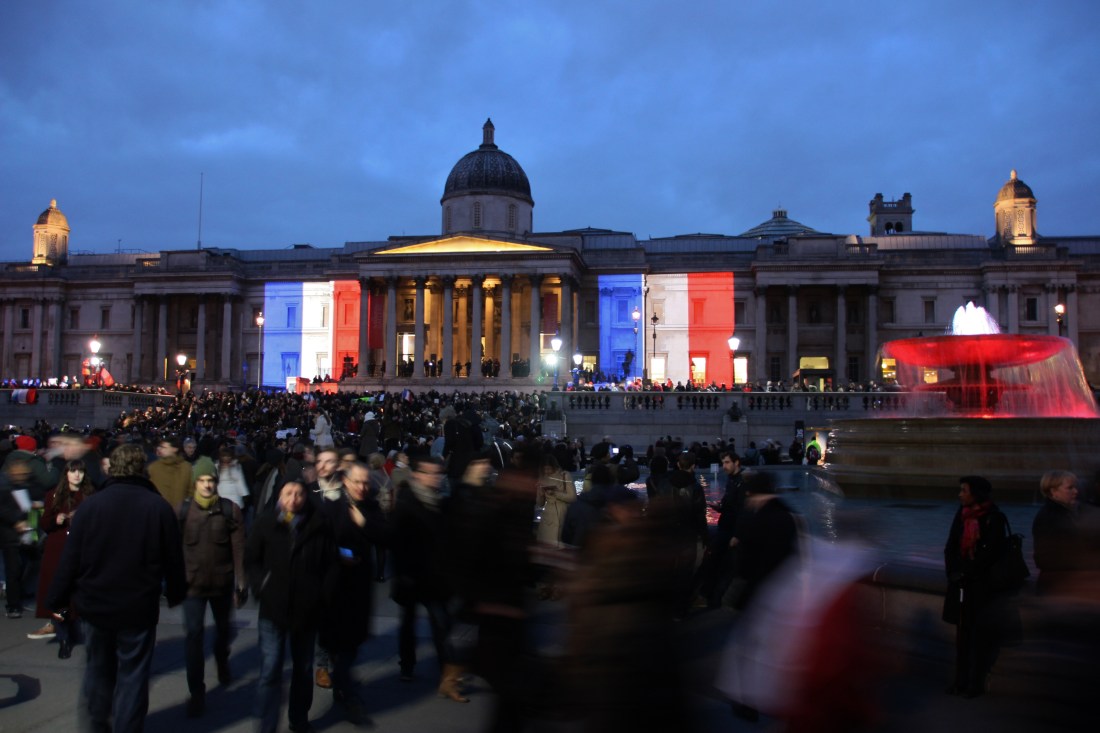
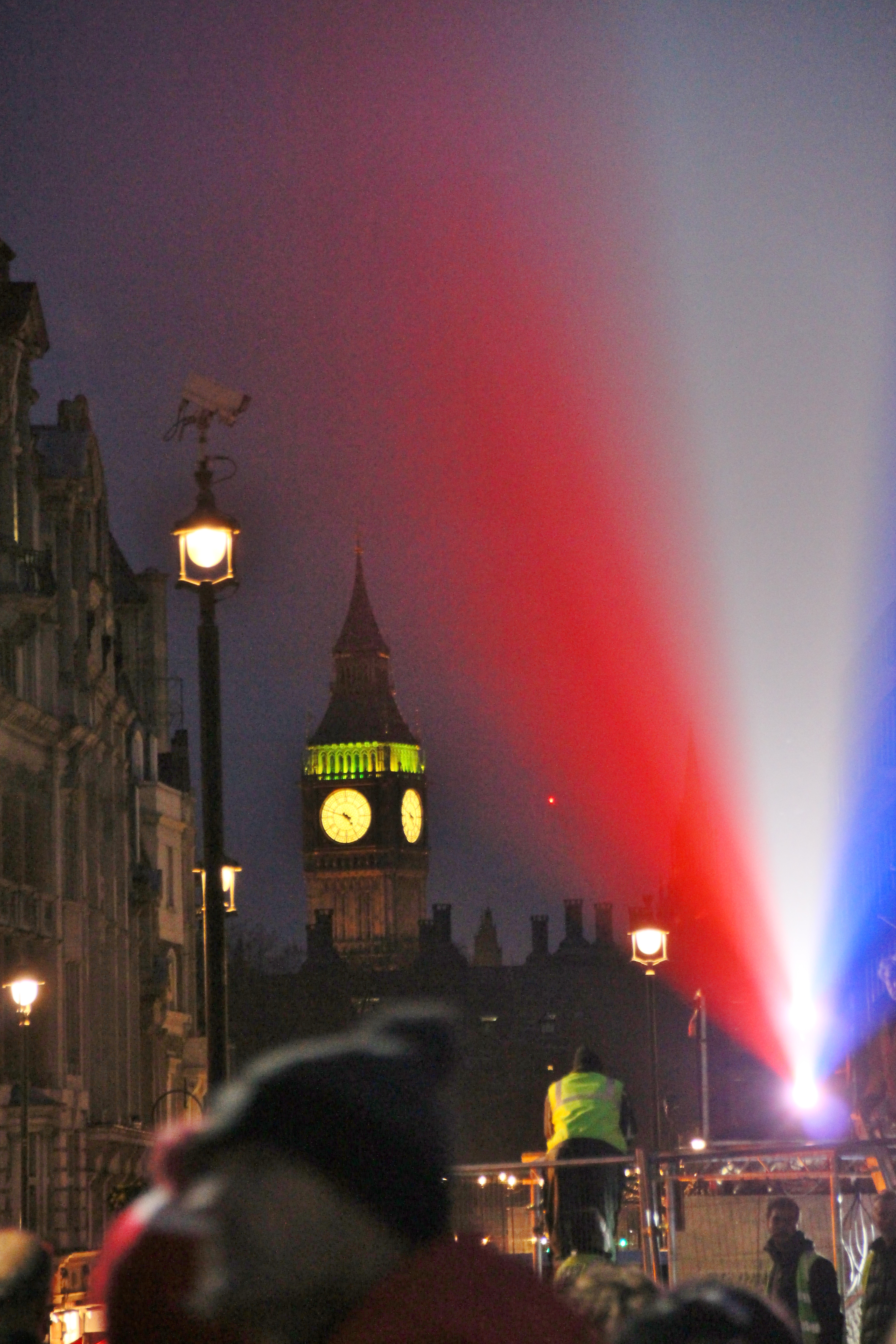
Trafalgar Square on Sunday evening (Photo: Graeme Awcock).
(Photo: Graeme Awcock).
The French flag was projected onto the National Gallery (Photo: Graeme Awcock).

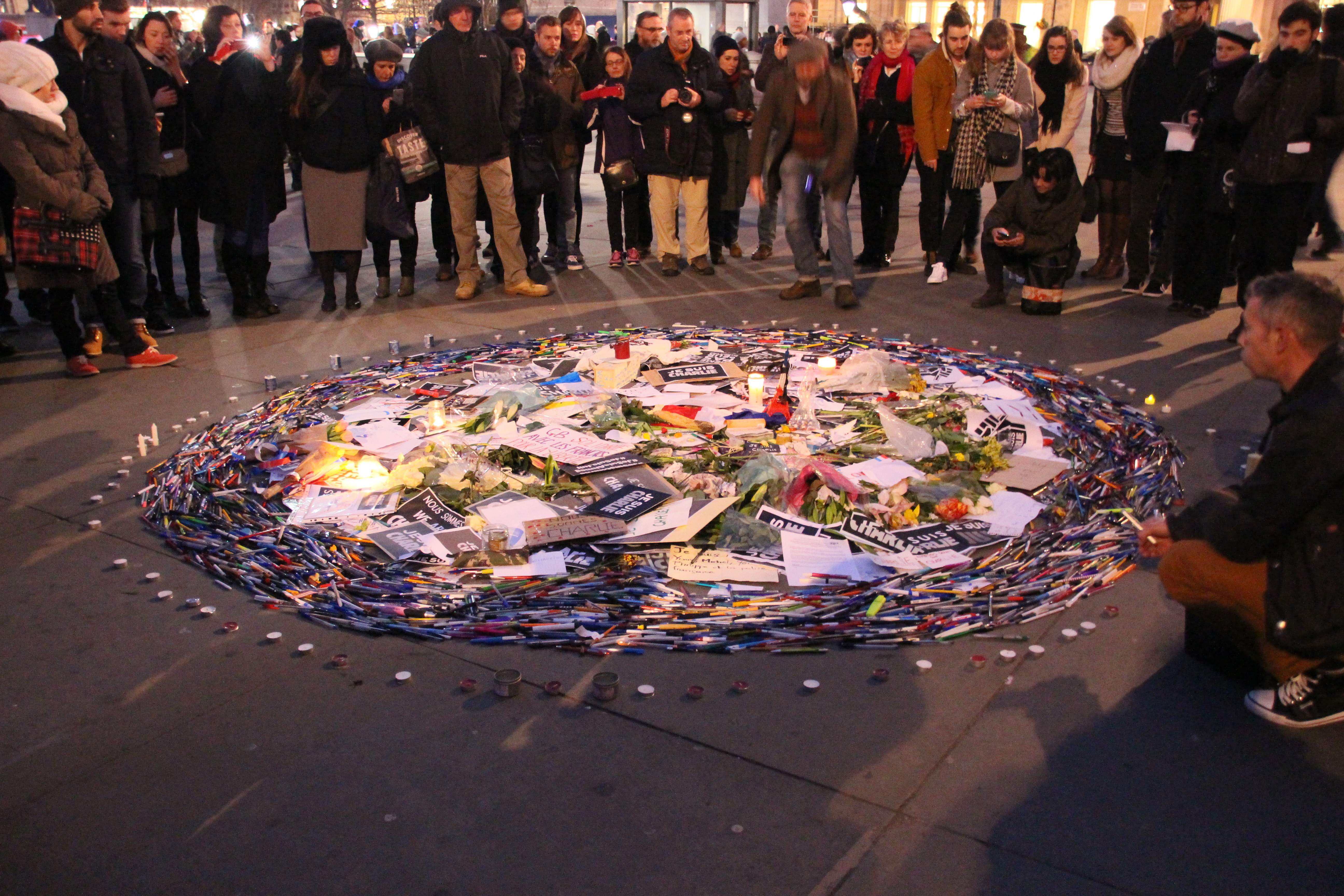
On Sunday afternoon, I was in Trafalgar Square during the vigil expressing sympathy and solidarity for Paris in the wake of the shocking events of the past week. The global condemnation of the shootings in Paris were instantaneous, and deafening. Gatherings took place around the world on Sunday to commemorate those who died and celebrate free speech. In London, several landmarks were lit up in the colours of the French flag including Tower Bridge and the National Gallery. People also gathered in several places including the French Embassy and Trafalgar Square. I don’t really know what to call what took place in Trafalgar Square, it seemed simultaneously to be protest, memorial and vigil. The BBC describe it as a ‘unity rally,’ but that doesn’t feel quite right to me either. It was obviously officially sanctioned and organised; Nelson’s column had been fenced off so that the French flag could be projected onto the National Gallery. To me, it felt like an expression of solidarity, sympathy and defiance. There were clearly lots of French people there, so it had a more personal feeling of grief too.

(Photo: Graeme Awcock).
People left candles and pens in tribute and defiance (Photo: Graeme Awcock).

The location of such gatherings are not insignificant, so it is important to consider why such events occur in the places that they do. Boyle makes a valid point, and it is true that Parliament Square is regulated by specific laws that do not apply anywhere else in the country. I do think that there has been an attempt to depoliticise events in Paris, or at least situate them outside of the normal party politics. Commentators across the political spectrum have been quick to rush to the defence of free speech, although of course free speech is mediated and limited by laws and the government, so it is a political issue. Therefore there may have been a conscious effort not to involve Parliament Square in Sunday’s events, to try and maintain their apolitical status.

(Photo: Graeme Awcock).
The atmosphere was subdued but positive (Photo: Graeme Awcock).

As ever however, I think it is more complicated than that.  Trafalgar Square has been a focus for large gatherings of people since it’s completion in the mid nineteenth century. Public events range from Bloody Sunday in 1887 t0 the celebration of London being chosen for the 2012 Olympics in 2005. The square has been a focus of public life in London for the last two centuries, so a less cynical interpretation of events is that it just didn’t occur to people to gather anywhere else. On balance, I think it is probably a combination of these reasons.

IMG_0103
The fountains in Trafalgar Square were lit with the colours of the French flag (Photo: Graeme Awcock).

The gathering in Trafalgar Square on Sunday was not a typical protest. There were no demands, no chants, no placards. It was less subdued that a vigil, too quiet to be a rally, and less ceremonial than a memorial. Whatever it was, it was a powerful expression of unity and solidarity, and I’m glad I was there.

Book Review: Fight the Power! A Visual History of Protest Among the English Speaking Peoples

'Fight the Power!' by Wilson et al.
‘Fight the Power!’ by Wilson et al.

Wilson, Seán Michael, Benjamin Dickson, Hunt Emerson, John Spelling and Adam Pasion. Fight the Power! A Visual History of Protest Among the English-Speaking Peoples. Oxford: New Internationalist, 2013.

The title of Fight the Power! A Visual History of Protest among the English-Speaking Peoples may be a little long winded, but it does sum up the book well. Through the medium of comic strips, the book tells the story of some of the key moments in the history of protest in the English-speaking world (well, from the last 2 centuries anyway). The protests discussed are wide ranging in terms of topic and geography, taking in race, class, labour and governance issues, as well as such diverse countries as Ireland, Australia, America, and the former British Empire.

The format of the book makes it incredibly approachable and engaging, ideal for young people (although some of the images are a little graphic) or those with little previous knowledge of protest. The examples lack detail and can be one-sided, but neither of these are inherently bad things. The book is a fantastic introduction to many protests, and it does not claim to be an unbiased account.

Despite the diversity of the examples, several themes recur throughout the book. One is police brutality. The actions taken by those in authority attempting to suppress protest have frequently proved provocative, causing demonstrations to escalate into violent clashes. The Battle of Peterloo (1819) and the Battle of Toledo (1934), amongst others, are good examples of this. Violence, or the lack of it, is another theme that recurs throughout the book. Whether or not to use violence is one of the most fundamental decisions a protest movement makes, which can drastically influence the outcome of a campaign. There is no ‘right’ answer; apart from the moral debate, both violent and non-violent movements have proved successful in the past.

The lasting impression which the book leaves is one of hope. Particularly in the past few years, it can be very easy to believe that protest does not achieve anything, that  it is all too easy for those in authority to repress or ignore demonstrations and social movements. But what the examples in Fight the Power prove is that protest can force change. The Suffragettes, Rosa Parks, and the various independence movements of the British empire demonstrate that change may take time, decades even, and it may not be exactly the progress that you imagined, but it can be achieved.

Another key message of the book, which is particularly relevant to my PhD, is that past protests can provide both practical suggestions and inspiration to contemporary protest movements. As Tariq Ali writes in the Introduction, “History rarely repeats itself, but its echoes never go away” (p5). An image on the back cover of the book shows an Occupy protester holding a “We are the 99%” placard, backed by a Suffragette, Rosa Parks, Nelson Mandela, and others mentioned in the book. It is a powerful image of historical solidarity.

This book was given to me as a Christmas present (I got a lot of books this year, so brace yourself for a lot of reviews over the next few months!), and it certainly fulfills that role perfectly. It is a nice introduction to some of the most famous protests in the history of the English-speaking world, but I would recommend it even if you are already familiar with most of them as a refreshing approach to the history of protest.

Turbulent London: 2014 in Review

WordPress.com has very helpfully put together a summary of Turbulent London’s stats from 2014. The blog has only been going since July, and I am very proud of what it has achieved in that time. I had been wanting to start a blog based around my PhD, for some time, but had got stuck trying to think of a name. Once I finally got Turbulent London up and running however, I discovered that blogging is an exciting and dynamic means of communication which has been greatly beneficial to me, as well as thoroughly enjoyable.

As the summary shows, people in 41 countries have read Turbulent London, which is  just amazing to me. I get a buzz of excitement every time I see that someone from Finland, Iraq, or Algeria has read my writing. Closer to home, I am always humbled when one of my friends, colleagues or fellow PhD students tell me that they read and enjoyed a post.

I am aware that this may be coming across as overly emotional or self-promoting, but really I just wanted to take this opportunity to share my enjoyment of Turbulent London, and to thank everyone for taking the time to read and engage with my posts. Also, if you have been considering starting a blog yourself, I strongly advise you do it, because it is fantastic.

I hope you all had a lovely Christmas, and I wish you all the best for 2015.

Here’s an excerpt:

A San Francisco cable car holds 60 people. This blog was viewed about 1,600 times in 2014. If it were a cable car, it would take about 27 trips to carry that many people.

Click here to see the complete report.

Pits and Perverts Revisited: ‘Pride’ the Movie and Politics Now

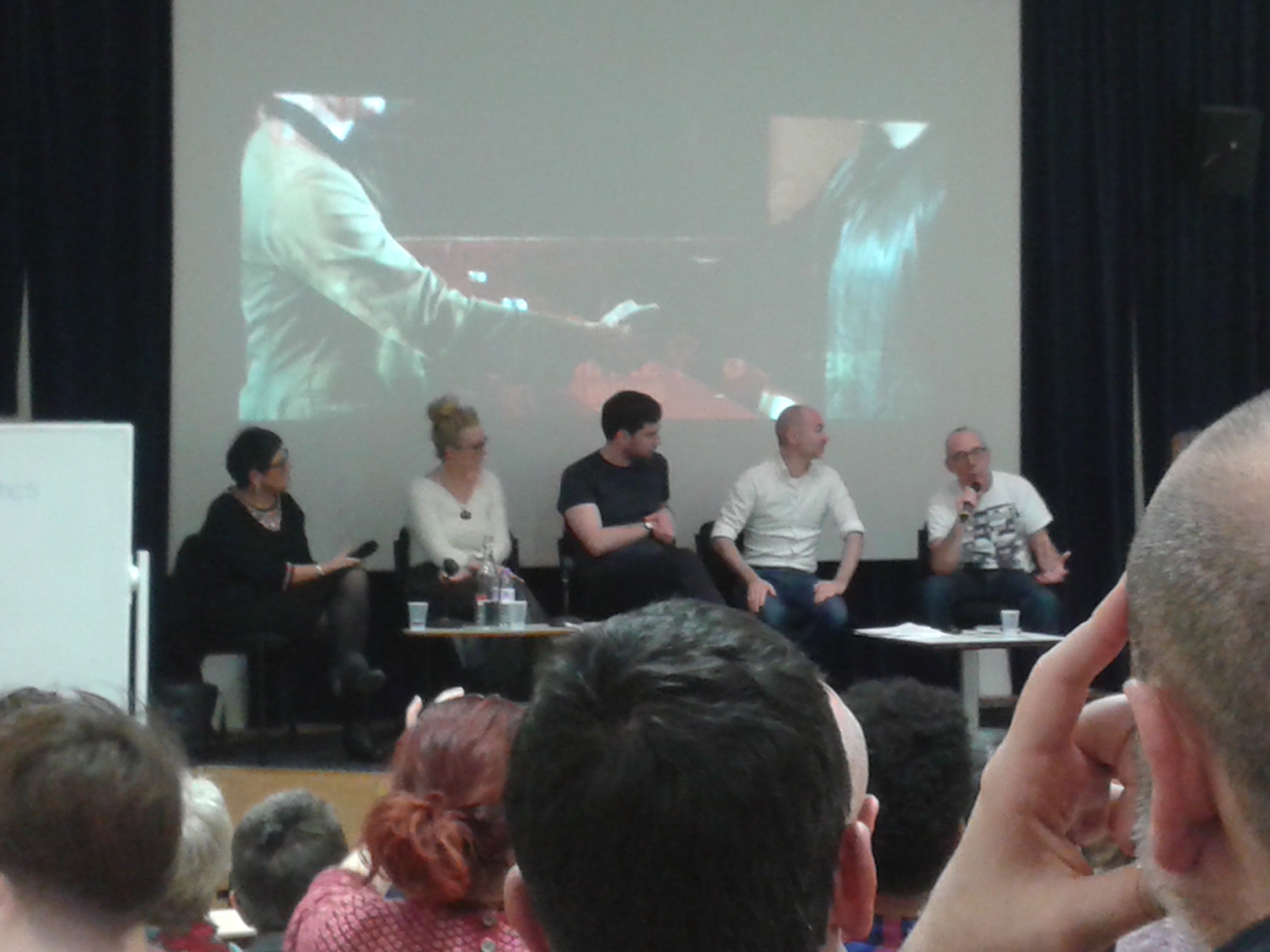
The Pits and Perverts Revisited panel.
The Pits and Perverts Revisited panel (Photo: Hannah Awcock).

Last Friday, I went to an event at Birkbeck College called Pits and Perverts Revisited: ‘Pride’ the Movie and Politics Now. It is almost exactly 30 years since the Pits and Perverts fundraiser in Camden was organised for the striking miners by Lesbians and Gays Support the Miners, the group depicted in this year’s hit film, Pride. This event was a reflection on the film and LGSM itself, with Mike Jackson and Siân James speaking, upon whom characters in the film were based. It included a screening of the documentary All Out! Dancing in Dulais and a panel discussion also featuring Diarmaid Kelliher (a PhD student at the University of Glasgow working on solidarity groups for the miners in London), and Bev Skeggs (a professor of Sociology at Goldsmiths). All Out was made in 1986, and is about the work that LGSM did for the miners. It was a great evening full of passionate discussion, which raised a lot of interesting points.

The key thing that really came home to me during the course of the evening was the importance of solidarity to protest movements. The point was made in All Out that it is illogical to fight for the right of one oppressed group or minority but not others. Solidarity can take many forms, from a declaration of support to volunteers to help man the picket lines, but all types are important. There is a long tradition of solidarity amongst social movements in Britain, for example miners from across the country joined the Grunwick strike on the picket line in the 1970s. However there is also a tradition of groups not receiving the support they need, for example many of the big trade union’s attitudes to women workers. Solidarity between different protest movements is still not a given, but as Pride demonstrates, it can be an invaluable and incredibly beneficial experience.

Another important characteristic of social movements that was emphasised was networks. Exchanging solidarity with other groups involves making connections, sharing knowledge, resources and experience. Several of the speakers emphasised the importance of making connections with other movements and activists, particularly internationally as many of the issues campaigned on now have international causes and implications. Academic geographers frequently analyse social movements from the perspective of networks, and it was nice to know that this is a legitimate perspective to take.

The final thing that came out of the discussion that I think is really important to emphasise is the necessity of fundraising. The main things that LGSM did in support of the miners were collections and fundraisers. At the height of the strike the Neath, Dulais and Swansea Valleys Miners Support Group needed £5-8000 per week to feed 1000 mining families. These funds were essential for the strike to continue, and without it, the miners would have had no choice but to return to work. Fundraising is not glamorous or exciting, but no campaign will last for long without some form of income.

The audience for Pits and Perverts Revisited was more mixed than your average academic seminar, which I think contributed to the vigour and practical nature of the discussion. The evening gave me a lot to think about. Pride is a fantastic film, funny and heart-warming, but it is also inspiring activism and discussion, which I think is a truly wonderful achievement.

Book Review: To End All Wars

'To End All Wars' by Adam Hochschild
‘To End All Wars’ by Adam Hochschild

Hochschild, Adam. To End All Wars. London: Pan Books, 2011.

By the time we reach the centenary of Armistice Day in 2018, I get the feeling that we might be suffering from a certain degree of World War 1 fatigue. The sheer number of  documentaries, dramatisations, books, ceremonies and art installations will likely make it difficult for any one thing to stand out. I think that To End All Wars by Adam Hochschild has a good chance of leaving a lasting impression.

The story of the first world war is familiar to most of us, but To End All Wars tells the narrative from an unfamiliar perspective; it is about those people who spoke out against the war. Opposition is not discussed in the traditional narratives of the war, the general perception appears to be that it wasn’t criticised until years afterwards. Admittedly critics of the war were few, tested as they were by the “mass patriotic hysteria” (Hochschild, 2011) but they most certainly did exist. On the 2nd of August 1914, there was a huge anti-war rally in Trafalgar Square, with calls for a general strike if war was declared. Prominent campaigners like Keir Hardie, Charlotte Despard and Sylvia Pankhurst continued to oppose the war, with Pankhurst proposing a Women’s Peace Expeditionary Force, where 1000 women would march into no-man’s land between the two armies.

Publicly criticising the war required a great deal of bravery. Those that did were almost instantly ostracised, derided or accused of treachery, labeled as German spies trying to undermine the war effort. Many paid a heavy price for their defiance. For example, the Wheeldon family, socialists who hid soldiers escaping conscription, were convicted in 1917 of the completely false charge of attempting to murder Lloyd George and another member of the war cabinet, victims of a government attempt to disgrace the anti-war movement. 3 family members were sentenced to 5-10 years hard labour after a sham trial that didn’t even last a week.

To End All Wars is arranged chronologically, making the tragic progress of the war appear even more inevitable as the reader can do absolutely nothing to prevent the horrors that we know full well are coming. The style of writing is dramatic, and the book often reads more like a novel than non-fiction. Charlotte Despard, the famous suffragette and anti-war campaigner, was actually the sister of John French, the Commander-in-Chief of the British Army until 1915. Hochschild hides this connection though, revealing it like a plot twist at the end of a chapter. The first chapter is spent introducing the key players in the book, developing them like characters. Whilst the approach felt a bit unusual at first, it makes for an engaging and accessible read.

Admittedly, Hochschild does spend a lot of time describing the events of the war, and whilst this is generally useful context, it does sometimes feel like filler, padding out the relatively rare examples of opposition to the war. However on balance this is a thoroughly enjoyable book, that provokes thought about the nature of war and opposition to it, as well as providing a rare new insight into the First World War.

Turbulent Londoners: Charlotte Despard, 1844-1939

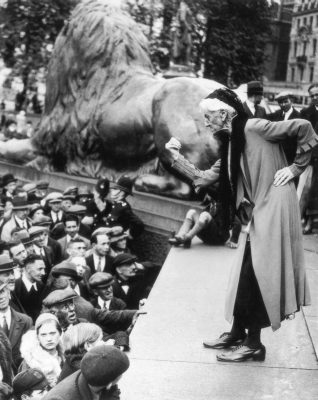
Turbulent Londoners is a series of posts about radical individuals in London’s history who contributed to the city’s contentious past. My definition of ‘Londoner’ is quite loose, anyone who has played a role in protest in the city can be included. Any suggestions for future Turbulent Londoners posts are very welcome. The second Londoner to be profiled is Charlotte Despard, an inspirational pacifist, feminist and socialist campaigner.


Charlotte Despard (née French)
attributed to Charles Mendelssohn Horsfall
oil on canvas
NPG 4345
© National Portrait Gallery, London

Charlotte Despard was a prominent feminist and social campaigner in the late-nineteenth and early twentieth centuries, who fought for many causes during her long life. Born into a wealthy French family in Kent in 1844, she married in 1870. She was brought up as a young Victorian lady should be, and frequently railed against her lack of a proper education. After her husband died in 1890, she became a dedicated and inspiring campaigner, although she was well known for her simple black clothing for the rest of her life.

Despard organised and funded a health clinic, a soup kitchen for the unemployed and youth and working men’s clubs in the slum called Nine Elms in Battersea, London. Not content with mere philanthropy, she actually moved into the area, living amongst those she worked so hard to help. In 1894 she became a Poor Law Guardian in Lambeth, a job at which she excelled, using her position to care for the most vulnerable ‘paupers’.

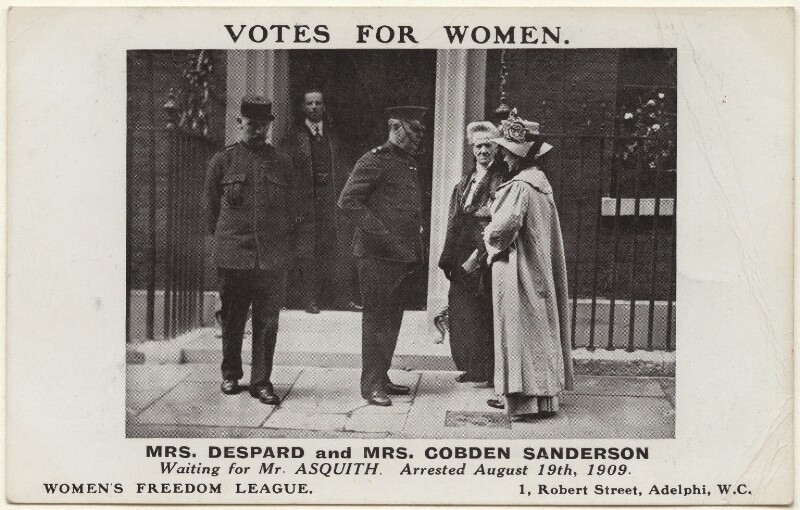
Politically, Despard was an active supporter of the Social Democratic Party and the Independent Labour Party, running in the 1918 general election as a pacifist Labour candidate for Battersea. By the time the Women’s Social and Political Union moved to London in 1906, she was a well-known progressive speaker, and an obvious choice for an ally. She became the WSPU’s honorary secretary, and was imprisoned twice in 1907 for her actions as a suffragette, at the age of 63. However, later that year the Suffragette movement split, and Despard became President of the Women’s Freedom League, which unlike the WSPU was democratically organised and advocated a campaign of passive resistance.

Charlotte Despard (née French); Anne Cobden-Sanderson with three unknown men
by Unknown photographer
halftone postcard print, 19 August 1909
NPG x45197
© National Portrait Gallery, London

Despard was a pacifist, opposing the Boer War and World War One, despite her brother, Sir John French, being the commander-in-chief of the British Expeditionary Force in France until 1915. The two remained close throughout the First World War, until Charlotte declared her support of Irish home rule and later independence. As the Lord Lieutenant of Ireland, Sir John French was tasked with trying to supress the very people she supported, and their previously close relationship suffered badly. In 1921 she moved to Ireland, where she continued to campaign for civil rights and the relief of poverty and distress. Despite her advanced years, she was classed as a dangerous subversive under the Irish Free State’s 1927 Public Safety Act. In 1933 her house in Dublin was attacked by an anti-communist mob.

As if all that wasn’t enough, Despard was also active in promoting a variety of other causes, including Save the Children, the Indian independence movement, theosophy, and the London Vegetarian Society. She died after a fall at the age of 95, but left behind an enduring legacy. Charlotte Despard was a confident, strong-willed, independent woman, who frequently defied convention and suffered hardship to fight for what she believed in. She is an inspiration.

Sources

History Today. http://www.historytoday.com/sites/default/files/despard1.jpg (accessed 12/11/14).

Hochschild, Adam. To End All Wars: A Story of Protest and Patriotism in the First World War. London: Pan Books, 2011.

Mulvihill, Margaret. ‘Despard, Charlotte (1844–1939)’, Oxford Dictionary of National Biography, Oxford University Press, 2004; online edn, May 2014 [http://www.oxforddnb.com/view/article/37356, accessed 12 Nov 2014.

Open University, The. ‘Charlotte Despard.’ Making Britain (no date) http://www.open.ac.uk/researchprojects/makingbritain/content/charlotte-despard (accessed 12/11/14).

Oxford Dictionary of National Biography (no date) http://www.oxforddnb.com/images/article-imgs/37/37356_1_200px.jpg (accessed 12/11/14).

Scrolls, Vikings, and Dragons: Representations of the Archive in Children’s Television

'Riders of Berk' is a television spin off of the popular 2010 fil 'How to Train Your Dragon' (Source: Dreamworks Dragons: Riders of Berk, 2013)
‘Riders of Berk’ is a television spin off of the popular 2010 film ‘How to Train Your Dragon’ (Source: Dreamworks Dragons: Riders of Berk, 2013)

As long as you promise not to ask me how I know about this example, I wanted to discuss the portrayal of archives in children’s television. DreamWorks Dragons: Riders of Berk is a spin-off from the 2010 DreamWorks film How to Train Your Dragon. It may sounds surprising, but the show does contain archives, and the ways in which they are represented actually speaks well to the use of real-life archives.

'Bork's Archive' contains all the knowledge that the vikings of Berk have collected about dragons (Source: Dreamworks Dragons: Riders of Berk, 2013).
‘Bork’s Archive’ contains all the knowledge that the Vikings of Berk have collected about dragons (Source: ‘We Are Family Part 1’ Dreamworks Dragons: Riders of Berk, 2013).

Academics have argued that children’s films and TV shows are actually quite powerful cultural products, perhaps because they are dismissed by adults as insignificant and harmless. However they arguably play a significant role in shaping how children understand and interpret the world around them, so they are actually quite influential. Riders of Berk could very easily be a child’s only encounter with an archive, and is therefore worthy of consideration.

Berk is a village on a small island of the same name, populated by Vikings with names like Hiccup, Snotlout and Fishlegs, and dragons. At the beginning of the film, Vikings and dragons are mortal enemies, but with the aid of an injured dragon called Toothless, Hiccup manages to prove that both dragons and Vikings can profit from working together, and by the time the TV show begins, dragons are firmly integrated into the daily life of Berk. In Riders of Berk, a group of teenage Vikings, led by Hiccup, fly around on their dragons, having adventures and learning more about all the different types of dragons. However, all is not well in the land of the Vikings, and there are villains, set on destroying the peace between dragons and Vikings, or stealing the Hiccup’s dragon-training knowledge for their own dastardly aims.

Dragons and Vikings used to be enemies, but now live together in harmony (Source: 'We Are Family Part 1' Dreamwork's Dragons: Riders of Berk, 2013).
Dragons and Vikings used to be enemies, but now live together in harmony (Source: ‘We Are Family Part 1’ Dreamwork’s Dragons: Riders of Berk, 2013).

In the finale of the series, entitled “We Are Family,” Hiccup is entrusted with a chest containing Berk’s collected knowledge on dragons, know as “Bork’s Archive.” As the premier authority on dragons, Hiccup is given this “part of our [Berk’s] history” so that he can continue to develop their knowledge. From the way responsibility is passed on, and Hiccup’s reaction to the task, it is clearly a great honour. The knowledge is obviously valued by the community, and he is told to guard it carefully. Hiccup wastes no time in starting to search through this “amazing” archive, demonstrating how useful archives can be.

Hiccup feels honoured when he is given the job of 'archivist' (Source: Dreamworks Dragons: Riders of Berk).
Hiccup feels honoured when he is given the job of ‘archivist’ (Source: ‘We Are Family Part1’ Dreamworks Dragons: Riders of Berk).

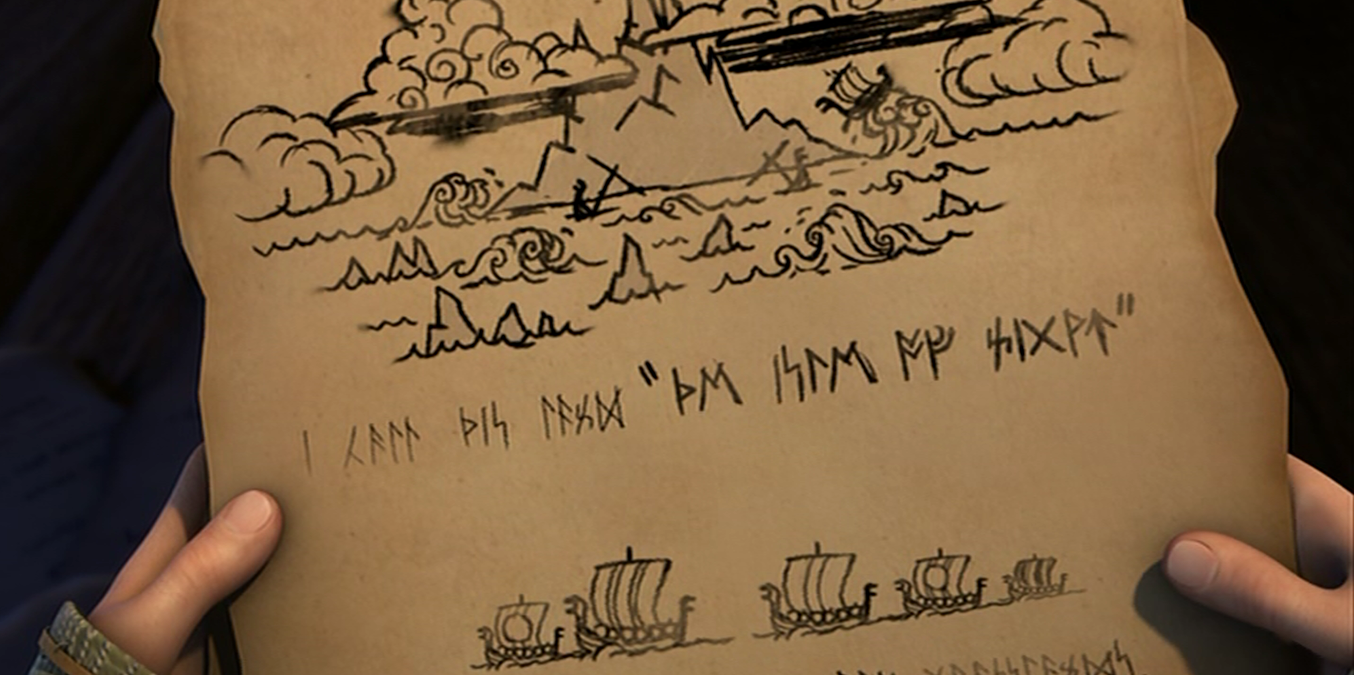
Later in the episode, Hiccup learns the valuable lesson that not all sources in the archive can be trusted, simply because they come from the archive. Hiccup’s loyal companion Toothless is a rare type of dragon called a Night Fury. No other Night Furies are known to exist on Berk or the surrounding islands. In the archive, Hiccup finds a map to an island of Night Furies called “The Isle of Night,” and promptly sets off to find more of Toothless’ kind. The map turns out to be a fake however, planted in the archive to lure Hiccup into a trap by the evil Alvin the Treacherous. This highlights the importance of finding out as much as possible about where a source comes from, and why it was produced, in order to assess its reliability and possible biases.

The fake source that leads Hiccup into a trap (Source: Dreamworks Dragons: Riders of Berk, 2013)
The fake source that leads Hiccup into a trap (Source: ‘We Are Family Part 1’ Dreamworks Dragons: Riders of Berk, 2013)

So from this one episode of a children’s television show, a lot can be learnt about the value of archives, as well as the precautions that must be taken with them. Although Bork’s Archive is a lot smaller than most archives I have come across, I would argue that it is quite representative of archives as a whole. The people of Berk value Bork’s archive as a source of collected knowledge, and are aware of the archive’s ability to help contemporary knowledge progress further. However, Hiccup learns that just because something is in an archive, doesn’t mean that it is ‘true’ or authentic; the archive can be deceptive. This may seem like a bit of a silly post, but in all seriousness, I think it is important to talk about archives and the methodology of archival research as much as possible, and why shouldn’t we do that through the medium of children’s television? So, if you need a light-hearted teaching aid for archives, or just something fun for your next tea break, you could do worse than checking out Dreamworks Dragons: Riders of Berk.