Protest has a complicated relationship with mainstream politics. Governments and political parties are frequently the targets of social movements and demonstrations, such as the recent Anti-government protests after the 2015 General Election. Political parties and politicians often appear as the subject of protests stickers. In London, the frequency of these kind of stickers increased in the weeks before the recent General Election. Generally, the streets of London did not agree with Britain’s voters.
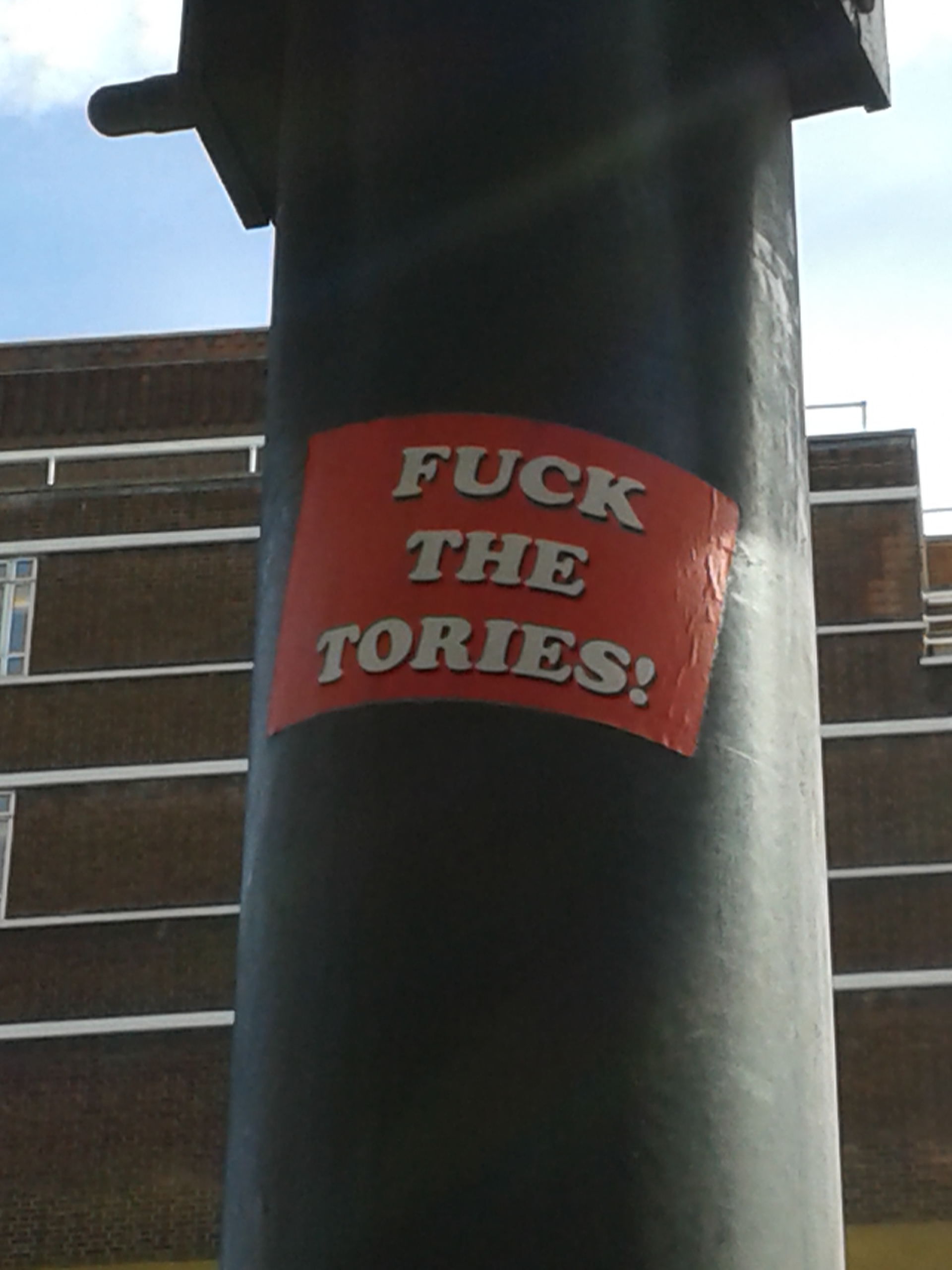
There was a decidedly anti-Conservative tone of many of the protest stickers that appeared in the weeks before the 2015 General Election (Photo: Hannah Awcock, Tottenham Court Road, 17/04/15).
UKIP also received a certain amount of criticism on the streets of London, although it then went on to win 12.6% of the vote (Photo: Hannah Awcock, Gordon Street, Bloomsbury, 17/04/15).
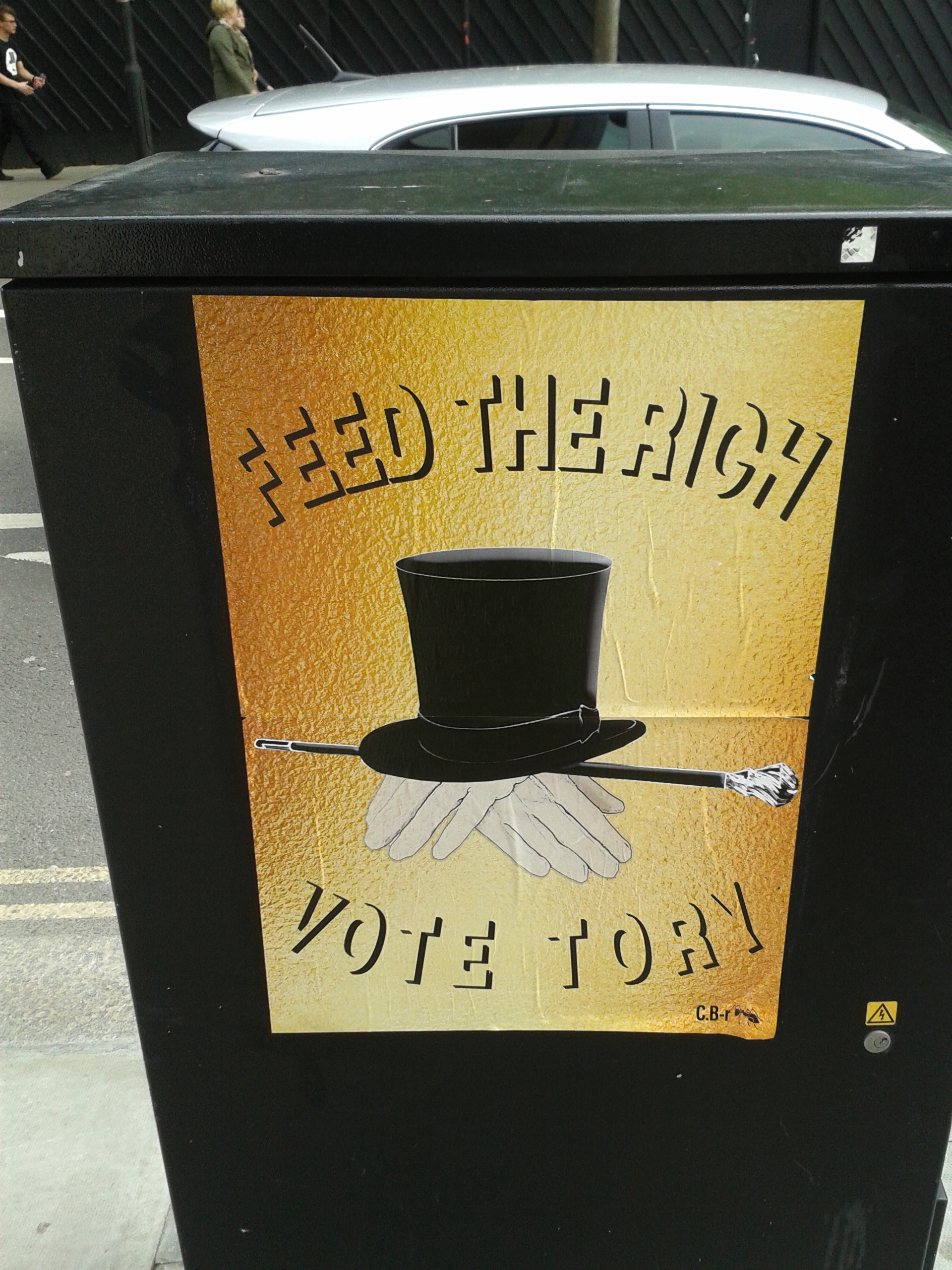
This example, more of a poster than a sticker really, directly referenced the election (Photo: Hannah Awcock, New Oxford Street, Holborn, 03/05/15).
These stickers criticized the electoral system as a whole rather than specific politic parties. They had been removed the next day (Photo: Hannah Awcock, Borough High Street, 28/04/15).
A sticker calling for Muslims not to vote. Some argue that voting is polytheism, because no one has the right to make laws except God. The sticker has an official appearance, looking more like a warning sign than a protest sticker (Photo: Hannah Awcock, Euston Station, 12/05/15).
This sticker, by the Anarchist Federation, is also calling for people not to vote, although I’m sure the motive was very different. This sticker was located on a bin, which might have been an attempt to equate voting with rubbish. Or it might have been a coincidence (Photo: Hannah Awcock, Camden High Street, 20/05/15).
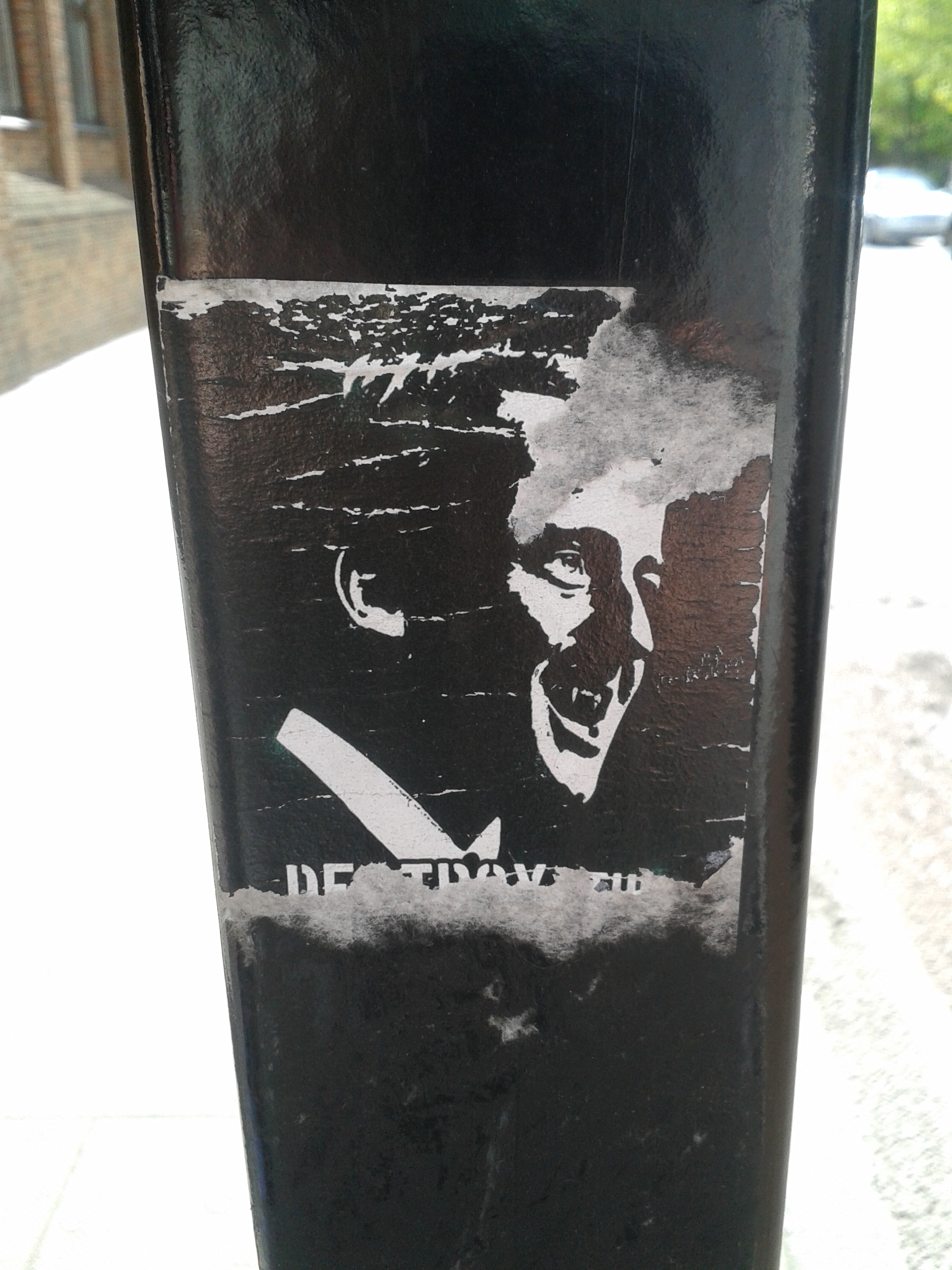
The writing on this sticker has been removed, but the image of David Cameron with vampiric teeth gets the message across I think! (Photo: Hannah Awcock, Borough High Street, 28/04/15).
This sticker, along with the next one, rank amongst my favourite stickers that I’ve come across so far in London. Avengers: Age of Ultron was released in UK cinemas on the 23rd of April, so the reference is topical as well as humorous (Photo: Hannah Awcock, New Oxford Street, Holborn, 03/05/15).
Not to be left out, Nigel Farage also gets the Avengers treatment (Photo: Hannah Awcock, New Oxford Street, Holborn, 03/05/15).
This sticker also criticises Nigel Farage’s party, using wordplay to warn of the dangers of complacency (Photo: Hannah Awcock, King’s Cross, 05/05/15).
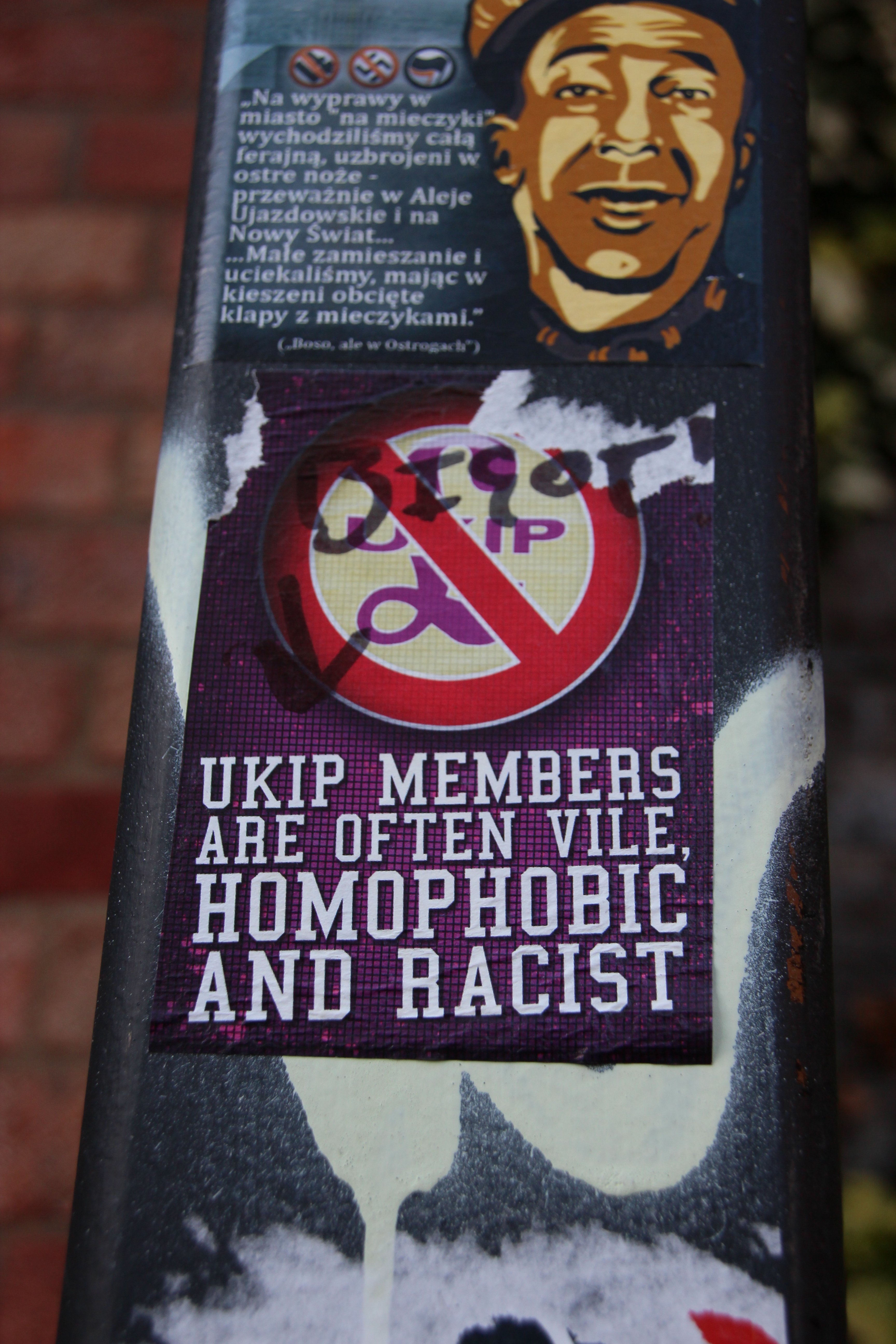
This sticker is another criticism of UKIP, but it has been grafittied, accusing the person who made the sticker of bigotry (Photo: Hannah Awcock, Regent’s Canal tow path, Camden, 20/05/15).
Many people are disillusioned with the political system, and feel like the current political parties do not offer real choice. They all argue that there is a need for continued austerity, for example. This sticker is referring to that sense of disillusionment (Photo: Hannah Awcock, Euston Road, 06/05/15).
This sticker refers to an entirely different vote, although the issue of Scottish independence was still an important one during the election campaign. This sticker is from the Yes Campaign, that argued for Scottish independence during the referendum in 2014 (Photo: Hannah Awcock, Malet Street, Bloomsbury, 17/04/15).
On this day 208 years ago a mutiny started at the Nore anchorage in the Thames estuary that would last for a month and would come to threaten the beating heart of London, they city’s incredibly lucrative trade economy. Great Britain was at war with revolutionary France, which put a huge strain on the nation’s navy, and also meant that the government could not afford to have the navy mutinying. Discontent had been brewing within the navy since the start of 1797; the men were poorly treated, their wages had not changed for over a century, and high rates of inflation were severely eroding their value. As well as this, the French revolution had badly scared Britain’s ruling elites, and they feared a similar uprising here.
In April the ships at the Spithead anchorage near Portsmouth mutinied, demanding better pay and working conditions. They won their demands, and everyone who took part was pardoned. The seamen at Nore took inspiration from those at Spithead, but their mutiny was not destined to be so successful, for a number of reasons.
The crew of the Sandwich were the first to mutiny, on the evening of the 12th of May 1797. They were joined by other ships, but some ships left the Nore to avoid taking part in the mutiny. Organisation was difficult amongst the sailors at Nore, as the ships were spread out, and they didn’t belong to a single fleet, as was the case at Spithead. Nevertheless delegates were elected from every ship, and a man named Richard Parker was elected ‘President of the Delegates of the Fleet.’
On the 20th of May (which also happens to be my birthday!), the mutineers presented a list of 8 demands to Admiral Charles Buckner. The demands started off fairly average, including pardons for the mutineers and increased pay. However the demands soon took on a more radical turn, as the mutineers demanded that the King dissolve Parliament, and immediately make peace with France. This turn outraged the Admiralty, who offered the Nore sailors only the same concessions they had given to the men at Spithead.
The mutineers blockaded the Thames, and tried to prevent any ship from entering or leaving London. Had they been successful for any great length of time, they would have crippled London’s booming economy. They also made plans to sail to France, a plan which alienated many of the sailors, causing more ships to abandon the mutiny. The government and Admiralty didn’t want to make any further concessions, especially as they were wary of the political aims of some of the more radical leaders.
The mutineers were denied food, and eventually so many ships slipped away, despite being fired on by those that remained, that the mutiny collapsed. Richard Parker was swiftly convicted of treason and piracy and hanged from the yardarm of the Sandwich, where the mutiny started. 29 leaders were also hanged, and others were flogged, imprisoned or transported to Australia.
The men at Nore were fighting for better conditions and pay, but their more radical demands meant they the government and Admiralty could not be seen to back down. The mutineers also threatened London’s economy, which the authorities could not allow to stand. The seamen’s status as members of the navy put them in a different position to civilians when it came to their working rights. Members of the armed forces do not have the same rights as the average worker; to this day, they are not allowed to join a union or go on strike. These restrictions make the actions of the sailors at Nore all the more admirable. They faced dire consequences to stand up for themselves, and Richard Parker and many others paid the price when the mutiny collapsed.
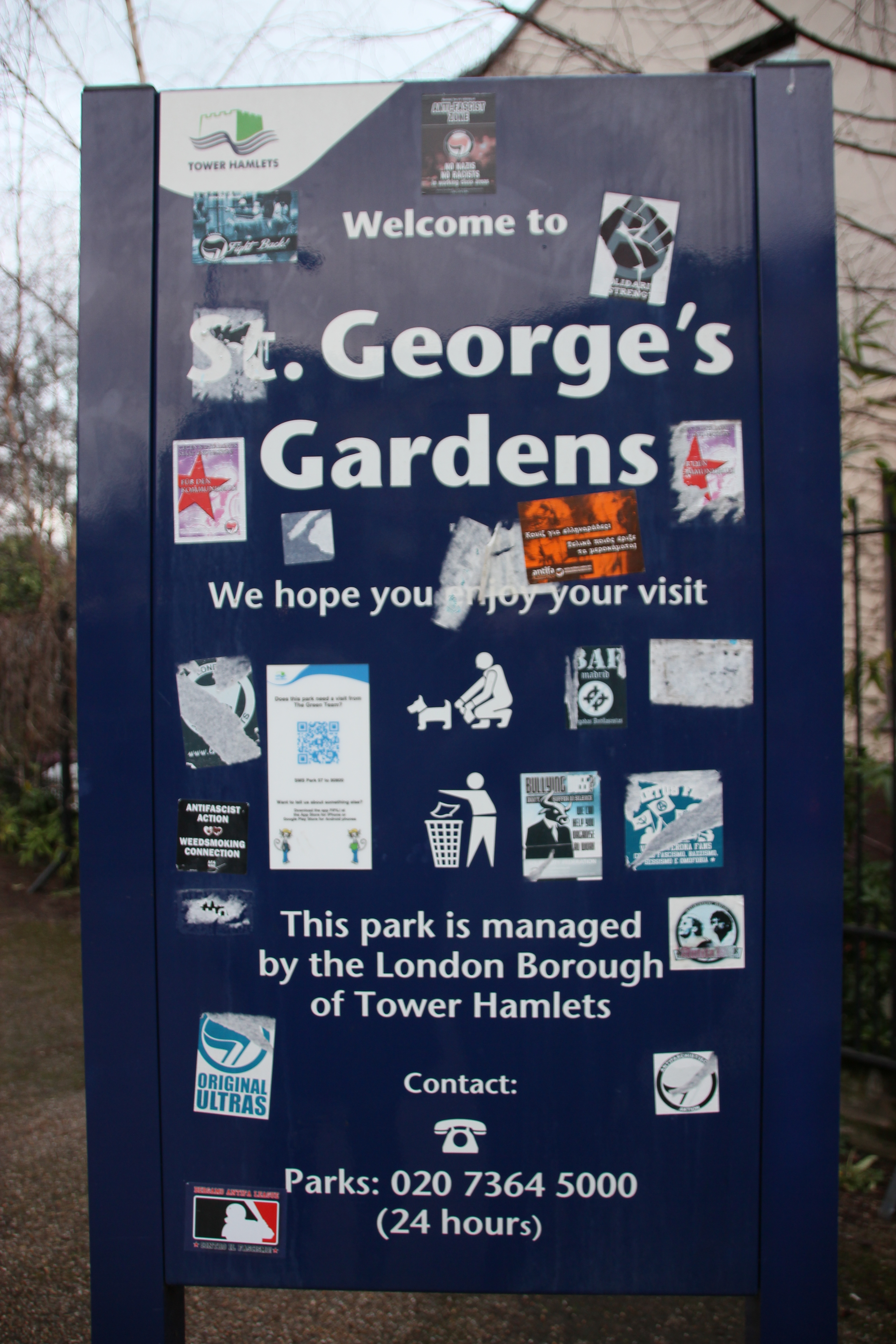
Stickers are a ubiquitous part of the urban environment, like this sign in Cable Street (Photo: Hannah Awcock).
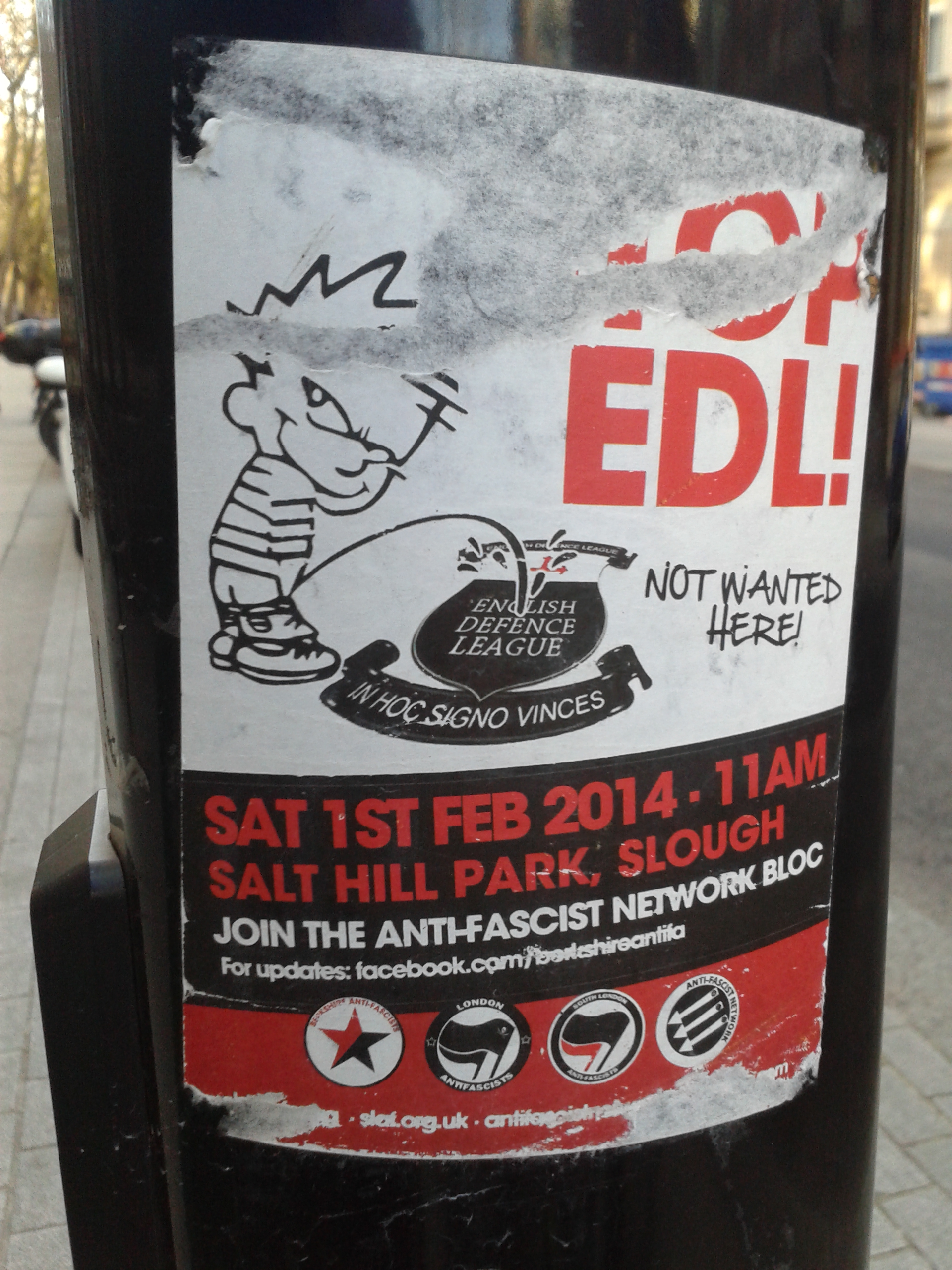
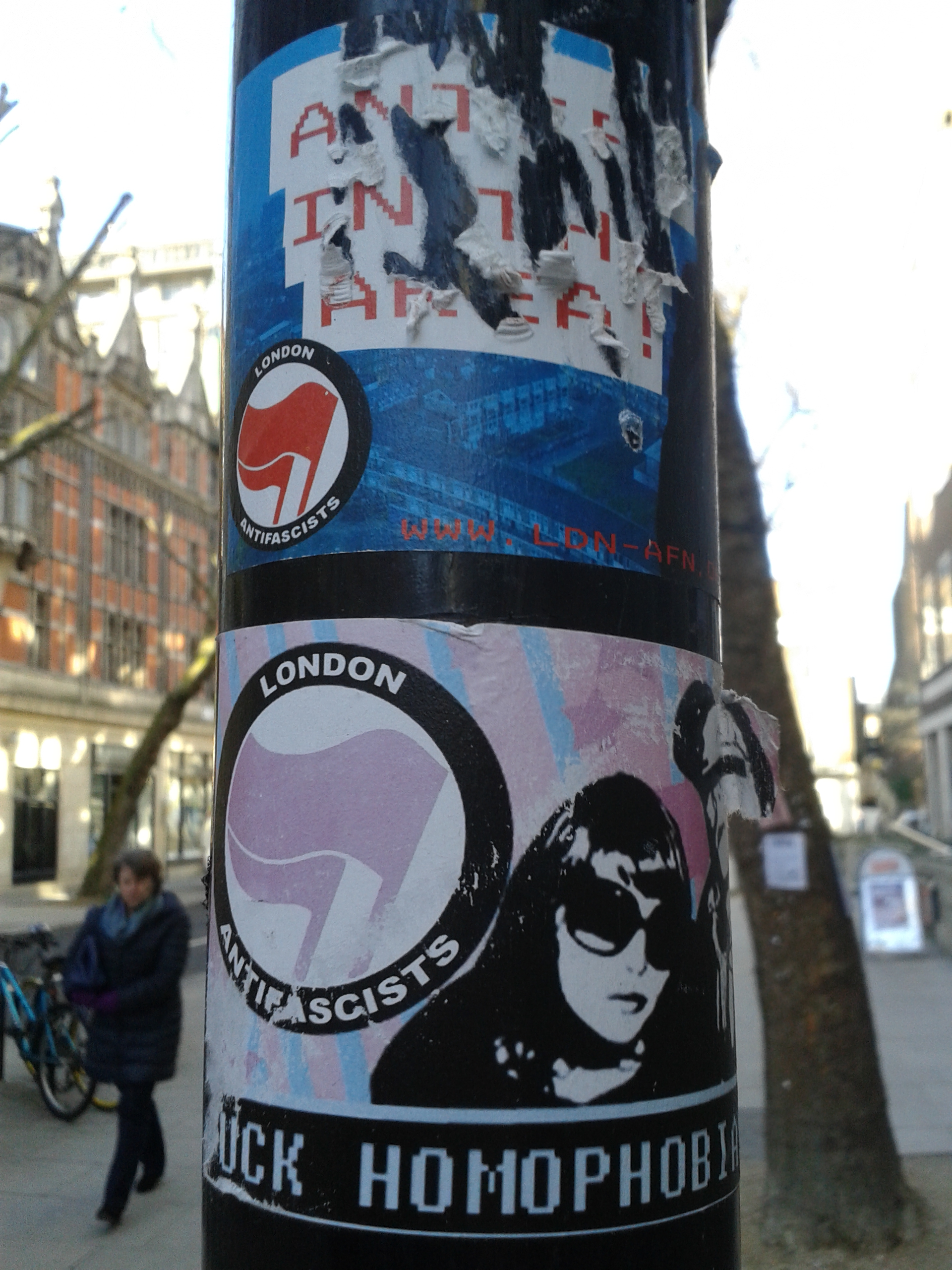
Stickers are a ubiquitous part of the urban environment, often more common than graffiti in city centres. They are quick, easy and cheap to produce and put up, so they are an effective way of getting a message across. They are employed for a variety of purposes, such as advertising, art and dissent. The meaning of many is not obvious, they remain indecipherable to all but the author and those with the right knowledge to decode them. They also come in many shapes and sizes, with many different techniques used to produce them. Like graffiti they are meant to be ephemeral, gradually disintegrating under the weight of the weather, idle hands and cleaners. As I move around London I photograph many of the protest stickers that I see, gradually building up a map of dissent in our capital. Below are some of the stickers I have seen.
A free education sticker outside of the University of London Union building in Malet Street on 17/02/15 (Photo: Hannah Awcock).
Occupy Parliament Square Sticker seen on the 02/02/15 at King’s Cross Station. This sticker has been weathered, picked, and written on- demonstrating how protest stickers can spark political debate (Photo: Hannah Awcock).
Some stickers are printed, whilst others look more handmade, like this one seen in Brick Lane on 05/06/14 (Photo: Hannah Awcock).
Some stickers advertise a particular protest, like this one in Malet Street, seen on 17/02/15 (Photo: Hannah Awcock).
Not all protest stickers are left-wing, like this one seen at Euston Station on 14/11/14 (Photo: Hannah Awcock).
Something as simple as speech bubbles can drastically alter meaning, as with this government advert, seen on 04/02/15 in Elephant and Castle. These stickers allow a sort of audience participation, so others can add more tax dodging companies (Photo: Hannah Awcock).
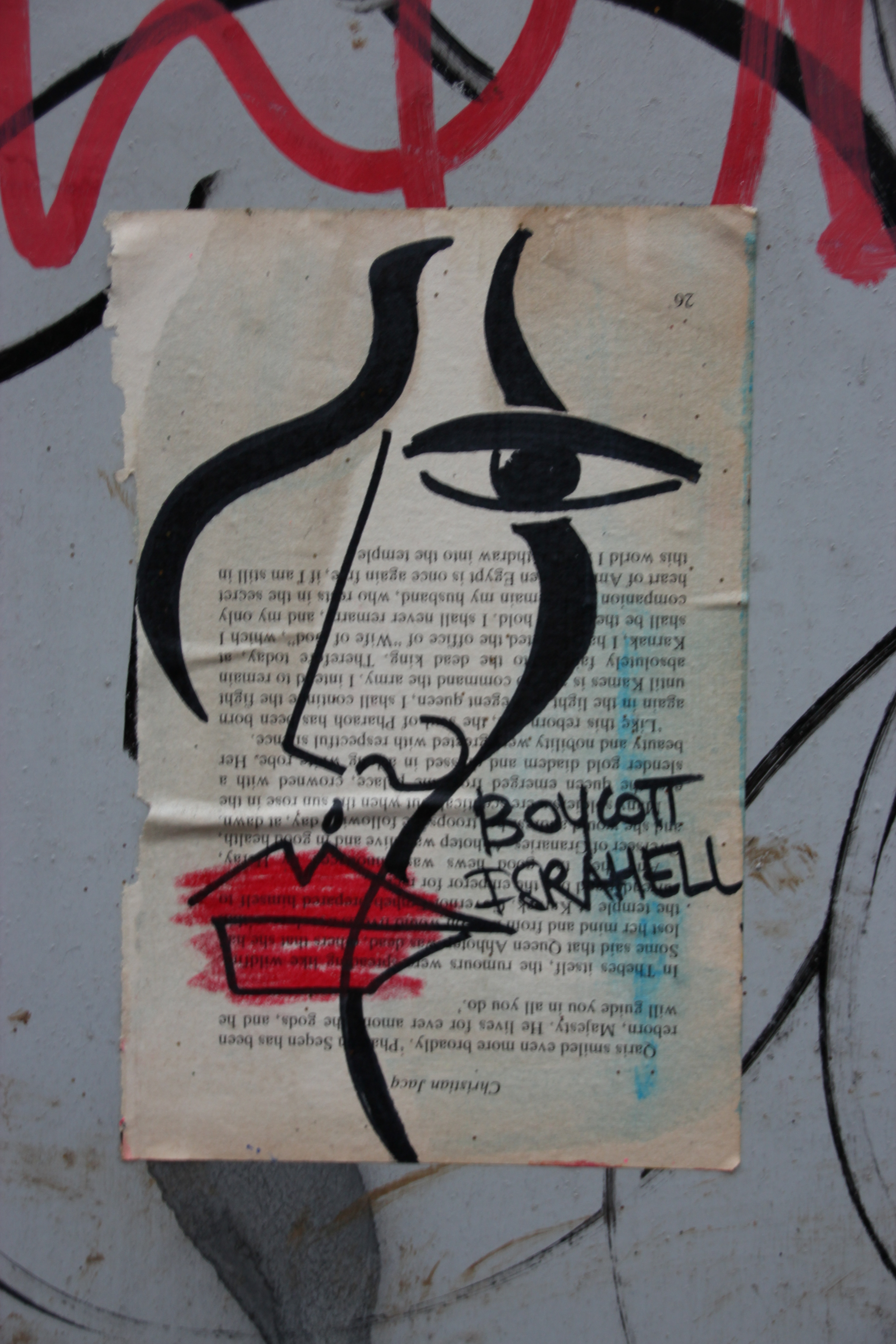
This sticker has creatively recycled a page from a book to oppose Israel. Seen in Soho on 31/12/14 (Photo: Hannah Awcock).
Protest stickers are particularly common in some areas of the city, such Malet Street in Bloomsbury, where the University of London Union building is. This photo was taken there on 17/02/15 (Photo: Hannah Awcock).
Some stickers can be seen in multiple locations across the capital. This photo was taken outside the Inner London Crown Court in Southwark, but it has also been seen at Euston Station (Photo: Hannah Awcock).
Last week I went on a second year undergraduate field trip in New York as a member of staff. I was running a project group on protests and riots in the city, so I spent the week immersing myself in the radical past and present of the big apple. There are loads of things you can do to learn about New York’s radical side, and I had a great week getting to know them all.
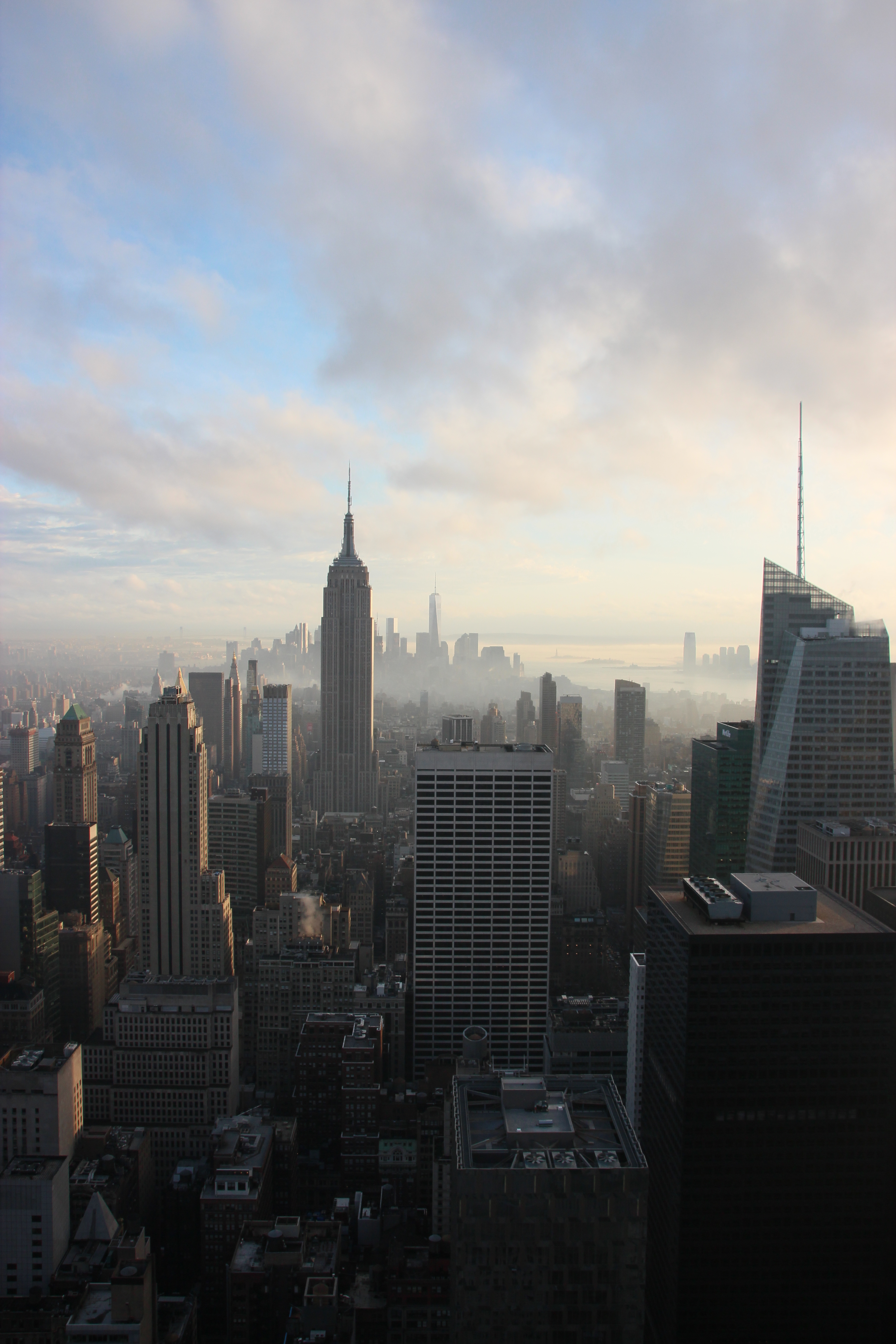
New York’s iconic skyline from the top of the Rockefeller Centre (Photo: Hannah Awcock).
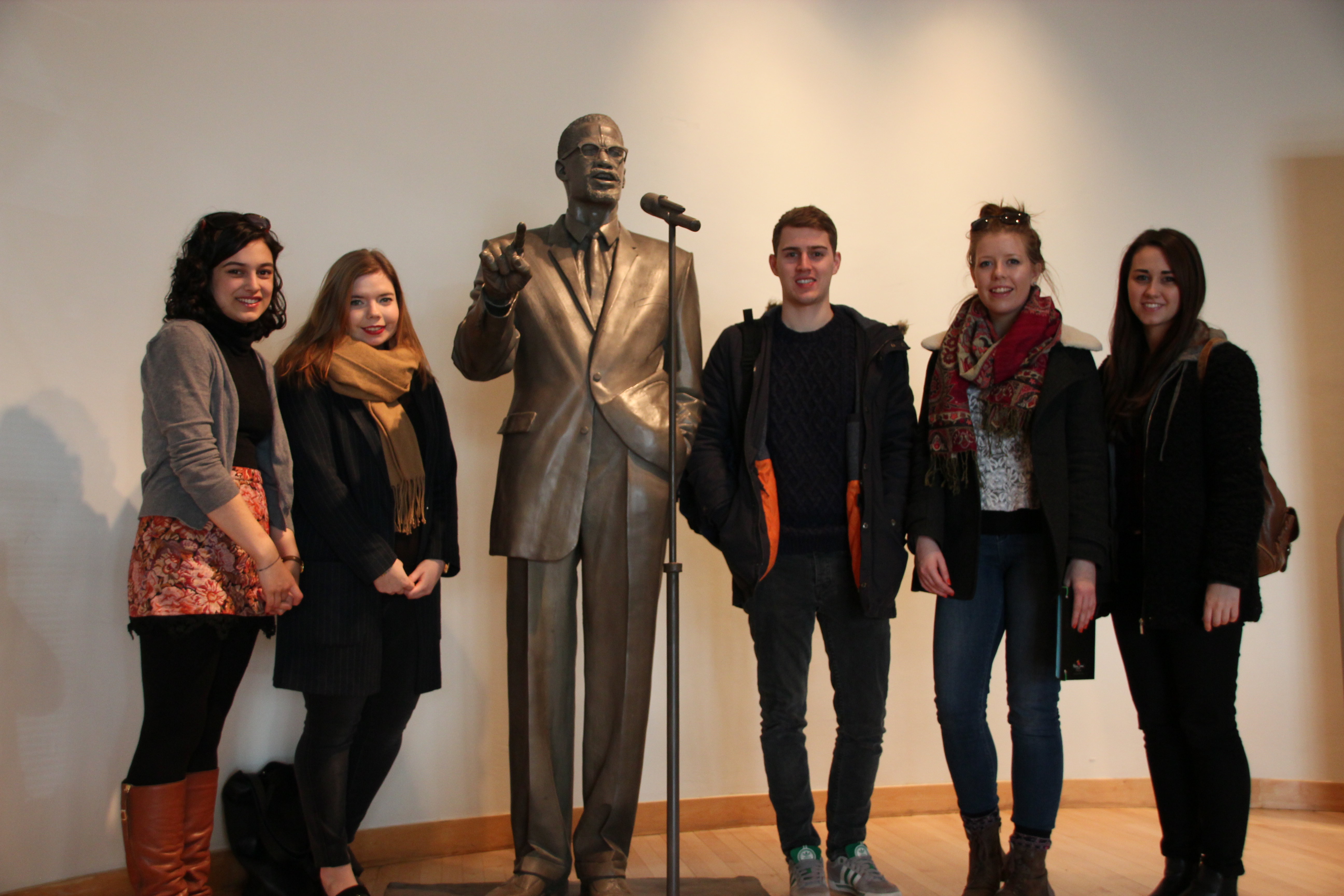
With my group of students, I visited the Malcolm X and Dr. Betty Shabazz Memorial and Education Centre in Washington Heights. The Centre aims to honour Malcolm X and his wife by continuing their legacy, supporting campaigns that fight for social justice and human rights. It is in the building in which Malcolm X was assassinated; the very spot where it happened is sectioned off, and some of the original floorboards remain. It is a very interesting space, and I think it is a much better memorial than a statue or mural (although the centre does have both of these) because it continues their campaign work rather than just passively existing as a reminder.
My students with a statue of Malcolm X at the Shabazz Centre (Photo: Hannah Awcock).
We also went on an Occupy Wall St. walking tour with founding member of Occupy and qualified tour guide, Michael Pellagatti. Pellagatti uses his extensive knowledge of the history of New York to put the Occupy movement into the context of other protests in the city, and his experience as one of the original members of Occupy Wall St. to give fascinating details about exactly what happened where in Zucotti Park and the surrounding areas.
Michael Pellagatti, the Radikal Tour Guide (Photo: Hannah Awcock).
The Museum of the City of New York’s exhibition Activist New York is another way to learn about the radical side of the city. It details various protest movements, from resistance to religious intolerance in New Amsterdam to the recent controversy over plans to build a mosque at 51 Park Street near Ground Zero. It is a fantastic introduction to the city’s radical history, particularly if, like me, you have little prior knowledge. Unfortunately it is not a permanent exhibition, so won’t be around forever. The Museum also has a 20 minute video about the history of New York, which is a brilliant introduction to how the city developed.
The Activist New York Exhibition at the Museum of the City of New York (Photo: Hannah Awcock).
If you are interested in doing your own research about protest in New York, then the Interference Archive in Brooklyn is an ideal place to go. The archive’s collection houses ephemera (leaflets, posters, t-shirts, badges, banners, zines etc.) from a wide variety of protests across the world. The aim of the archive is to explore the relationship between cultural production and social movements, and it does this through a whole range of events and exhibitions, as well as its collections.
The Interference Archive (Photo: Hannah Awcock).
As with other cities, there are also sign of contention and controversy all over the streets of New York. Graffiti is common, as are protest stickers, although I did not spot as many stickers in New York as I have done in London. Some of my students witnessed a Black Lives Matter protest in a clothes store whilst they were out shopping. It was a case of being in the right place at the right time, and shows how protest can occur in every aspect of urban life.
A protest sticker referring to the recent controversy over the police treatment of black people (Photo: Hannah Awcock).
Although not as old as London, New York still has a vibrant and fascinating history, and protest and contentious politics are a big part of that history. Obviously there is any number of things to see and do in New York, but if you do go, perhaps consider getting to know its radical side, as it is such an integral part of the city.
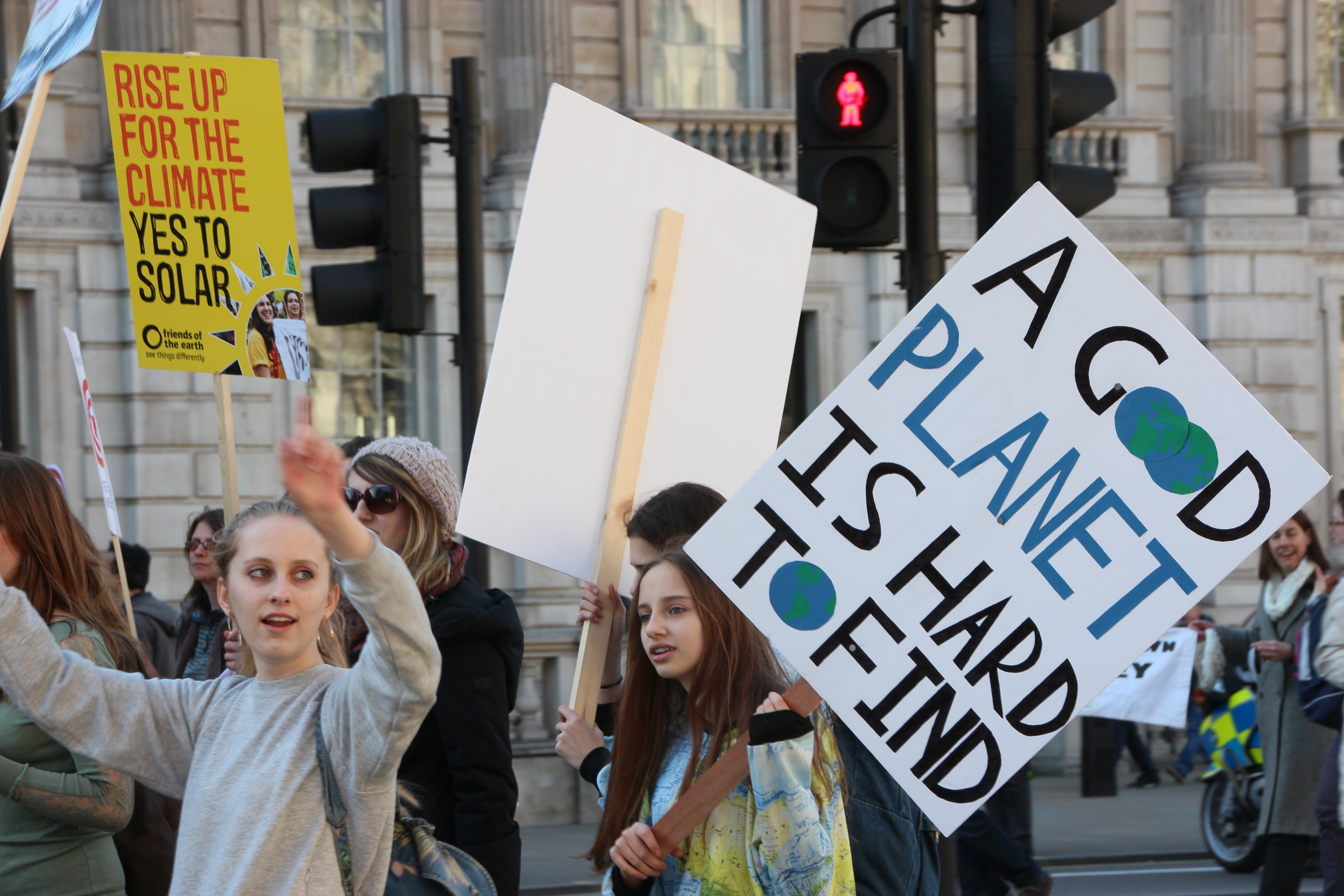
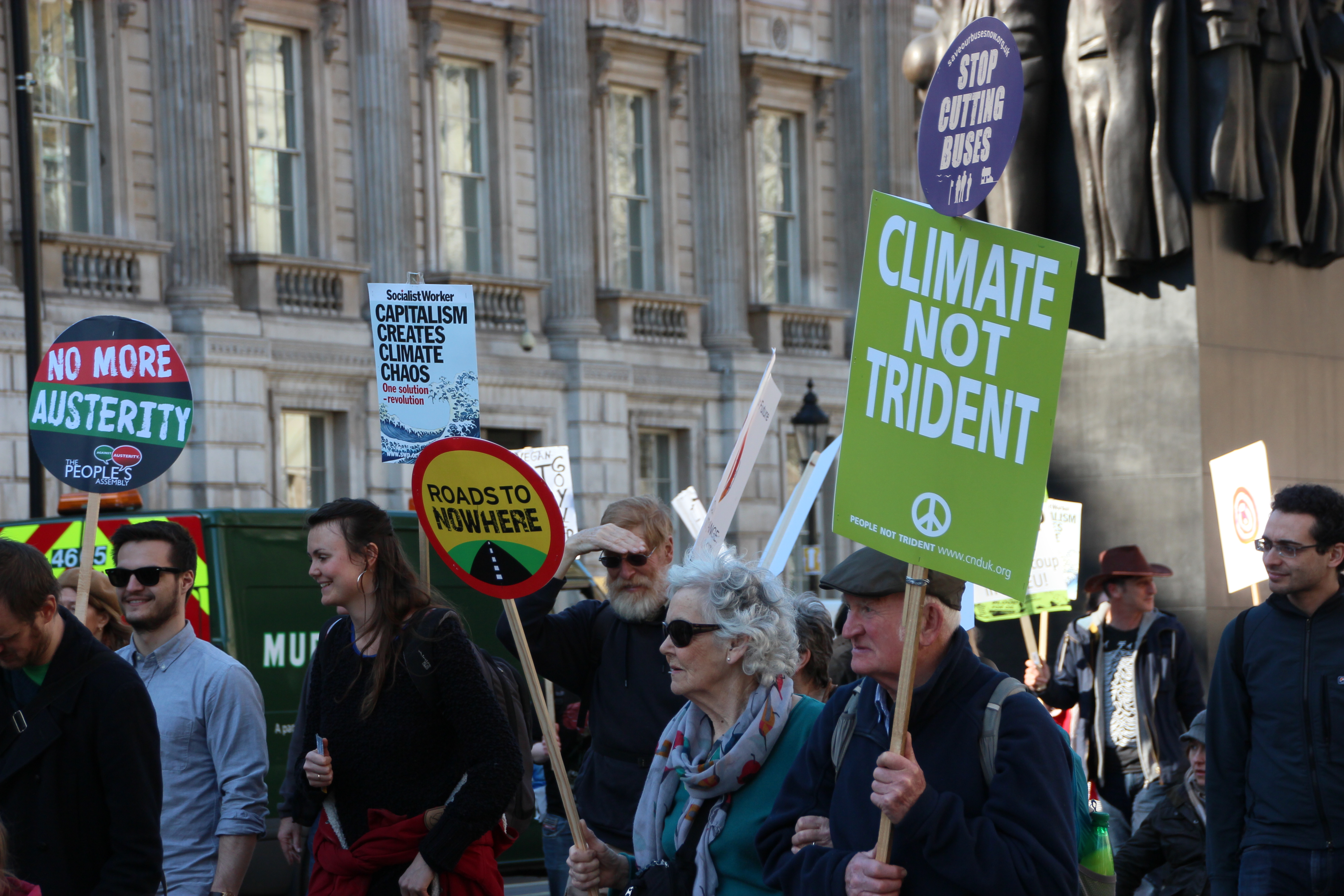
Westminster was very busy on Saturday (the 7th of March), with both the Time to Act and Million Women Rise marches taking place. No sooner did the end of the Climate Change march pass Trafalgar Square towards Parliament Square, than Million Women Rise entered the square for a rally, demonstrating just how important this small area of London is to British politics. The marches represented very different issues, with Time to Act calling for urgent changes to the way we deal with climate change, and Million Women Rise demanding an end to male violence against women, tying in with International Women’s Day on the 8th of March. The beautiful weather combined with the bright placards creative chants and upbeat atmosphere to create a thoroughly enjoyable spectacle. Here are some of my photos from the day.
People had come from all over the country to protest against issues related to climate change in their local area, but there were several London groups (Photo: Hannah Awcock).
People of all ages attended the march…. (Photo: Hannah Awcock)
…from the young… (Photo: Hannah Awcock)
…to the old, several generations were represented by the demonstrators. I think climate change marches tend to be more friendly and safe events than protests around some issues (Photo: Hannah Awcock).
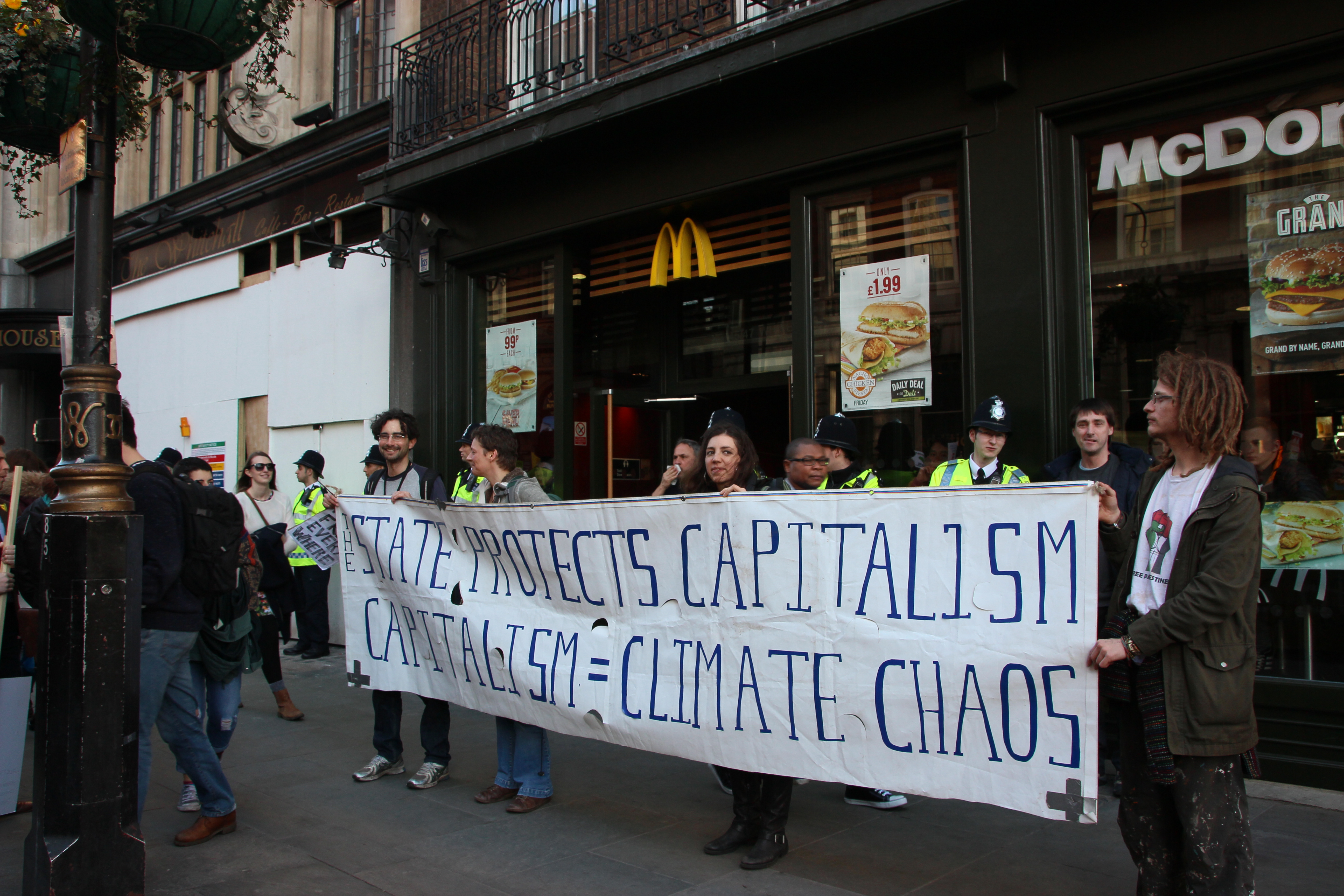
This group stopped in front of a McDonalds to help make their point (Photo: Hannah Awcock).
As usual, there were generic placards printed large numbers by groups such as the Green Party, the CND, and Left Unity… (Photo: Hannah Awcock)
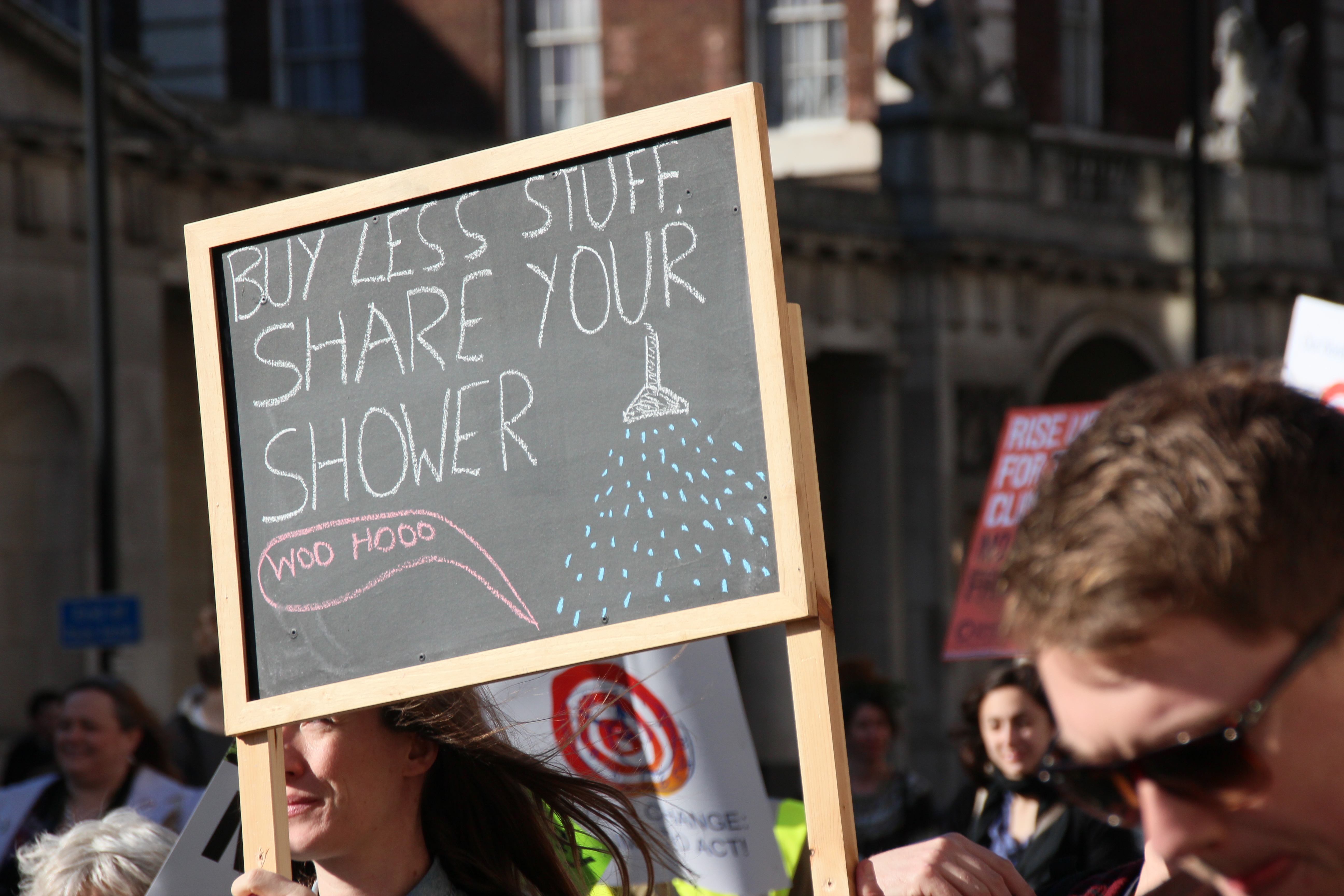
…as well as home-made efforts, which frequently take a comic approach to the issues (Photo: Hannah Awcock).
Lots of issues were represented in the Time to Act march, including fossil fuels, TTIP, runways and Trident. Drax is a coal-fired power station in Yorkshire that provides about 7% of the UK’s electricity supply (Photo: Hannah Awcock).
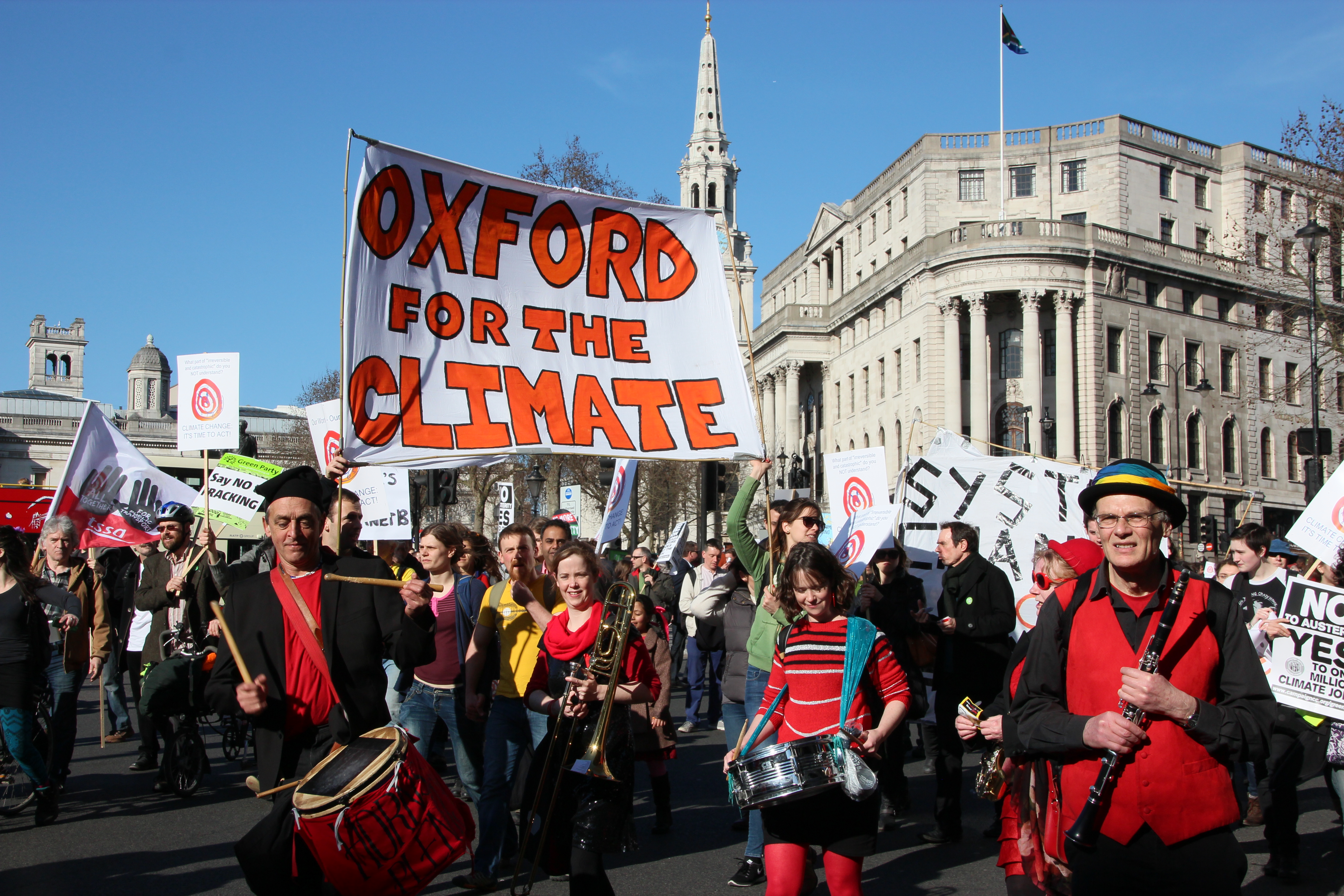
This contingent from Oxford brought their own band. Music is a really important part of protest marches, helping to left the mood and keep the marchers upbeat and energised (Photo: Hannah Awcock).
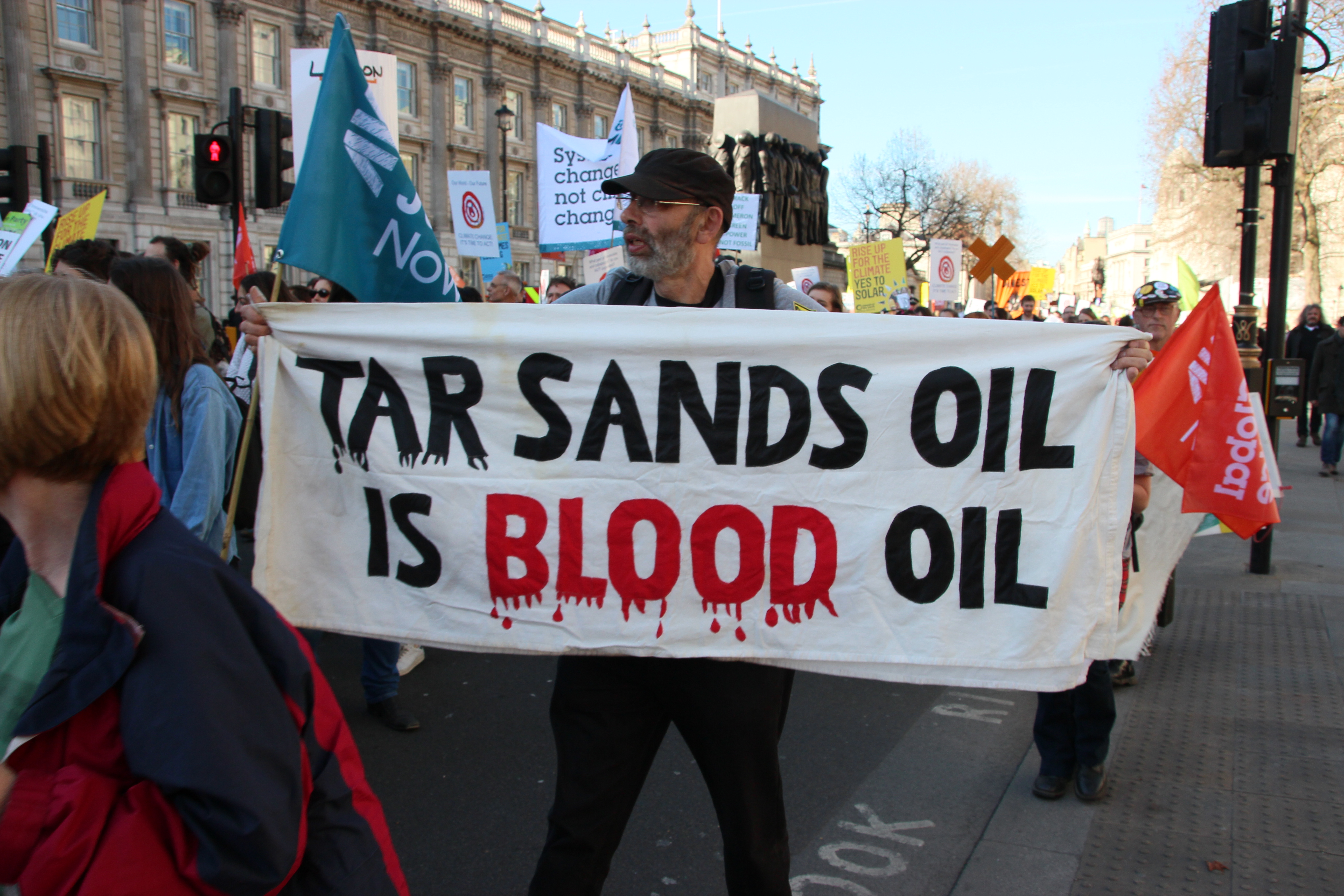
Whilst fracking was a popular topic of disdain for the marchers, this gentleman decided to focus on tar sands. Tar sands is not a method of fossil fuel extraction that is used in the UK, but many contemporary activists take an international approach to their campaigning (Photo: Hannah Awcock).
This protester brought his bike along, presumably to promote the environmentally -friendly form of travel. The placard in his basket is a play on Shell’s logo and name (Photo: Hannah Awcock).
One of the last placards of the Time to Act march was this one, calling for spectators to join the march (Photo: Hannah Awcock).
The Million Women Rise march arrived in Trafalgar Square just as the last Time to Act protester passed by. They too had many mass-produced placards (Photo: Hannah Awcock).
But there were also home-made placards too, like this one (Photo: Hannah Awcock).
Although violence against women is a more focussed topic than climate change, other issues were still brought in by demonstrators, such as this sign about migration (Photo: Hannah Awcock).
Lots of different groups were represented on the march, from a huge variety of backgrounds. From Essex… (Photo: Hannah Awcock)
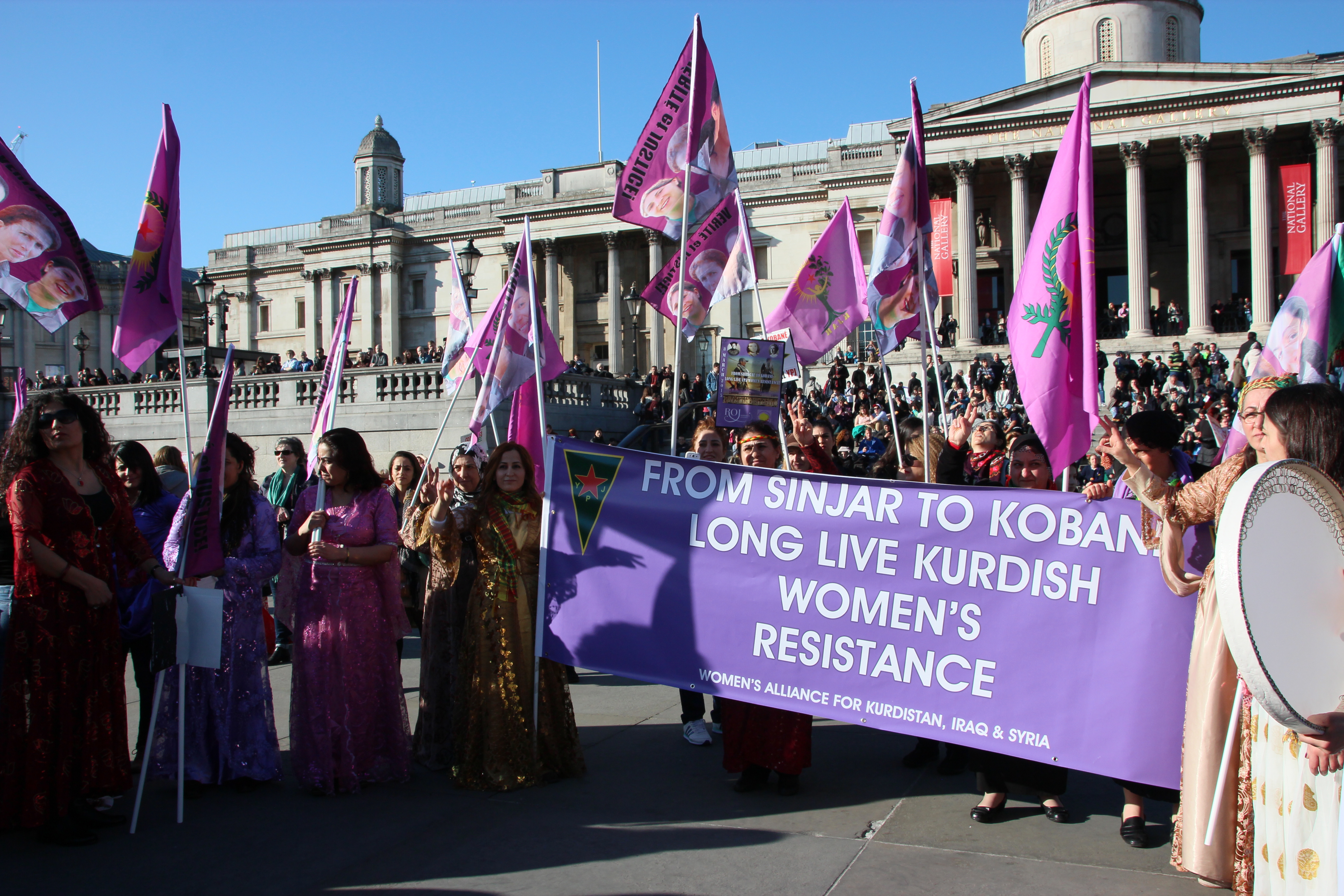
…to Kurdistan, each group had a different style and approach (Photo: Hannah Awcock).
This was one of my favourite banners from the day, with the bright colours and striking imagery. Unfortunately, I doubt it will ever be seen in the National Gallery! (Photo: Hannah Awcock).
Most marches end with a rally, with speakers, and sometimes music. The Million Women Rise stage was set up in front of Nelson’s Column (Photo: Hannah Awcock).
Turbulent Londoners is a series of posts about radical individuals in London’s history who contributed to the city’s contentious past. My definition of ‘Londoner’ is quite loose, anyone who has played a role in protest in the city can be included. Any suggestions for future Turbulent Londoners posts are very welcome. The fourth Turbulent Londoner is Robert Lockyer, a 17th Century Leveller and parliamentarian who became a martyr for his cause.
Illustration from the 1649 title page of The Declaration and Standard of the Levellers of England (Source: Wikimedia).
Since 2009, Crossrail has been burrowing its way beneath central London. Considering London has over 2000 years of history, it is not surprising that Crossrail is engaged in one of the largest archaeological projects the UK has ever seen. Excavation is soon to begin on the Bedlam burial ground under Liverpool Street Station, which was used in the 16th and 17th Centuries, and is the location of the final resting place of Robert Lockyer, Leveller and parliamentarian.
Robert Lockyer was alive several hundred years before any of the Londoners I have featured so far, and he was not a member of the aristocracy, so relatively little is known about his life. He would have faded into obscurity if not for the dramatic circumstances of his death when he was just 25. Lockyer was probably born in Bishopsgate, London, and joined the parliamentarian army in 1642, the year in which civil war broke out between King Charles I and the Long Parliament.
Lockyer was a Leveller, a group that was considered radical even in the English republic established after the execution of Charles I in 1649. They were the first democratic movement in Britain, demanding universal manhood suffrage, equality before the law, and religious tolerance. Their ideas were influential in the American and French revolutions, and they continue to inspire activists.
London was politically volatile after Charles’ execution, and some units of the army were moved outside the city to separate them from Leveller influence. Lockyer’s regiment was already restless, and when the order was given to move to Essex on the 26th April 1649 Lockyer and the other men under Captain John Savage refused to leave. They took the troop’s colours and barricaded themselves in The Bull Inn, a well-known radical meeting place. Captain Savage found them and ordered them back, but they refused unless they were paid a fortnight’s wages with arrears. Lockyer was singled out with a direct order to obey, but still he refused.
Eventually the Commander-in-chief of the Army, Sir Thomas Fairfax, and Oliver Cromwell himself arrived, and everyone was arrested. The 6 ringleaders, including Lockyer, were sentenced to death. Lockyer was the only one who was executed though, by firing squad in St Paul’s Churchyard the next day. He became a martyr for the Leveller cause, and his funeral was attended by 4000 Londoners wearing black and sea green (the colour of the Levellers) ribbons, a powerful show of force for the Leveller cause.
Robert Lockyer was not rich, famous, or politically powerful. Yet as a result of his actions he is still remembered nearly four centuries later, and out of the 3000 skeletons expected to be dug up during the Crossrail excavation, his is the one causing excitement. Neither Lockyer nor the Levellers managed to achieve their goals, and he and many others suffered a great deal for their beliefs. However he proved an inspiration for many activists and campaigners since, and it is impossible to tell how many successful campaigns his story played a role in motivating.
Gentles, Ian J. ‘Lockyer, Robert (1625/6–1649)’, Oxford Dictionary of National Biography. Oxford University Press. 2004, accessed 9th February 2015 http://www.oxforddnb.com/view/article/47102
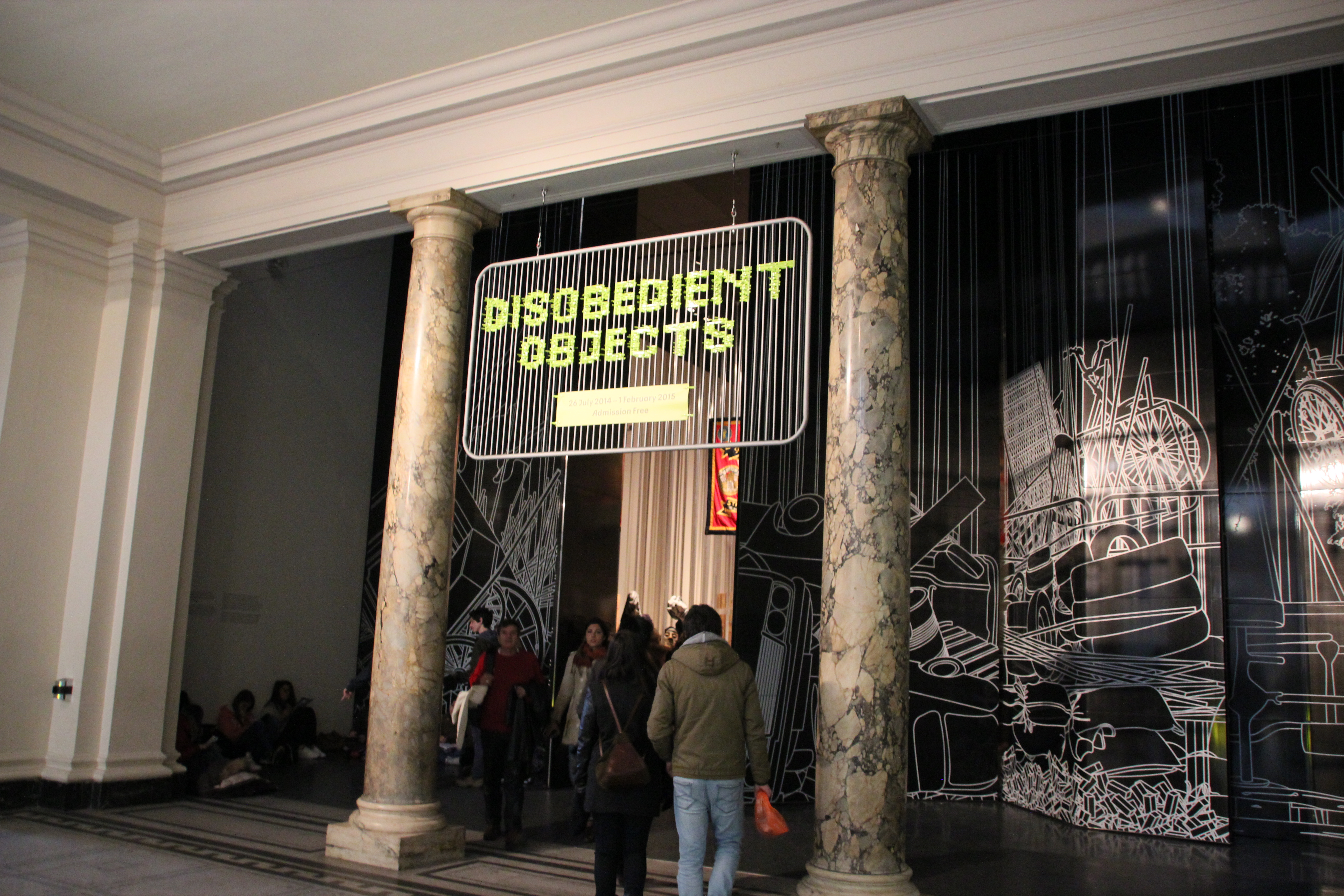
The entrance to the ‘Disobedient Objects’ exhibition at the V&A museum (Photo: Hannah Awcock).
Last weekend, the Disobedient Objects exhibition at the V&A museum in South Kensington closed. For the past 6 months, when you walked into the front entrance of the museum on Cromwell Road you could turn right and walk into a gallery filled with the objects of protest, from a suffragette branded teacup, through a remote-controlled spray-paint machine, to giant inflatable cobblestones. Safe to say it’s not what you would usually expect to find in “the world’s greatest museum of art and design.”
Since its foundation in 1852, the V&A museum (named after Queen Victoria and her husband Prince Albert), has housed a collection representing 5,000 years of human history, in the form of art works of all kinds, from all over the world. The purpose of Disobedient Objects was “to examine the powerful role of objects in movements for social change” (V&A, n.d.) using “objects that open histories of making from below.” (Flood and Grindon, 2014; 8).
The ‘Disobedient Objects’ exhibition (Photo: Hannah Awcock).
I visited the exhibition several times, and I thought it was fantastic. It had objects of all shapes and sizes from social movements and protests all over the word, and it even had an empty space on the wall for visitors to contribute to as more social movements and contentious issues developed over the course of the exhibition. However I did notice some interesting conflicts between the culture of the museum and the cultures of protest represented by the objects in the exhibition. Protest is ephemeral, messy, and anti-hierarchical, and it was very interesting to observe how the museum, a place of quiet permanence, dealt with these characteristics.
The ceramic ‘intervention’ at the entrance to the V&A (Photo: Hannah Awcock).
The first example of conflict appeared before you even entered the exhibition. On the walls outside the main entrance to the V&A is a ceramic ‘intervention,’ made by Carrie Reichardt and the Treatment Rooms Collective. It is beautiful, but it was done with the full permission and approval of the museum, and is mounted on metal frames, so it can easily be removed. It demonstrates a common phenomenon that occurs when subversive subcultures are accepted into mainstream culture; they lose some of their edge, their spontaneity, often the things that made them so exciting in the first place.
The seating provided for watching a short film (Photo: Hannah Awcock).
Another example I noticed of the clash between museum and protest culture was during my last visit. It was the final day that the exhibition was open, and it was very busy. A short film was projected onto the back wall of the gallery, and there were a few bench-like things in the ply-wood used for displays so that people could sit and watch it. On this day people were sitting on the backs of the benches, with their feet on the ‘seat’ bit, to watch the film because it was so busy. They were ordered down by a V&A employee, a triumph of the strict rules of museum spaces over the freedom of protest spaces.
A sticker in the exhibition protesting a pay cut for V&A staff (Photo: Hannah Awcock).
My final example is less a contradiction, and more just something I thought noteworthy. I have already mentioned the space in the exhibition set aside for visitor-generated materials as the exhibition progressed. On this wall, and dotted around the rest of the exhibit were stickers protesting a 10% pay cut at the V&A. If you celebrate methods and practices of criticism, you have to be prepared to receive some criticism yourself.
Subversive subcultures such as graffiti, skateboarding and protest have all been appropriated by mainstream culture to various extents over the past few decades. I think that Disobedient Objects is a good example of this process, and highlights some of the difficulties involved. The social norms and expectations of museums are very different from those of protest. Disobedient Objects existed on the border between the two, a precarious position that was reflected in the constant negotiations around how the space was used by visitors and controlled by the museum.
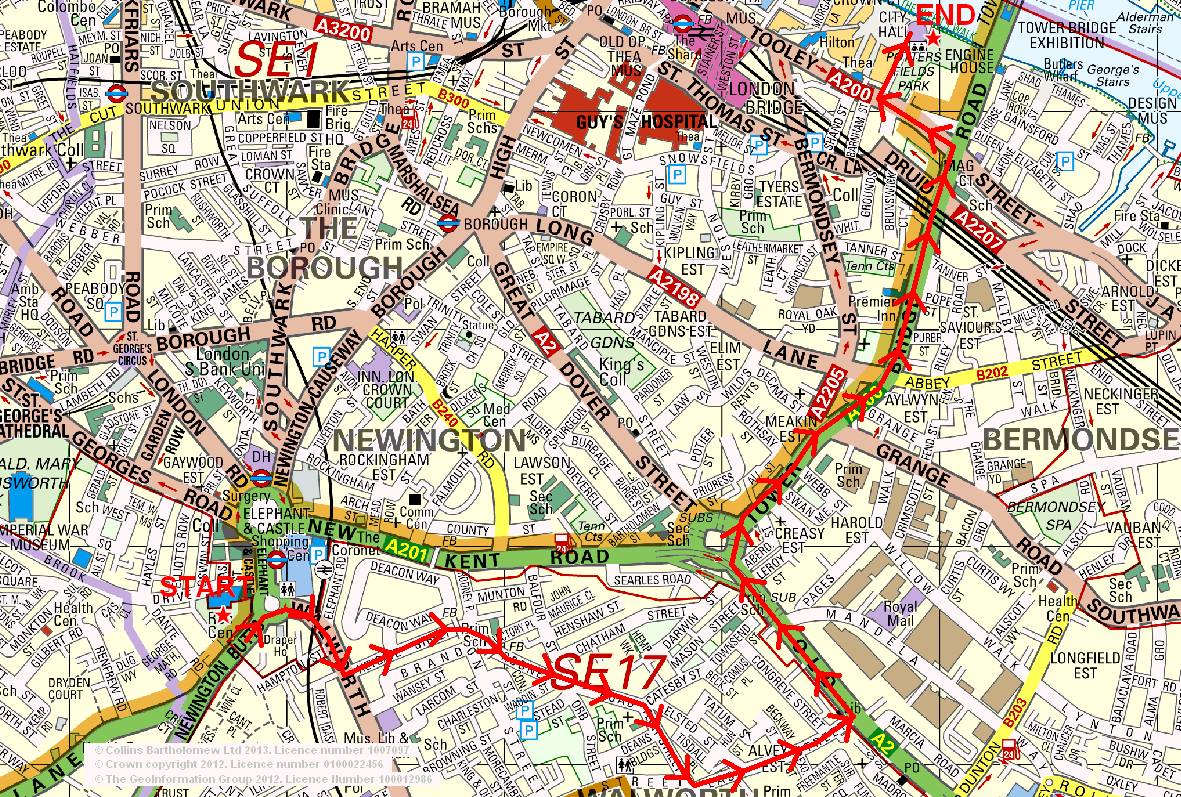
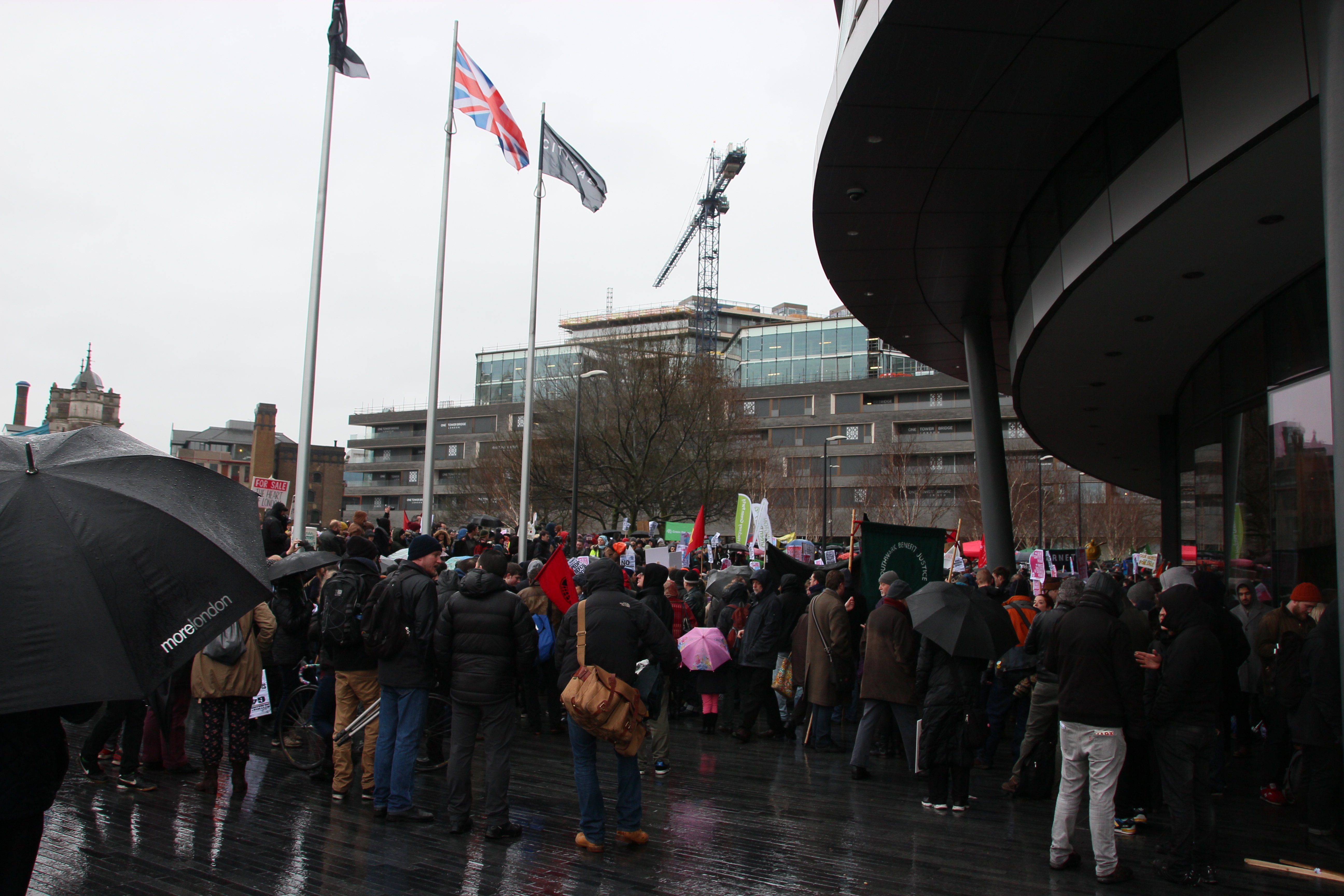
The March for Homes finished with a rally at City Hall (Photo: Hannah Awcock).
Today I took part in the March for Homes, a demonstration calling for more affordable housing in London. There were 2 marches, starting in Elephant and Castle and Shoreditch, that met at Tower Bridge and then proceeded to City Hall for a rally. In this post are some of the photos I took of the event, with a few of my reflections thrown in.
The marchers starting to gather in Elephant and Castle (Photo: Hannah Awcock).
I was on the march starting in Elephant and Castle, because I live in the area, and I see the effects of the housing crisis every day. There are at least 2 major developments going on there at the moment; One the Elephant, which can be seen in the above photo, and the redevelopment of the former Heygate Estate. The amount of social housing that is included in these two developments is tiny, and laughably insignificant. The housing crisis in London is something that I feel very strongly about. I am lucky enough to have funding for my PhD and no dependents, so I can afford housing quite easily. But there are many thousands who are not so fortunate, and although I love London, I know that I won’t be living here long term, because the city is simply not affordable, even if you manage to get a decent job.
Large groups often provide placards for demonstrations, like this made by the Socialist Workers Party (Photo: Hannah Awcock).
A speaker at Elephant and Castle from the National Union of Teachers (Photo: Hannah Awcock).
Speakers at Elephant and Castle included many representatives from local housing campaigns. I believe that the fundamental cause of the housing crisis is that housing in London is viewed primarily as an investment. Houses and flats are bought as a means of making money, and the owners don’t even need to bother renting them out, because prices are rising so fast that they can make plenty of money anyway, just by selling them on after a year or two. The fundamental purpose of housing is providing a space of safety and warmth, but this has been forgotten, or is ignored, by those in charge. As a result, people suffer.
Another placard at Elephant and Castle (Photo: Hannah Awcock).
The march set off towards the empty wasteland that used to be the Heygate Estate (Photo: Hannah Awcock).
The south route of the March for Homes went through several large areas of social housing (Source: March for Homes, 2014).
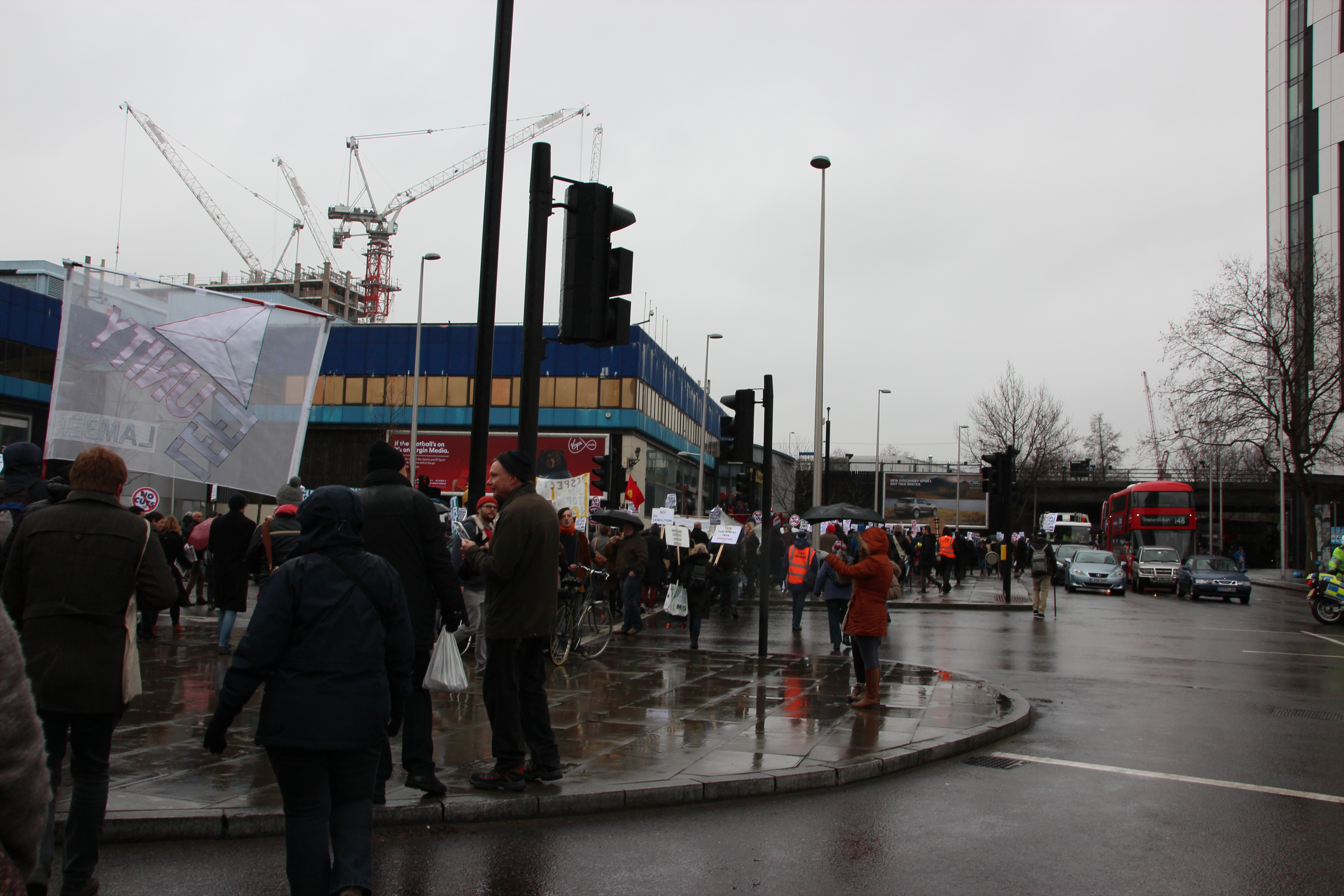
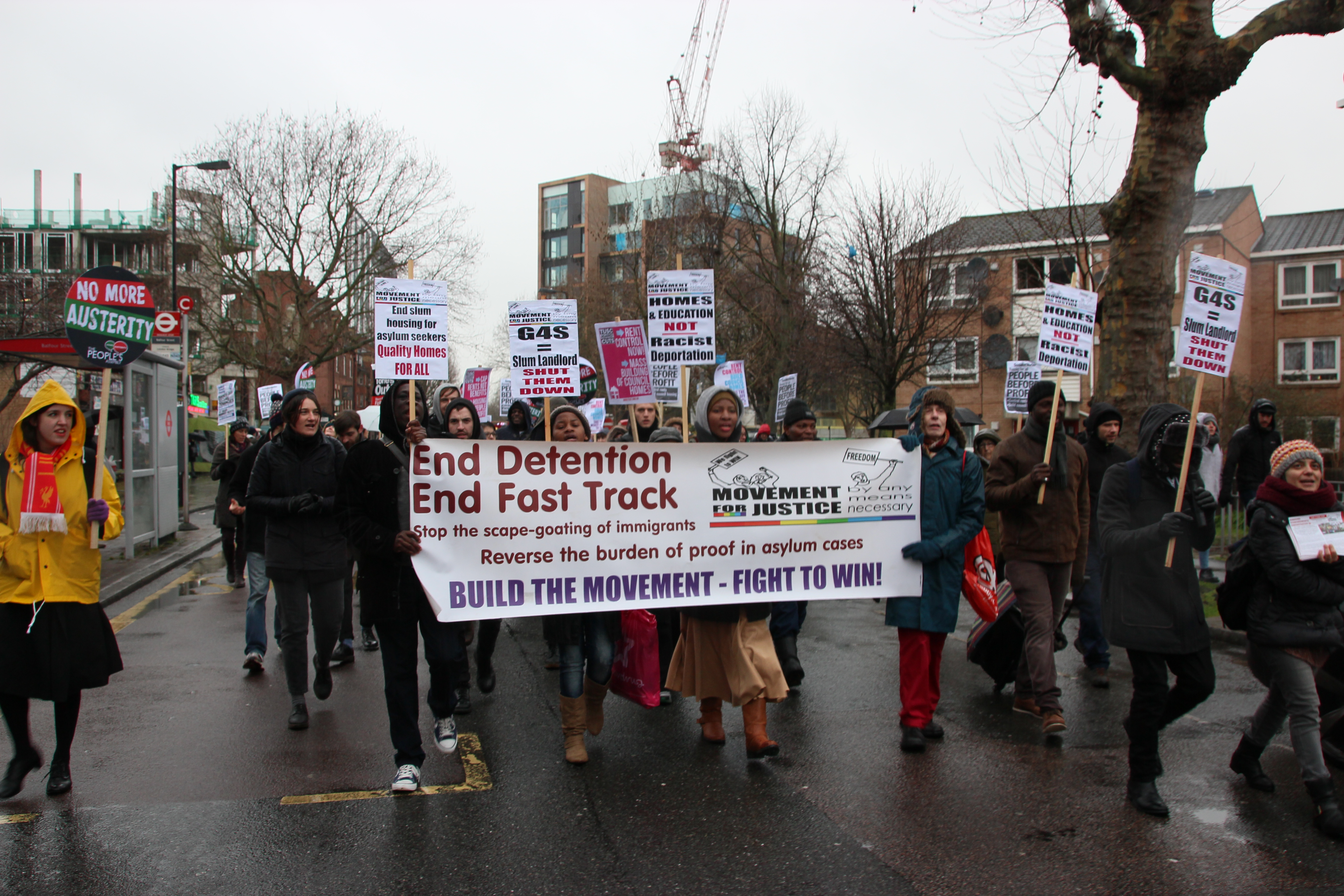
We marched through several large council housing estates on the way to City Hall. These are the areas in which people are directly affected by the crisis, and I hope that some of those took heart from the sight of us processing down the streets in the rain. Protests can be an expression of solidarity as well as a method of publicising a cause, and I hope that we did both today.
The march went right through the middle of what used to be the Heygate Estate (Photo: Hannah Awcock).
Many groups were represented at the March for Homes (Photo: Hannah Awcock).
Some creative editing of a hoarding for a development by L&Q (Photo: Hannah Awcock).
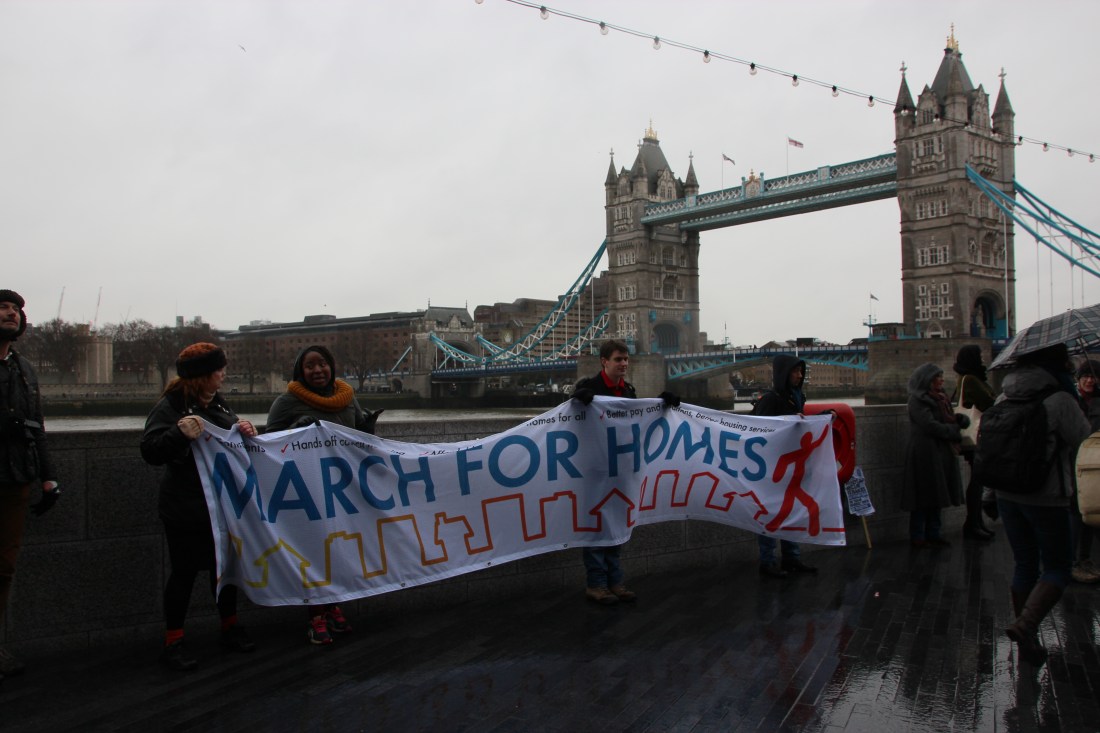
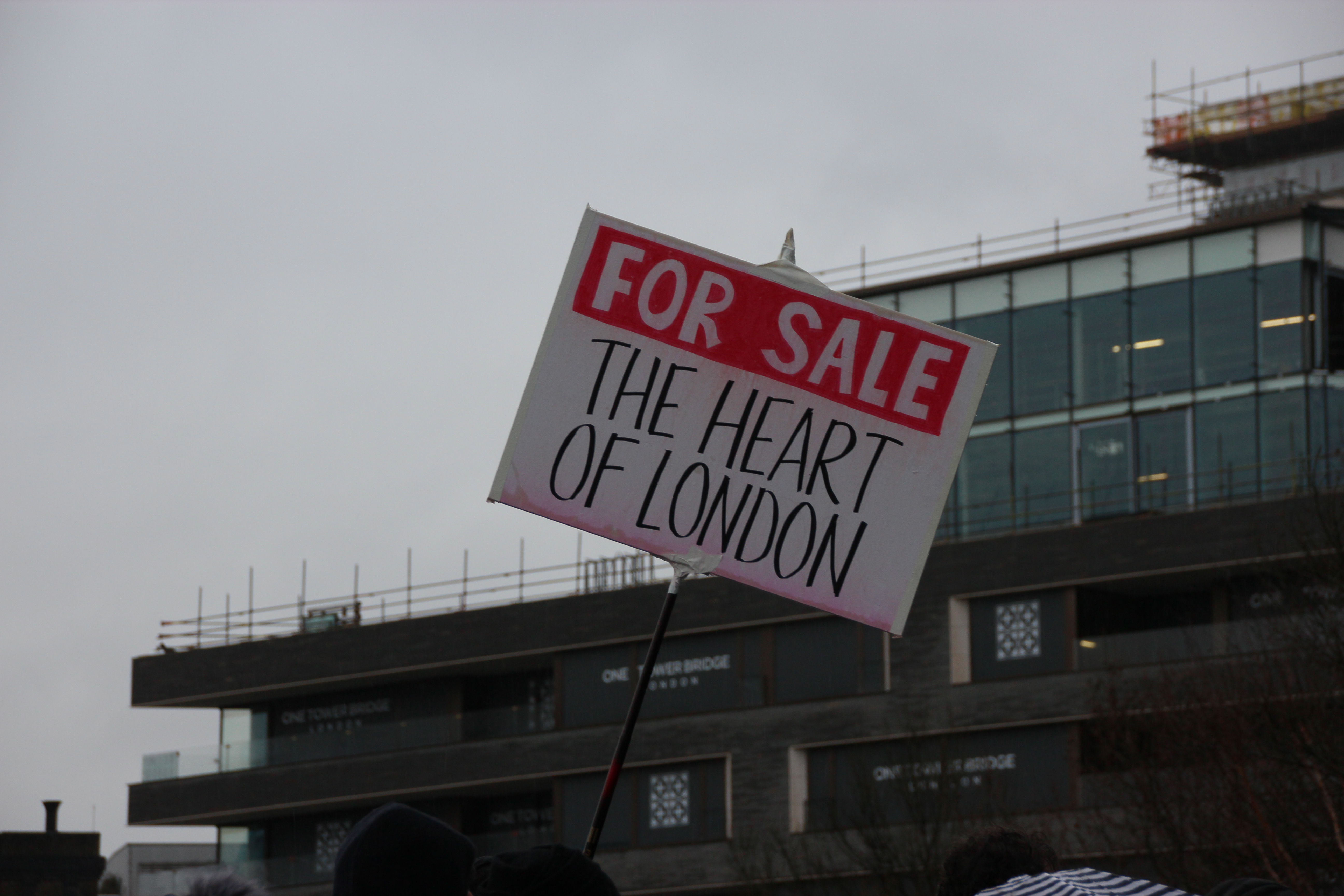
A placard in front of Tower Bridge, one of London’s most famous landmarks (Photo: Hannah Awcock).
This was very much a London-focussed demonstration. The marches culminated at City Hall, the seat of power for London, rather than Parliament Square, the seat of power for the UK. Housing is a problem in many places across the country, but today was specifically about London. The protest aimed to get the attention of the government of London, not the government of the UK, and this was reflected in the routes and locations of the demonstration.
Some placards were home made, but these are often the most creative (Photo: Hannah Awcock).
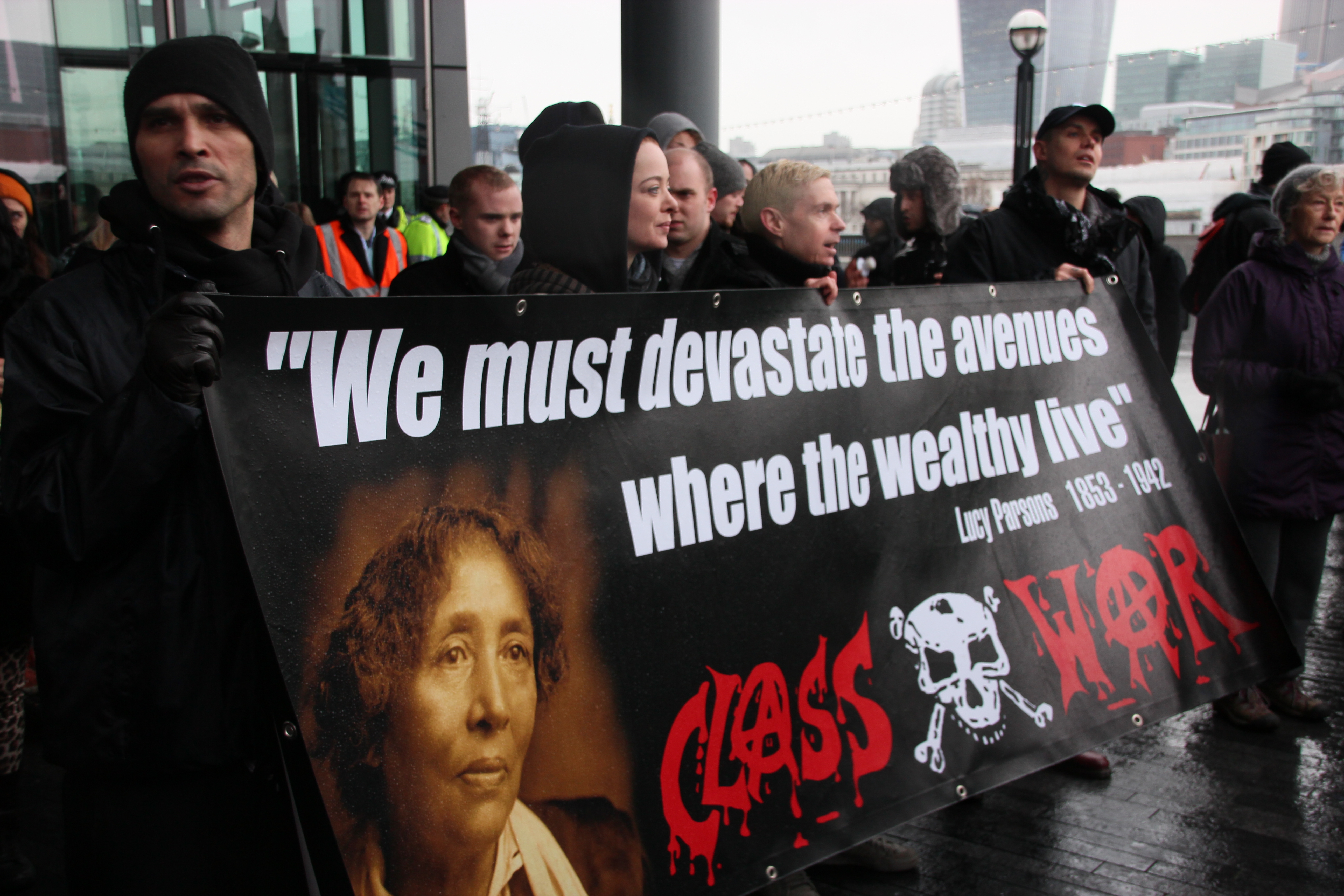
Anarchist groups also took part in the demonstration (Photo: Hannah Awcock).
The rally at City Hall- I wonder if Boris Johnson was listening from his office (Photo: Hannah Awcock).
Despite the foul weather, I really enjoyed myself today. It was my first protest in a while, and I’m glad that it went off peacefully for my own sake, even if it perhaps means we won’t get any major news coverage. After I left, a breakaway group occupied some empty council houses on the Aylesbury Estate in elephant and Castle, and I will be following events there carefully. The housing crisis in London is a very real problem, and it needs to be tackled. Nothing will happen overnight, and the March for Homes is just one step in a process that will, in all likelihood, be very long. But I’m glad I was there, standing up to be counted for something I believe in.
Wilson, Seán Michael, Benjamin Dickson, Hunt Emerson, John Spelling and Adam Pasion. Fight the Power! A Visual History of Protest Among the English-Speaking Peoples. Oxford: New Internationalist, 2013.
The title of Fight the Power! A Visual History of Protest among the English-Speaking Peoples may be a little long winded, but it does sum up the book well. Through the medium of comic strips, the book tells the story of some of the key moments in the history of protest in the English-speaking world (well, from the last 2 centuries anyway). The protests discussed are wide ranging in terms of topic and geography, taking in race, class, labour and governance issues, as well as such diverse countries as Ireland, Australia, America, and the former British Empire.
The format of the book makes it incredibly approachable and engaging, ideal for young people (although some of the images are a little graphic) or those with little previous knowledge of protest. The examples lack detail and can be one-sided, but neither of these are inherently bad things. The book is a fantastic introduction to many protests, and it does not claim to be an unbiased account.
Despite the diversity of the examples, several themes recur throughout the book. One is police brutality. The actions taken by those in authority attempting to suppress protest have frequently proved provocative, causing demonstrations to escalate into violent clashes. The Battle of Peterloo (1819) and the Battle of Toledo (1934), amongst others, are good examples of this. Violence, or the lack of it, is another theme that recurs throughout the book. Whether or not to use violence is one of the most fundamental decisions a protest movement makes, which can drastically influence the outcome of a campaign. There is no ‘right’ answer; apart from the moral debate, both violent and non-violent movements have proved successful in the past.
The lasting impression which the book leaves is one of hope. Particularly in the past few years, it can be very easy to believe that protest does not achieve anything, that it is all too easy for those in authority to repress or ignore demonstrations and social movements. But what the examples in Fight the Power prove is that protest can force change. The Suffragettes, Rosa Parks, and the various independence movements of the British empire demonstrate that change may take time, decades even, and it may not be exactly the progress that you imagined, but it can be achieved.
Another key message of the book, which is particularly relevant to my PhD, is that past protests can provide both practical suggestions and inspiration to contemporary protest movements. As Tariq Ali writes in the Introduction, “History rarely repeats itself, but its echoes never go away” (p5). An image on the back cover of the book shows an Occupy protester holding a “We are the 99%” placard, backed by a Suffragette, Rosa Parks, Nelson Mandela, and others mentioned in the book. It is a powerful image of historical solidarity.
This book was given to me as a Christmas present (I got a lot of books this year, so brace yourself for a lot of reviews over the next few months!), and it certainly fulfills that role perfectly. It is a nice introduction to some of the most famous protests in the history of the English-speaking world, but I would recommend it even if you are already familiar with most of them as a refreshing approach to the history of protest.
WordPress.com has very helpfully put together a summary of Turbulent London’s stats from 2014. The blog has only been going since July, and I am very proud of what it has achieved in that time. I had been wanting to start a blog based around my PhD, for some time, but had got stuck trying to think of a name. Once I finally got Turbulent London up and running however, I discovered that blogging is an exciting and dynamic means of communication which has been greatly beneficial to me, as well as thoroughly enjoyable.
As the summary shows, people in 41 countries have read Turbulent London, which is just amazing to me. I get a buzz of excitement every time I see that someone from Finland, Iraq, or Algeria has read my writing. Closer to home, I am always humbled when one of my friends, colleagues or fellow PhD students tell me that they read and enjoyed a post.
I am aware that this may be coming across as overly emotional or self-promoting, but really I just wanted to take this opportunity to share my enjoyment of Turbulent London, and to thank everyone for taking the time to read and engage with my posts. Also, if you have been considering starting a blog yourself, I strongly advise you do it, because it is fantastic.
I hope you all had a lovely Christmas, and I wish you all the best for 2015.
Here’s an excerpt:
A San Francisco cable car holds 60 people. This blog was viewed about 1,600 times in 2014. If it were a cable car, it would take about 27 trips to carry that many people.































 Turbulent Isles